Last updated: 2026-08-01 by Ted Sellers, Owner
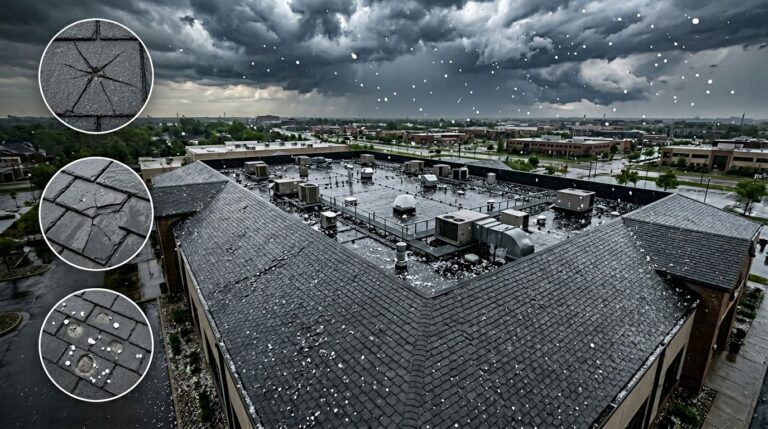
Cedar shake hail damage usually shows up as fresh splits, broken corners, crushed wood fibers (bruising), and shaken-loose pieces that expose roofing underlayment or fasteners. Start by confirming a recent hail event using “collateral” clues like dented gutters and marked flashing, then inspect the wood shake shingles for random, storm-pattern impacts. Photograph everything and get a roof inspection if access is unsafe or damage looks widespread.
When This Applies
If your commercial property has cedar shake sections
Many commercial buildings don’t have full cedar shake roofs, but they do have decorative wood shingles on steep-slope features. Think entry canopies, mansards, dormers, or older historic structures. Those areas still matter, because one damaged slope can cause roof leaks into lobbies, tenant suites, or electrical spaces.
Cedar shakes also age in a way that can hide storm hits. After hail, a roof can look “mostly fine” from the street, while the real damage sits along ridges, hips, and upper exposures.
For basic, ground-based inspection habits (and why walking on wood roofs can be a bad idea), review roof inspection guidance.
When it doesn’t apply (or hail isn’t the main problem)
Not every split means hail. Cedar naturally checks and dries over time due to UV exposure, and older shakes can crack from thermal swings alone as part of cedar roof maintenance. Foot traffic, falling branches, and poor roof ventilation can also mimic impact damage.
Aging patterns that look like impacts
Sun-driven wear often looks more uniform. You’ll see consistent curling, slow edge fraying, and repeated checking across many shakes. Hail tends to create random “hot spots,” with sudden breaks mixed among shakes that still look normal.
Low-risk storms and false alarms
If the “hail” was brief and small, you may find plenty of dents in soft metals like flashing but little true wood breakage. Cedar’s surface can hide bruising at first, so compare multiple slopes before you rule it out.
A useful gut-check: hail damage is messy and uneven, while most aging and installation issues repeat in patterns.
Cases where you should stop and call a pro
Commercial owners have a higher risk profile than homeowners because leaks can shut down operations. Also, cedar is easy to damage during inspection if it’s brittle, wet, or covered in moss and mildew.
Immediate business-risk triggers
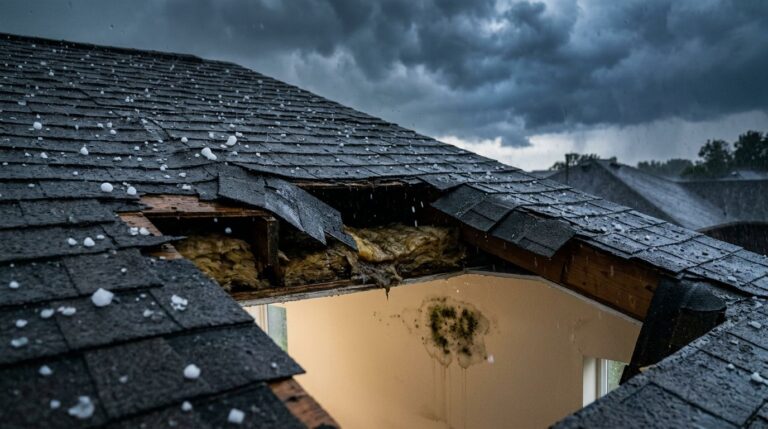
If you see active dripping, stained ceiling tiles, wet insulation, or electrical area exposure, treat it as urgent. At that point, the question isn’t only “Is it hail?” It’s “How fast can we stop water?”
Step-by-Step
Ground-level checks before you get on a ladder
- Confirm the storm window. Note the date, time, and wind direction you remember. Then inspect the windward slopes first, because they often take the hardest hits.
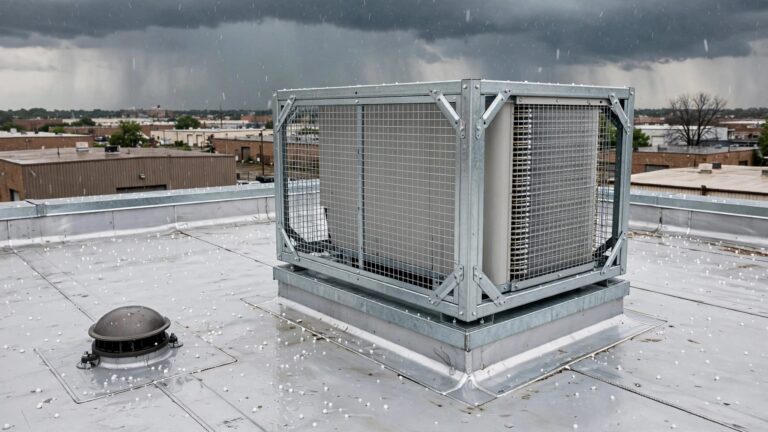
- Look for collateral impact marks. Check downspouts, gutter system, metal caps, roof vents, HVAC housings, and window wraps. Random dents and paint chips support a hail case.
- Scan cedar from the ground with binoculars. Focus on ridges, hips, and upper courses. Watch for fresh, light-colored wood where a shake corner snapped off.
- Photograph everything before you touch anything. Take wide shots of each elevation, then close-ups of dented metals and any shake breakage you can see. Keep photos labeled by slope.
On-roof checks for cedar shake hail damage (only if it’s safe)
-
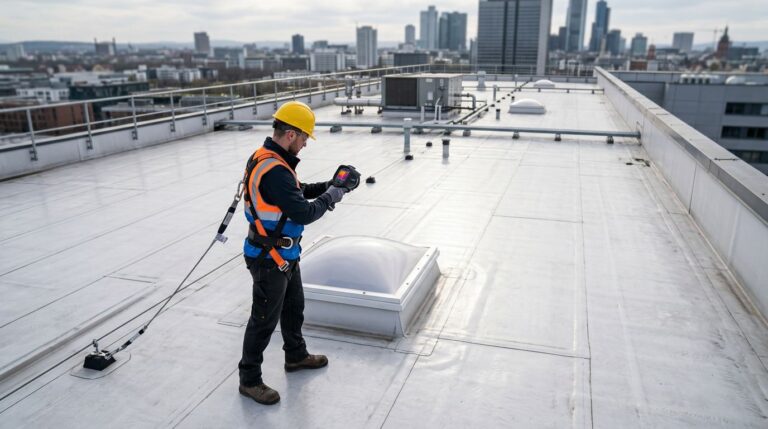
Choose safe access, or don’t go up. Use a safety harness if accessing the roof. Cedar can be slick and fragile. If the roof is steep, high, wet, or icy, stay off it and schedule an inspection.
-
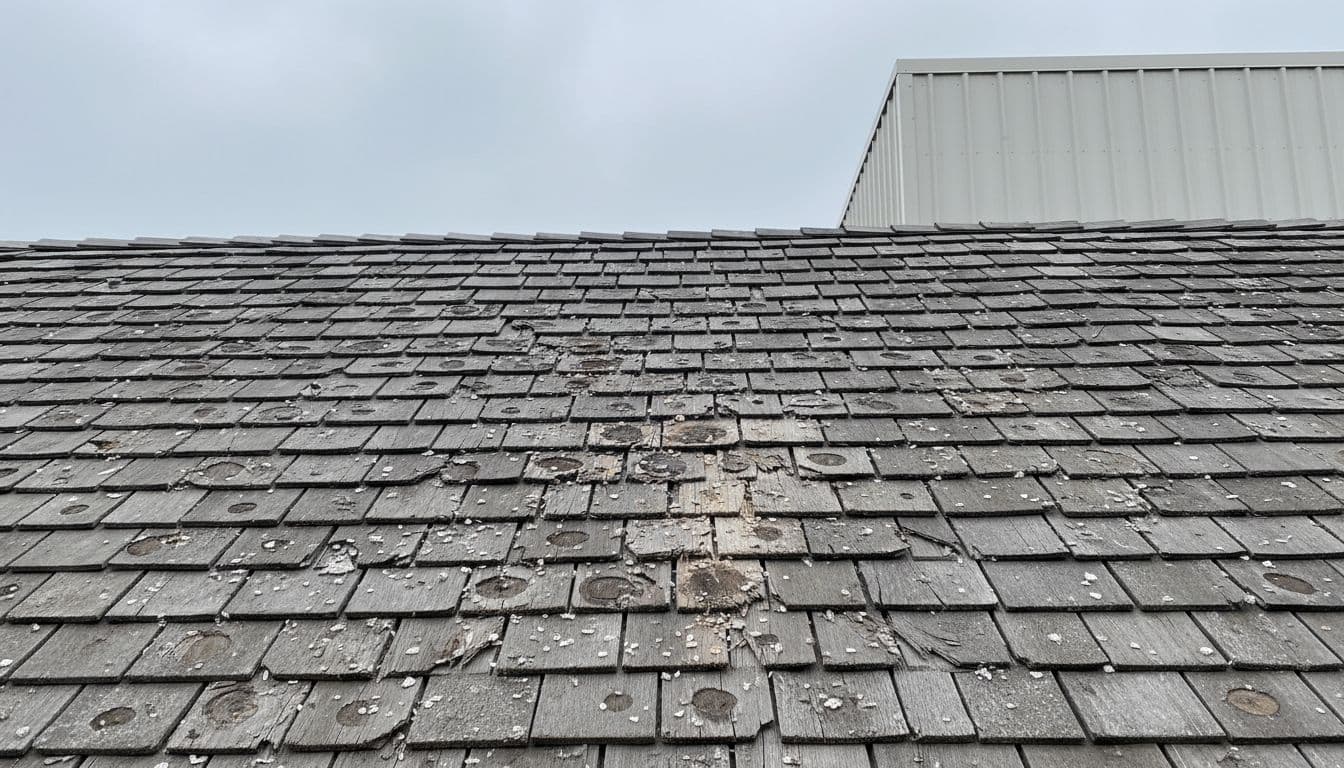
Check for fresh splits and sharp fractures. Hail often causes sudden cracking across the grain, split or puncture, broken corners, and “new” splintering. Fresh damage usually looks lighter than weathered wood.
-
Look for bruising (crushed fibers), not just cracks. Press gently near suspected hits. A bruised area can feel softer or look “matted,” even if the surface didn’t fully break.
-
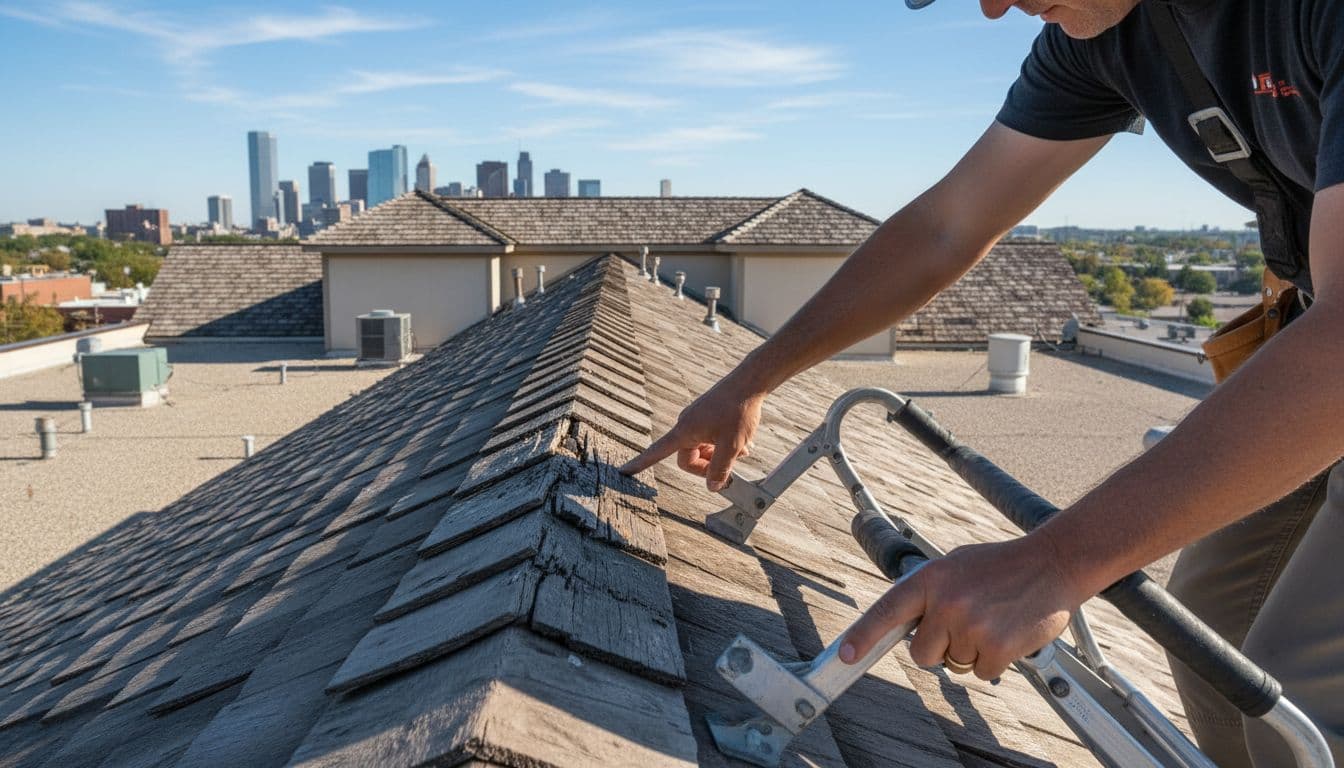
Inspect the key water-shedding points. Pay extra attention to ridge caps, hips, valleys, sidewalls, and flashing lines. Hail damage here can compromise structural integrity and shorten the path from “impact” to “leak.”
-
Find exposed underlayment or fasteners. Missing shake corners and split but lifted shakes can reveal roofing underlayment, nails, or gaps. Those openings often grow after freeze-thaw cycles.

Document, protect, and decide what happens next
- Map damage in a simple way. Pick test areas on each slope, then record how many shakes show fresh breaks or bruises. Consistent hits across multiple test areas point to broader damage and potential water penetration requiring cedar roof maintenance.
- Stop water fast if you suspect an opening. If interior staining starts, don’t guess at the entry point. Water travels, especially around transitions. Consider scheduling commercial roof leak detection to confirm sources and prevent repeat callbacks.
- Match the fix to the risk. Small, isolated breaks may be repairable with replacement shingles or roofing sealant. Widespread bruising, repeated splits, or fragile older shakes can push you toward a larger scope. Consult a roofing contractor for professional evaluation, sometimes similar in decision-making to a commercial roof replacement where patching stops making financial sense.
For a solid perspective on documenting storm damage for claims and repair planning, see this hail damage identification and documentation guide.
FAQ
How can cedar shakes be hail-damaged if I don’t see obvious dents?
Wood shake shingles like cedar don’t “dent” like metal. Instead, hail can crush fibers, start hidden splits, or break corners that later fall away. That’s why collateral signs (dented gutters, marked flashing) matter. If those signs are present, inspect for bruising and fresh fractures.
What if I’m not sure whether my commercial roof needs repair after the storm?
Start with inside clues: new stains, wet insulation smells, or ceiling tile sag that signal roof leaks. Then compare slopes for random, storm-like damage. If any tenant areas are affected, treat it as time-sensitive for hail damage repair. Waiting can turn a small opening into a bigger restoration job.
Can you replace a few shakes, or does hail mean replacing the whole roof section?
It depends on spread and age. Isolated, clean breaks can often be repaired. Avoid a pry bar, since it risks structural damage. If many shakes show bruising, splitting, or loosened fasteners, repairs may not hold for long. In those cases, section replacement is often more reliable than repeating spot fixes.
What happens if hail damages cedar shakes on a building with strict appearance requirements?
Document early and keep samples if they’re safe to collect. Some properties need like-for-like materials or specific grades to match, including replacement shingles with comparable moisture resistance. Your contractor may also need to coordinate staging and safety plans to protect pedestrians and entrances while work happens.
What if my building has cedar shakes on the entry, but the main roof is a flat membrane?
Inspect both. Hail that breaks cedar shake roofing can also puncture accessories on low-slope systems. If the membrane shows seam issues, punctures, or pooling changes, you may need commercial flat roof repair as well, or consider roof replacement. Treat the site as one storm event, not separate problems.
Cedar shakes can look tough until they suddenly don’t. The safest approach is quick documentation, careful inspection of the roof deck, and fast action where water can enter, such as applying wood preservative to cedar shake roofing. If the pattern suggests cedar shake hail damage, a professional evaluation helps you choose between repair and replacement without guessing. For broader storm response and repair options, connect with Saint Paul commercial roofing experts and protect your building before small openings become big disruptions.
Need a roof inspection in Saint Paul or the Twin Cities? Call Sellers Roofing Company at +1-651-703-2336 or schedule a free estimate. We are a black-owned, NMSDC-certified MBE roofing contractor with 9+ years experience.