Last updated: 2026-08-01 by Ted Sellers, Owner
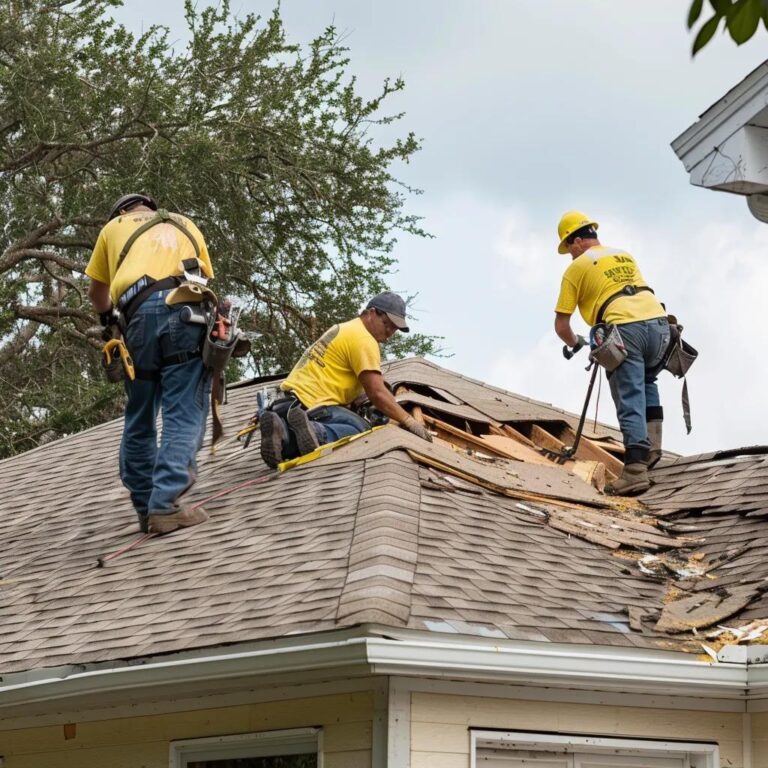
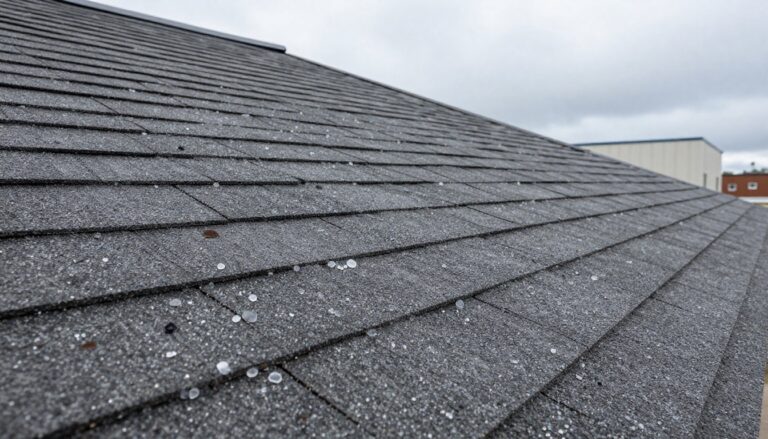
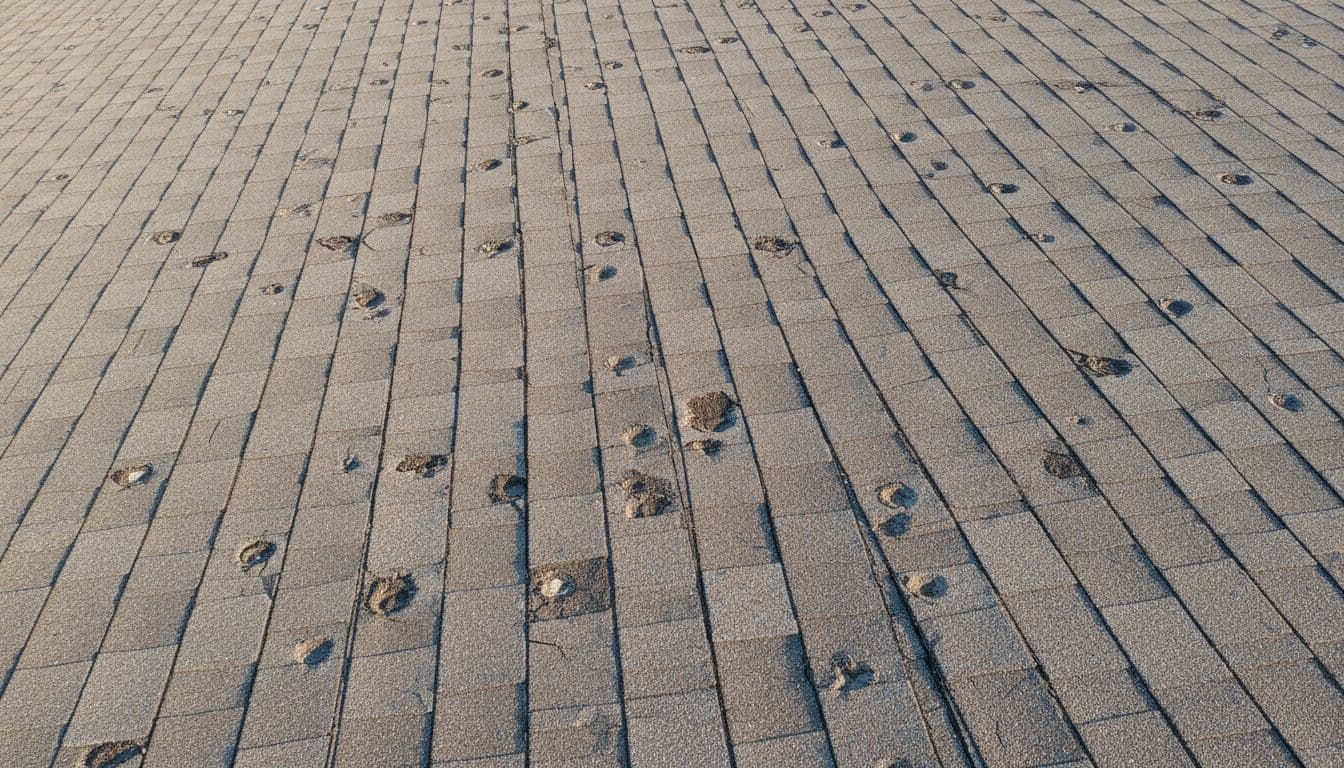
Hail damage shingles usually show random dark spots where granules are knocked away, soft bruises that feel spongy, fresh dents, split edges, and sometimes cracks. On architectural shingles, the hits rarely line up in a neat pattern. Nearby metal flashing, vents, and gutters often show dents too, which helps confirm the damage.
From the ground, worn shingles and hail-hit shingles can look similar. A closer check shows whether you need a small repair, better storm records, or a faster plan.
When This Applies
For commercial buildings with shingle roof sections
This applies to offices, churches, retail buildings, and multi-family properties that use architectural shingles on steep-slope sections. Many commercial sites have them over entryways, mansards, or visible front elevations.
If your property has only TPO, EPDM, PVC, or built-up roofing, these signs won’t match the whole roof. Those systems show hail damage in different ways.
Mixed roof systems need two inspections
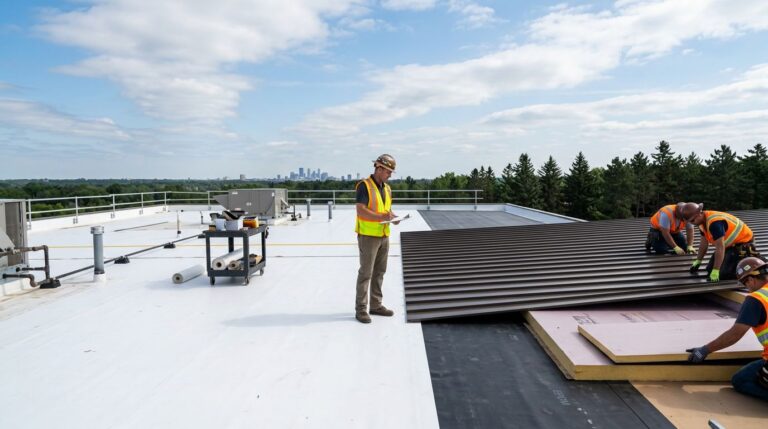
Some buildings have shingles on one section and membrane on another. In that case, the hail may bruise shingles up front while the low-slope area needs a separate leak review. If interior staining starts after the storm, commercial roof leak detection in Saint Paul helps track water that may travel far from the impact point.
When the same marks are not hail
Not every scuff is storm damage. Old shingles lose granules from age. Foot traffic can scrape surface granules. Wind can crease tabs, and blistering from heat can leave small popped spots.
The difference is pattern. Real hail damage looks scattered and random, like someone tossed marbles at the roof. Age wear usually looks more even across broad areas.
Step-by-Step
1. Look for random granule loss
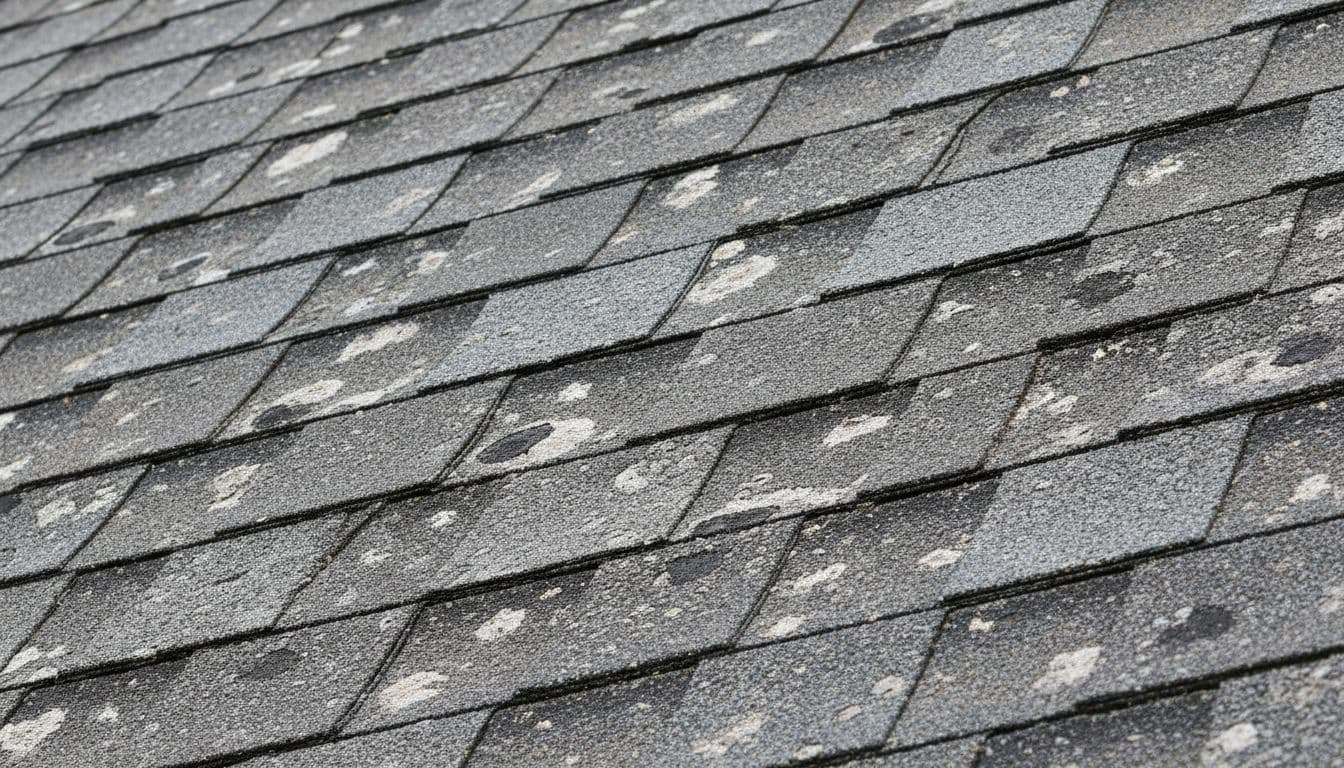
Start with the obvious sign: small, dark, round impact areas where the top granules are gone. On architectural shingles, those spots may expose fresh asphalt beneath the surface. They often look darker or shinier than the rest of the roof.
Don’t confuse the shingle’s printed shadow lines with damage. True hail marks break the surface pattern. They also appear in random clusters, not in perfect rows.
What a true hit looks like
A real impact mark often has a clean edge. The spot may feel rough around the rim and smoother in the center. Fresh hits also look newer than the surrounding roof.
2. Press lightly for bruises
Some hail damage doesn’t crack the shingle right away. Instead, it bruises the asphalt layer below the surface. Think of fruit with a bruise under the skin. It may look normal at first glance, but the layer underneath has been hurt.
Press gently with your thumb on suspect spots. A bruised area can feel softer than the shingle around it. That soft feel matters because it often means the mat has taken a hit.
Hail damage looks random. Age-related wear usually looks even.
Check sunny and shady slopes separately
South and west slopes often take storms differently. One side may show clear strikes while another looks fine. That’s normal after wind-driven hail.
3. Check ridge caps, edges, and nearby metal
Next, inspect ridge caps, hips, and exposed edges. These areas often take the first direct hits. Severe storms can split corners, crack lifted edges, or knock heavy granules from high points.
Then look at metal vents, flashing, gutters, and downspouts. Dents on metal don’t prove shingle damage by themselves, but they support the story. When both the shingles and metal show fresh impact, the case gets much stronger.
If water shows up inside
A leak doesn’t always appear under the damaged spot. On larger buildings, water may travel before it stains a ceiling tile or wall.
4. Decide between repair and replacement
If the damage is isolated to a small slope, targeted repairs may work. However, broad granule loss, repeated bruising, and cracks across several test areas point to deeper trouble. At that stage, a patch may only buy time.
For older systems, commercial roof replacement can cost less over time than repeated service calls. On mixed buildings, one storm may leave you needing shingle work on one section and commercial flat roof repair on another. If your commercial roof needs repair, move quickly and get a clear scope before the next storm. For broader storm response, review storm repair options for Saint Paul commercial roofs.
FAQ After a Hail Storm
Can shingles look fine from the ground and still be damaged?
Yes. Bruising and small granule-loss spots can hide from street level. That’s why close inspection matters after a hard hail event.
What if only one slope has hail damage?
That happens often. Wind direction, building height, and nearby structures can shield one side while exposing another side to direct impact.
Do dents on gutters prove the shingles are damaged too?
No, but they help support the finding. Metal dents plus random shingle bruises and granule loss make a stronger damage pattern.
How long can I wait before calling for an inspection?
Don’t wait long. Rain, sun, and freeze-thaw cycles can turn small impact spots into leaks or splits. Take photos while the evidence looks fresh.
What happens if my building has shingles and a flat roof?
Treat them as two systems. The shingle section may need spot replacement, while the low-slope area may need membrane patches or full commercial flat roof repair.
After a hail storm, the clearest signs are random impact marks, bruising, and fresh granule loss, not smooth, even wear. If the roof looks peppered instead of uniformly aged, take that pattern seriously.
Document the marks, note any metal dents, and schedule a roof inspection before small hits turn into bigger water problems. Fast action protects the building and gives you cleaner proof if a claim follows.
Need a roof inspection in Saint Paul or the Twin Cities? Call Sellers Roofing Company at +1-651-703-2336 or schedule a free estimate. We are a black-owned, NMSDC-certified MBE roofing contractor with 9+ years experience.