Last updated: 2026-05-26 by Ted Sellers, Owner
Short answer: In Minnesota, one inch diameter hail (quarter-sized hail) is the most useful “take it seriously” threshold for hail damage to an asphalt shingle roof. Damage can start smaller on older or brittle shingles, but functional hail damage is more common at 1.25 to 1.5 inches, especially on standard architectural shingles. After any storm near these sizes, check for bruises, granule loss, and dents on soft metals, then photograph evidence fast.
When This Applies
If your building has an asphalt shingle roof
Many commercial properties still have steep-slope shingle areas, such as entry features, office wings, and mixed-slope buildings. If you’re responsible for a facility, those shingle sections can be the first place hail damage turns into leaks.
Mixed-slope sites deserve extra caution
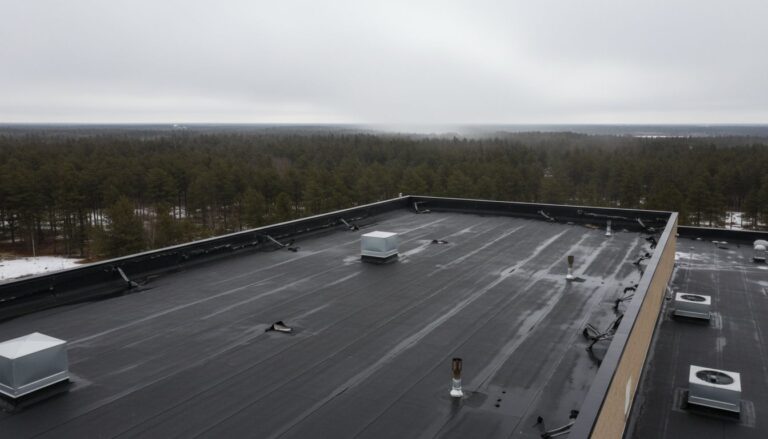
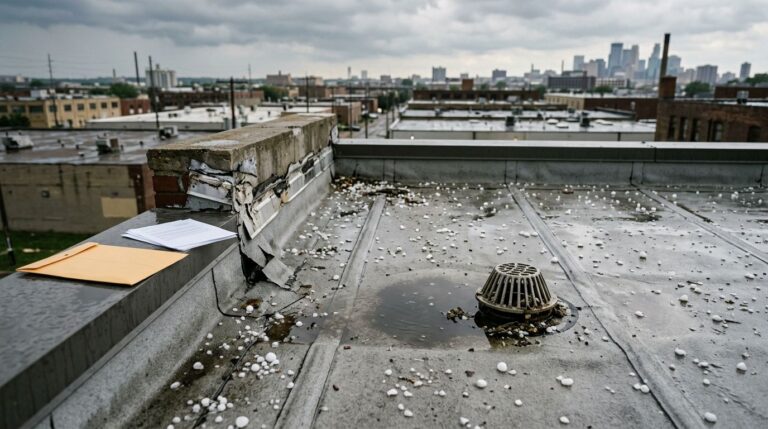
If your site has both shingles and membrane areas, hail can damage both in different ways. A shingle slope might show bruises, while a nearby membrane roof shows punctures at corners and traffic paths. When those clues line up, it’s a signal to evaluate the whole exterior, not just one roof plane.
When hail size alone won’t tell the full story
Hail size is a fast filter, not a final verdict. Two roofs can see the same storm and end up with very different outcomes.
Older, heat-aged, or brittle shingles can fail with smaller hail
Asphalt shingles lose flexibility with age and sun exposure. Once the mat and asphalt are less forgiving, smaller stones can create bruised shingles and loosen granules.
Impact-resistant shingles can raise the damage threshold
Some roofs use impact-resistant products like Class 4 shingles. Even then, “no damage” isn’t automatic. Collateral dents on metals still matter, because they hint at the storm’s energy and direction.
Quick hail size thresholds for damaging asphalt shingles in Minnesota
Rule-of-thumb sizes you can use right away
Hail is like throwing ice at sandpaper. Small stones may only rough it up, while larger stones can cause dents and cracks, or strip it.
Field experience lines up with controlled impact testing on common roof materials, including asphalt shingles (see this research on hail damage threshold sizes for roofing materials).
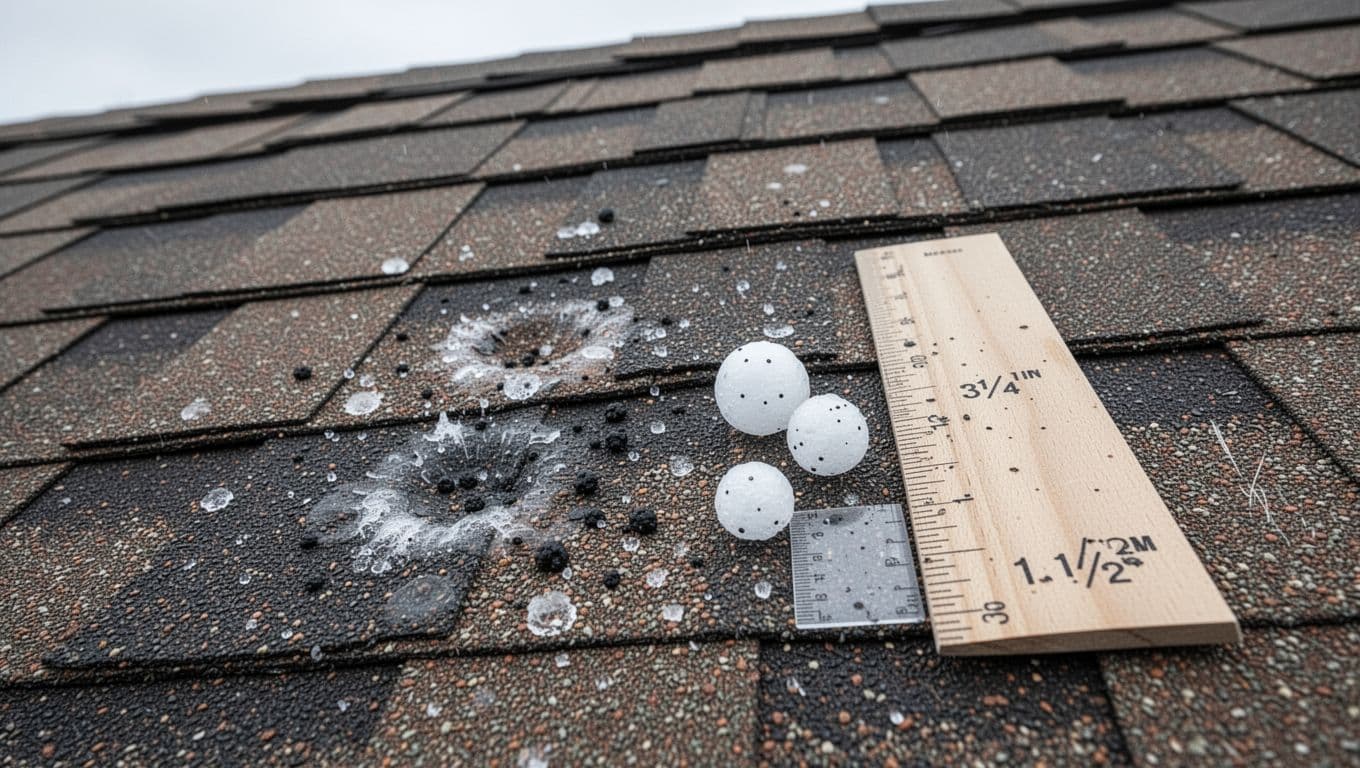
Here’s a practical Minnesota-focused reference. Use it to decide how urgent your roof inspection and documentation should be. It’s important to document damage quickly after a hail event.
| Hail size | What often happens on asphalt shingles | What you should do next |
|---|---|---|
| 3/4 inch (penny-sized) | Usually cosmetic, but can start granule loss on older shingles | Inspect metals and gutters, then spot-check shingles |
| 1 inch (quarter-sized) | A common starting point for real bruising and measurable granule loss | Document and schedule a roof inspection soon |
| 1.25 to 1.5 inches | Higher odds of functional hail damage on architectural shingles | Treat as likely damage, document thoroughly |
| 1.75 to 2 inches | Damage is often widespread, including soft metal and accessories | Prepare for repair planning and possible claim |
| 2 inches and up | Severe impacts from golf ball-sized hail, dents and cracks, torn seals, heavy collateral damage | Get professional roof inspection quickly |
Takeaway: If you can confirm hail near 1 inch or larger, don’t wait for leaks to prove the point.
A shingle roof can look “fine” from the ground and still be bruised. The best early clue is often collateral damage on soft metal.
What hail damage looks like on asphalt shingles (and what it isn’t)
Clues that point to real hail damage
True hail hits tend to repeat a pattern: random spacing, similar-sized marks, and consistent direction on exposed slopes.
What bruised shingles look and feel like
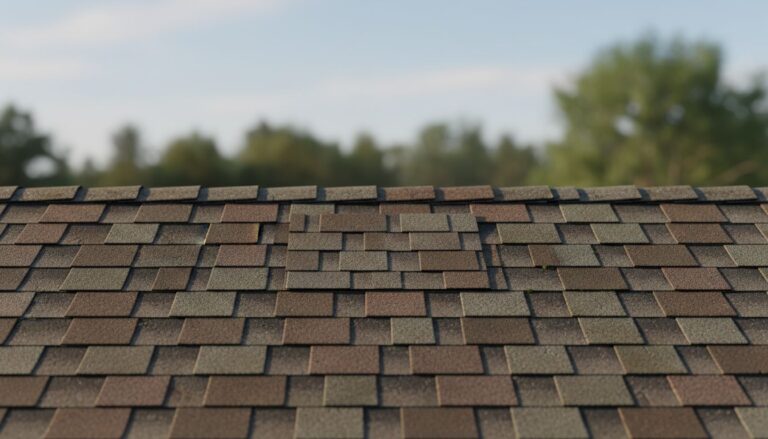
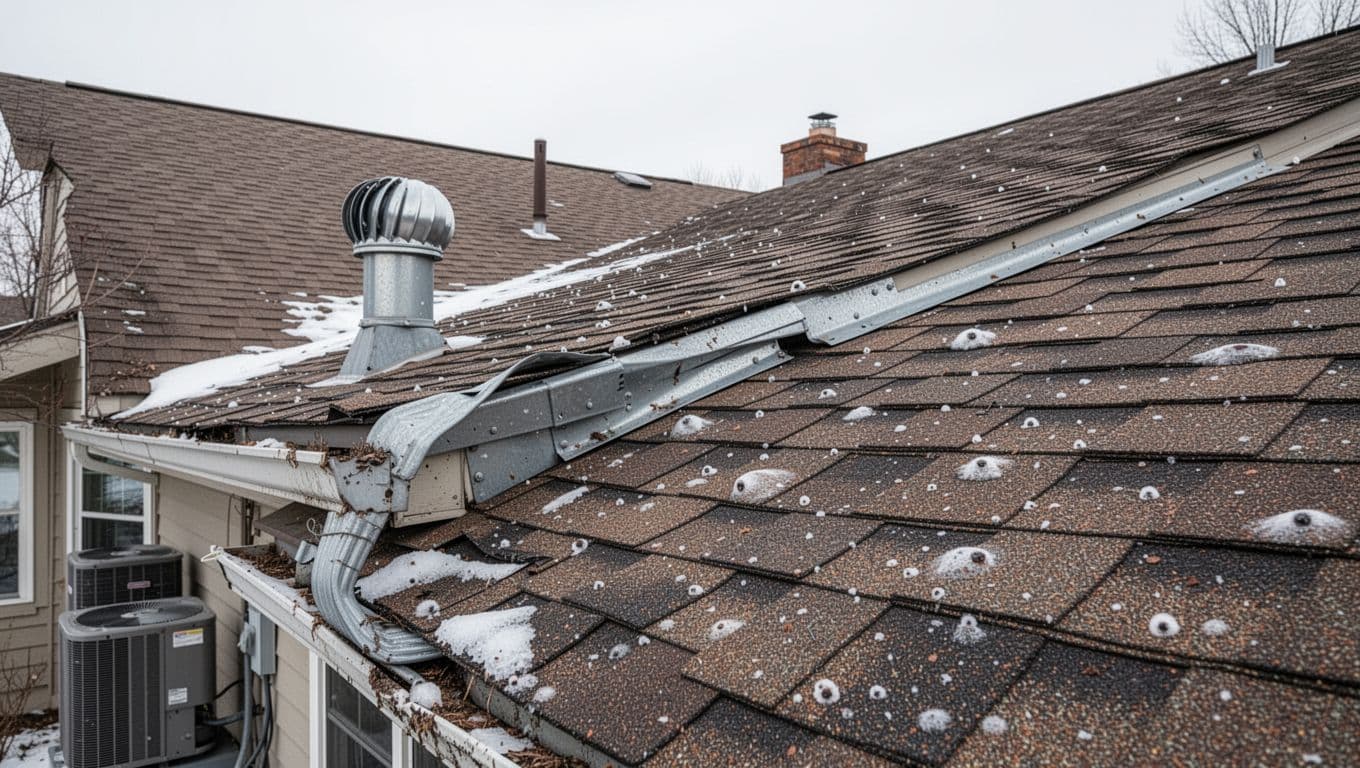
To spot hail damage from impacts, a bruise may show as a dark, round spot where granules are loosened. On some shingles, you can feel a soft spot with gentle pressure (don’t grind your finger, just a light press). Granules may collect at downspouts and in gutter runs after the storm.
Mat fractures in shingles matter more than scuffs. Look for fresh mat fractures, broken corners, and tabs that no longer sit flat.
Lookalikes that get mistaken for hail
Hail isn’t the only thing that knocks granules loose. Misreads can waste time and create bad claim photos.
Common non-hail marks
- Blisters: raised bumps from manufacturing or heat, not impact
- Mechanical scuffs: foot traffic, ladder rub, tool marks
- Thermal cracking: age-related splits that don’t match storm direction
If you want a deeper, technical framework for separating impact damage from lookalikes, review these guidelines for assessing hail damage to shingle roofs.
Step-by-Step
Document, inspect, and decide what happens next
- Confirm the storm window. Save weather alerts, radar screenshots documenting storm damage, and the time the hail fell, because timing ties photos to the event.
- Estimate hail size safely. Measure stones on the ground with a tape measure, or photograph them next to a quarter for scale to gauge quarter-sized hail.
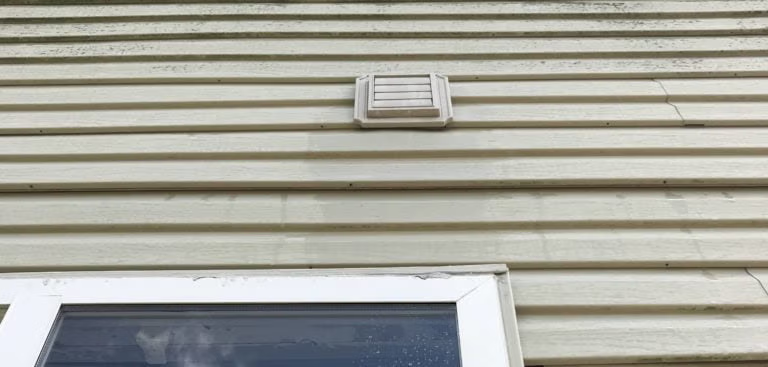
- Start with collateral damage at eye level. Photograph dented gutters, downspouts, metal wraps, vent caps, and other soft metals.
- Check window screens, sills for spatter marks, and painted surfaces. Screen tears and chipped paint often track hail direction, which helps explain why one slope is worse.
- Scan shingles from the ground first. Use binoculars to look for uneven texture, missing shingles, fresh granule scarring, and damaged ridge caps.
- Limit rooftop access. If you must access a low slope, avoid steep shingle walking, because foot traffic can create false “damage.”
- Photograph representative shingle impacts. Capture wide shots, then close-ups with a coin or ruler, keeping the camera square to the shingle.
- Don’t ignore other roof areas. If your site has membranes or equipment screens, hail can cause spot hail damage to membrane seams, driving commercial flat roof repair needs around penetrations and rooftop units.
- Decide whether repair or replacement planning is on the table. Hire a roofing contractor to evaluate roof replacement needs; widespread bruising, fractured shingles, and heavy collateral dents can justify commercial roof replacement budgeting.
- Act fast if water damage shows up. Any water damage like interior staining, dripping, or wet insulation means the commercial roof needs repair, even if the shingles look “mostly okay.”
How to document damage after a Minnesota hailstorm
A photo set that supports your insurance claim and a repair plan
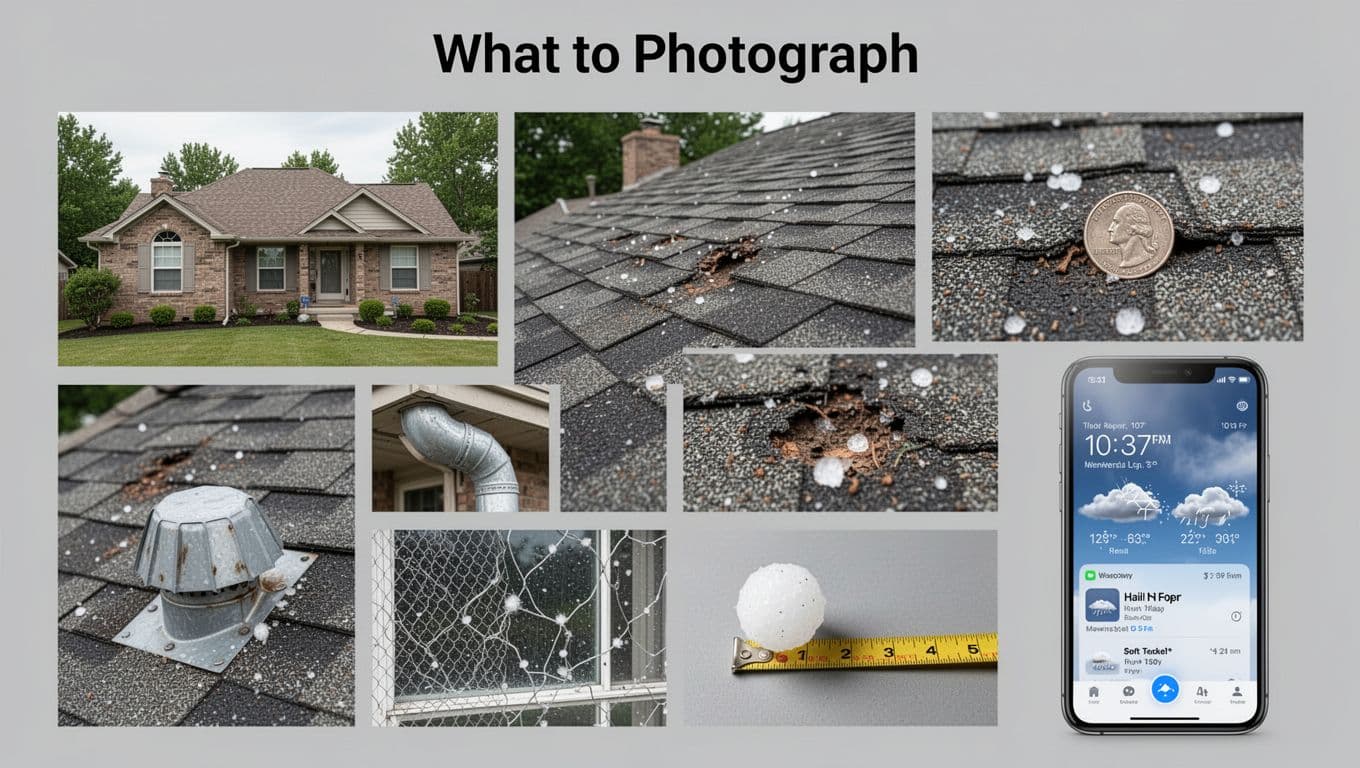
Use a simple sequence so your file set tells a clear story. This evidence is vital for your insurance claim:
- Wide building elevations (all sides, then each roof plane)
- Roof-slope overview shots (show pitch, features, and exposure)
- Close-ups of shingle impacts with a coin or ruler in frame
- Soft metal dents on vents, flashings, gutters, downspouts
- Window screen damage, window sills, and spatter marks on siding or trim
- Hail size proof (stones next to a tape measure, photographed quickly)
- Interior evidence if present (ceiling stains, water damage, wet tiles, drips, insulation)
Two small tips that prevent useless photos
Keep the camera steady and include scale in every close-up. Also, don’t crop too tight, because adjusters need context to confirm it’s roofing material.
FAQ
Should I file a claim if the hail was under 1 inch?
It depends on age and collateral damage. Even quarter-sized hail can warrant an insurance claim if soft metals show dents, your shingles may be bruised too. Document everything and get a professional opinion before deadlines make the decision for you.
How soon do I need to inspect after a hailstorm?
As soon as it’s safe. Rain, wind, and foot traffic can erase clues fast. Early photos also help separate hail from pre-existing wear.
What if my shingles look fine but my gutters are dented?
Treat that as a red flag. Dented gutters are reliable collateral indicators. Metals dent more easily than shingles, so the gutters can confirm hail size and direction. That proof can support a closer shingle inspection.
Can hail damage cause leaks months later?
Yes. Bruised shingles can shed granules or suffer mat fracture, then UV and rain do the rest. Small cracks around fasteners and edges can also open up over time.
Does roof age really change hail resistance?
Yes. Older shingles are less flexible and can bruise easier, compromising structural integrity. Class 4 shingles offer better resistance, but age still matters. For long-term context on how aging affects asphalt shingles, see the IBHS roof aging research agenda.
A hailstorm doesn’t need baseball-sized stones to shorten an asphalt shingle roof’s life. In Minnesota, hail of one inch diameter is the practical checkpoint, and collateral dents often tell the truth first. Photograph wide context, then tight evidence with scale, because good documentation speeds up decisions. If you’re seeing bruises, fractures, or water, contact a roofing contractor to spot hail damage early and treat it as repair planning now, not “wait and see later.”
Need a roof inspection in Saint Paul or the Twin Cities? Call Sellers Roofing Company at +1-651-703-2336 or schedule a free estimate. We are a black-owned, NMSDC-certified MBE roofing contractor with 9+ years experience.