Last updated: 2026-05-26 by Ted Sellers, Owner
Short answer: Identify hail damage on luxury asphalt shingles by looking for random impact marks across multiple slopes, fresh granule loss with dark asphalt showing, cracked or bruised spots that feel soft when gently pressed, and matching damage on roof “soft metals” like vents and flashing. Document findings with clear photos, note the storm date, and compare marks to non-hail issues like blisters or foot scuffs.
When This Applies
Who should use this check, and who shouldn’t
This applies to commercial property owners whose buildings have luxury asphalt shingles on steep-slope areas, such as entry features, mansard sections, dormers, sloped mechanical screens, or mixed-slope multifamily roofs. Luxury shingles (often called “designer,” “premium,” or “architectural” shingles) are thicker and layered, so hail may bruise the mat under the granules without an obvious hole.
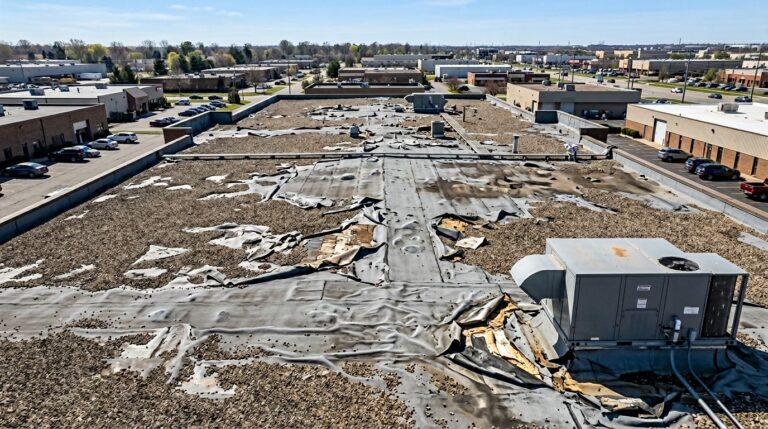
On the other hand, this does not apply to the main roof surface on many commercial buildings, which is often TPO, EPDM, modified bitumen, metal, or built-up roofing. If your building mainly has a membrane roof, hail signs and failure modes differ. In that case, you may be looking at commercial flat roof repair issues like punctures, seam stress, or damaged rooftop accessories, even if the shingle accents look fine.
What makes luxury shingles tricky after hail
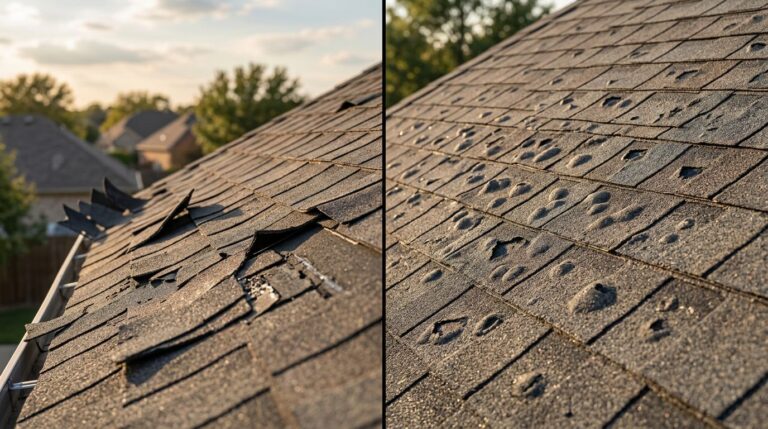
Luxury shingles can “hide” damage. From the ground, the roof may look normal because the laminated layers still lay flat. Meanwhile, the impact may have fractured the fiberglass mat or loosened granules in a tight circle. Think of it like a bruised apple: the skin can look fine, but the inside took the hit.
Hail patterns also matter. True storm impacts usually appear:
- In random spacing, not a neat line
- On multiple shingles, not just one odd spot
- Along with damage to vents, caps, flashing, gutters, and downspouts
For a visual sense of how real hail damage tends to “tell a consistent story” across roof parts, see what hail damage actually looks like.
A single dent or one “perfect circle” doesn’t prove hail. Consistency across the roof and accessories is what makes the case.
Edge cases that fool busy building owners
When it’s probably not hail (even if it’s round)
Some common look-alikes show up on high-end shingles:
| Mark you see | Common non-hail cause | Quick way to tell |
|---|---|---|
| Round bumps or pimples | Blisters from heat/moisture | Bumps often feel raised, not bruised, and repeat in clusters |
| Smooth, shiny scuffs | Foot traffic or tools | Scuffs follow a path near edges, valleys, or equipment access points |
| Granules thinning evenly | Normal aging | Wear looks broad and uniform, not spotty impact circles |
| Long splits | Thermal cracking or movement | Splits often track with shingle direction and repeat in similar spots |
After hail, the pressure is to decide fast. Still, mislabeling normal wear as storm damage can backfire during a claim review.
Step-by-Step
A practical hail inspection process for luxury shingles
- Start with the storm “story.” Write down the date and time window, then check if nearby properties reported hail. If you track site incidents, note any leaks or ceiling stains that appeared afterward.
- Do a ground check first. Use binoculars and look for irregular, dark specks that weren’t there before. Pay extra attention to ridges, hips, and the upper third of slopes.
- Scan roof accessories for matching hits. Look at metal vents, flashing edges, skylight frames, gutters, downspouts, and HVAC covers near the shingled areas. If those soft metals show dents, hail becomes more likely.
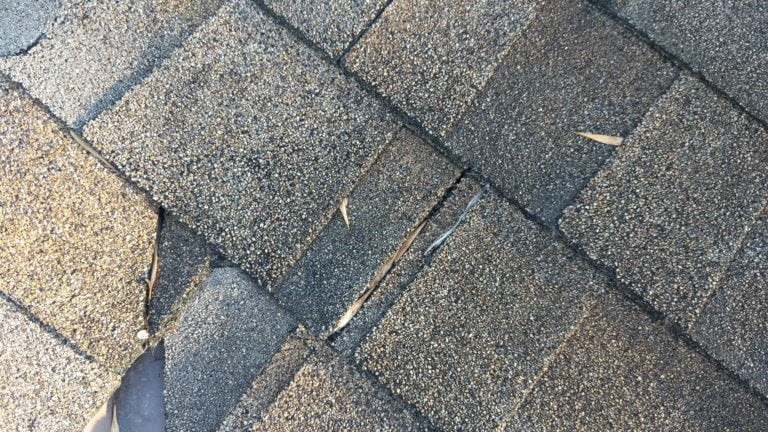
- Look for “fresh” granule loss, not old wear. True impacts often show a defined spot where granules are missing and the asphalt looks darker. Older wear usually looks dusty, gray, or blended.
- Check several slopes, not just the easy one. Hail rarely hits only one small patch. If you only see marks on one shingle face, confirm the wind direction and whether nearby slopes show anything similar.
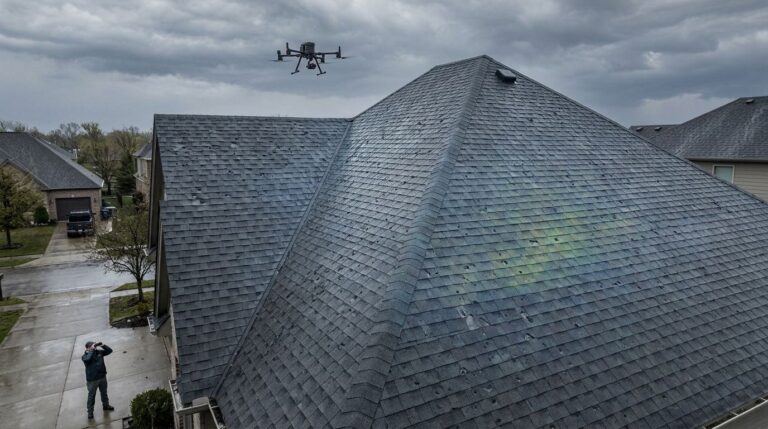
- Get closer safely (ladder edge view or drone). Many business owners shouldn’t walk steep slopes. A ladder-edge view can still reveal missing granules, cracked laminations, and ridge cap scarring. If you use a drone, record slow passes to capture impact texture.
- Use the “gentle press” test on suspicious spots. On a cool shingle, lightly press the center of a suspected impact with your thumb. A bruise often feels slightly soft compared to the surrounding area. Stop if granules start to release.
- Check for cracks in the laminate layers. Luxury shingles may show small, crescent-like cracks where the top layer flexed from impact. These can become entry points for water later, especially after freeze-thaw cycles.
- Photograph like you’re building a file. Take wide shots (whole slope), mid shots (a group of shingles), and close-ups (one impact). Include a coin for scale, and take a photo of the slope from the ground to show location context. For more documentation tips, this guide on spotting hail damage without guessing is a helpful reference.
- Count and map hits in a small test area. Choose a 10 ft by 10 ft section on each affected slope. Track how many clear impacts you find. A few questionable marks may point to age or traffic, while repeated impacts across slopes point to a storm event.
- Don’t ignore collateral damage around the shingle sections. Hail that bruises luxury shingles may also damage parapet caps, rooftop-unit panels, and membrane details nearby. That’s where a “small” issue can turn into a building-wide problem, especially if your commercial roof needs repair after wind-driven rain.
- Make the repair-versus-replace call based on spread and condition. If impacts are widespread, if shingles are older, or if multiple slopes are affected, a localized patch can become a repeat problem. At that point, planning for commercial roof replacement on the steep-slope areas (or coordinating it with other roof scopes) can reduce downtime and repeated mobilization.
If you’re unsure, don’t “test” every spot by pressing hard. You can knock off granules and blur the evidence.
Decision points that change the outcome
- Cosmetic versus functional damage. Some impacts mainly remove granules. Others crack the mat under the surface. Luxury shingles can look fine while losing lifespan. If you manage long-term CapEx, lifespan loss matters even without leaks.
- Mixed roofing systems on one property. A building may need shingle work on sloped features and commercial flat roof repair on the main field. Treat them as one storm event but two different diagnostic paths.
- Timing. Document quickly. Sun and rain can soften edges and make new damage look old within weeks.
FAQ
Will hail damage always cause leaks right away on luxury shingles?
Not always. A bruise can fracture the mat and still shed water for a while. However, the damaged spot often ages faster, so leaks may show up later after wind, ice, or more storms.
When “no leak” still matters
If you’re budgeting for long-term ownership, reduced shingle life is still a cost, even without immediate water intrusion.
How can I tell hail hits from foot traffic on a steep-slope roof?
Foot traffic usually creates scuffs in repeatable paths, often near edges, valleys, or access points. Hail impacts show random spacing and often match dents on vents and flashing. If marks cluster only where people walk, that’s a red flag for traffic, not hail.
Can I replace only the damaged slopes on a luxury shingle system?
Sometimes. The challenge is color and lot matching, especially with premium blends. If the roof is older, partial replacement can look patchy and may not age evenly.
When partial replacement makes sense
If damage is isolated to one exposure and the shingles are newer, selective work can be reasonable.
What should I do if the shingle accents look damaged, but my flat roof looks fine?
Treat it as a cue to inspect the whole envelope. Hail can strike accessories, curb flashings, and edge metal without obvious membrane holes. If an inspection finds punctures or seam stress, the right scope could be targeted commercial flat roof repair, not a full tear-off.
For an overview of inspection and claim considerations across roof types, this hail damage inspection and claim guide provides useful context.
If I suspect storm damage, what proof should I gather for insurance?
Focus on clear, repeatable evidence: date of storm, slope-by-slope photos, close-ups with scale, and collateral damage on metals. Also keep repair receipts for temporary fixes.
What happens if the claim gets questioned
A consistent pattern across shingles and accessories is stronger than one dramatic photo.
Conclusion
Bottom line for business owners
Luxury shingles can hide storm impacts, so don’t rely on curb appeal alone. Look for hail damage asphalt shingles patterns across slopes, confirm with accessory dents, and document early. If damage is widespread, coordinate scopes so your building isn’t stuck in repeat repairs. Most importantly, a clean inspection today protects the roof’s life tomorrow, even when it still “looks fine.”
Need a roof inspection in Saint Paul or the Twin Cities? Call Sellers Roofing Company at +1-651-703-2336 or schedule a free estimate. We are a black-owned, NMSDC-certified MBE roofing contractor with 9+ years experience.