Last updated: 2026-05-26 by Ted Sellers, Owner
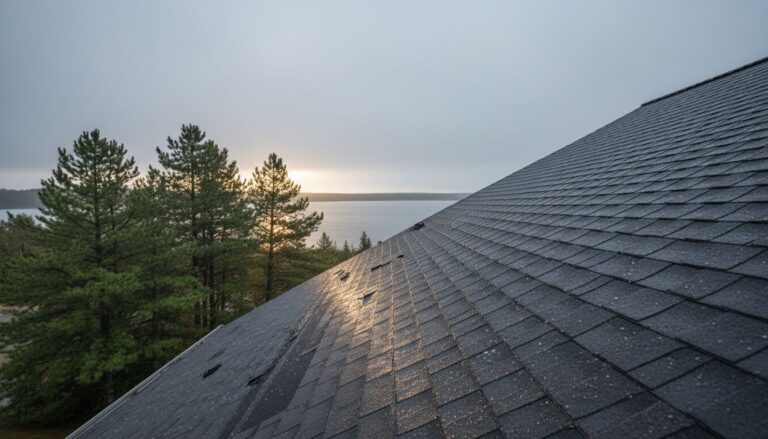
The first signs of roof hail damage are usually dents on metal roof parts, fresh shingle granules in gutters, and bruised or pitted asphalt shingles. You may also see small cracks, lifted edges, or new attic moisture. These clues often appear before a leak, which is why early inspection matters.
When This Applies
Check soon after a hailstorm, or when nearby surfaces show impact
This advice fits homeowners, landlords, and business owners who also own a house or rental home with asphalt shingles. It matters most after a storm with visible hail, strong wind, or fresh impact marks on cars, decks, window screens, or mailbox tops.
On many homes, the first damage shows up on soft metal before shingles. Gutters, flashing, roof vents, and downspouts dent easily. Those small dings act like a preview of what happened on the roof surface. For side-by-side examples, these key visual clues of hail damage can help you tell recent impact from old wear.
This applies best to asphalt shingle roofs, which cover most homes. On metal, tile, or wood roofs, the first clues look different. Also, impact-resistant shingles can hide damage better, so fewer visible marks don’t always mean the roof escaped the storm.
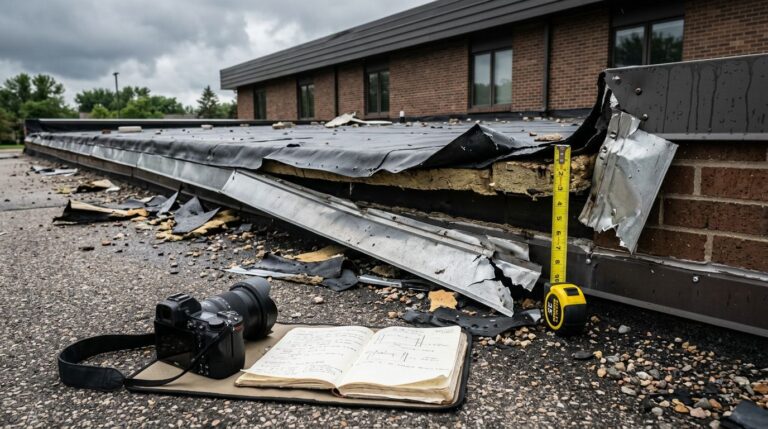
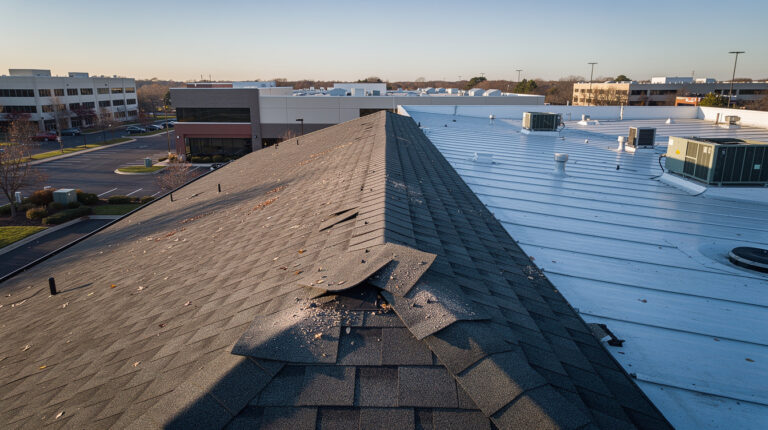
If you also manage other properties, don’t use the same checklist you would use for commercial flat roof repair. A shingle roof bruises and sheds granules. A low-slope membrane fails in other ways. That’s also why the call for commercial roof replacement follows a different inspection path, and why a house may show storm hits long before a commercial roof needs repair.
When it may not be hail damage
Not every rough spot came from hail. Old shingles can blister from heat. Wind can crease tabs, and tree branches can scrape one area and mimic impact marks. Granule loss near the end of a roof’s life can also happen without a storm.
Older roofs can fool you
Age-related wear usually looks more even across the roof. Hail damage looks random, with scattered hits and sharper edges. When marks cluster on one roof slope, especially the side that faced the storm, hail becomes more likely.
Fresh dents on metal plus fresh granules in gutters usually point to recent storm damage, not routine aging.
Step-by-Step
1. Inspect metal roof parts from the ground first
Start with gutters, downspouts, flashing, vents, and metal chimney caps. Hail often leaves round dents or chipped paint there. Because those surfaces are easier to read than shingles, they give you an early clue without walking the roof.
Also check window screens, AC fins, and soft metal trim. When those show fresh impacts, the roof deserves a closer look.
Skip a rooftop walk after a storm. Use binoculars, a phone zoom, or a ladder only if conditions are dry and safe.
2. Check gutters and downspouts for fresh granules
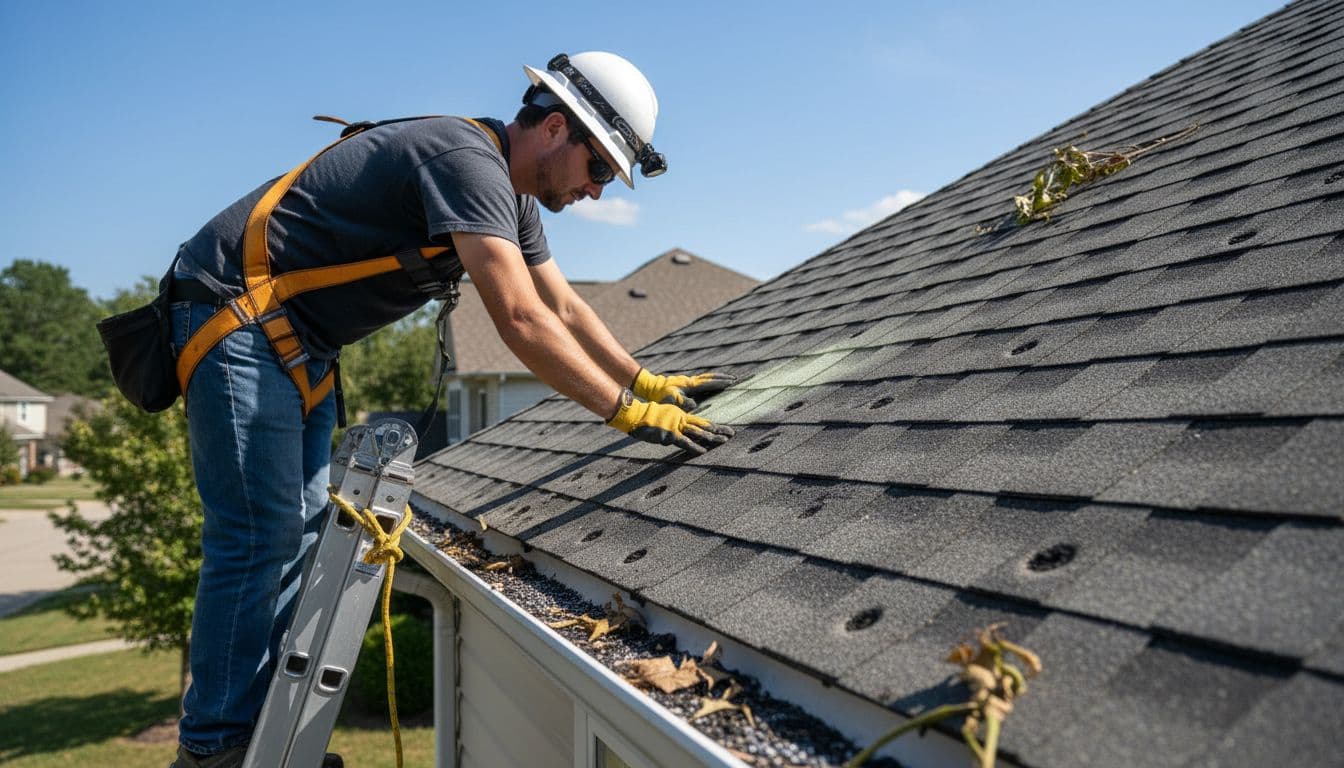
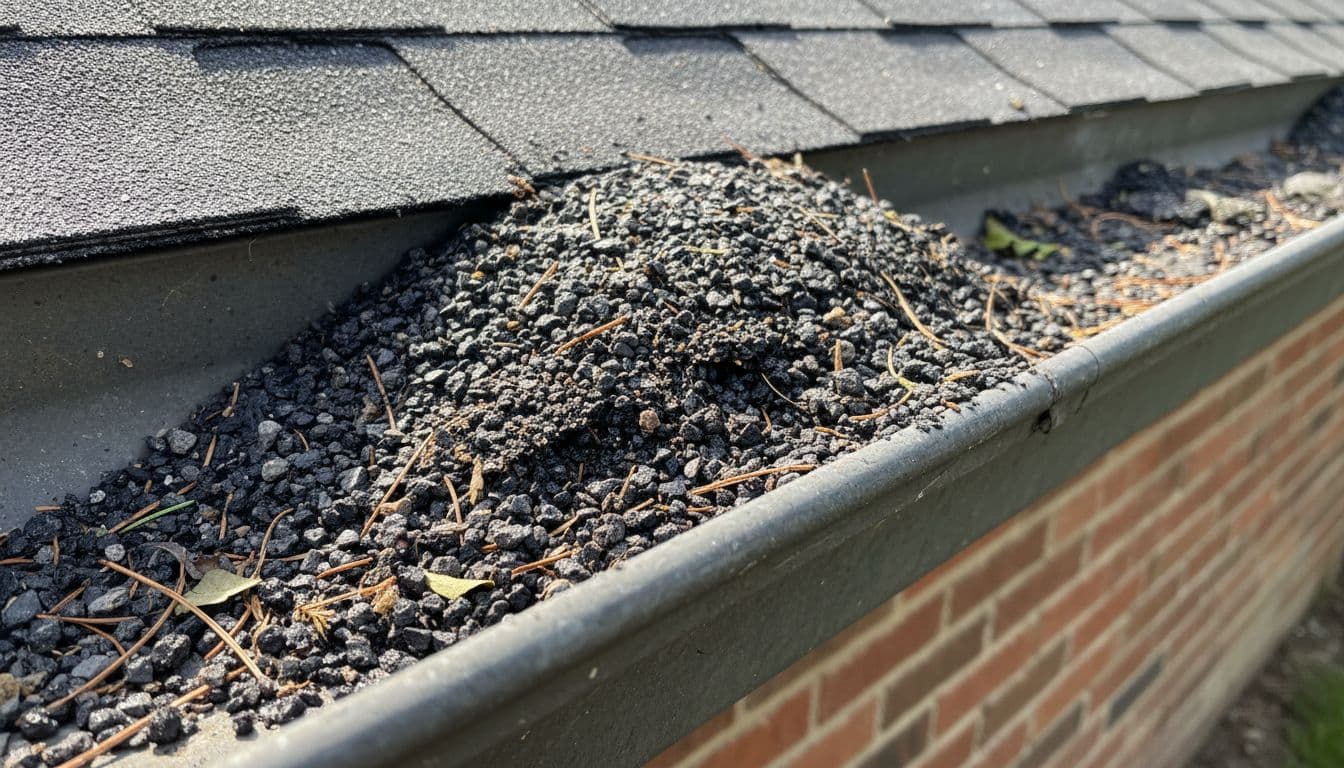
Asphalt shingles carry mineral granules like armor. When hail knocks them loose, they collect in gutters and at downspout exits. A small amount is normal on an older roof, but a sudden pile after one storm is a red flag.
Look for dark, sand-like grit mixed with tiny shingle fragments. That mix often shows the roof took fresh impact, not slow aging.
3. Look for bruised or pitted shingles
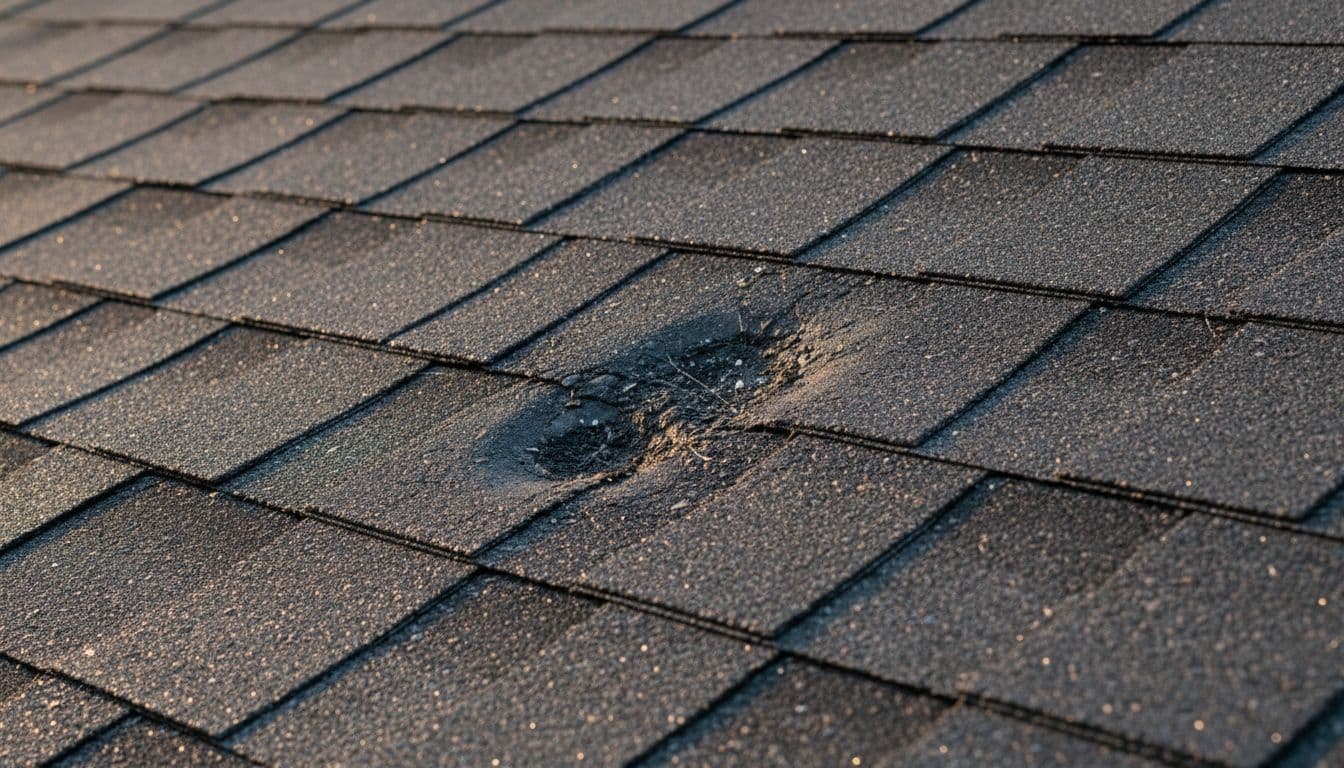
From a safe angle, scan for dark spots, small circular hits, or places where the shingle surface looks shiny or raw. Many people describe them as tiny hammer taps. On asphalt shingles, the damaged area may feel soft, like a bruise under skin, although a roofer should confirm that up close.
What a bruise usually looks like
Recent hail hits appear random, not in straight lines. The marks may also expose the black mat under the granules. If you need a visual reference, this expert guide to spotting roof hail damage shows the impact patterns inspectors usually document.
4. Check inside the attic and top-floor ceilings
Hail doesn’t always punch an instant hole. Still, it can weaken shingles enough to let water in later. Look for damp insulation, fresh stains, musty odor, or tiny drips near vents and valleys.
Water may track along rafters, so the wet spot indoors may not sit directly under the damaged shingle. That’s why interior clues matter even when the roof looks mostly normal from the yard.
5. Photograph everything and book a roofing inspection
Take wide photos, then close-ups. Save the storm date, weather alerts, and pictures of dented metal or granules. Good records help separate fresh hail damage from old wear, and they also help if you need insurance support later.
Ask for marked photos of each roof slope, not a verbal opinion only. Clear documentation gives you a stronger repair plan.
Get help faster if leaks or broken accessories appear
Move quickly when you see cracked skylights, torn vents, ceiling stains, or branches on the roof. Those signs may mean the damage is already beyond a simple patch.
FAQs after a hailstorm
Can hail damage show up days later?
Yes. A roof can look fine at first, then leak after the next rain. That’s one reason hail damage is often missed until leaks appear.
If my gutters are dented, does that mean the roof is damaged too?
Not always, but it raises the odds. Gutters are softer than shingles, so denting there is a strong warning sign that the roof likely took hits as well.
Should I climb onto the roof myself?
Usually, no. Wet shingles, loose granules, and hidden soft spots make post-storm roofs risky. A ground check and attic check are safer first steps.
Will insurance cover minor roof hail damage?
Coverage depends on your policy and on proof that the storm caused functional damage. This homeowner guide to identifying hail damage explains why timing and documentation matter.
Can new shingles still get hail damage?
Yes. Newer roofs resist damage better, but large hail can still bruise shingles, dent metal, and strip granules. Impact-resistant shingles reduce risk, yet they don’t make a roof hail-proof.
The Bottom Line on Early Hail Damage
Small marks are the warning, not the whole problem
The earliest signs are usually simple, dents on metal, fresh granules, and bruised shingles. Catching those marks early gives you the best chance to fix a small problem before water reaches the roof deck or attic.
After the next hailstorm, don’t wait for a ceiling stain. Get the roof checked while the evidence is still easy to see.
Need a roof inspection in Saint Paul or the Twin Cities? Call Sellers Roofing Company at +1-651-703-2336 or schedule a free estimate. We are a black-owned, NMSDC-certified MBE roofing contractor with 9+ years experience.