Last updated: 2026-08-01 by Ted Sellers, Owner
Commercial EPDM seam leak detection works by combining close seam inspection with moisture mapping tools that can “see” where water traveled under the membrane. Pros look for edge lift, tiny voids in seam tape, fishmouths, and punctures near lap lines, then confirm the source using infrared scans, electronic leak detection, or smoke testing. The goal is to pinpoint the breach, not just the drip inside.
When This Applies
The situations where EPDM seams are the likely culprit
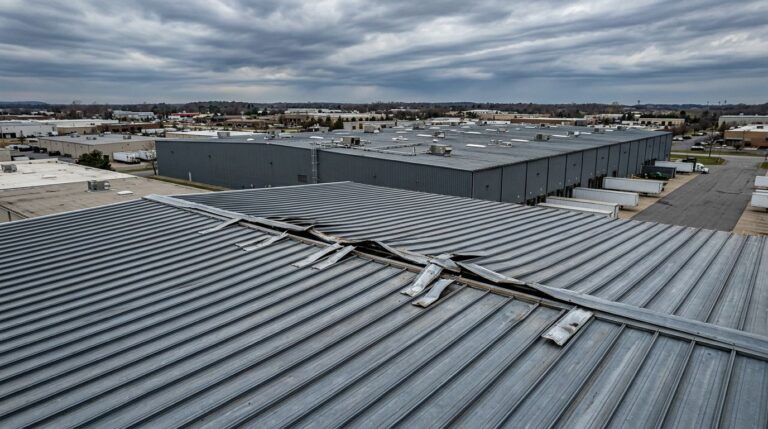
This applies to commercial business owners with an EPDM roof who see leaks that come and go, especially after heavy rain, snowmelt, or a hail event. Seams are the roof’s “zippers.” When a zipper tooth bends, the opening can be tiny, but water still gets in.
Common clues that point to seams include:
- Water staining that appears far from the roof edge or drains (water can travel sideways).
- Leaks that show up after freeze-thaw cycles, then disappear during dry spells.
- Older seam areas that have seen frequent foot traffic near HVAC units.
- A roof history of patchwork, where seam transitions were re-worked.
A seam investigation also makes sense when someone says your commercial roof needs repair, but nobody can agree on where the water enters. On low-slope roofs, guessing wastes money because the interior leak often shows up well away from the breach.
When it’s probably not an EPDM seam leak
Seams might not be the primary suspect if the leak lines up with a curb, skylight, wall flashing, or a drain bowl. In those cases, seam checks still matter, but penetrations and terminations usually come first.
Key edge cases to keep in mind
EPDM seam leak detection can also mislead if water enters at one spot, then rides along the deck flutes or saturated insulation before it drops. That’s why good contractors validate findings with more than one method.
How EPDM Seam Leak Detection Really Works (and Why Seams Fail)
What’s happening at an EPDM seam
An EPDM field seam depends on clean surfaces, correct primer, and proper pressure to bond seam tape (or adhesive on older systems). Over time, stress adds up: heat, cold, movement, and rooftop traffic. Hail can worsen things by bruising the membrane near the lap and starting micro-tears at the seam edge.
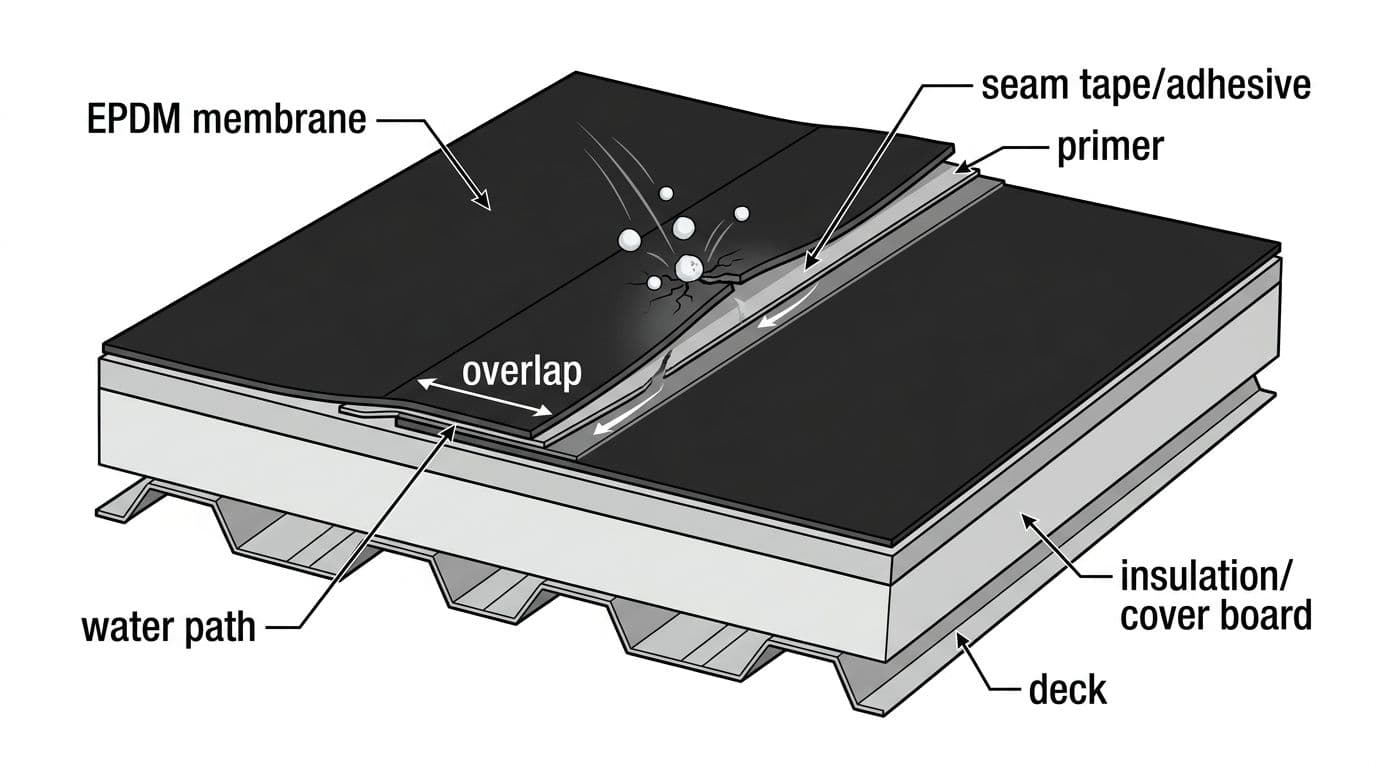
From a leak detection standpoint, the key detail is this: water rarely drops straight down. It can slip into a seam void, move along the tape line, and soak insulation before you ever see a ceiling stain. That’s why the best process treats seams like a pathway problem, not a single point problem.
For a deeper look at how seams should be installed and repaired, see technical details on EPDM seams.
How pros confirm the seam is the source
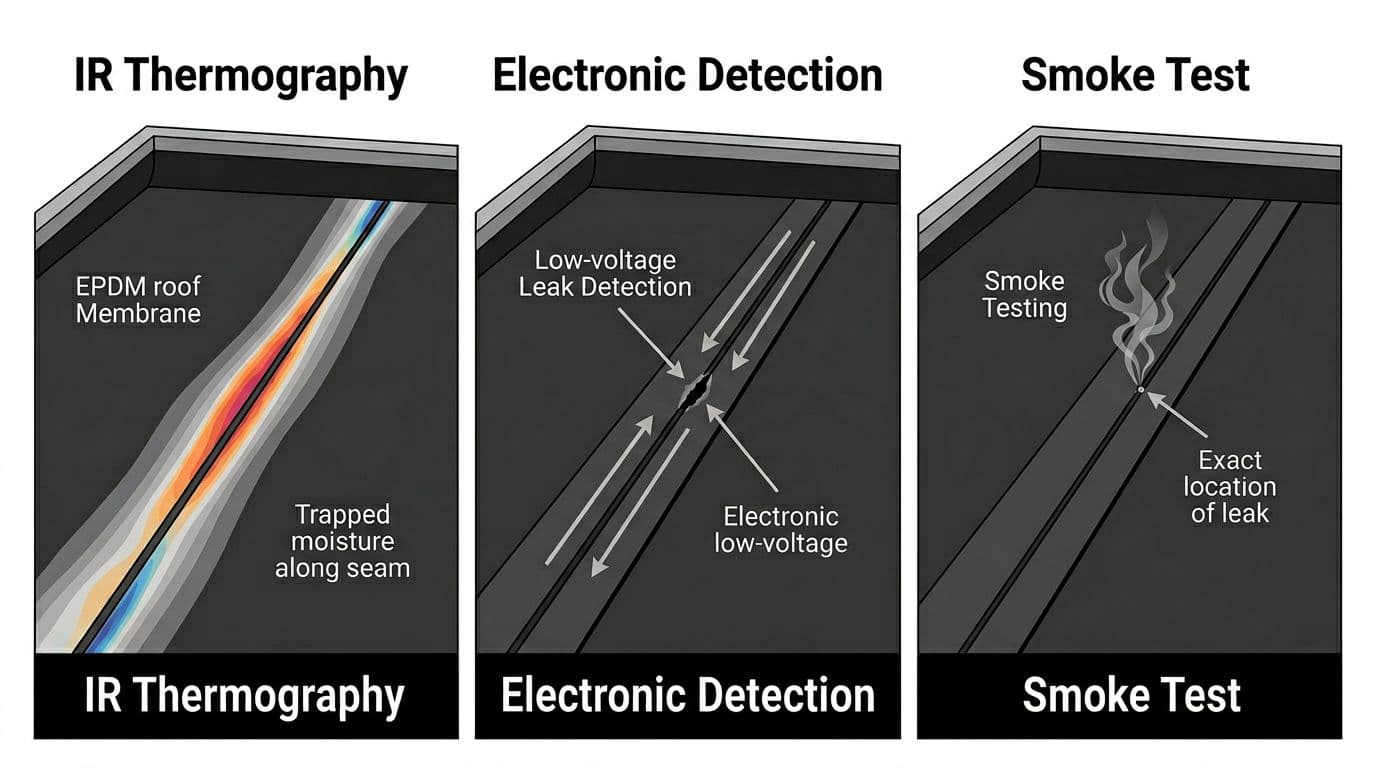
A qualified team usually layers methods, starting simple and getting more precise:
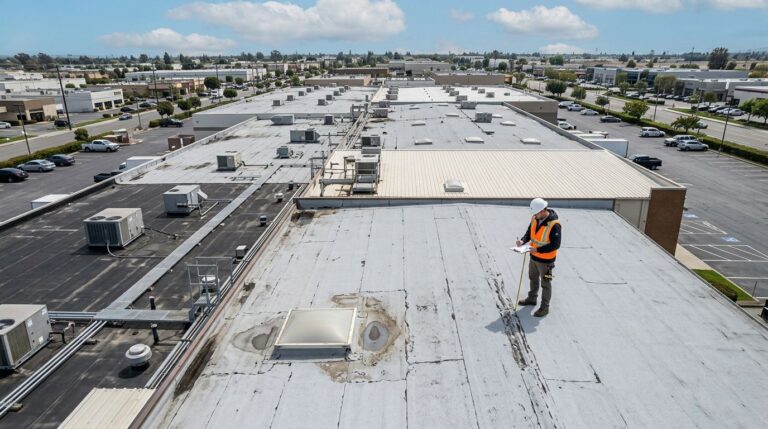
- Visual seam checks: looking for bridging, wrinkles, gaps, edge curl, and patch edges that are lifting.
- Moisture mapping: scanning broad areas so you don’t chase the wrong seam.
- Pinpoint testing: using electronic testing or smoke to locate the exact breach.
A reliable diagnosis finds the entry point on the roof surface, then explains the water’s path to the interior. If a report can’t do both, it’s incomplete.
If you want to see how a full commercial process is typically structured, compare it with a local commercial roof leak detection service approach.
Step-by-Step
A practical workflow contractors use on EPDM seam leaks
- Start with interior clues, then stop guessing. Document where water shows inside, when it appears, and whether HVAC is running. This helps narrow conditions, not locations.
- Walk the roof and map seam risk zones. Techs focus on field seams near units, walk paths, ponding areas, and transitions, because those zones take the most abuse.
- Probe and mark suspect seam details. They check for fishmouths, edge lift, tape voids, and failed lap sealant. They also look for punctures just off the seam line.
- Scan for trapped moisture to avoid false targets. Infrared thermography (when conditions allow) helps outline wet insulation patterns so repairs hit the right area.
- Use electronic leak detection to pinpoint the breach. Low-voltage testing can trace current flow to the exact opening, even if it’s tiny, which is why it’s so useful on large roofs.
- Confirm with smoke testing when the seam is stubborn. Smoke pushed under the membrane can escape at the defect, which makes hard-to-see seam gaps obvious.
- Validate the repair scope, not just the hole. A single seam breach can mean wider tape failure, wet insulation, or multiple entry points, especially after storms.
- Choose the right fix: repair, section replacement, or full replacement. Some leaks call for commercial flat roof repair at the seam only. Others need wet insulation cut-out and re-build. If seams fail across the field, commercial roof replacement may be the better long-term move.
To understand typical repair materials and seam tape options once the breach is found, this overview of EPDM seam repair methods is a helpful reference.
FAQ
Can an EPDM seam leak show up 30 feet away inside?
Yes. Water can travel along the membrane surface, through insulation joints, or along metal deck flutes. As a result, the stain inside often marks the low point, not the entry point.
When distance is most likely
Long travel paths are common on very flat roofs with ponding, and on roofs with saturated insulation that acts like a sponge.
Will caulking the seam stop the leak?
Sometimes, but it’s a gamble. If seam tape has voids or the overlap is lifting, surface sealant may fail quickly because water can still migrate under the lap. Proper seam repairs usually involve cleaning, priming, and re-bonding with the right EPDM-compatible materials.
Does infrared always find wet insulation under EPDM?
No. Infrared depends on weather and roof conditions. Recent rain, heavy wind, or uneven sun can blur results. That’s why many teams pair IR with electronic testing or core samples.
Can electronic leak detection work if the roof is wet?
Often, yes, and light surface moisture can even help some low-voltage methods. However, standing water, snow, or frozen conditions can limit accuracy and safety. A good contractor will explain the test setup and any limits before starting.
What happens if seam leaks keep returning after repairs?
Recurring leaks usually mean one of three things: the true entry point wasn’t found, multiple seams have aged out, or wet insulation was left in place. At that point, a broader evaluation of the roof system and repair history is smarter than repeating small patches.
For owners weighing repair versus replacement, it can help to review the scope of services offered by a Saint Paul commercial roofing team.
Leaks from EPDM seams can feel like a magic trick, here one day and gone the next. The fix starts when testing confirms the entry point and the water path. Once you have that, you can plan a targeted repair, a larger section fix, or a commercial roof replacement based on facts, not hunches.
Need a roof inspection in Saint Paul or the Twin Cities? Call Sellers Roofing Company at +1-651-703-2336 or schedule a free estimate. We are a black-owned, NMSDC-certified MBE roofing contractor with 9+ years experience.