Last updated: 2026-08-18 by Ted Sellers, Owner
Most homes follow International Residential Code R806 style rules for attic ventilation to the outdoors, size vents using the 1/150 rule (or 1/300 when conditions allow), keep intake and exhaust balanced, and protect openings with screens and weather protection.
I work on Minnesota roofs, and our cold winters make moisture control and ice dam prevention the big reasons homeowners should care. In other words, the roof ventilation rules from building codes are less about comfort and more about proper ventilation keeping the roof system dry, stable, and long-lasting.
When someone asks, “What are the rules for roof ventilation”, I answer it the same way on every inspection: start with code ratios, then confirm the attic can actually move air from soffit intake to high exhaust. If that air path is blocked, the math on paper won’t matter.
Good venting also supports what I call the “What are the 5 functional requirements of a roof” checklist, it helps the roof shed water, resist moisture, manage heat, handle loads, and stay durable over time.
In this post, I’ll give you a simple step-by-step method to figure out what your home needs, using measurements you can verify.
- Code ratios (NFVA), when 1/150 applies, when 1/300 is allowed
- Balanced airflow, matching low intake to high exhaust
- Clear ventilation paths, baffles, insulation clearance, and blocked soffits
- Vent type details, including how do ridge vents work and do ridge vents leak concerns
- Cold-climate pitfalls, condensation control and ice dam risk
What the roof ventilation rules are trying to prevent in a real home
When I explain what are the rules for roof ventilation to a homeowner, I don’t start with math. I start with the problems those rules are meant to stop. In a real house, roof ventilation is a pressure and moisture system, not just a set of vents on a plan.
In Minnesota, the stakes are higher because winter air is cold and dry, while indoor air is warm and wet. That difference drives condensation, frost, mold, and ice dams. In summer, trapped attic heat still shortens shingle life and makes top floors miserable. Roof ventilation supports What are the 5 functional requirements of a roof in plain terms: it helps the roof stay dry, control heat, and last longer.
Moisture control comes first, because warm air leaks up all winter
The biggest thing roof ventilation rules try to prevent is moisture build-up in attics. The driver is the stack effect. Warm air inside the house rises, and it pushes into the attic space through every ceiling crack. Think of your home like a warm chimney. The attic becomes the top of the chimney if you don’t air seal.
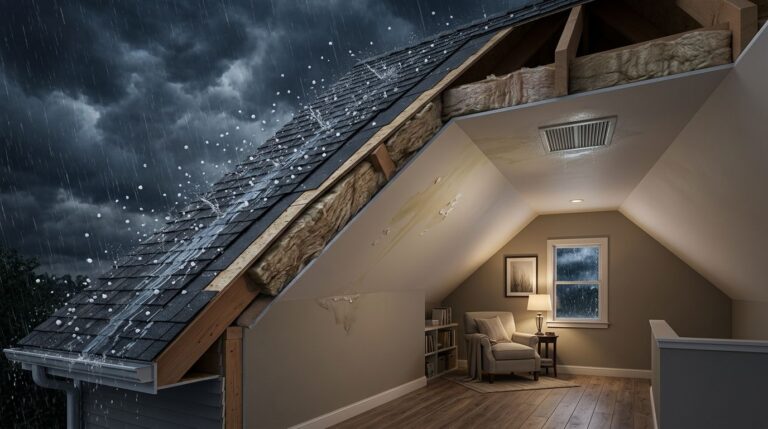
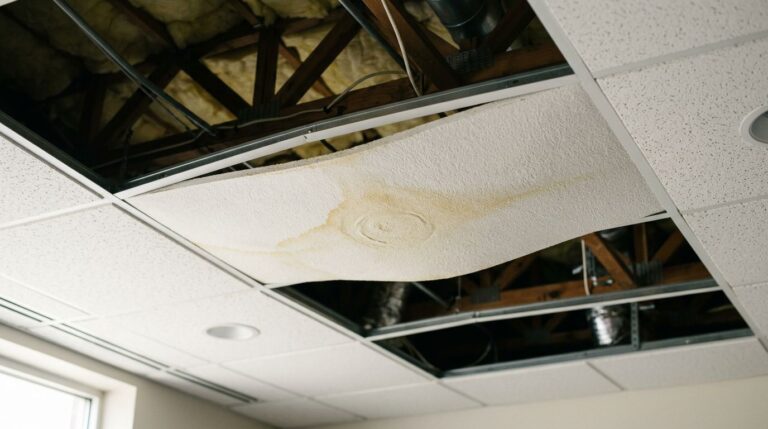
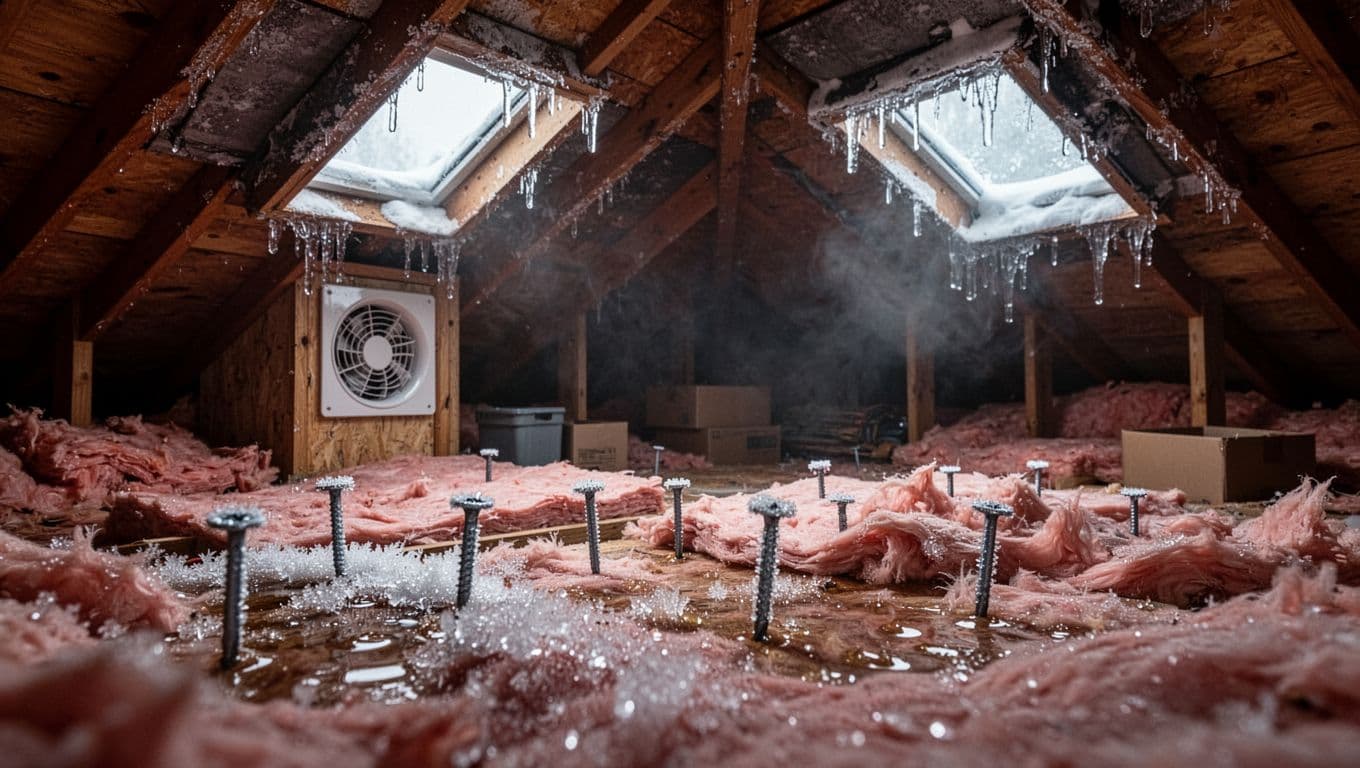
Once that warm, humid air hits the cold roof deck, it cools fast. Cold air holds less moisture, so the water vapor turns into liquid water or frost. That is attic condensation. Over time, it can rot roof sheathing, rust fasteners, and feed mold. Venting helps flush out some moisture, but it can’t overcome steady air leakage from below.
I see this pattern constantly on Minnesota inspections. On a cold morning, I often find frost on the roof nails and damp, matted insulation near bad fan duct runs. The worst spots are around bath fans that dump into the attic or flexible ducts that sag and leak. When the sun warms the roof, that frost melts and rains back down onto the insulation.
Gotcha: Roof ventilation is not a substitute for air sealing. If indoor air keeps leaking up, the attic will stay wet no matter how many vents you add.
If you want the building science version of this, I like the practical guidance from the DOE Building America team on attic air sealing and insulating for ice dam prevention. The theme matches what I see in the field: stop the leak path first, then let ventilation do its job.
Before you blame the vents, I check for indoor moisture sources that are accidentally feeding the attic:
- Bath fans: Duct ends in the attic, disconnected elbows, or a crushed flex duct.
- Kitchen vents: Recirculating hoods mistaken for vented hoods, or leaky duct joints.
- Dryer mistakes: A dryer vent routed into the attic, or a disconnected dryer duct in a ceiling chase.
Heat buildup in summer still matters, even in Minnesota
Winter problems get the attention here, but summer attic heat still matters. A poorly vented attic can run far hotter than the outdoor air. That spikes the attic temperature and loads the roof deck and the shingles from underneath, hour after hour.
In practical terms, trapped attic heat tends to cause three headaches:
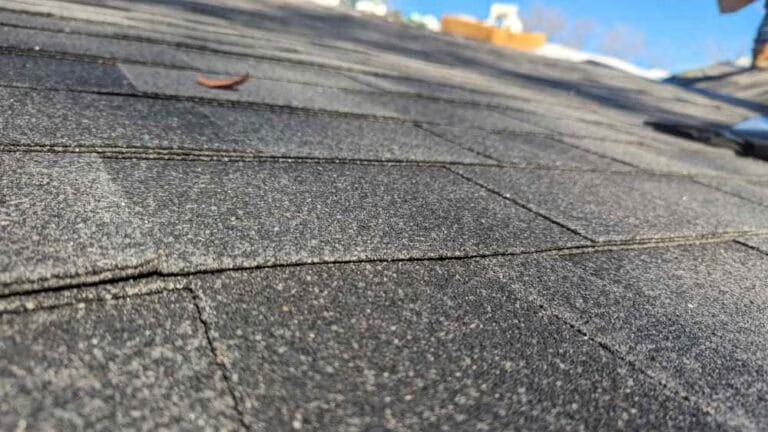
First, it bakes the shingles. Asphalt shingles age faster when they run hot. You might not see it right away, but the roof often looks tired earlier than it should.
Second, it pushes heat into the house. Even with decent insulation, heat radiates down into upper rooms. As a result, bedrooms over the garage and finished second floors feel stuffy in the afternoon.
Third, it can increase cooling costs and hurt energy efficiency because the HVAC has to fight that extra load. In many homes, the ductwork runs in the attic too. Hot attic air around ducts makes the system less efficient.
I keep this simple when I walk attics: roof ventilation works best when air can enter low (usually soffits) and exit high (often at the ridge). If insulation blocks the soffits, or if the ridge vent is short, airflow slows down. The attic holds heat longer, and the whole roof system takes a beating.
Ice dams: why ventilation is only part of the fix
Ice dams are a roof system failure, not just an edge-of-roof problem. Ventilation helps, but it is only one side of the triangle I look for: air leaks + insulation gaps + poor venting.
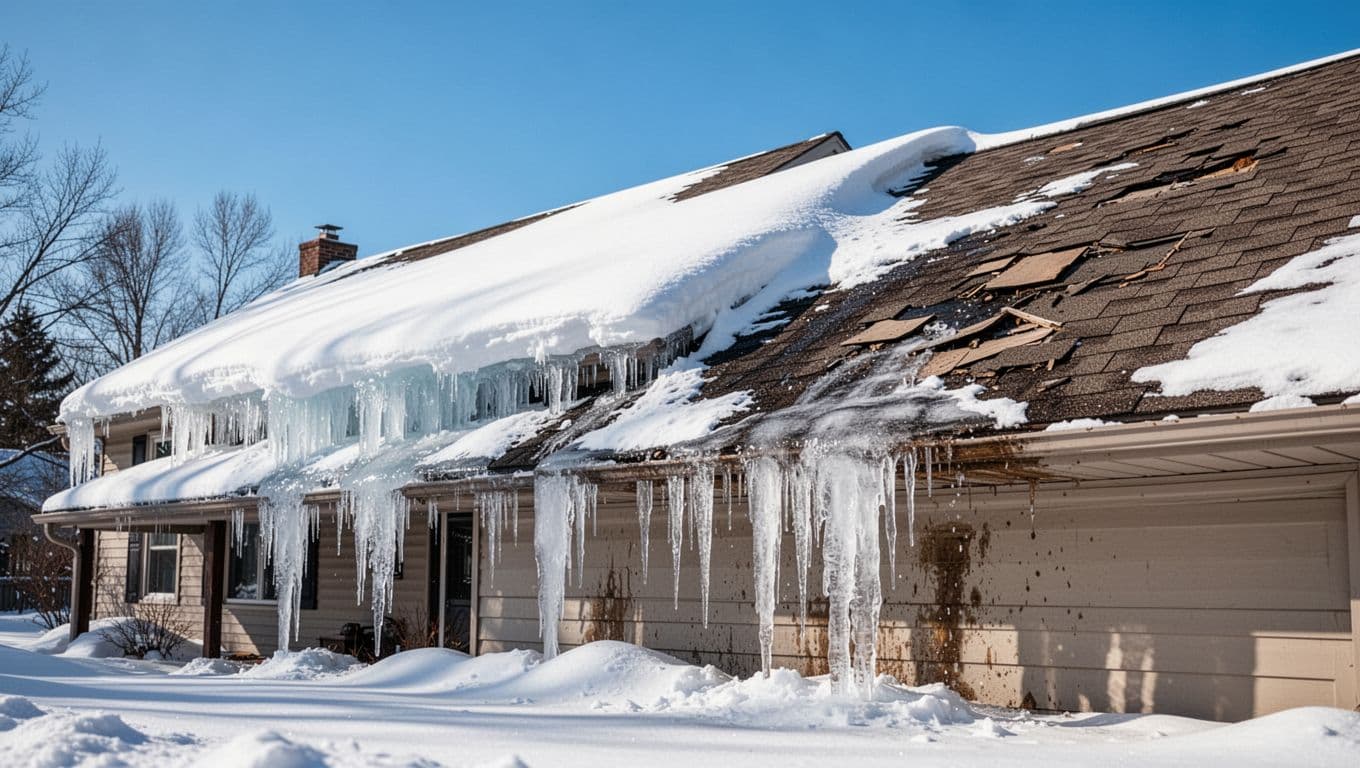
Here is what happens. Heat escapes into the attic through bypasses (can lights, attic hatches, open wall tops). Next, insulation gaps let that heat reach the roof deck. Then, if the attic can’t flush heat out, the roof deck warms and melts the snow above it. Meltwater runs down to the cold eaves, refreezes, and builds a dam. Water backs up under shingles and finds a path into the house.
Yes, ventilation can help keep the roof deck colder. Still, air sealing and insulation usually do the heavy lifting because they reduce the heat source in the first place. The University of Minnesota Extension lays out the homeowner-facing basics well in its guide to dealing with and preventing ice dams.
From the ground, I tell homeowners to watch for a few early warning signs. You don’t need to climb a ladder to spot trouble:
- Thick icicles only along one section of eave (often over a bathroom or kitchen).
- A bare, melted strip of roof above the eaves while nearby areas stay snow-covered.
- Ice or water staining on fascia or soffit trim.
- Gutter ice that keeps reforming after you knock it down (a sign of steady meltwater).
The core code rules for roof ventilation most homes follow
When homeowners ask me, “What are the rules for roof ventilation”, I point to three fundamentals most codes build on. First, air has to move from the attic to outdoor air, not into another hidden cavity. Next, the vent area has to be sized using a clear ratio (and the ratio only works if you use net free area, not rough opening size). Finally, the path has to stay open, because blocked intake makes the best exhaust vent useless.
These rules also support What are the 5 functional requirements of a roof in a practical way. A roof that stays dry and manages heat lasts longer, sheds water better, and avoids seasonal damage.
Rule one: vent to the outdoors, not into the soffit cavity or wall
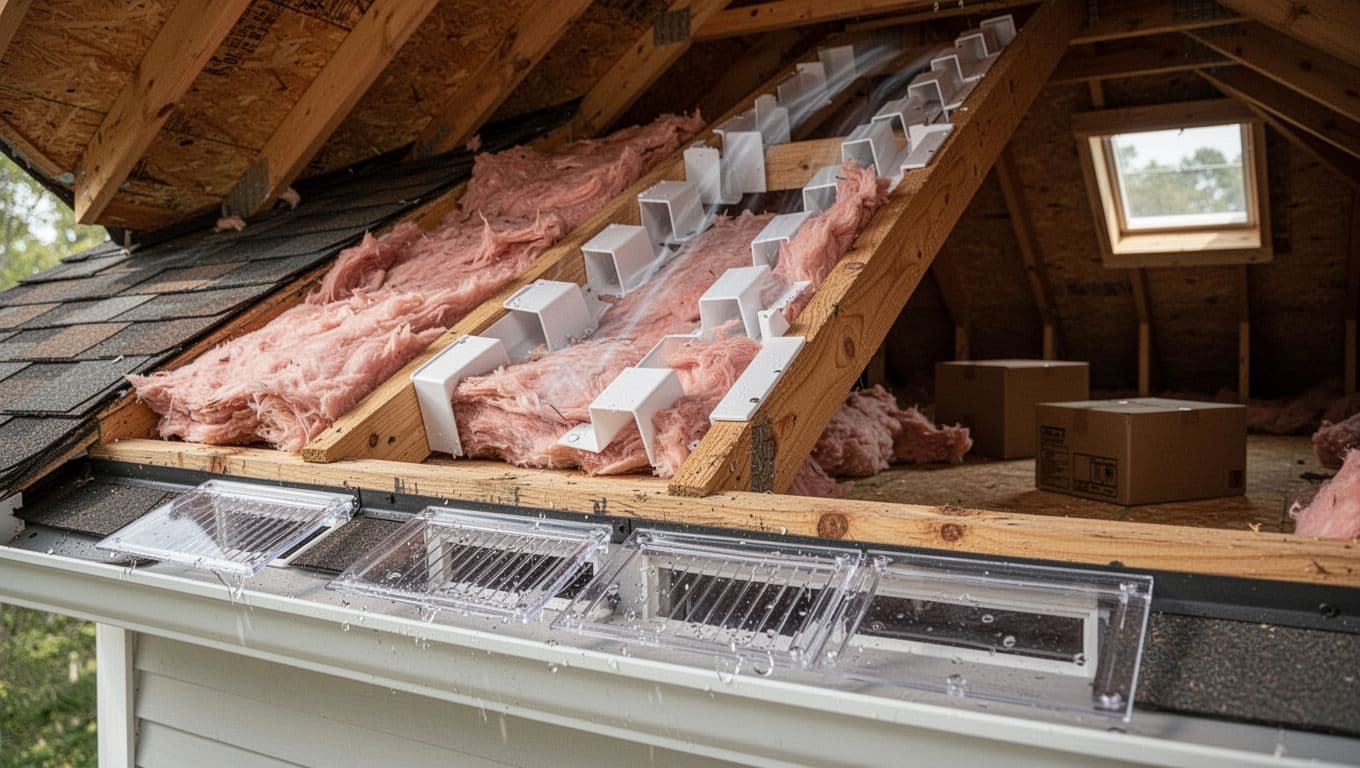
“Directly to outdoor air” means the vent opening actually connects to the outside, with a clear path for air to enter and exit. Intake vents should pull air from outside at the eaves, then feed rafter bays or the attic space. Exhaust vents should release that air to the outside at the ridge or near the top of the roof.
In practice, I treat it like a straw. If the straw ends inside the cup wall, you are not drinking anything. The same goes for roof ventilation. If a vent dumps into a soffit cavity, a wall cavity, or a blocked overhang, it is not doing the job.
Here are common installation mistakes I see on inspections, especially after insulation work:
- Blocked soffits because the soffit is solid wood, painted shut, or covered by debris.
- Insulation stuffed into the eaves, which seals off the intake right where it matters most.
- “Vents” that discharge into the roof overhang instead of outside, so air just swirls in a dead zone.
- Improper fan terminations that add moisture to the attic air that the vents then struggle to remove.
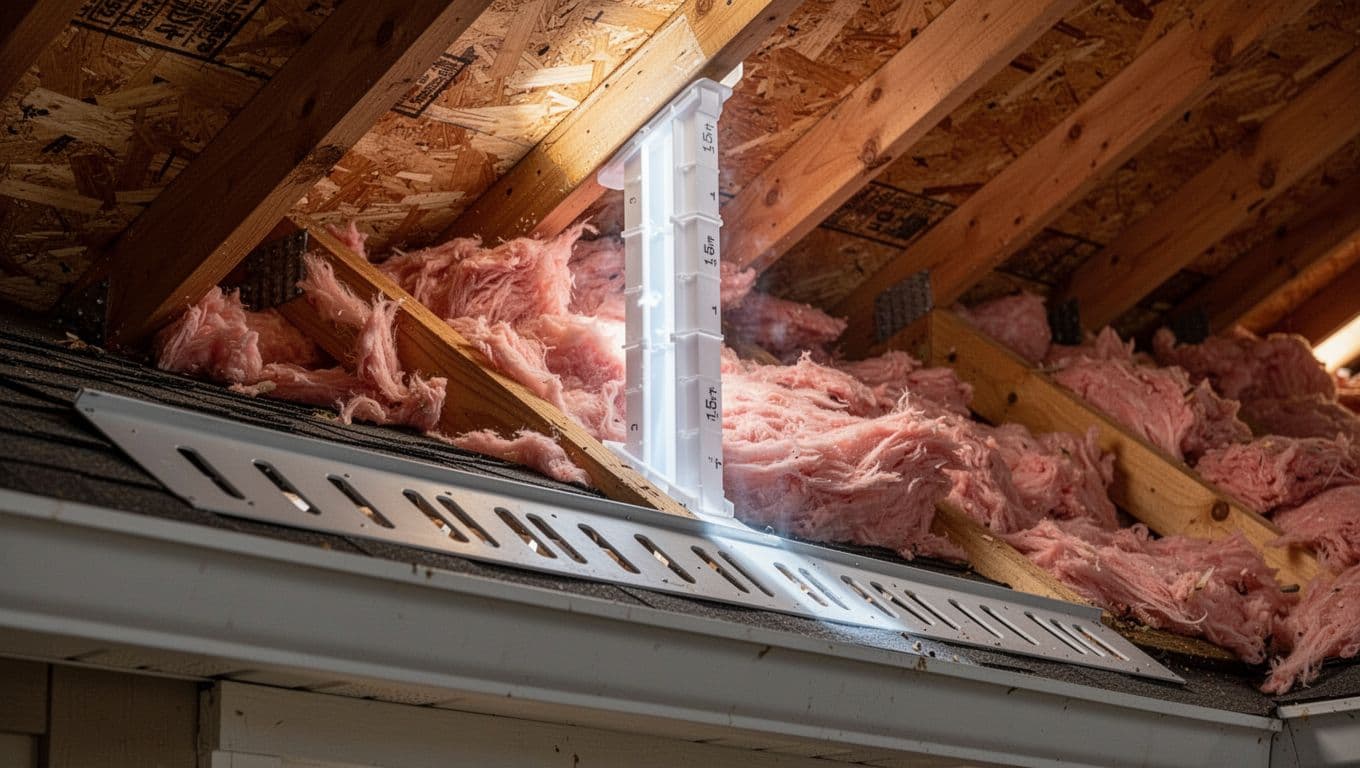
The simple fix is usually a baffle (also called a rafter vent). I install or recommend baffles to hold back insulation and preserve a 1 inch to 2 inch air channel from the soffit up the roof deck. Once that channel stays open, roof ventilation can actually move air instead of pressing against a plug of fiberglass.
If the intake air cannot reach the attic, adding more exhaust at the ridge rarely helps.
For a solid overview of how these pieces work together, I like IIBEC’s attic ventilation basics, because it frames ventilation as a system, not a single vent type.
Rule two: size it using 1/150, or 1/300 when you qualify
The sizing rules most homeowners run into come from International Residential Code guidance. The baseline is 1/150, meaning you need 1 square foot of net free vent area for every 150 square feet of attic floor. If you qualify for an exception, you can use 1/300 ratio, which cuts the required vent area in half.
Plain English: the larger the attic, the more open vent area you need to move enough air.
Here’s the math I use on site for a 1,200 square foot attic.
- Start with attic floor area: 1,200 sq ft.
- Pick the ratio:
- 1/150:
1,200 ÷ 150 = 8sq ft of total net free ventilating area - 1/300:
1,200 ÷ 300 = 4sq ft of total net free area
- 1/150:
- Convert square feet to square inches (because vent products list net free area in square inches):
- 1 sq ft = 144 sq in
- 1/150 total net free ventilating area:
8 × 144 = 1,152sq in - 1/300 ratio total net free area:
4 × 144 = 576sq in
- Split between intake and exhaust: I target a balanced split, so the attic can pull air in low and push it out high.
If you are trying to qualify for the 1/300 ratio, stay careful. In many cases, it assumes two things are true:
- You have a vapor retarder on the warm-in-winter side of the ceiling (common language you will see tied to Class I or II vapor retarders in colder climates).
- You have smart vent distribution, meaning you do not place all the vent area in one spot. In general, it needs low intake at eaves and high exhaust at the roof peak, with a reasonably balanced share at each location.
Because local code adoption varies, I always confirm ratio rules with the local building department. If you want to see how some cities publish this guidance for homeowners and contractors, this City of Hastings roof ventilation PDF shows the same core approach.
Rule three: understand net free area (NFA) so your math is real
This is where roof ventilation calculations often go off the rails. Building codes talk in terms of net free ventilating area, which is the open area air can actually pass through after you subtract for screens, louvers, and vent design. A vent might look big, yet the working opening can be much smaller.
I explain it like a coffee filter. The filter can cover the whole basket, but the holes control the flow. With vents, the screen and baffle geometry are the filter.
You can usually find NFA in three places:
- On the box label (common for off-the-shelf vents)
- On the manufacturer spec sheet (best source)
- In a product listing from the supplier (verify it matches the model)
To help you sanity check your numbers, here are typical ranges I see in the field. These are not universal, so I still verify the actual product NFA.
- Soffit strip vents: often around 9 to 18 sq in per linear foot
- Round “can” vents (soffit or roof): commonly 30 to 60 sq in each
- Ridge vents: often around 12 to 18 sq in per linear foot
Once you use NFA, your 1/150 or 1/300 math becomes real. Without it, you can be under-vented by a lot, even when the roof looks like it has plenty of vents.
Placement rules that make the system actually work (intake low, exhaust high)
When homeowners ask me, “What are the rules for roof ventilation”, this is the part that decides whether the system performs or just looks good from the yard. The basic rule is simple: bring air in low and let it out high. That creates a path that can flush moisture and heat, which supports What are the 5 functional requirements of a roof by helping the roof stay dry, stable, and durable.
However, placement only works when air can actually travel. If intake is choked off, exhaust vents start fighting each other, and the attic becomes a dead zone.
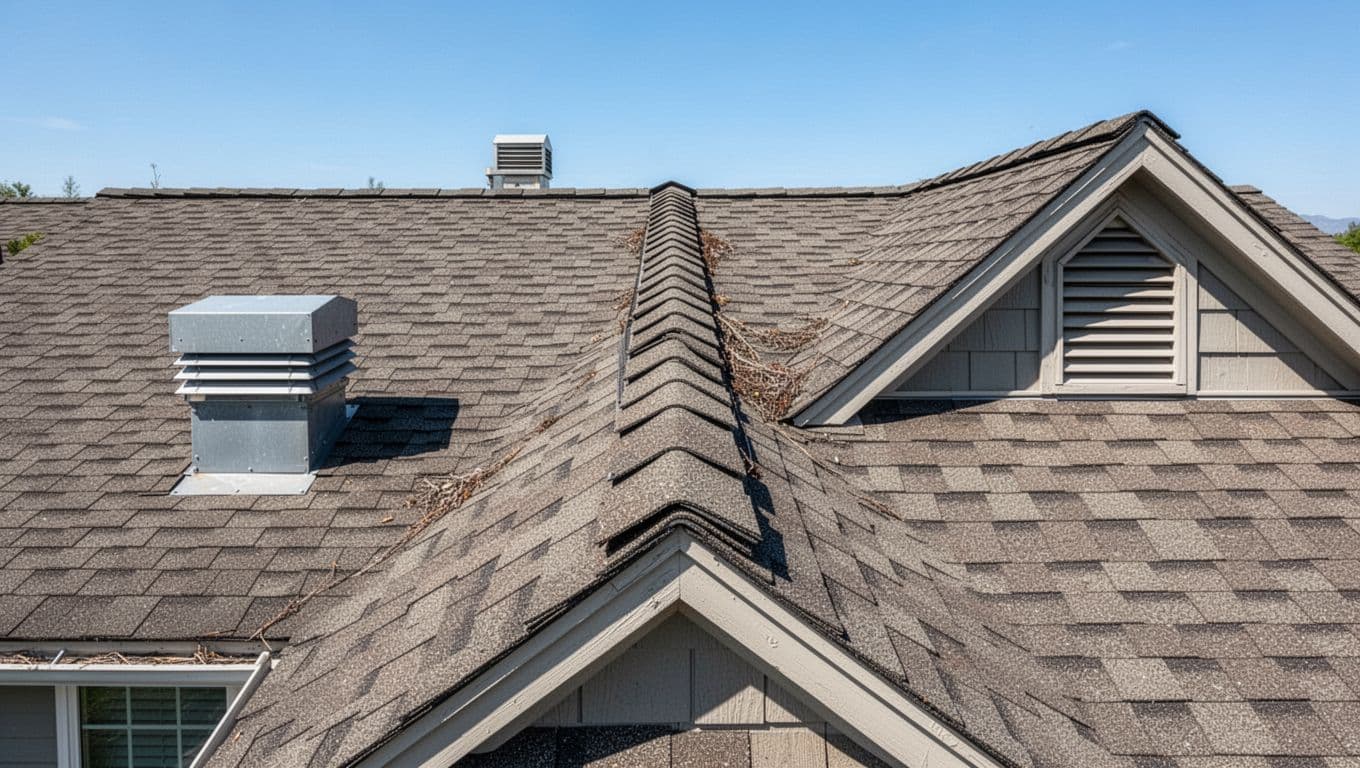
Intake vents: soffits and eaves do most of the heavy lifting
Intake ventilation is the engine of roof ventilation. In most vented attics, soffit vents and eave vents supply the makeup air that ridge vents or roof vents exhaust. Without enough intake ventilation, the attic still exhausts air, but it often pulls from the wrong places (like bathroom fan leaks, ceiling cracks, or even conditioned air from the house).
This is why intake area often needs to be larger than people expect. In the real world, intake openings get reduced over time:
- Insulation drifts and packs into the eaves.
- Painters clog perforated soffit vents with paint.
- Old wood soffits get their holes filled with debris, cobwebs, or trim work.
In other words, the NFA on paper is not always the NFA in the attic.
A proper setup keeps a clear air path from the soffit to the attic. I rely on baffles (rafter vents) for that. Baffles create a consistent channel, typically around 1 inch to 2 inches, between the insulation and the roof sheathing in the rafter spaces. That channel prevents wind-washing through insulation and stops insulation from plugging the intake.
Here is the check I use at the eaves:
- I confirm soffit holes are actually open to the outdoors, not into a blocked cavity.
- I look for baffles in every rafter bay that has insulation nearby.
- I verify insulation stays back from the roof deck so air can move freely.
If soffit intake is restricted, adding more exhaust up top usually makes the attic pull air from the house, not from outside.
Exhaust vents: ridge vents, roof vents, and gables (and the mixing rule)
Exhaust ventilation is the release valve, but it only works when intake feeds it. I think of exhaust choices in three buckets: ridge vents, box (roof) vents, and gable vents. Each can work, but they don’t behave the same way.
A ridge vent runs along the peak, which is the highest point where hot, moist air wants to collect. With continuous soffit intake, ridge vent exhaust usually gives the most even airflow across the underside of the roof deck. That matters in Minnesota because uniform airflow helps reduce cold-deck warm spots that feed condensation and ice dams.
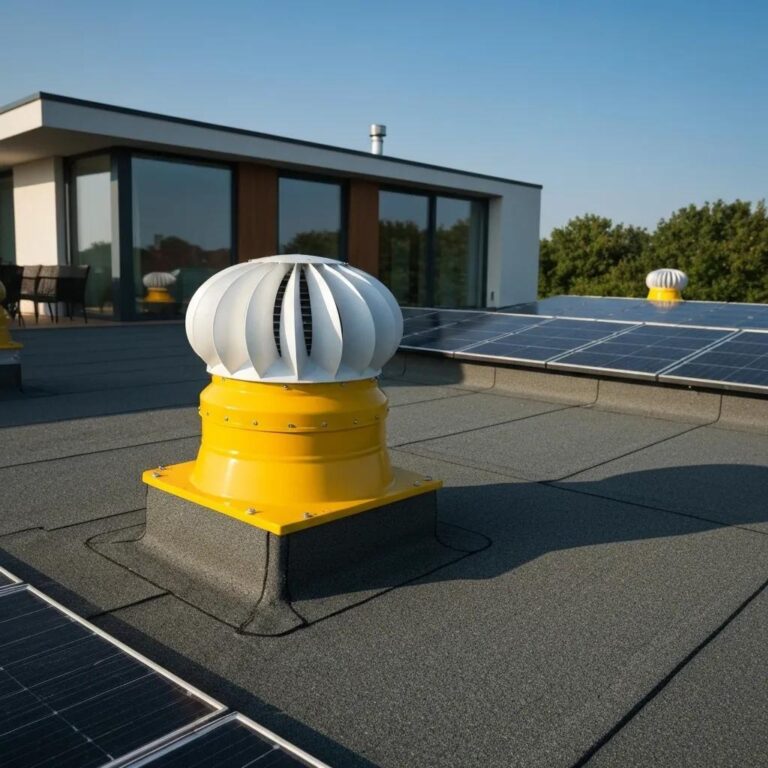
A static exhaust vent (box vent) exhausts from a single opening near the top of the roof. It can work well when a ridge vent is not practical, for example on short ridges, complex roof lines, or where the ridge is interrupted. Still, box vents tend to vent the area closest to them, so layout matters.
A gable vent exhausts through the wall at the end of the attic. Gable venting can help on some older homes, especially when the attic is open and the roof geometry is simple. The downside is that wind can dominate the airflow and create uneven patterns.
Now for the mixing rule. Mixing exhaust ventilation types can short-circuit airflow. The classic example is a ridge vent paired with open gable vents. In some houses, air enters a gable vent and exits the ridge vent (or the reverse), which means the airflow loops at the top of the attic instead of washing the roof deck from eave to ridge. As a result, the lower attic stays stagnant, and moisture issues can continue.
Here is the simple decision guide I follow:
- Ridge vent + soffit intake: My first choice when the roof has a decent ridge line and continuous soffits. It usually gives the cleanest low-to-high path.
- Box vents + soffit intake: A solid option when ridge venting is limited by roof design, or when the ridge is too short to provide enough NFA.
- Gable vents: Acceptable on some homes, especially when there is no good soffit access. I treat gables as supplemental unless the attic was designed around them.
For code-based context on balancing high and low vent placement, I also like the way IIBEC explains attic venting as a system, not a single part, in Attic Ventilation 101.
A simple way I split intake and exhaust when planning a vent layout
Once I have the total NFA target (using 1/150, or 1/300 when allowed), I plan the layout like a supply and return system. The goal is steady flow, not a bunch of random holes, creating a balanced ventilation system.
In most vented attics, I aim for about half intake and half exhaust, then I bias slightly toward intake because intake is easier to accidentally block.
Here is the method I use, step by step:
- Calculate total NFA required for the attic floor area (then convert to square inches).
- Split the total in half for a starting point, 50 percent intake and 50 percent exhaust.
- Shift toward more intake (about 55 percent intake, 45 percent exhaust) when soffits may get restricted, for example with deep blown insulation, narrow eaves, or older painted soffit panels.
- Choose vent products by listed NFA, not rough opening size, then verify the count or linear feet gets you to the numbers.
- Confirm the air path at the eaves with baffles and clearance, because roof ventilation only works when air can travel from low intake to high exhaust.
That planning approach keeps me aligned with what the rules are trying to accomplish. It also helps the roof meet the moisture and durability goals behind What are the 5 functional requirements of a roof, not just the math behind the code.
Cold-climate rules of thumb for Minnesota homes (and what to ask your inspector)
Minnesota winters punish small ventilation mistakes. When I answer “What are the rules for roof ventilation” in a cold-climate attic, I focus on three things first: a clear soffit-to-ridge air path, moisture sources that should never reach the attic, and whether the roof assembly is even meant to be vented.
This matters because roof ventilation supports What are the 5 functional requirements of a roof in a very practical way. It helps the roof shed water, resist moisture, manage heat, handle snow loads without hidden rot, and stay durable over decades.
Don’t let insulation block your soffits, use baffles in every bay
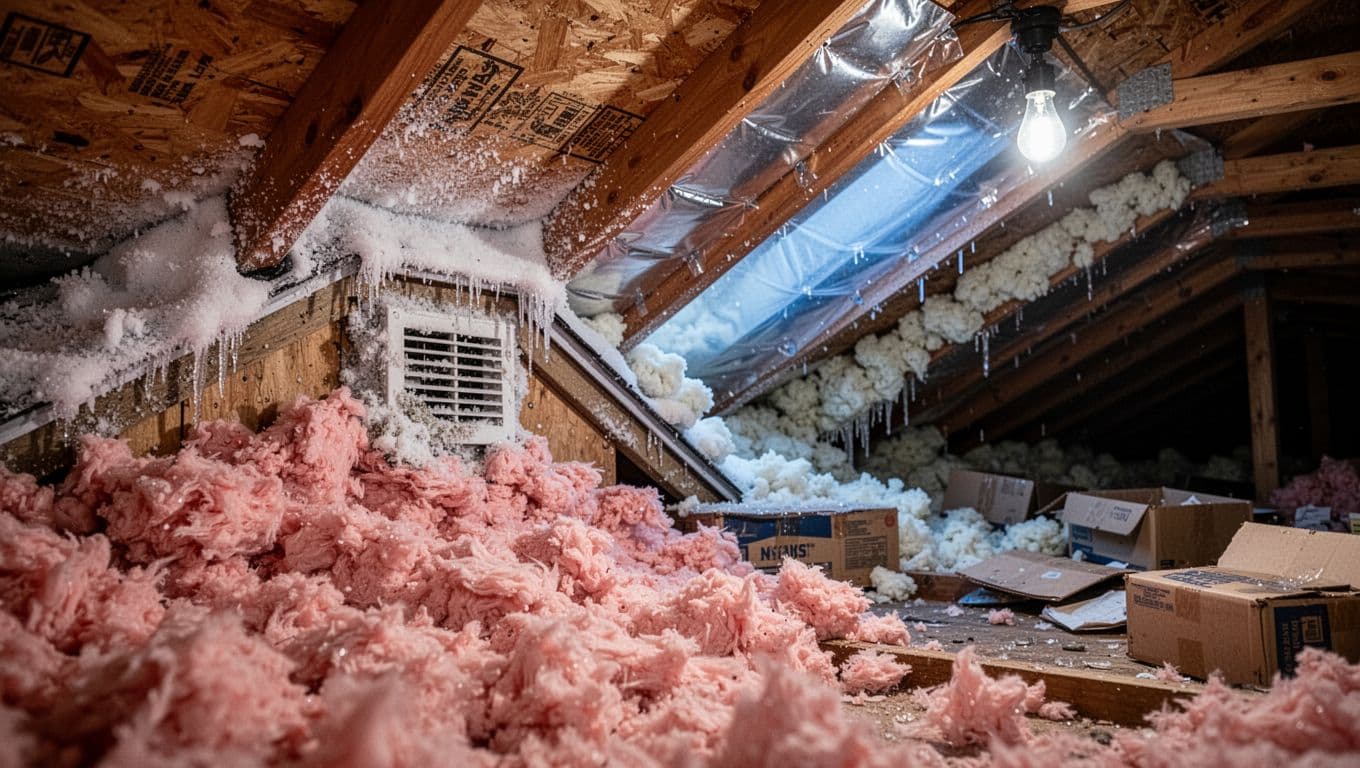
Soffits are the lungs of a vented attic. When insulation blocks them, the attic cannot pull in cold, dry air at the eaves. As a result, the attic air gets wet in winter, then that moisture freezes on nails and the roof deck. When temperatures rise, the frost melts and soaks insulation, stains ceilings, and can start mold growth.
Blocked intake also makes roof temperatures uneven. Some roof sections stay warmer because trapped heat cannot wash out. That uneven melt pattern is a quiet ice dam factory. You can have “enough” ridge vent on paper, yet still fail the real-world rule, the air path must be open.
In most Minnesota homes with loose-fill insulation, I expect insulation baffles in every insulated rafter bay at the eaves. They hold insulation back and keep a 1 inch to 2 inch air channel tight to the underside of the roof deck. That channel is the highway that makes the whole system work.
Here is the quick attic check I use so I do not miss the basics:
- Soffit openings are actually open: I look for daylight, airflow, or clean vent channels (not packed insulation).
- Baffles are installed and continuous: I confirm each bay has a chute that extends above the insulation depth.
- No wind-washing at the eaves: I watch for blackened fiberglass or dirty streaks that show air blasting through insulation.
- Frost patterns tell the story: Frost on nail tips, wet roof deck edges, or damp insulation points to intake blockage or air leaks.
- Attic hatch and penetrations are sealed: I check the hatch, can lights, bath fan housings, and top plates for bypasses.
If the soffits are blocked, adding more exhaust up top often makes things worse, because the attic starts pulling air from the house.
If you want the cold-climate code source to cite in a conversation with a building official or inspector, I reference the 2020 Minnesota Residential Code for the statewide baseline.
Bathroom fans, kitchen vents, and dryers must exit the home, not the attic
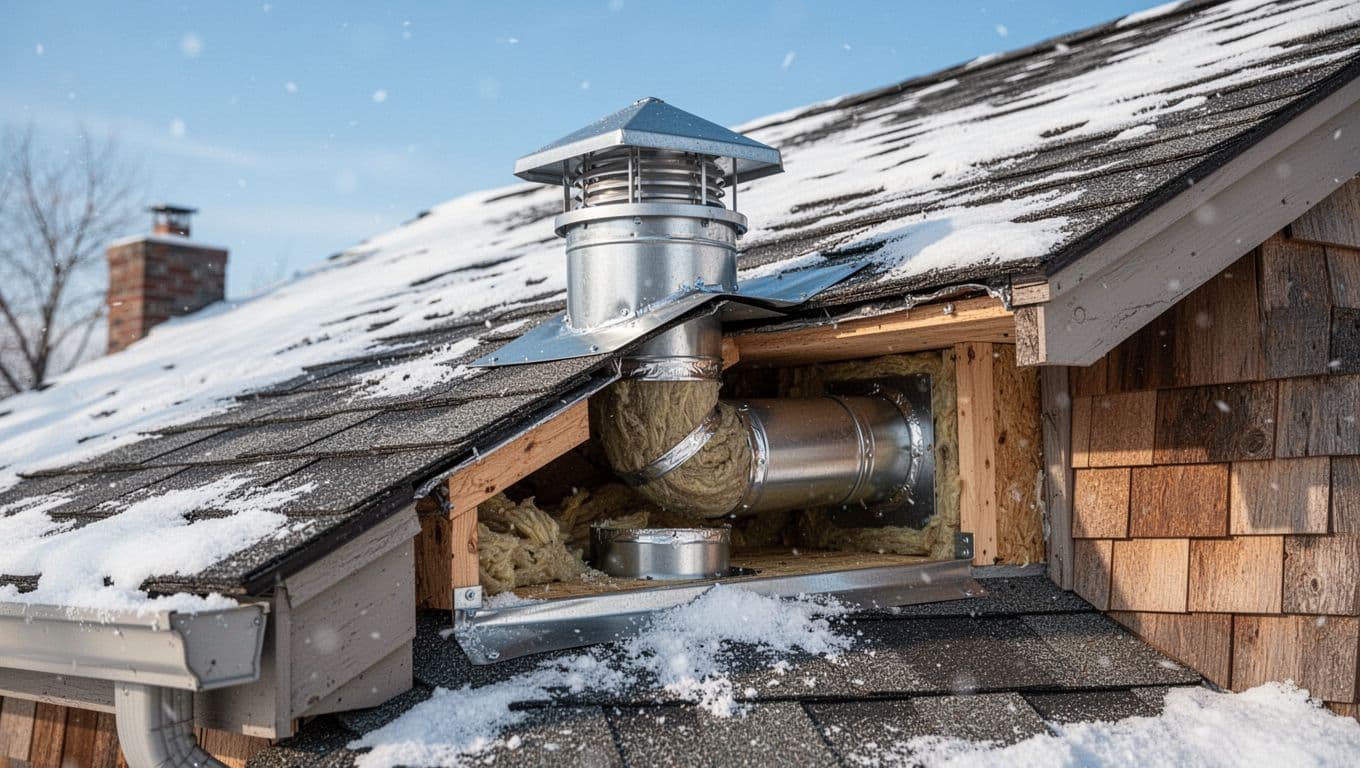
A vented attic is not a dumping ground. Bath fans, range hoods (when ducted), and dryers move warm, wet air. If that air ends in the attic, it condenses on cold wood and metal fasteners. In Minnesota, the damage can show up as frost within days of a cold snap.
Proper mechanical ventilation termination is simple. The duct needs to run to the exterior and end at a roof cap or wall cap designed for that appliance. I also look for a backdraft damper so wind does not blow cold air back into the duct and drip condensation into the fan housing.
In cold attics, I treat duct details as just as important as the vent cap:
- Use insulated duct in unconditioned attic space, especially for bathroom fans. It cuts condensation inside the pipe.
- Avoid long, sagging flex duct. When flex sags, water collects in the low spots and can leak back.
- Seal duct joints with mastic or approved foil tape (not cloth duct tape). Then clamp connections at the fan and cap.
- Slope the duct slightly to the exterior when possible, so any condensation drains outward, not back toward the ceiling.
- Air seal the ceiling penetration around the duct with foam or caulk, because warm air will leak around the pipe too.
For homeowners, this is a good “what to ask my inspector” moment. I like direct questions that get direct answers:
- “Can you show me where each fan and the dryer vent exits the house?”
- “Do you see any disconnected ducts or moisture staining near terminations?”
- “Are the ducts insulated and supported, or do they sag and hold water?”
For Minnesota-specific code adoption context, I point to the state rule chapter that adopts the IRC by reference, Minnesota Rules, Chapter 1309.
When an unvented attic can make sense, and why it’s not a DIY choice
Most homes I inspect use a vented attic, and that is usually the safest path. Still, unvented attics (often called “hot roofs”) can make sense in certain designs, especially when venting is impossible or when the roof geometry creates dead zones that never ventilate well.
At a high level, unvented attics work by moving the thermal and moisture control layer to the roofline. Instead of venting the attic, you insulate the underside of the roof deck (commonly with spray foam) or build a roof system that uses rigid insulation above the roof deck. In either case, the goal is to keep the roof deck warm enough in winter that it does not hit the dew point and collect moisture.
The reason I draw a hard line against DIY here is risk. Unvented attics can fail quietly and expensively:
- Moisture can get trapped if the insulation type, thickness, or vapor control is wrong.
- Roof leaks can hide longer, because there is no airflow to dry things out, and stains can show late.
- Shingle temperatures can run higher, depending on the assembly and roof covering.
- Air quality issues can follow if combustion appliances or venting paths are not addressed.
When a homeowner asks me “What are the rules for roof ventilation” and they are considering unvented, I steer the conversation to permits and design. In Minnesota, this is a code path, not a shortcut. I want a plan that matches the Minnesota Residential Code, the insulation R-value rules, and the product specs.
If you are tempted because ice dams keep coming back, I get it. Still, an unvented roof only works when the whole assembly is designed as a system. That same system thinking is what protects What are the 5 functional requirements of a roof, especially moisture control and long-term durability.
Common roof ventilation mistakes that fail inspections or cause damage
When an attic fails, it usually fails quietly. I see it as stained roof decking, frosty nail tips, moldy sheathing, or ice dams that return every winter. The frustrating part is that many of these issues happen on roofs that “have vents.” The problem is that roof ventilation is a system, not a collection of parts.
If you want a practical answer to “What are the rules for roof ventilation”, start here: air should enter low, move along the underside of the roof deck, then exit high. Break that pathway and you can still hit the code ratio on paper while building moisture and comfort problems in real life. Those failures also chip away at What are the 5 functional requirements of a roof, especially moisture control, durability, and load performance over time.
Too much exhaust and not enough intake (the “easy” mistake)
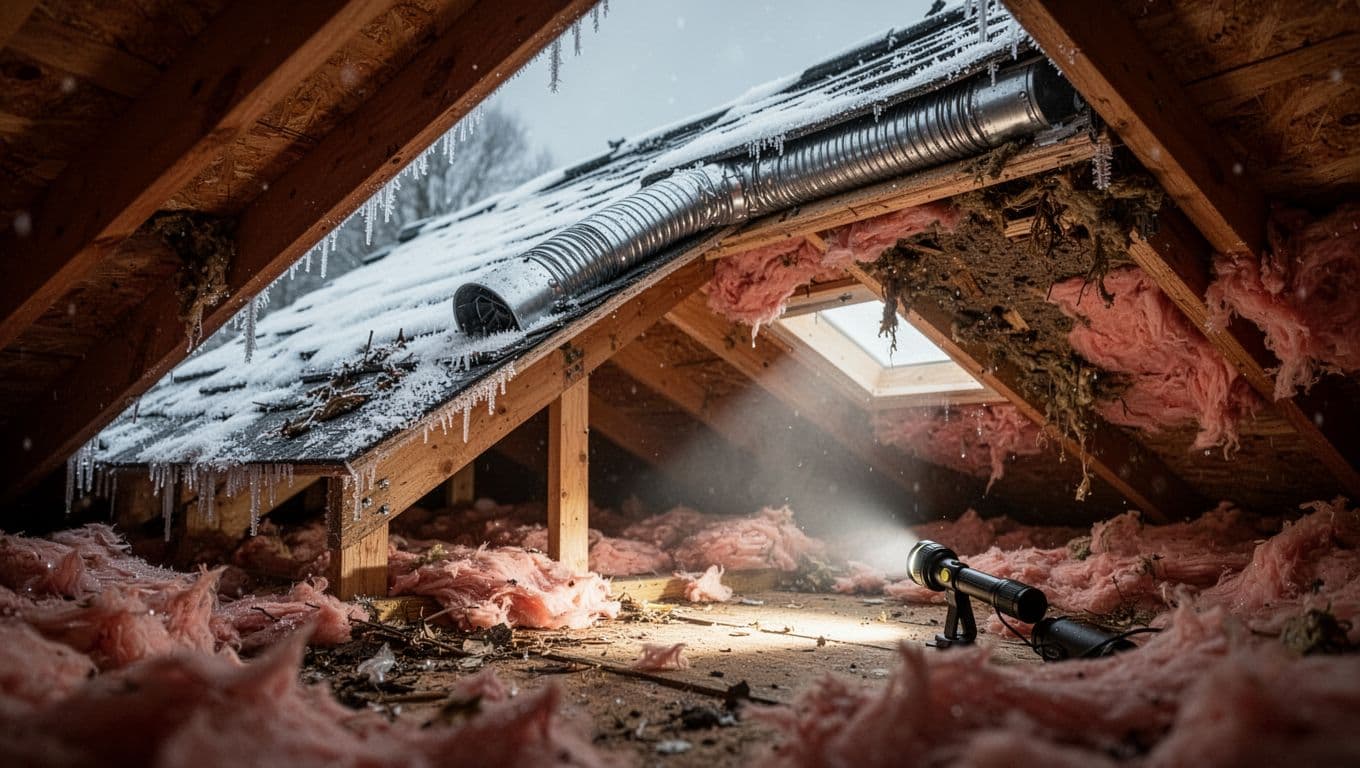
This is the mistake I run into most because it feels logical. People add ridge vent, box vents, or even a power fan, then assume the attic will dry out. However, without enough soffit intake, the attic space can go into negative pressure relative to the house.
Negative pressure changes where the air comes from. Instead of pulling cold, dry air from the soffits, the attic starts pulling conditioned air from the living space through ceiling leaks. That air is warm and often humid in winter, so it condenses on cold roof sheathing. The result is comfort complaints downstairs and moisture damage upstairs.
Here is the visual I tell homeowners to imagine. Picture a shop vac (your exhaust vents) running in a room with the door shut (blocked intake). The vac still moves air, so it starts sucking from gaps under the baseboards and around outlets. Your attic does the same thing. It will “steal” air from the easiest leak paths:
- Recessed lights, attic hatches, and bath fan housings
- Gaps around plumbing stacks and chimney chases
- Top plates where interior walls meet the ceiling drywall
Comfort issues show up fast. In winter, that air loss can create cold drafts and higher heating bills. In summer, it can pull cooled air out of the house and heat you up faster. Moisture issues take longer, but they cost more. Wet roof decking loses strength over time, fasteners corrode, and insulation performance drops when it gets damp and matted.
If I see strong exhaust with weak intake, I expect moisture problems, even if the vent area “meets code” on paper for proper ventilation.
For a homeowner-friendly explanation of why many attic systems fail when they are unbalanced, I like this breakdown on proper attic ventilation system failures.
Short-circuiting airflow by mixing vent types the wrong way
A vented attic needs clear cross ventilation, with air entering low, moving along the underside of the roof deck, then exiting high. Mixing vent types can interrupt that path because air takes the shortest route with the least resistance. When I inspect these setups, I often find that the top of the attic moves air, while the lower roof deck stays warm and damp.
The classic short-circuit is ridge vent plus open gable vents. Instead of air entering at the soffits and washing the underside of the roof deck, wind pushes air in one gable and out the ridge. That flow skims the top of the attic and leaves the eaves stagnant. In Minnesota, that is exactly where condensation and ice dam patterns start.
Other common mixes can cause similar problems:
- Ridge vent plus box vents (the box vents can become intake points)
- Ridge vent plus power attic fan (the fan can depressurize the attic and pull from the house)
- Multiple high exhaust types scattered across roof sections with no matching low intake
The inspection risk is simple. If an inspector sees a system that cannot produce consistent eave-to-ridge flow, they may call it out as ineffective ventilation, even if vents exist. The damage risk is worse. When parts of the roof deck stay warm in winter, you get uneven melt. When parts stay damp, rot starts where you cannot see it.
My rule is easy to remember:
- One primary exhaust strategy per attic.
- One primary intake strategy at the eaves.
That does not mean every roof needs a ridge vent. It means I pick an exhaust type that fits the roof geometry, then I support it with enough intake. If the home was designed around gable venting and has poor soffit access, I either keep it consistent or redesign the full system so air does not short-circuit. The risk grows when mixing ridge vents with static exhaust vents or other upper ventilators.
If you want a simple overview of the “air takes the easy path” problem, this article on common attic ventilation mistakes explains the short-circuit concept in plain language.
Bad installs: blocked ridge slots, missing baffles, and leaky roof caps
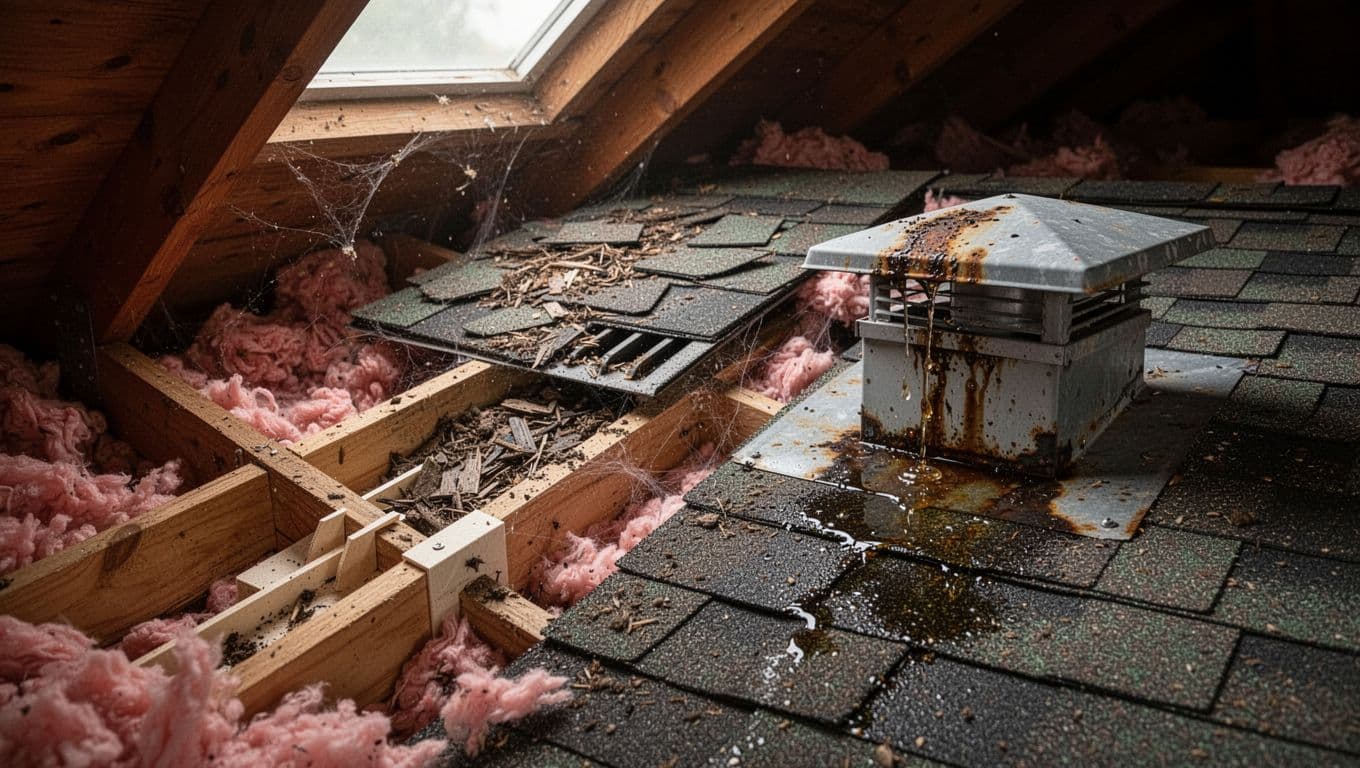
Even when the vent plan is right, installation can ruin it. I treat these as the problems most likely to fail inspections or cause damage later because they create either (1) blocked airflow or (2) water entry points.
Here are the install errors I see most often:
- Blocked ridge vent slot: The roofer cuts too narrow, stops short of the ends where the product requires clearance, or clogs the slot with underlayment and shingle debris. The ridge vent looks correct from the yard, but it cannot breathe.
- No baffles at the eaves: Insulation drifts into the soffit area and blocks intake. This is common after adding blown insulation.
- Crushed, disconnected, or uninsulated fan ducts: Bath fans dump moisture into the attic, or the duct sweats and drips because it is not insulated.
- Leaky roof caps or poor flashing: A roof cap for a bath fan or a box vent gets nailed high, poorly sealed, or installed on a bad surface. Wind-driven rain or meltwater finds the fasteners.
- Screens missing or wrong: Openings without proper screens invite pests. Screens that are too fine can restrict net free area and reduce airflow.
Homeowners can check a lot of this safely, without climbing on the roof. From the ground, I look for straight clues:
- Are ridge vents continuous, or do they stop and start randomly?
- Do roof caps sit flat, or do they look lifted at one edge?
- After snow, do I see odd melt stripes near a short-circuit area?
From an attic hatch, you can do a quick, low-risk scan with a flashlight:
- Look along the eaves for daylight at soffit vents (or at least clear chutes where air should enter).
- Check if baffles are present in each bay, especially where insulation is deep.
- Scan the ridge area for a visible slot and signs of blockage (wood tight to the ridge with no cut line is a red flag).
- Look for water staining around roof caps, rusty nails, or damp insulation directly below a vent.
If I smell musty air, see wet insulation, or spot scorch marks near wiring, I stop and bring in the right pro.
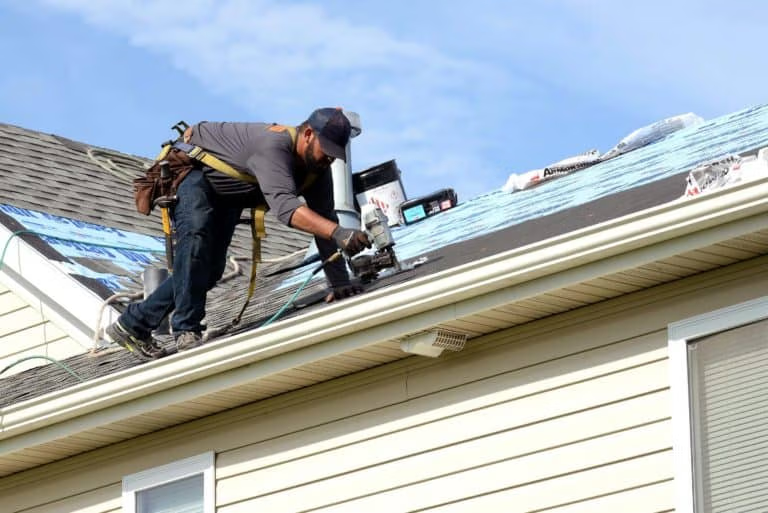
I also draw a clear line on safety. I do not want a homeowner walking a roof to “check vents.” Falls happen fast, and power lines near eaves are a real hazard. Inside the attic, exposed junction boxes, older wiring, and buried light fixtures can also be dangerous. If you see active leaks, questionable wiring, or you need to move across joists to reach the problem area, it is time to call a roofing pro (and sometimes an electrician).
For another straightforward rundown of install mistakes and why they cause damage, see this guide on common errors in roof ventilation installations.
Conclusion
The rules for roof ventilation are simple on paper, and strict in the attic. I vent to the outdoors, size the system using NFVA (1/150 as the baseline, 1/300 only when the assembly qualifies), then keep intake low and exhaust high. After that, I protect the air path with baffles and clear soffits, because blocked intake makes the math meaningless. Finally, I keep moisture out of the attic by sending bath fans, range hoods, and dryers all the way outside.
If you only remember one thing, remember balance. A balanced ventilation system works when it pulls outside air from the eaves and releases it at the peak, without short-circuits or negative pressure. Thanks for reading, if you want a second set of eyes, I can inspect the full system and tell you what will pass in the Saint Paul and Twin Cities area.
- Measure attic floor area
- Pick the ratio (1/150, or 1/300 if conditions allow)
- Confirm vent product NFVA (not rough opening)
- Balance intake and exhaust (and bias slightly toward intake in real homes)
- Keep the air path clear (baffles, unblocked soffits, open ridge slot)
- Vent fans outside (no terminations in the attic)
- Verify roof ventilation rules, local code, and permits before changes
If you want a clean, code-based answer to “What are the rules for roof ventilation”, it comes down to 1/150 or qualified 1/300 NFVA, balanced soffit intake and high exhaust, and a clear airflow path. I also treat air sealing as part of the rule set, because it controls winter moisture load.
Then I confirm fans discharge outdoors, not into the attic. For Saint Paul and the Twin Cities, a professional inspection is the fastest way to confirm your attic ventilation is dry, balanced, and built for winter.
{“@context”:”https://schema.org”,”@type”:”BlogPosting”,”@id”:”https://roofingexpertsstpaul.com/roof-ventilation-code-rules/#article”,”mainEntityOfPage”:{“@type”:”WebPage”,”@id”:”https://roofingexpertsstpaul.com/roof-ventilation-code-rules/”},”headline”:”What Are the Rules for Roof Ventilation? A Code-Based Guide (and How Venting Supports the 5 Functional Require”,”description”:”Most homes follow International Residential Code R806 style rules for attic ventilation to the outdoors, size vents using the 1/150 rule (or 1/300 when conditions allow), keep intake and exhaust balanced, and protect openings with screens and weather protection. I work on Minnesota roofs, and our co”,”datePublished”:”2026-02-12T22:10:00″,”dateModified”:”2026-03-02T03:49:45″,”author”:{“@type”:”Organization”,”name”:”Sellers Roofing Company”,”url”:”https://roofingexpertsstpaul.com”},”publisher”:{“@type”:”Organization”,”name”:”Sellers Roofing Company”,”url”:”https://roofingexpertsstpaul.com”,”logo”:{“@type”:”ImageObject”,”url”:”https://roofingexpertsstpaul.com/wp-content/uploads/2025/05/sellers-roofing-logo.png”}},”url”:”https://roofingexpertsstpaul.com/roof-ventilation-code-rules/”,”inLanguage”:”en-US”,”about”:{“@type”:”Thing”,”name”:”Roofing, Hail Damage, Storm Repair, Insurance Claims”},”isPartOf”:{“@type”:”Blog”,”@id”:”https://roofingexpertsstpaul.com/blog/”}} {“@context”:”https://schema.org”,”@type”:”WebPage”,”url”:”https://roofingexpertsstpaul.com/roof-ventilation-code-rules/”,”speakable”:{“@type”:”SpeakableSpecification”,”cssSelector”:[“h1″,”h2″,”.speakable”]}}Need a roof inspection in Saint Paul or the Twin Cities? Call Sellers Roofing Company at +1-651-703-2336 or schedule a free estimate. We are a black-owned, NMSDC-certified MBE roofing contractor with 9+ years experience.