Last updated: 2026-08-01 by Ted Sellers, Owner
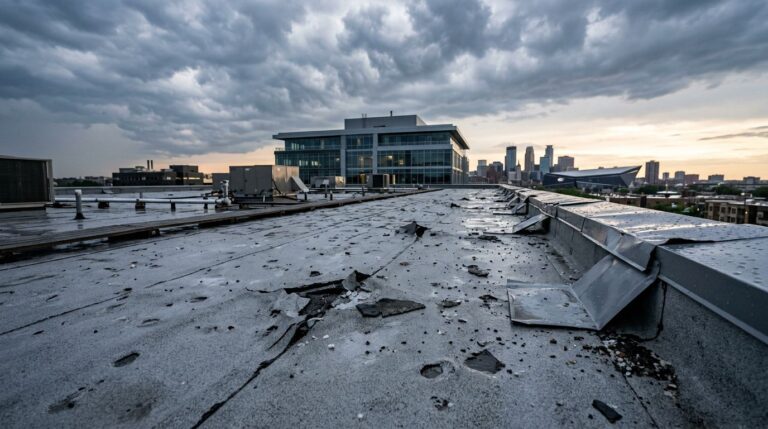
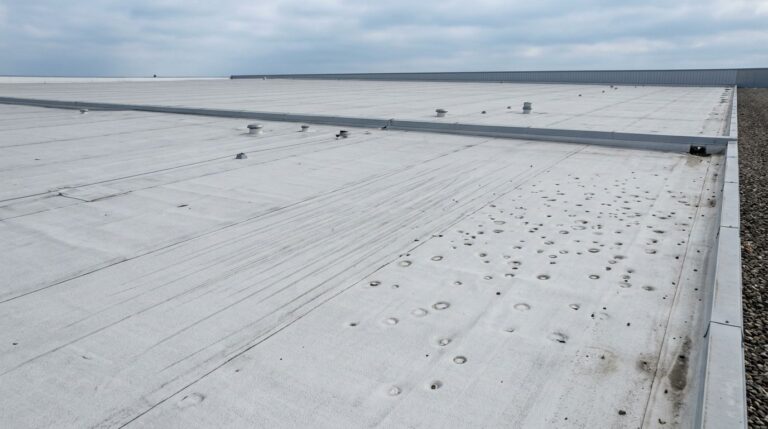
Hail damage on a commercial flat roof counts when hail creates a puncture, tear, split, cracked seam, displaced flashing, or bruising that weakens the membrane and shortens roof life. Even if you don’t see an active leak, commercial flat roof hail damage can still be “real” damage when it compromises waterproofing, insulation, or critical details around drains, edges, and rooftop units.
When This Applies
Who should use this definition
This applies to commercial building owners and facility managers with low-slope or flat systems like TPO, PVC, EPDM, modified bitumen, and built-up roofing (BUR). It’s also relevant if you manage rooftops with lots of penetrations, HVAC curbs, skylights, or frequent foot traffic, because hail often turns small weak spots into failure points.
It also applies right after a storm when you’re deciding whether to call for temporary service, schedule an inspection, or start an insurance claim. If your team is already saying “the commercial roof needs repair,” this framework helps you confirm whether hail is the trigger or just the spotlight.
When hail marks aren’t “damage”
Not every mark counts. Some hail leaves surface scuffs, tiny dings on soft metals, or shallow impressions that don’t reduce waterproofing. That’s why the question isn’t “Do I see hail?” It’s “Did hail change performance or speed up failure?”
Cosmetic vs functional impact on a flat roof
Cosmetic issues may look ugly yet remain watertight. Functional damage changes the roof’s ability to shed water, resist UV, handle movement, or keep seams and flashings tight. If hail creates a pathway for water now, or a weak point that will open later, it counts.
Edge case: older roofs and pre-existing wear
Age matters. A 22-year-old membrane with brittle seams can fail from hail that a newer roof would shrug off. In other words, hail can be the “last straw” on a tired system, and the resulting splits still count as damage.
What Hail Damage Looks Like on Flat Commercial Roofs
Membrane bruising, punctures, and seam problems (TPO, PVC, EPDM)
On single-ply roofs, hail can cause punctures that you might miss on a quick walk. It can also stress heat-welded seams and termination points. Look for impact spots near seams, around pipe boots, and at membrane-to-metal transitions.
A useful way to think about it is a car windshield: a tiny chip looks minor, until temperature swings turn it into a long crack. Roof membranes behave the same way under Minnesota freeze-thaw cycles.
What a “bruise” looks like, and why it matters
“Bruising” can appear as a soft spot, a subtle depression, or a scuffed area where the membrane feels different under light pressure. The surface may look fine, yet the reinforcement layer can be compromised. That often shows up later as seam failure, pinholes, or accelerated weathering.
If you want a photo-based reference for what inspectors look for, the roof hail damage spotting checklist (PDF) is a solid starting point.
Blisters, cracks, and granule loss (modified bitumen, BUR)
Modified bitumen and BUR can show hail damage as fractures, disturbed surfacing, or crushed areas that change drainage. A common sign is new cracking at laps, field seams, or around pitch pans.
Granule loss is another clue. Losing a few granules isn’t always catastrophic, but heavy loss exposes asphalt to UV and heat, which shortens roof life quickly.
When granule loss crosses the line
If you see concentrated “bald” patches, exposed asphalt, or large areas of loosened surfacing in hail impact zones, treat it as functional damage. Those areas often become the first leaks during the next heavy rain.
Metal edge, flashing, and rooftop unit impacts
Even when the field membrane looks okay, hail can deform edge metal, coping caps, counterflashing, reglet details, and penetration flashings. Those are the roof’s weak joints. When hail dents or loosens them, wind and water finish the job.
For many properties, the most cost-effective path starts with a qualified assessment from a local crew familiar with low-slope systems, such as a Saint Paul commercial roofing company.
Hidden paths to leaks
Flat roofs let water travel. A hail-hit curb corner can leak, then the water migrates and shows up 30 feet away. That’s why “no leak over the damage” doesn’t prove the roof is fine.
If you only check the obvious dents, you’ll miss the real risk, damaged seams and flashings that fail months later.
Step-by-Step
Immediate actions after a hailstorm
- Restrict roof access until it’s safe, because wet membranes and loose ballast can cause falls.
- Walk interior spaces first, then note new stains, wet insulation odors, or dripping near exterior walls.
- If water is entering, arrange emergency service to limit damage to inventory, equipment, and ceilings.
Document what changed (and what didn’t)
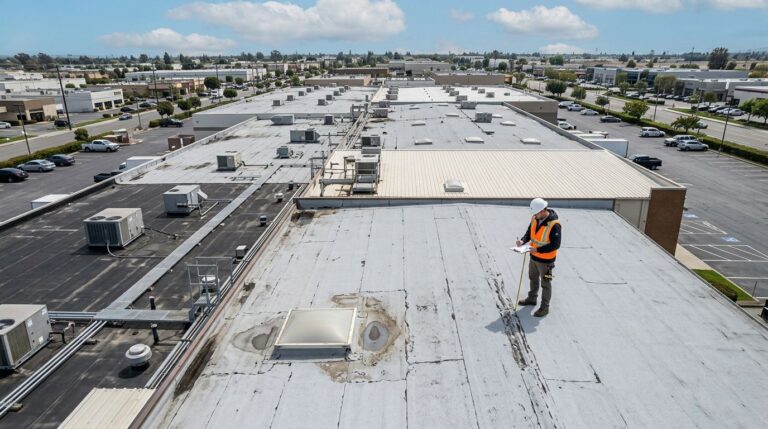
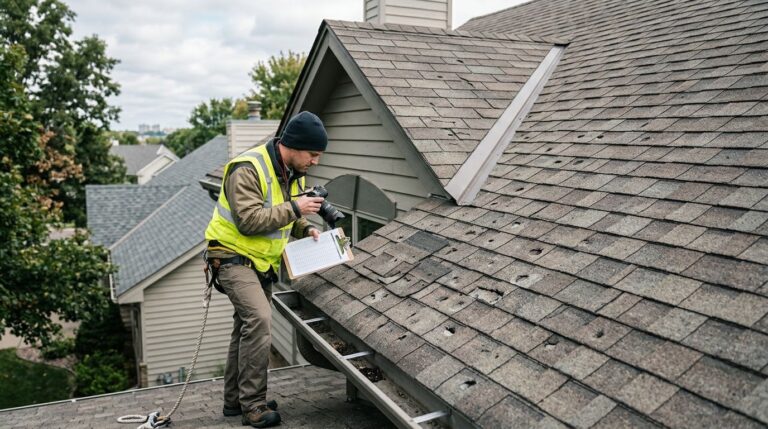
- Photograph the roof in wide shots first, then close-ups with a ruler or coin for scale, and include drains, edges, and HVAC curbs.
- Map findings on a simple roof sketch, because hail patterns often cluster on one exposure or windward edge.
- Keep weather details and timelines, then match them to your documentation, a practical guide is this hail damage inspection and claim overview.
Confirm damage type, then choose the right scope
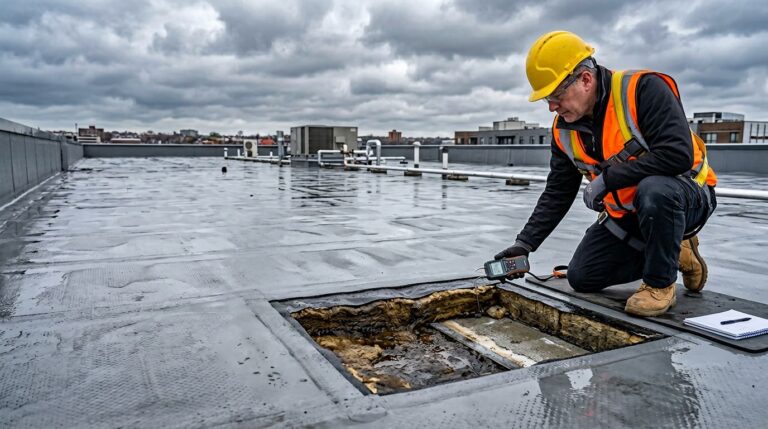
- Schedule professional testing if leaks are hard to trace, because impact points and leak points rarely line up, start with commercial roof leak detection Saint Paul.
- Choose commercial flat roof repair when damage is isolated (punctures, small seam splits, limited flashing issues) and the roof still has service life.
- Move to commercial roof replacement when hail damage is widespread, insulation is saturated, seams fail across multiple zones, or the roof is near end of life.
FAQ
Will insurance cover hail “bruising” if there’s no leak?
Sometimes. Coverage depends on whether bruising is considered functional damage to your roof system. If testing shows reinforcement damage, weakened seams, or reduced impact resistance, that’s stronger support than photos alone.
What helps most during a dispute?
Core samples (when appropriate), moisture mapping, and clear before-and-after documentation help show the roof changed because of the hail event.
How soon should I inspect a flat roof after hail?
Inspect as soon as it’s safe, ideally within days. Quick documentation matters because foot traffic, heat, and rain can change what the roof looks like and blur the hail pattern.
What if hail only damaged HVAC covers and not the membrane?
Don’t stop there. Dented HVAC panels can be cosmetic, but hail around units often damages curb flashings, pitch pans, and sealant joints. Those details fail first and cause expensive interior damage.
Can I just patch hail hits and call it good?
If impacts are truly isolated, patches can work. However, repeated patching on a roof with broad bruising often turns into chasing leaks. In that case, restoration or replacement may cost less over time.
What’s the biggest mistake business owners make after hail?
They wait for a drip. By the time you see water inside, insulation may already be wet and energy costs may rise. Treat “no leak today” as a temporary snapshot, not a clean bill of health.
Bottom line for business owners
Hail damage “counts” when it weakens waterproofing, not just when it looks dramatic. Focus on seams, flashings, drains, and any spot where the roof changed after the storm. If your team suspects the commercial roof needs repair, act quickly while the evidence is fresh and the fix is still contained.
Need a roof inspection in Saint Paul or the Twin Cities? Call Sellers Roofing Company at +1-651-703-2336 or schedule a free estimate. We are a black-owned, NMSDC-certified MBE roofing contractor with 9+ years experience.