Last updated: 2026-08-01 by Ted Sellers, Owner
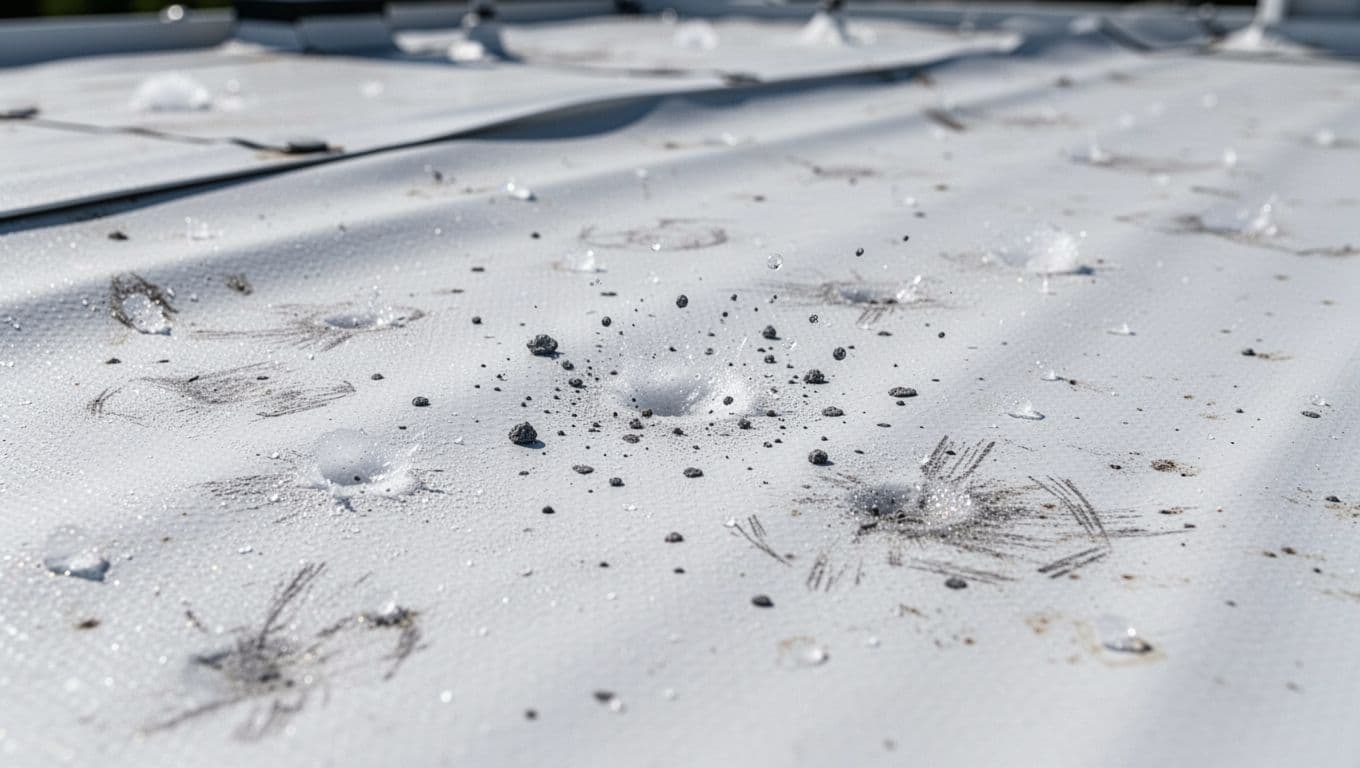
TPO hail splatter marks are subtle dark speckles left on thermoplastic polyolefin roofs after a hailstorm. Unlike dirt or foot‑traffic scuffs, these peppery gray or black dots don’t wash away easily. Knowing how to recognize TPO hail splatter marks helps property owners decide if their roof has been compromised and whether to bring in a commercial roofing professional.
When This Applies
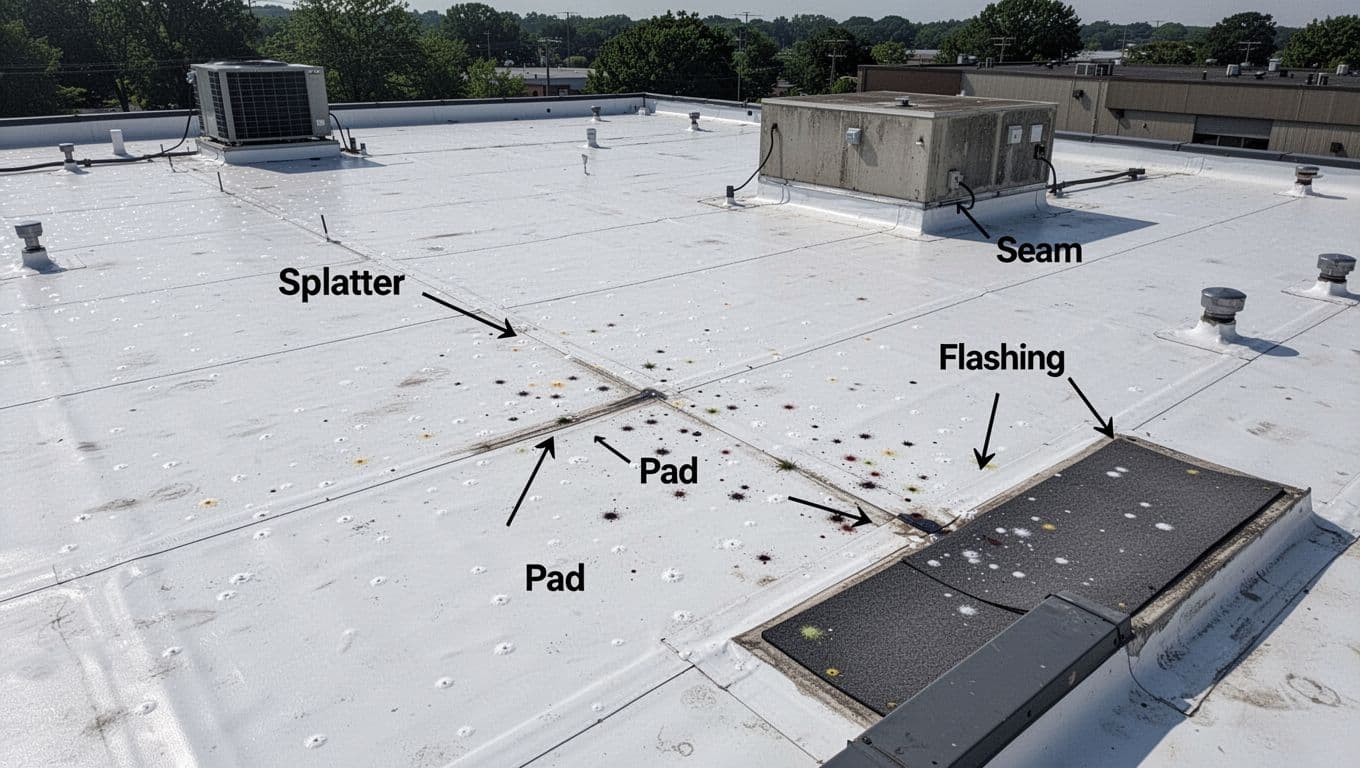
After a hailstorm on white or light TPO membranes
This applies most to commercial buildings with white TPO, because contrast makes splatter easier to see. White TPO membranes maintain energy efficiency through high reflectivity, but they also make surface bruising easier to spot. Plan to look as soon as it’s safe after the storm, before crews, tenants, or HVAC techs add new scuffs. Also, inspect after snow or ponding water clears, since standing water can hide small marks.
Splatter marks matter even when you don’t see leaks yet; they often signal hail damage. A membrane can look “fine” from the ground, while hail damage quietly weakens seams, flashings, or high-stress points around rooftop units. If you want extra background on why this kind of storm wear can be hard to judge at a glance, see why TPO hail damage can be deceptive.
If the roof looks “dirty all over,” slow down. Uniform discoloration is often aging, not hail.
When it doesn’t apply, and the look-alikes to watch for
Not every dot is hail. Some common look-alikes include rooftop grime near exhaust fans, algae-like staining on older sections, adhesive smears near repairs, and “drag marks” from moving tools or hoses. Foot traffic often shows up as repeated paths to HVAC units and drains, while hail tends to leave a more random field pattern. Real hail damage threatens the structural integrity of a commercial flat roof, unlike these superficial mimics, and it can also compromise waterproofing performance over time.
Edge cases that confuse commercial owners
Older, chalky membranes can hold dirt and show darkened wear faster. Also, roofs with recent service work may show fresh scuffs that mimic impacts. In both cases, you’ll need pattern checks and close-up photos to avoid chasing the wrong problem.
Step-by-Step
On-Roof Inspection Steps to Identify Hail Damage from Splatter Marks
- Start with safety and access for roof inspection. Use trained personnel, proper fall protection, and safe ladder or hatch procedures. If your roof is icy, postpone the walk.
- Confirm you’re looking at TPO. TPO is typically white, single-ply, and has heat-welded seams. If you’re not sure, stop and verify, because EPDM, PVC, coatings, and modified bitumen can show storm wear differently.
- Begin your roof inspection in open-field areas first for common flat roofing materials. Check wide, unobstructed membrane areas away from drains, exhaust, and rooftop equipment. This reduces false positives from dirt sources.
- Use angled light to reveal surface texture during roof inspection. Move so sunlight hits the membrane from the side. Splatter often shows as small specks plus faint scuffing that’s easier to see at a low angle.
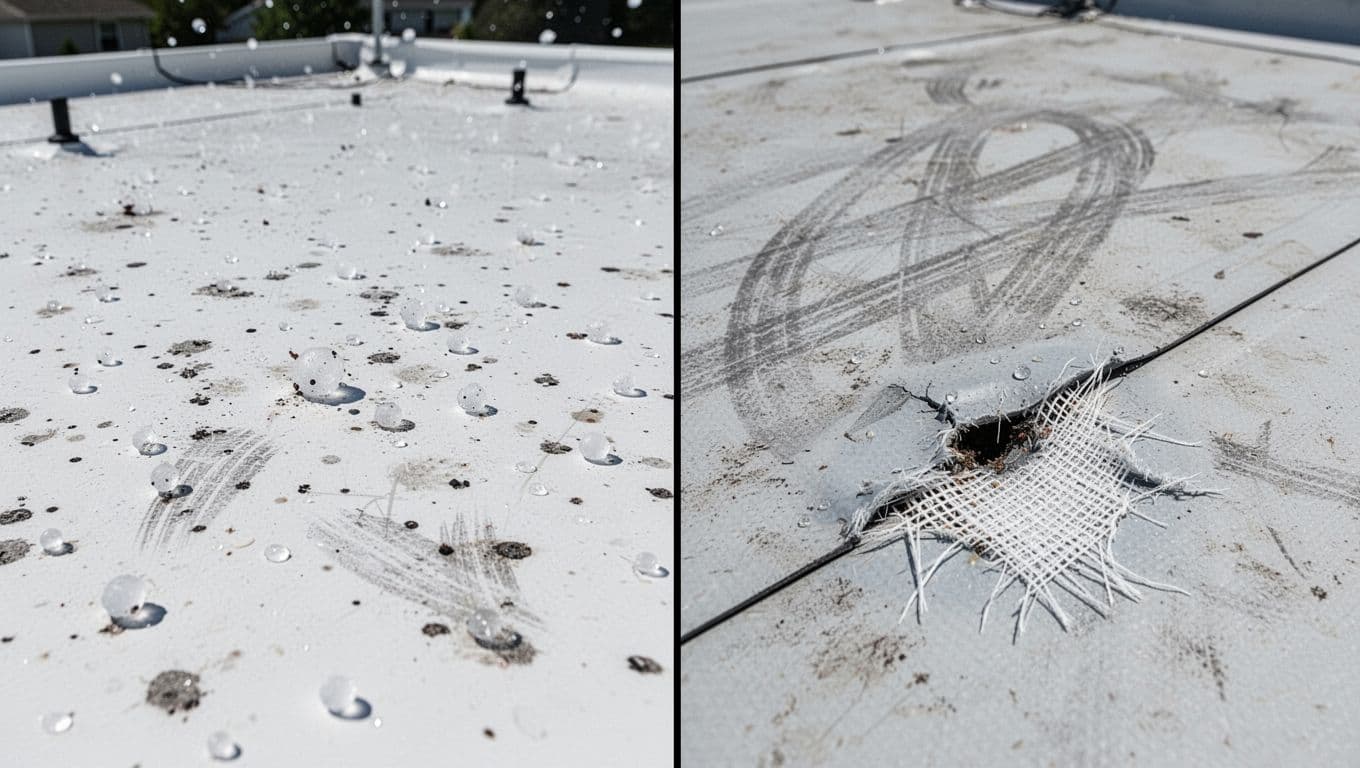
- Look for “random scatter,” not “travel lanes.” Hail marks appear across the field, not just where people walk. If marks line up like a hallway to an HVAC curb, you’re likely seeing foot-traffic wear.
- Do a gentle wipe test on a few spots. Lightly rub a speck with a damp cloth. If it smears off easily, it may be surface grime. If it stays, treat it as a possible impact mark and document it.
- Check high-risk details near splatter clusters, including flashing and components. Inspect seams, termination bars, pipe boots, pitch pans, and curb flashings. Hail doesn’t have to puncture the field to cause failures at edges and transitions.
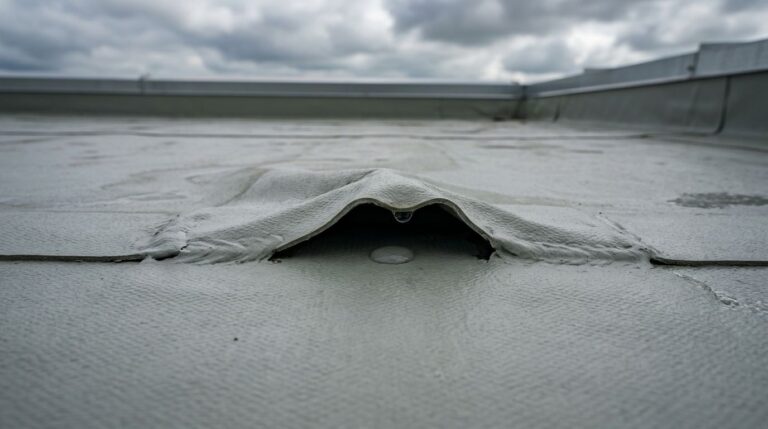
- Search for “tell” damage, not just specks. Look for cuts, pinholes, bruised areas, punctures and tears, soft spots in the underlying insulation or rigid insulation board, or exposed scrim (the reinforcement layer). Exposed scrim and open seams are strong signs your commercial roof needs repair.
- Document the damage like an insurance adjuster would. Take wide shots for location of impact marks, then close-ups with a reference (coin, tape measure, or chalk circle) of the impact marks. Note which elevations get the worst hits, because wind-driven hail can hit one side harder.
- Decide the next action based on function, not fear, after the roof inspection to identify hail damage. If you find breaches or seam issues, schedule TPO roofing repair quickly with a professional roofing contractor. If impact marks are widespread and the system is near end-of-life, start budgeting for a commercial flat roof replacement or additional TPO roofing repair to repair or replace the membrane. When leaks are suspected but the entry point isn’t obvious, book commercial roof leak detection in St. Paul so you don’t repair the wrong area.
FAQ
Do hail splatter marks always mean my TPO roof is leaking?
No. Many splatter marks from hail damage are surface-level, and the roof can stay watertight. Still, TPO hail damage can weaken seams and flashings where leaks start later. That’s why detail checks and documentation matter, even when ceilings look dry. Hail damage often hides risks to seam strength over time.
What if the interior leak shows up weeks later?
Water infiltration can travel under insulation on low-slope roofs and affect the TPO roof membrane. A later leak from hail damage doesn’t rule out earlier hail.
How can I tell hail splatter from dirt or HVAC exhaust fallout?
Check location and pattern. Exhaust fallout often concentrates downwind of fans and stacks, and it looks like a gradient. Hail splatter from hail damage is more randomly scattered across open areas. Impact marks on flat roofing materials may show circular cracks or semicircular patterns. A gentle wipe test helps, but don’t scrub hard enough to change the surface.
What’s the difference between hail splatter and foot-traffic scuffs?
Foot-traffic scuffs usually form repeat routes to rooftop equipment and drains. They look like streaks, toe-prints, or dragged-tool marks. Hail splatter from hail damage looks like small “paint flicks” across the field, often paired with tiny scuffs. Hail damage patterns differ from wear. For more examples of what inspectors look for, compare your findings to this guide to identifying TPO hail damage.
If I see exposed scrim, is that an emergency?
Yes. Exposed scrim from hail damage means the membrane’s top layer is compromised, with punctures and tears allowing water to enter faster. This leads to a loss of hail resistance. Treat that as urgent repair, especially before freeze-thaw cycles widen the damage. If you manage multiple sites, document it and move quickly to reduce interior risk.
When should I stop DIY checks and call a commercial roofer?
Call a professional roofing contractor when you see open seams, punctures, wet insulation signs, or widespread hail damage. For small punctures and tears, patching material offers a temporary fix, but get expert help for insurance claims. Also call if you need claim-ready documentation of hail damage, a weather history report, or support for an insurance claim. You’re weighing repair versus replacement after hail damage. For a repair-focused view of options after storms, this hail damage repair guide for TPO can help you frame questions before you schedule an inspection and file an insurance claim. In Saint Paul, you can also coordinate evaluation and next steps through Sellers Roofing Company’s commercial roofing services.
Hail splatter marks from hail damage can be subtle, but the pattern tells a story. When you verify the scatter, check the details, and document the damage properly, you make better calls on TPO roofing repair, hail resistance, and whether roof replacement is needed to protect the TPO roof membrane. Hail damage to the TPO roof membrane can worsen hidden leaks and seam issues. If you suspect TPO hail damage, don’t wait for a drip to confirm it. A timely inspection now often prevents bigger disruption later.
If you’re concerned about TPO hail splatter marks on your commercial roof, schedule a professional roof inspection today to catch damage early and plan the right repair or replacement.
Need a roof inspection in Saint Paul or the Twin Cities? Call Sellers Roofing Company at +1-651-703-2336 or schedule a free estimate. We are a black-owned, NMSDC-certified MBE roofing contractor with 9+ years experience.