Last updated: 2026-05-26 by Ted Sellers, Owner
After a windy night, most people scan the yard for fallen branches and look for missing shingles. That helps, but it’s only part of the story. Wind damage often starts quietly, with lifted tabs, broken seal strips, and sharp creases that are easy to miss from the ground.
That matters because a roof can look mostly normal and still be weaker than it was the day before. As of March 2026, recent Minnesota roof coverage has focused more on freeze-thaw stress than major shingle wind events, yet that actually raises the risk on older roofs. Brittle shingles don’t flex well, so a strong gust can bend or unseal them faster.
If you’re trying to figure out how to determine wind damage on shingles, the goal is simple. Look for physical changes in the tabs, the seal, and the shingle surface, then decide whether the damage is isolated or spread across a slope.
The most common signs of wind damage on shingles
Wind rarely starts by ripping off half the roof. Usually, it works more like a hand peeling a sticker. It catches the lower edge of a tab, lifts it, breaks the adhesive bond, and slaps it back down. That repeated motion leaves clues.
The clearest sign is a sharp crease line across a shingle tab. This is called wind creasing. The shingle mat bends, and the fold often leaves a visible line with granule loss along it. If you want a side-by-side visual, this wind creased shingles guide shows what that kind of uplift damage tends to look like.
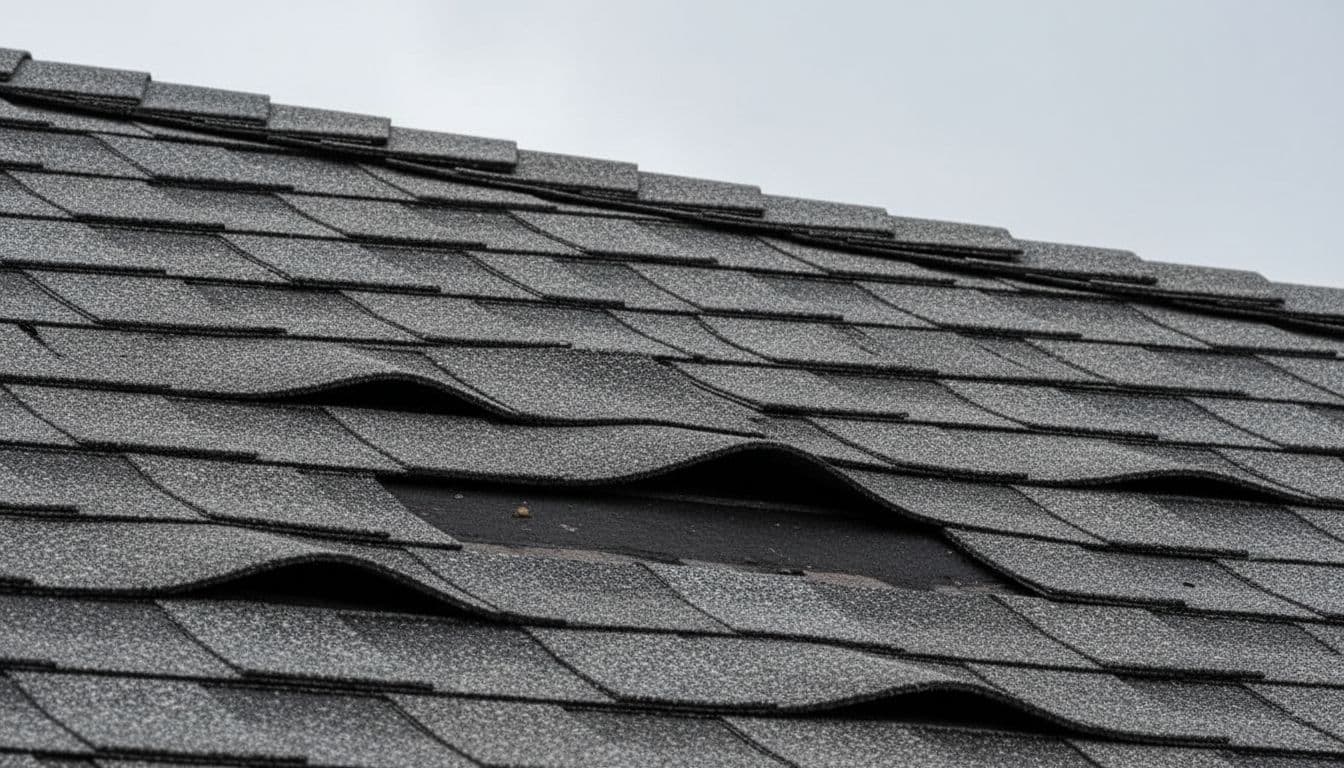
You should also watch for tabs that sit slightly raised at the corners, especially along eaves, rakes, and ridges. Those are the roof’s pressure points. If the seal strip has failed, the tab may look almost normal, yet it can lift again in the next gust.
Missing tabs or whole missing shingles are more obvious. So are torn corners, exposed underlayment, and ridge cap shingles that no longer line up cleanly. Still, widespread damage often looks less dramatic than people expect. A roof with ten creased tabs can be more at risk than a roof with one missing shingle.
A shingle that lies flat again can still be damaged.
Pattern matters too. If several damaged tabs appear on the same slope, especially on the windward side, that points toward uplift rather than random wear. A helpful outside reference is this explanation of what counts as wind damage to shingles, which breaks down why missing shingles are only one part of the picture.
The subtle clues that show up before a leak
Not all signs sit on the roof surface. Some show up around the house first.
Fresh shingle pieces in the yard are one clue. Another is a new pile of dark granules in gutters or at the end of a downspout. Granules protect the asphalt from sun and weather, so when wind bends or scuffs a tab, that surface can shed faster.
Granule loss alone doesn’t prove wind damage, because older roofs shed some granules with age. Still, timing matters. If a gutter looked clean last week and now holds a gritty layer after a storm, pay attention.
This quick comparison helps separate the big clues from the smaller ones:
| Sign | What it often means | Urgency |
|---|---|---|
| Missing shingle or tab | Wind tore material free | High |
| Straight crease across a tab | Uplift bent the shingle mat | High |
| Lifted corners that don’t reseal | Broken adhesive strip | High |
| Granules in gutters after a storm | Surface abrasion or crease wear | Medium |
| Ridge cap shingles out of line | Wind pressure hit the ridge | High |
The takeaway is simple: surface change plus storm timing is a stronger signal than any one clue alone.
You may also notice roof lines that look slightly uneven from the street. Sometimes one tab edge casts a new shadow because it no longer lies flat. Early morning or late afternoon light helps here, because low-angle sun makes lifted edges easier to spot.
Interior stains are a late clue, not an early one. By the time water marks show up on a ceiling, the roof may have been compromised for days or weeks. Wind damage often starts outside long before it announces itself indoors.
How to determine wind damage on shingles safely
A safe inspection gives you more useful information than a rushed climb. Start from the ground and work in sections. Look at each slope, then focus on edges, corners, and the ridge. Those areas usually take the first hit.
Use binoculars or your phone’s zoom. You’re looking for creases, missing tabs, uneven edges, and shingles that seem to flutter or sit crooked. If the roof is steep, tall, wet, or icy, stop there and call a pro.
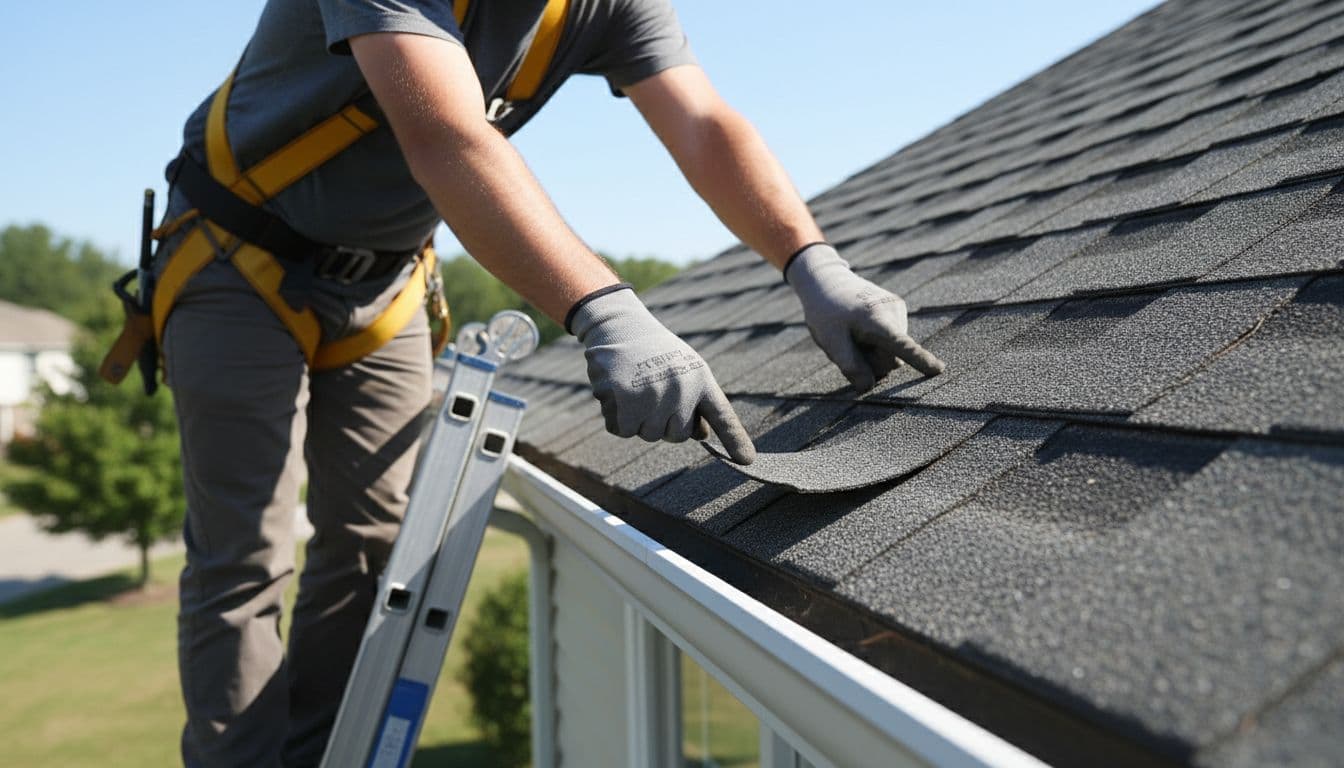
Here’s a smart way to inspect without turning it into a risky guessing game:
- Walk the property first: Look for shingle fragments, fresh granules, bent vents, or loose ridge cap pieces near the perimeter.
- Photograph each roof plane: Take wide shots first, then zoomed images of anything that looks lifted, folded, or torn.
- Compare slopes: Wind damage often clusters. One side may have several lifted tabs while the sheltered side looks normal.
- Check after the next warm day: Some tabs settle back down visually. If they still look lifted or shadowed, the seal may be gone.
If you have to climb a wet, high, or steep roof to “confirm” damage, it’s no longer a safe homeowner inspection.
Property managers should document the date of the storm, wind direction if known, and where each damaged area sits on the building. That record helps when damage appears small at first but spreads later. On mixed buildings with a shingle entry canopy and a low-slope main section, it also helps to compare those symptoms with these warning signs of 50 mph roof wind damage, since wind often affects both roof types differently.
When wind damage needs repair fast
A few lifted shingles on a newer roof may be repairable. Widespread creasing on an older roof is a different story.
If the tabs no longer reseal, each new storm gets another chance to pry them up. Once that happens, water can track under the shingles, reach the underlayment, and work toward nails, joints, and decking. That’s why “it still looks okay” can be such an expensive sentence.
Watch for three escalation signs. First, the same area keeps lifting after mild wind. Second, multiple slopes show broken or creased tabs. Third, you see fresh leaks or staining after rain, even though the roof looked fine from the ground.
Age plays a part as well. Older asphalt shingles get stiffer, and stiff shingles crease more easily. In other words, the roof may survive the storm visually but lose its ability to stay sealed.
For apartment buildings, churches, offices, or retail sites with both steep-slope and low-slope sections, keep the roof systems separate in your thinking. A wind-damaged shingle canopy may need tab replacement, while the main membrane area may call for commercial flat roof repair.
If damage is broad and the system is near the end of its life, owners may have to weigh commercial roof replacement. The key point is speed: once the seal breaks and the field of shingles start loosening, that commercial roof needs repair before the next weather swing makes the scope bigger. Don’t wait for a shingle to disappear completely. By then, the roof has already told you the story twice.
Conclusion
The biggest signs of wind damage on shingles are usually creased tabs, lifted edges, broken seals, granule loss, and missing pieces, not just dramatic blow-offs. Look for patterns, check the roof from the ground, and take photos while the storm timing is still clear. If the roof seems mostly fine but something looks off, trust that instinct. Fast action after wind damage is almost always cheaper than waiting for the first leak to prove it.
Need a roof inspection in Saint Paul or the Twin Cities? Call Sellers Roofing Company at +1-651-703-2336 or schedule a free estimate. We are a black-owned, NMSDC-certified MBE roofing contractor with 9+ years experience.