Last updated: 2026-08-01 by Ted Sellers, Owner
Yes, sometimes. In Minnesota, while policies allow for these payments, the insurance company often scrutinizes the necessity based on the complexity of the project, insurance can cover roof claim overhead profit when the work is large enough to need a contractor-managed repair or full replacement. It is not automatic, and smaller patch jobs, ACV payments, or policy endorsements can reduce or block it.
The real question is scope. If your commercial roof needs repair in one spot, the carrier may push back. If tear-off reveals wet insulation, code items, or a larger replacement, overhead and profit becomes much harder to leave out.
Key Takeaways
- Overhead and profit (O&P) is not automatic on Minnesota roof claims; it applies when the scope requires contractor coordination, like full replacements, multiple trades, or code upgrades, but not small patch jobs or ACV payments.
- Focus on scope over check amount: compare Xactimate estimates, document hidden damage with photos/moisture readings/test cuts, and use supplements for missed covered work.
- Policy language matters—replacement cost is better than actual cash value; ordinance/law coverage boosts claims with code items; challenge carrier reductions with exact wording.
- Follow steps: build proof, submit written objections, request reinspection or appraisal if needed; strongest claims match real repair needs with clear documentation.
When This Applies
Roof claims where O&P is more likely
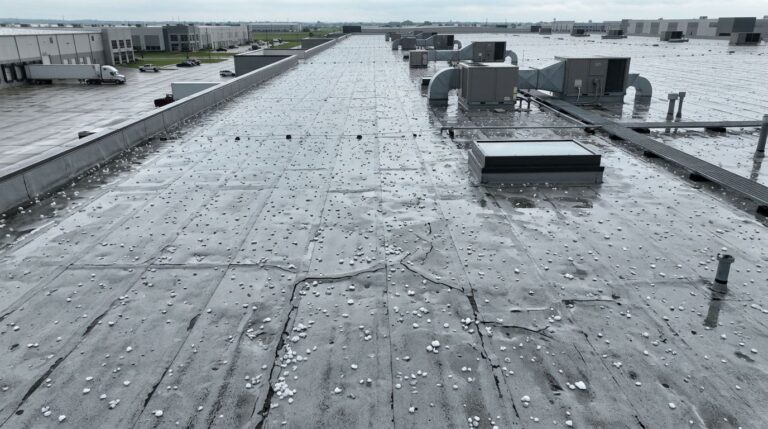
O&P usually shows up when the job needs more than a single repair crew. That often happens on commercial flat roofs, especially after hail, wind, punctures, or hidden moisture.
These situations usually move the claim closer to O&P:
| Claim situation | O&P is usually |
|---|---|
| Full or major roof replacement | More likely |
| Multiple trades or a general contractor are needed | More likely |
| Small seal repair or one isolated patch | Less likely |
| ACV-only payment with no replacement-cost holdback | Less likely |
The pattern is simple. The more coordination, tear-off, and code work the roof needs, the stronger the case for O&P. The presence of multiple trades often triggers the industry standard for payment, like the three trades rule. For a roof replacement, the complexity of the job typically requires a general contractor to manage the coordination of work involving multiple trades and subcontractors.

When it usually does not apply
A carrier often resists O&P on a small repair. That happens when one crew can handle the work without a broader construction role or the need for a general contractor.
It also may not apply if the policy language limits replacement cost, or if the insured cannot show that O&P is part of the cost of fixing the roof to code. A Minnesota Supreme Court summary from Zelle’s discussion of section 65A.10 shows why that code tie matters.
A check amount by itself tells you very little. The scope tells you whether O&P belongs.
What Minnesota Policy Language Usually Controls
Replacement cost versus actual cash value
Most disputes start with the payment structure in a homeowner policy. Replacement cost coverage is usually better for the insured because it aims at the cost to repair or replace the damaged property. Actual cash value is more limited, since it often starts with depreciation taken out.
That matters because overhead and profit may come later, after the work is done and documented, especially in replacement cost settlements where the standard “10 and 10” (10% for overhead and 10% for profit) is typically applied. If the policy pays actual cash value only, the room for these additions is much smaller.
Code items can change the number
Minnesota claims often turn on whether the repair must meet current code. If tear-off reveals insulation, edge metal, fasteners, or other details that must be upgraded to stay compliant, the payment can rise fast.
That is where ordinance or law coverage matters. If it exists and the loss triggers it, the claim may include more than surface repairs. If it does not exist, the insurance company may still owe the direct repair cost, but not every upgrade tied to the project.
Endorsements and carrier rules are not the same thing
Some policies include O&P endorsements or special limits. Others do not. Internal claim rules do not override the policy, but a real endorsement can.
Ask for the exact policy language when the carrier cuts the line item. If the insurer cannot point to the wording, the reduction is easier to challenge.
Step-by-Step
1. Compare the scope, not the check
Start with the line items. Look at membrane squares, insulation thickness, tear-off, flashing, drains, permits, and disposal. Compare the Xactimate report from the insurance adjuster with the actual labor and materials costs calculated by the roofing contractor using an estimating program. A low payment often comes from a missed item, not from a bad labor rate.
If the roof needs a larger scope than the carrier listed, the issue is not just price. It is an incomplete estimate.
2. Decide whether the roof is repairable or not
If the damage is isolated, commercial flat roof repair may be enough. In that case, overhead and profit may stay out of the insurance claim.
If tear-off exposes wet insulation, damaged substrate, or failed seams across a wide area, the job may move toward commercial roof replacement. That is the point where overhead and profit is much easier to justify.
3. Build proof for missed damage
Take photos, moisture readings, test cuts, and field measurements. Tie every added item to the covered loss with supporting documentation. That evidence matters when the carrier only priced the visible damage.
A local inspection from Saint Paul commercial roofing contractors can help when the file needs better documentation. On low-slope roofs, hidden moisture and spread-out damage are common, so a quick walk-through is often not enough.
4. Use a supplement for omitted covered work
A roofing supplement or supplemental bill is the right tool when the first estimate missed real repair items. It is not for upgrades, cosmetic changes, or a different roof design.
Roofing supplements work best when the new proof shows why the first scope is short. If the insurance claim started as a small patch but now shows broader damage, the supplement can correct the gap.
5. Put the objection in writing
Ask the insurance adjuster why it removed overhead and profit. Then answer with photos, measurements, policy language, and code notes. Keep it short and specific.
A clean rebuttal should say what was missed, where it was missed, and why it belongs in the covered scope. That approach keeps the dispute focused on facts.
6. Escalate if the gap stays open
If the insurer still refuses to adjust, request a reinspection. Consider an assignment of benefits with a roofing contractor to strengthen your position. If the policy allows appraisal, that may be the next step when both sides agree that damage exists but disagree on price.
For large commercial losses, a coverage attorney can help if the carrier keeps treating a replacement as a minor repair. The goal is to match the payment to the real scope, not to fight about labels.
Conclusion
Minnesota does not treat overhead and profit as an automatic add-on. It covers a contractor’s operating expenses and provides a reasonable profit to ensure business growth, which is a standard part of a fair claim settlement. It belongs when the real roof work needs contractor coordination, especially on larger commercial claims.
If your commercial roof needs repair in an insurance claim, the first estimate is only the starting point. The carrier has to pay for the covered scope, and the scope is what decides whether O&P delivers the necessary profit margin.
The strongest claims are the ones with clear photos, clean notes, and a repair path that matches the roof in front of you.
FAQ
Does insurance always pay overhead and profit on a Minnesota roof claim?
No. While a roofing contractor or insurance adjuster might propose O&P on the insurance claim, the insurance company often evaluates based on the size of the job, the policy language, and whether the repair really needs a contractor-managed scope. Small patch work often does not support it.
Can overhead and profit apply to a small commercial flat roof repair?
Sometimes, but it is less common. If one crew can complete the work without real coordination, carriers often argue that O&P is not part of the reasonable repair cost.
What if the insurer pays actual cash value first?
That is common. Depreciation may be held back until the repair is completed. Depending on the policy, O&P may also be reviewed again after the final work is documented.
Do supplements help with overhead and profit?
Yes, if the first estimate missed covered work or undercounted the job. A supplement can add labor, materials, and code items that were left out. It does not create coverage for upgrades or old wear.
What documents help most in Minnesota roof disputes?
Photos, moisture readings, test cuts, line-item comparisons, and code notes matter most. If the roof has hidden damage, keep the tear-off record and the inspection notes together so the claim file stays clear.
Need a roof inspection in Saint Paul or the Twin Cities? Call Sellers Roofing Company at +1-651-703-2336 or schedule a free estimate. We are a black-owned, NMSDC-certified MBE roofing contractor with 9+ years experience.