Last updated: 2026-05-26 by Ted Sellers, Owner
If you’re asking, what are the cons of TPO roofing before selecting a single-ply membrane. TPO can look attractive on paper, but leakage and premature aging sometimes appear sooner than expected.
This article previews common failure modes: seam problems, heat-driven cap-layer loss, and surface issues, so you can spot trouble and act quickly. For property and facility managers, identifying these risks early protects budgets and tenants from unexpected repairs.
Below you’ll find explanations of what causes seams to fail, how heat and UV damage the cap layer, and what surface signs to watch for on-site. The goal is practical: help you decide whether TPO fits your roof and outline steps Sellers Roofing Company uses to reduce risk in Saint Paul and the Twin Cities. That includes installation checks, seam testing, and maintenance strategies tailored to Minnesota weather. Use this guide to ask smarter questions of contractors and to document problems for quotes or warranty claims.
Seam vulnerabilities and heat damage
Seams are the most common source of leaks on TPO roofs, and welding quality often determines long-term performance. Inconsistent heat or hand-welding creates weak points where water can work its way under the membrane, and those failures usually show up along lap lines. Insist on automatic welders and routine field testing to reduce the chance of incomplete fusion. Industry resources that document common TPO failures can help you spot manufacturer- or formulation-specific issues when evaluating bids.
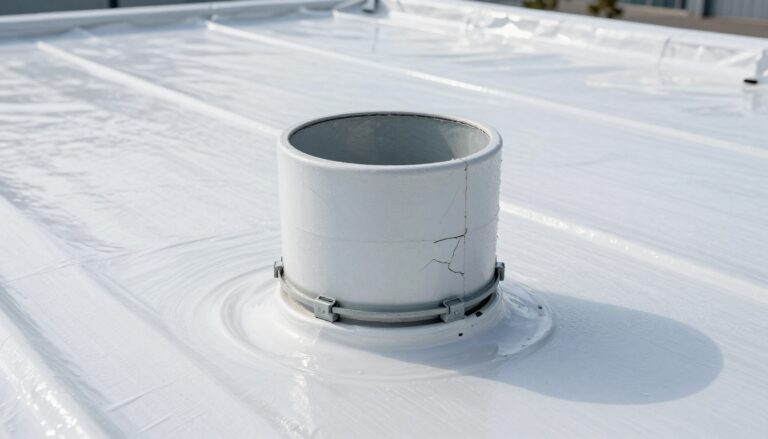
You can spot seam distress from the ground with a quick visual check: look for raised or puckered seams, small linear splits along weld lines, dark streaking that follows a seam, or blistering near seam edges. Photograph and log any findings so technicians can plan nondestructive or destructive testing as needed. Early detection often limits repairs to patches or localized re-welding rather than a full replacement.
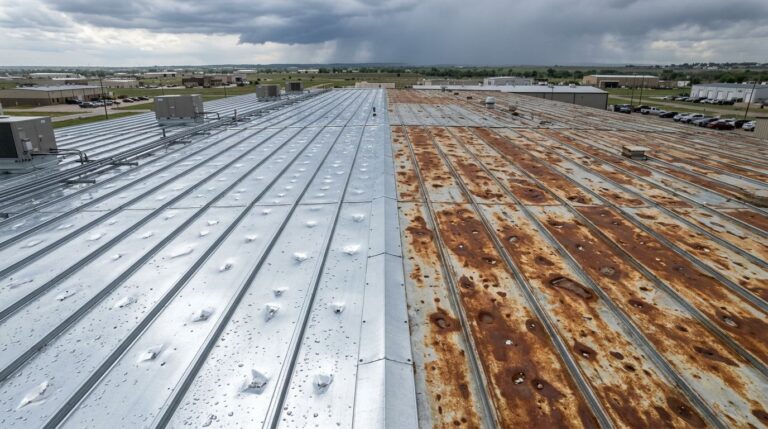
Heat and UV exposure are the primary drivers of cap-layer erosion, which makes the membrane brittle and prone to cracking. Dirt buildup, reflected heat from rooftop equipment, and nearby solar arrays can raise local temperatures and speed up this process. Choose validated formulations and thicker membranes where heat exposure is high to slow cap loss and extend service life.
Punctures from foot traffic or rooftop equipment, membrane shrinkage that stresses seams, ponding that accelerates wear, and limited color options are other common drawbacks. Lighter-colored TPO improves reflectivity but doesn’t eliminate the need for proper membrane selection and detailing. These factors influence placement of rooftop equipment and the choice of protective measures.
Key takeaways
- Seams are the most common failure point on TPO roofs. Poor welding creates leaks, so require automatic welders and documented seam testing during installation.
- Heat and UV exposure accelerate cap-layer loss and cracking. Choose membranes that have passed heat-aging tests and plan rooftop layouts to reduce reflected heat. For a concise summary of TPO advantages and tradeoffs, seeDiscover The Advantages Of TPO Roofing Today!.
- Field signs are usually visible from the ground, including gaps, flapping membrane, dark streaks, blisters, and ponding. Photograph and log every finding to support quotes, inspections, and warranty claims.
- Upfront savings on materials or installation often lead to higher long-term costs. Budget for both repairs and lifecycle replacement so you can compare total cost, not just sticker price.
- Require installation checklists, routine seam testing, and a maintenance plan to catch issues early. Sellers Roofing Company offers free inspections, certified crews, and documented maintenance to reduce these common risks.
What are the cons of TPO roofing: major failure modes
How these problems show up in the field and what they cost you
One major drawback of TPO is performance variation between manufacturers and formulations. Accelerated heat-aging tests show some membranes lose protective mass much faster than others, so product selection matters as much as installation.
Ask for validated test data and field samples from similar climates when comparing bids; published studies such as GAF’s aged TPO study provide useful comparative data for decision making.
Estimated service life for TPO typically ranges from 15 to 30 years, depending on membrane thickness, climate, rooftop equipment, and maintenance.
For comparison, EPDM often reaches 20–35+ years, PVC commonly lasts 20–30 years, and metal roofs generally outlive most single-ply systems on steep slopes. Use these numbers to size replacement reserves and to evaluate lifecycle cost rather than choosing solely on upfront price.
Certain conditions increase the risk of failure and require more frequent inspections: high UV exposure, reflected heat from nearby surfaces, solar panels or rooftop equipment that trap heat, and flat areas prone to ponding.
Owners can reduce these risks by removing debris and scheduling regular cleaning, adding walking pads and cover boards at traffic points, and improving drainage with tapered insulation.
Specify manufacturer-validated TPO formulations and hire certified welders to ensure seams are made correctly. These preventive steps lower repair frequency and extend usable life. For additional technical context on testing methods, see industry testing references such as Testing TPOs.
Sellers Roofing case studies: repairs and maintenance that fixed real TPO failures
Case study 1: A retail center had seam separation and interior leaks around tenant storefronts. Sellers Roofing Company used destructive seam testing to locate weak laps, removed compromised sections, and re-welded the area with automatic welders and stainless-steel cover strips to restore uniform pressure across seams.
Targeted insulation replacement addressed moisture issues, interior leaks stopped, and follow-ups confirmed the repairs held.
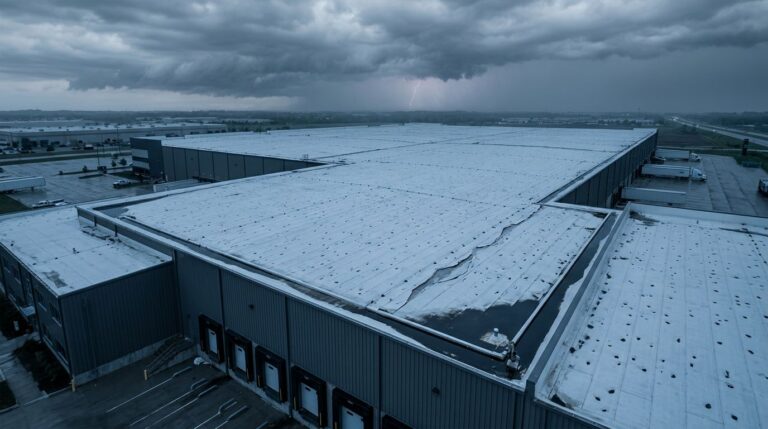
Case study 2: An older distribution warehouse showed cap-layer degradation and widespread surface cracking from long-term heat exposure.
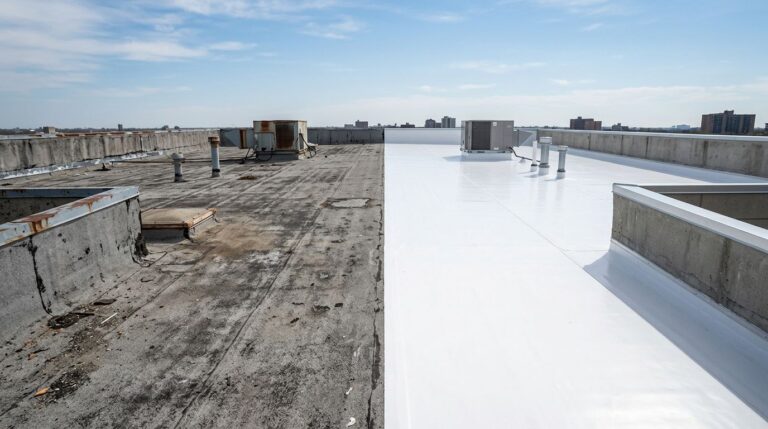
Sellers Roofing replaced the worst sections with a thicker membrane featuring a high-reflectivity top layer, corrected low spots to improve drainage, and applied a reflective coating to remaining field areas.
The work lowered peak roof temperatures and extended useful life without a full tear-off, while a tied warranty clarified coverage for the owner.
For real-world performance comparisons and continuing-education resources that evaluate aged TPO roofs, consult industry course summaries such as evaluating real-world performance of field-aged TPO roofs.
Case study 3: An office building enrolled in a semi-annual inspection program that detected small punctures and early shrinkage before they grew. Sellers Roofing performed targeted patching, re-tacked flashings and drains, removed debris, and replaced small insulation pockets to stabilize the membrane. Those routine actions deferred a costly replacement and reduced the building’s lifecycle cost.
Cost and repair tradeoffs: budgeting for repair, patch or full replacement
Material prices for TPO generally run between $1.00 and $3.75 per square foot, and total installed costs commonly fall between $4 and $12 per square foot depending on membrane formulation and job complexity. Expect mid-range projects to land near $6.50–$11.50 per square foot when insulation, penetrations, and flashings are included. Use a budget cushion rather than relying on a single low quote.
Membrane thickness, insulation type and R-value, and whether a full tear-off is required all drive cost. A thicker TPO or higher-grade insulation raises upfront expense but typically improves lifecycle performance, while an overlay can lower the initial price but may hide underlying problems. Treat a low initial quote as one data point, not a final decision.
Common repairs include seam re-welds, localized overlays, patching, flashing replacement, and drainage corrections. Small seam or puncture fixes often take a day or two and cost from a few hundred to a few thousand dollars; overlays or larger flashing work scale into the thousands and take longer. Contractor rates, warranty options, and the percent of roof affected determine whether repair or replacement makes sense.
Use a simple ROI check: annualized cost equals repair or replacement cost divided by the expected remaining life after the work. For example, a $5,000 repair that buys five extra years equals $1,000 per year, while a $40,000 replacement with 20 years of life equals $2,000 per year. Factor in warranty length and likely maintenance savings to choose the most cost-effective path.
How to reduce risk: installation standards, testing and maintenance
Ask direct, specific questions so contractors cannot answer with vague assurances. Request proof that crews are manufacturer-certified for the exact TPO brand, that automatic welders and trained operators will be used, and that the proposal includes membrane model and mil rating.
Also ask about minimum lap width, on-site seam testing methods (nondestructive scans or destructive peel tests), who issues the warranty, and whether daily quality logs and test reports will be provided with the final closeout.
Protect the roof after installation with a maintenance plan that includes semi-annual inspections, post-storm checks, routine cleaning to prevent thermal hot spots, and same-day flashing or seam repairs when issues are found. Include emergency response steps and 24/7 tarping in the service plan so interior damage is limited while permanent fixes are scheduled. Regular care reduces lifetime cost and extends the useful life of a properly installed system.
Deciding if TPO is right for your building and how Sellers Roofing Company helps
Decide if TPO fits by mapping roof characteristics to specific actions rather than relying on a single rule. For example, chronic ponding usually favors EPDM or a mechanical upgrade to drainage; roofs with heavy foot traffic need thicker membranes and more frequent inspections.
If reflected heat or closely grouped rooftop equipment is present, avoid thin formulations and require heat-tested membranes. For more on when TPO is a strong choice for commercial properties, see Why TPO Roofing Is Ideal For Your Commercial Building.
EPDM performs well with ponding and offers long service life with minimal maintenance, PVC provides stronger chemical resistance for industrial sites, and metal roofs last longest on steep slopes or in high-impact locations. Compare these tradeoffs side-by-side with lifecycle cost and maintenance needs, not only installation price.
That approach helps you match the system to priorities like longevity, chemical exposure, or upfront budget. If you manage an EPDM roof or are evaluating one as an alternative, consult this Expert Guide To Inspecting And Maintaining Your EPDM Roof for inspection and maintenance best practices.
Sellers Roofing Company helps by providing free inspections, certified crews using automatic welding and seam testing, and documented maintenance plans that focus on the issues that cause most TPO failures.
The company reviews warranties, provides transparent pricing, and offers 24/7 emergency response to limit interior damage after storms. Schedule an inspection and Sellers Roofing will convert your checklist into a clear recommendation tailored to your building and budget.
Next steps after learning what are the cons of TPO roofing
Knowing what are the cons of TPO roofing helps you spot problems early and make better purchasing decisions. The main points: early-generation TPOs vary in quality, seam distress is often visible from the ground, and heat-related cap erosion shortens service life if not addressed.
Those conditions lead to leaks and higher repair costs, but routine checks and targeted repairs often restore performance and delay a full replacement.
Take two practical steps now:
- Spend 60 seconds walking the roof perimeter to photograph obvious seam distress.
- Schedule a free, detailed roof inspection with Sellers Roofing Company to uncover hidden issues.
A quick visual check combined with a professional inspection will clarify risk and help you choose the right maintenance or replacement plan. Protect your building and budget with a documented plan from a certified local crew.
Need a roof inspection in Saint Paul or the Twin Cities? Call Sellers Roofing Company at +1-651-703-2336 or schedule a free estimate. We are a black-owned, NMSDC-certified MBE roofing contractor with 9+ years experience.