Last updated: 2026-08-01 by Ted Sellers, Owner
A denied roof insurance claim after a storm can be frustrating, but a denied roof claim after hail isn’t the end of the road. Start by getting the exact denial reason in writing, then build a clean evidence packet that ties damage to the storm date. Ask for the insurer’s full claim file (photos, adjuster notes, reports), submit a written reconsideration request, and escalate through reinspection, appraisal, or a formal complaint if needed.
When This Applies
This fits if you’re a commercial owner with storm-timed damage
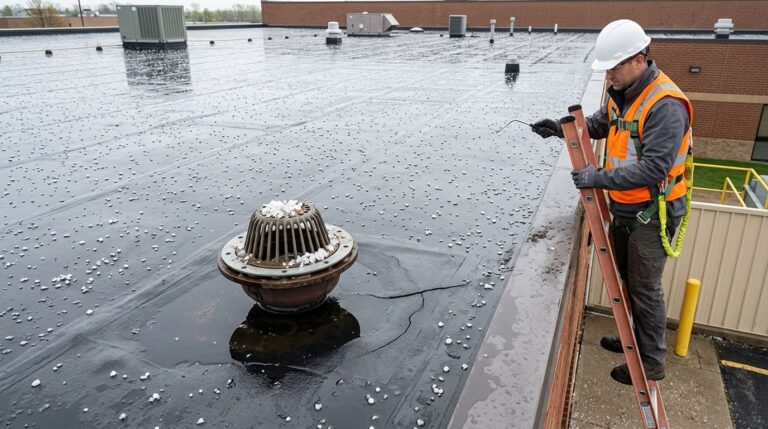
This applies when a hail event hit your area, you filed a claim, and the insurer denied it or approved only a small portion, sparking a hail damage claim dispute. It’s common on low-slope systems where bruised insulation, membrane fractures, or damaged seams don’t always show up in a quick walk-through.
Denials often come down to one of three things: the insurer says the marks are cosmetic damage, they blame wear and tear, or they say the damage isn’t from the reported storm date. If your roof is now leaking, if tenants are calling, or if your commercial roof needs repair to keep operations running, you need both a claim plan and a building protection plan at the same time.
The goal is simple: replace opinions with evidence of roof damage. That proof usually looks like time-stamped photos, a mapped inspection, and documents that show the roof was performing before the storm (or that any pre-existing issues were limited and separate).
Denial language that still leaves room to challenge
If your letter references “maintenance,” “aging,” “installation defects,” or “cosmetic damage,” don’t assume that’s final. Those phrases often get used when the file lacks clear cause-and-date evidence.
A stronger inspection package and a detailed written request for reconsideration can change the outcome. For background on how disputes and next steps are commonly handled, see this overview of hail claim dispute steps.
When an appeal may not be the right first move
Some situations call for a different sequence. If there’s active water entry, you may need commercial flat roof repair immediately, even while you dispute the denial. Likewise, if the insurer denied based on an engineering report, you may need your own qualified roof consultant or engineer first, not another contractor estimate.
Urgent exceptions where you should act before paperwork
If you have electrical risk, interior damage spreading, mold concerns, or a safety hazard, mitigate right away and document it. Most policies require you to prevent more damage. Keep receipts, work orders, and photos before and after temporary repairs so the mitigation can’t be reframed as “new damage.”
If you’re in the Twin Cities and need a second set of eyes, like an independent inspection, on storm documentation for a commercial building to meet insurance adjuster expectations, the Sellers Roofing Company commercial roofing team in Saint Paul can help outline what adjusters typically need to see for a clean, reviewable file.
Step-by-Step
Stabilize the building, then build an appeal packet that’s hard to ignore
- Read the denial letter twice, slowly, then highlight the exact reason for denial and every policy reference they cite (insurance policy exclusions, limitation, endorsement, or definition).
- Confirm what was actually denied in writing (full denial, partial denial, or below the deductible amount) and ask the insurer to restate it in one sentence you can quote back.
- Protect the property right now if water is getting in. Authorize temporary measures, document the condition first, and save every invoice and photo.
- Request the complete claim file from the carrier and ask for it in digital form. Specifically request the adjuster’s estimate, photos, notes, diagrams, any engineering report, and any weather or hail analysis they relied on.
- Gather your best “date and cause” documents as documentation of damage: roof inspection reports (pre-storm if you have it), weather reports, maintenance logs, prior repair invoices, interior leak photos tied to the storm timeline, and any roof warranty or manufacturer info that helps explain expected performance.
- Get a professional roof inspection with a damage map, not just a summary. Your report should identify test areas, membrane conditions, accessory damage (HVAC curbs, vents, flashing), and include clear photos with locations.
- Ask for an itemized scope and repair estimates that matches how commercial claims are reviewed (quantities, photos, line items, and a plain explanation of why spot repair won’t restore performance). If the damage is widespread, the estimate may justifiably point toward commercial roof replacement instead of piecemeal work.
- Write a short formal appeal letter that sticks to facts: storm date, observed damage, why the denial reason doesn’t fit, what documents you’re attaching, and the action you’re requesting (reinspection, revised scope, or supervisor review).
- Request a second inspection with the right people present, including your roofer/consultant. Ask the carrier to confirm who will attend (field adjuster, desk adjuster, engineer) so you’re not arguing the file to someone without authority.
- Escalate using the policy’s dispute options if they won’t move. Ask about the appraisal clause (if included), determine if the settlement is based on replacement cost value or actual cash value, ask for the internal appeal process, and document every call with date, name, and summary. For a plain-language discussion of common denial responses, review what to do when a roof claim is denied.
FAQ: Denied hail roof claims for commercial properties
Should I ask for the adjuster’s photos and notes, or is that “too aggressive”?
Ask. You’re not picking a fight; you’re closing an information gap. The insurance adjuster’s photos, measurements, and notes show what they did and did not document. If the file has blurry photos, missing elevations, or no damage map, you’ve found the weak spot you need to fix with better documentation.
What to say if they resist
Ask for “the complete claim file materials relied upon to make the coverage decision on policy coverage and to justify any low-ball settlement,” and request a delivery date.
What documents help most when the insurer says “wear and tear”?
Documents that separate old conditions from storm-caused change. Maintenance logs, pre-storm inspection reports, and dated repair invoices help. A post-storm report that explains why the pattern matches hail (and why normal aging wouldn’t create that pattern) is often the difference between a dead end and a reopened file.
If your roof has prior patches
That’s not automatically bad. The key is showing whether the hail created new failures outside those areas.
What if they say the damage is “cosmetic” but the roof is leaking?
Push for a performance-based review. On many commercial systems, “cosmetic” language doesn’t address functional impact like seam issues, punctures, compromised flashing, or saturated insulation. Provide interior photos and moisture findings tied to the storm timeline, then request a reinspection focused on function, not appearance.
Should I hire a public adjuster, a roofing consultant, or an attorney?
Match the help to the problem. If your file is missing technical proof, a qualified roof consultant or experienced roofing contractor can tighten the documentation. If the carrier is unresponsive or the dispute is procedural and stalled, a public adjuster may help manage the claim.
If you suspect bad faith handling or need legal interpretation, talk to a property damage lawyer. For escalation, consider filing a complaint with your state department of insurance or pursuing mediation or arbitration. For another perspective on denial pushback after hail, see what to do when insurance won’t cover hail repairs.
What happens if I repair the roof before the dispute is resolved?
You can, and sometimes you must, but document everything first, including factors like recoverable depreciation and future insurability. Take wide and close photos, mark locations on a roof plan, keep removed materials when feasible, and save all work orders.
Make sure your contractor notes what was found after opening the system, because that hidden condition often explains why a denial was wrong.
If you’re authorizing emergency work
Put in writing that the work is temporary mitigation to prevent further damage, not a full acceptance of denial.
Where this leaves you
A denial in your hail damage claim dispute can feel personal, but it’s usually a file problem, not a you problem. If you rebuild the roof insurance claim around clear documents and specific requests, you give the carrier fewer places to hide. Protect the building, tighten the evidence, and keep every communication in writing, until the outcome matches the damage you can prove.
Need a roof inspection in Saint Paul or the Twin Cities? Call Sellers Roofing Company at +1-651-703-2336 or schedule a free estimate. We are a black-owned, NMSDC-certified MBE roofing contractor with 9+ years experience.