Last updated: 2026-08-01 by Ted Sellers, Owner
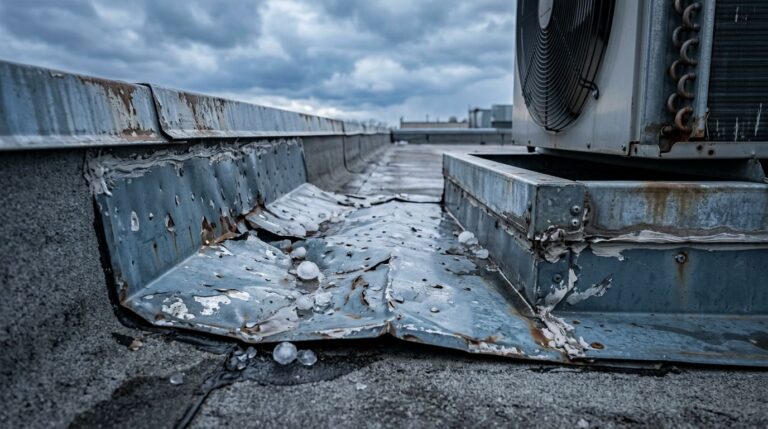
On Minnesota buildings, EPDM roof wind damage usually looks like lifted seams from high winds, curled edges, loose flashing, stretched EPDM membrane, ripples, and punctures from blown debris. Damage often starts at roof corners, perimeter edges, and around rooftop units. If sections look peeled back or no longer lie flat, water can get underneath fast and the roof needs prompt attention.
Key Takeaways
- Wind damage on EPDM roofs shows as lifted seams, curled edges, loose flashing, stretched membrane, ripples, and punctures, often starting at corners, perimeter edges, and around rooftop units.
- After strong winds in Minnesota, inspect inside first for leaks, then safely check high-risk areas like edges and drains; photograph issues for insurance and repairs.
- Differentiate wind damage from age, shrinkage, or hail; ballasted roofs may hide issues under missing stone, so professional inspection confirms seam failure and moisture spread.
- Act fast—even small lifts allow water entry that travels far; targeted repairs work for limited damage, but replacement often fits older, failing roofs.
When This Applies
Which buildings and weather events fit this problem
This applies to business owners with commercial roofing like EPDM on low-slope or flat roof areas, especially warehouses, retail buildings, schools, and office properties with wide open roof areas. Older roofs, roofs with past seam repairs, and buildings in exposed sites deserve a closer look after a strong wind event.
Minnesota’s severe weather adds extra stress because freeze and thaw cycles weaken seams and flashing first. Then wind hits the weakest detail. A roof may look fine from the parking lot while the membrane has already started to lift.
When the damage may come from another cause
Not every wrinkle or crack came from one storm. Age, membrane shrinkage, foot traffic, and poor drainage can mimic wind damage on EPDM. Hail can also leave membrane punctures that look similar, although the fix may differ.
This article fits EPDM membranes on commercial buildings. If your roof is TPO, PVC, metal, or shingles, the warning signs change.
Ballasted EPDM roofs need a different look
On ballasted EPDM, a type of synthetic rubber, roofs, missing stone, drifted ballast, or exposed membrane may be the main clue. The black sheet can be damaged under that surface layer, so the roof still needs a close inspection.
What EPDM Roof Wind Damage Looks Like
The membrane usually shows the first clues
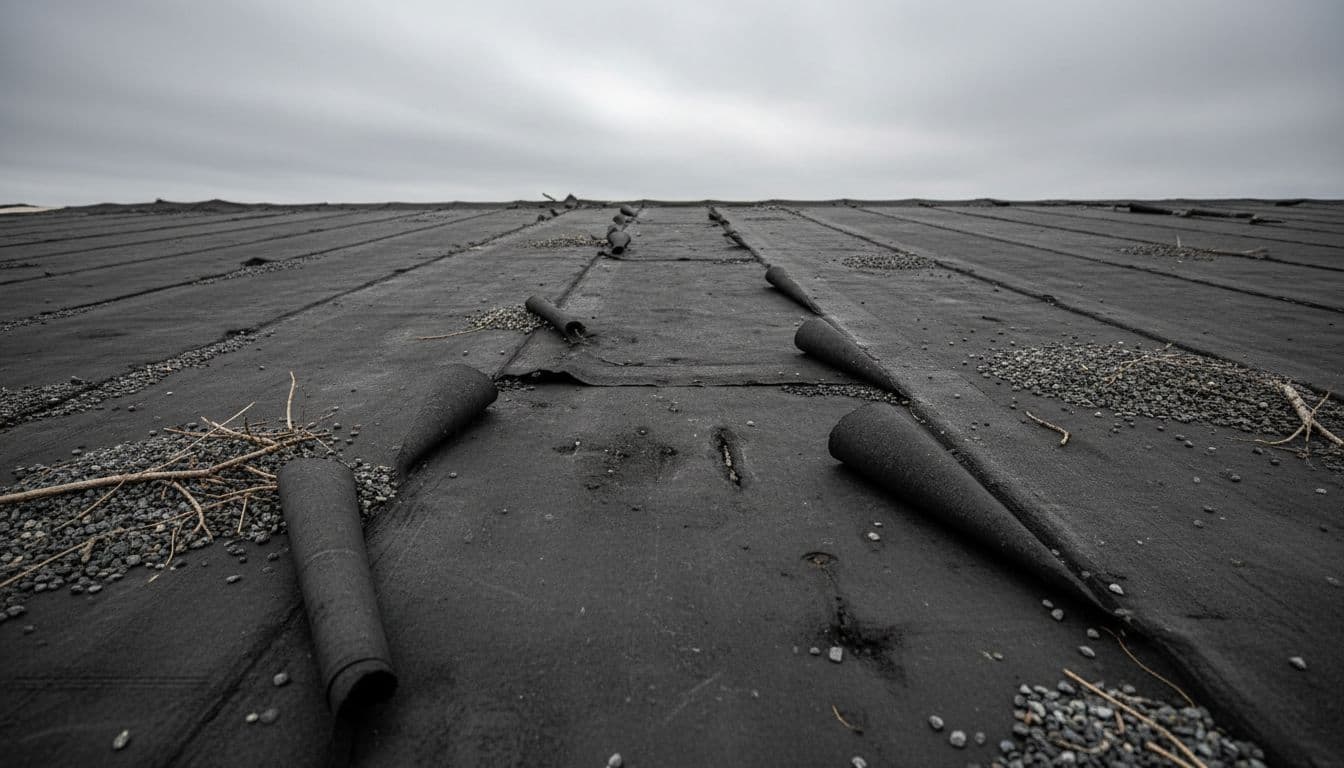
After a wind event, the first signs of wind uplift are often subtle. You may see seam edges lifting on the windward side, corner flashing pulling loose, or the EPDM membrane forming ripples that were not there before. Some areas look stretched on the leeward edges, while others curl upward at the perimeter.
On adhered EPDM, adhesive failure may cause the sheet to lose bond and feel loose underfoot. On mechanically attached systems, fastener lines can show through as the EPDM membrane billows. Look closely at termination bars, wall flashings, vents, curbs, and drains on the windward side, because wind pulls on those details from several directions.
Water can show up far from the lifted area
Water infiltration rarely drops straight down from the opening. Moisture infiltration can move through insulation and show up far from the failed seam. If stains appear after wind, a professional EPDM seam inspection post-storm can help trace the real source before damage spreads.
What serious wind damage looks like on a commercial roof
Severe storm damage is easier to spot. Sections may peel back, edge metal can loosen, flashing can detach, wet insulation may sit exposed, and substrate support can fail, leading to potential structural damage on the roof deck. At that stage, the commercial roof needs repair right away.
If damage is limited, commercial flat roof repair may solve it. If the membrane is old, saturated, or failing in several zones, commercial roof replacement often makes more sense. For larger storm losses, storm-damaged EPDM commercial roofing services can help document conditions and map the full scope.
If the membrane has lifted, the roof has already lost part of its wind hold.
Step-by-Step
How to respond after a wind event
- Start your roof inspection inside the building. Check ceiling tiles, wall tops, upper offices, and mechanical rooms for fresh stains, drips, or damp odors.
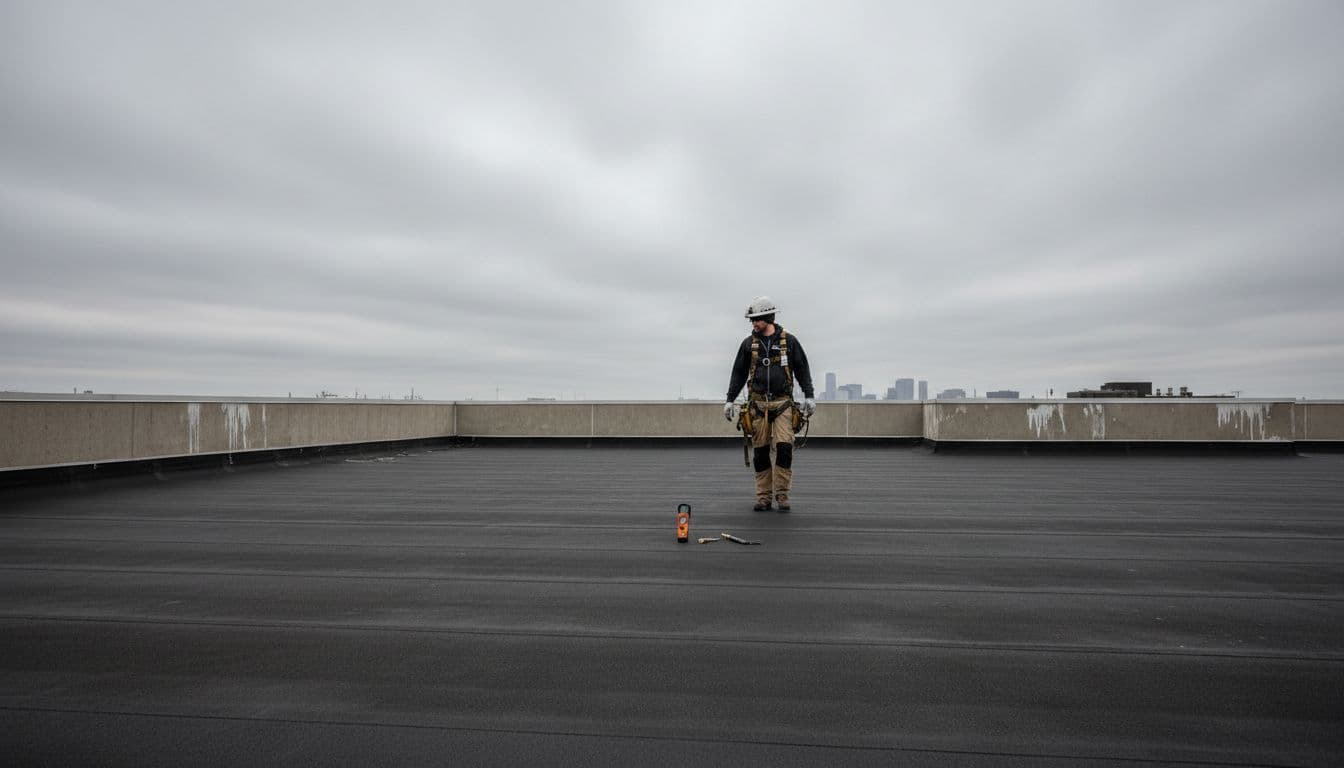
- Conduct the roof inspection only when conditions are safe and dry. Focus on corners, edges, drains (look for ponding water), parapet walls, and rooftop equipment first.
- Photograph any lifted seams, loose flashing, wrinkles, punctures, missing ballast, or exposed insulation. Good photos help with repair planning and insurance claim review.
- Mark damaged areas without pulling on the membrane. A loose sheet can tear wider if someone tries to press it back down.
- Protect the building envelope quickly if water is entering. Temporary covering may reduce interior damage, but it does not replace a full repair.
- Review the roof’s age and repair history as part of your proactive maintenance plan. A local tear on a newer membrane is different from repeated failures across the same roof.
- Schedule a professional roof inspection with a qualified roofing contractor to confirm moisture spread, seam failure, and the appropriate repair techniques. That decision often separates a targeted fix from a larger replacement plan.
FAQs About Wind-Damaged EPDM Roofs
Can an EPDM roof have wind damage without a big tear?
Yes. Early wind damage often starts as edge lift, separation in seams and flashing, or loose flashing. The EPDM membrane can look mostly intact while wind has already opened a path for water.
How long can I wait if the roof is not leaking yet?
Not long. Minnesota rain, thawing snow, and overnight temperature swings can turn a small lifted seam into a leak quickly. Fast inspection usually costs far less than interior cleanup.
When does repair stop making sense?
Age and trapped moisture change the answer
If the roof has widespread wet insulation, repeated seam failures, or is near the end of its service life, spot fixes may only delay the problem. In that case, replacement often gives a better long-term result.
Will insurance need proof of the storm?
Usually yes. Photos, dated notes, weather timing, and a clear inspection report help connect the loss to a wind event for your insurance claim. Without documentation, older wear may get blamed instead.
Can my business stay open during repairs?
Often yes, because many commercial roofing EPDM repairs happen in sections. Access points, odor control, safety barriers, and work hours matter, so planning around staff and customers keeps disruption lower.
Lifted seams, pulled edges, loose flashing, and membrane movement are early warnings, not cosmetic flaws. On EPDM roofs in Minnesota, wind damage often starts small and gets expensive later.
For business owners, the safest rule is simple. If the membrane no longer sits tight, the roof has lost part of its weather seal. A quick inspection now can prevent a much larger problem later.
Need a roof inspection in Saint Paul or the Twin Cities? Call Sellers Roofing Company at +1-651-703-2336 or schedule a free estimate. We are a black-owned, NMSDC-certified MBE roofing contractor with 9+ years experience.