Last updated: 2026-05-26 by Ted Sellers, Owner
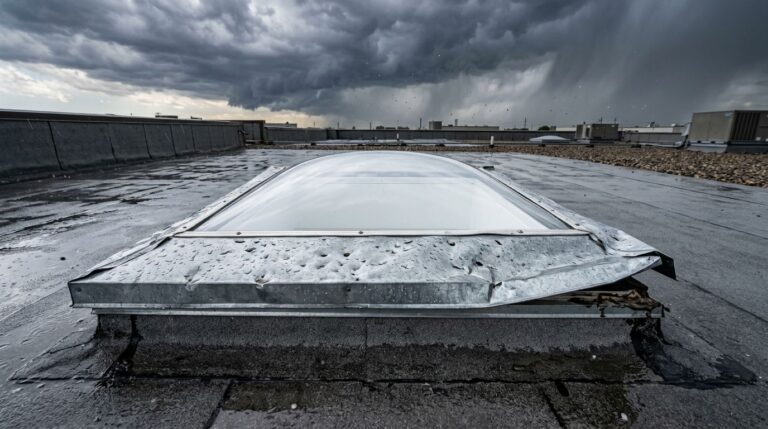
After a hailstorm in Roseville (55113), start with a safe ground check: look for granule piles in gutters, dents on vents and flashing, cracked skylights, and any indoor stains. Photograph hail next to a ruler and note the date. If you suspect damage, book a roof inspection. A re-roof in Roseville requires a building permit, and the final inspection includes photo verification of the ice-and-water barrier before it’s covered. Decide repair vs replacement based on roof age, damage density, and leak risk.
At-a-Glance
- Symptoms: Granule piles in gutters; dents on vents/flashings; indoor water stains.
- Urgency: File your claim within your policy’s deadline (many allow 1 year from date of loss). Tarp active leaks immediately.
- Who to call: Your insurance agent first, then a local roofer—see the Roof Leak Emergency Guide for what to photograph and short-term steps.
Local Layer: Neighborhoods, Roof Stock, and Seasonal Risks
Homes around Midland Hills, Langton Lake, Reservoir Woods, Lake Owasso, Lake Josephine, and McCarrons are often mid-century gable or split-level styles with architectural asphalt shingles and occasional low-slope garage or porch additions. Lakeside winds can drive hail at an angle, dinging soft metals first. Mature trees near Reservoir Woods and Langton Lake can hide granule loss until you check gutters. Winter ice dams can worsen weak points left by hail, so underlayment details at eaves and valleys matter.
Understanding Roof Hail Damage in Roseville
Hail forms in strong thunderstorms and falls as solid ice. Storms that produce quarter-size to golf-ball hail can strip shingle granules, bruise the asphalt mat, or crack tabs. On low-slope areas, impacts can scuff membranes and stress seams. Damage may not leak right away; heat-cold cycles and rain can open it over time. Older roofs (15–25 years) are more prone to visible cracking, while younger roofs may hide bruises that show up later as fresh granule piles or faint attic stains.
Causes and Contributors
- Storm intensity: Larger stones raise the chance of bruises and punctures. Wind sends hail sideways, concentrating hits on vents, flashing, and ridge caps.
- Roof age: As shingles age, the mat stiffens and seal strips weaken, making bruises and cracks more likely.
- Drainage: Clogged gutters slow water; heavy rain after hail exploits minor impacts.
- Exposure: Eaves, ridge caps, valleys, and slopes facing the storm show damage first; lakeside winds amplify impacts.
Step-by-Step Inspection Checklist (Homeowner + Pro)
Safety first: If the roof is wet, steep, or debris-covered, stay on the ground and call a pro.
- Perimeter sweep — Photograph each elevation, hail piles, downed branches, and any shingle fragments.
- Gutters & downspouts — Check for fresh granules; photograph dents in elbows and end caps.
- Siding & trim — Note new dings in metal trim, torn screens, and marks near windows.
- Soft metals (pro step) — On roof: inspect vents, chimney caps, pipe jacks, step flashing, skylight frames.
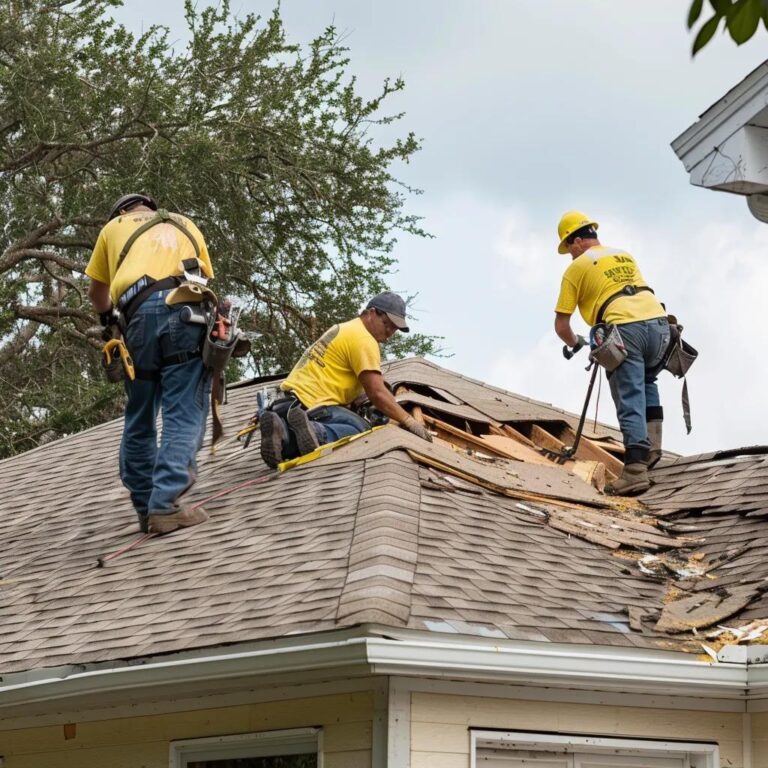
- Shingle sampling (pro step) — Use “test squares” by slope; feel for soft bruises, crushed granules, cracked tabs.
- Low-slope areas — Examine seams, drains, and HVAC stands for scuffs and nicks; verify counter-flashings.
- Attic scan — Look for damp insulation or fresh stains aligned to specific slopes.
- Complete photo set — Wide angles, close-ups, and ruler next to hail; label by slope and date.
- Report & plan — Summarize by slope; recommend repair or replacement with next-step timing.
- Permit path — If replacement is likely, plan the in-progress photo of the ice-and-water barrier before covering; needed for final inspection.
DIY vs Pro — Where Each Fits
DIY from the ground: Measure hail with a ruler; photograph each elevation; check gutters and downspouts; peek in the attic. Avoid walking the roof after storms—slip risk is high.
Pro inspection: Safe access, slope-by-slope sampling, and a photo-rich report useful for insurance and permits. Pros know the local permit steps and exactly when to capture the ice-and-water photo during replacement. Compare options in our <a href=”https://www.roofingexpertsstpaul.com/roof-repair-vs-replacement-planner/”>Roof Repair vs. Replacement Planner</a>.
Image idea: Split image: homeowner with binoculars vs harnessed technician.
Local Permits & Code Notes (Roseville)
- A building permit is required for residential re-roofing and major repairs.
- For the final inspection, be ready to show photos of the installed ice-and-water barrier before it’s covered.
- Apply and track via ePermits; schedule inspections with Building Inspections.
- General City Hall line: 651-792-7000. Building Inspections scheduling: 651-792-7080.
Image idea: Flow: Apply → Install (take underlayment photo) → Final inspection.
Costs in Roseville (as of August 11, 2025)
Assumptions: Single-family home, architectural asphalt shingles, one- to two-story, typical access/complexity. Steep pitches, multiple layers, complex flashing, decking repairs, or specialty materials change pricing. <table> <thead> <tr> <th>Scope</th> <th>What’s Included</th> <th>Typical Range</th> </tr> </thead> <tbody> <tr> <td>Inspection</td> <td>Visual check, photos by slope, written findings; advanced tools optional</td> <td><strong>$125–$363</strong> (avg ≈ $240)</td> </tr> <tr> <td>Hail Repairs</td> <td>Targeted shingle/flashings replacement; minor skylight or vent work</td> <td><strong>$375–$7,500</strong> (avg ≈ <strong>$4,250</strong>)</td> </tr> <tr> <td>Full Replacement (Asphalt)</td> <td>Tear-off, underlayment incl. ice-and-water, new flashings, disposal, permit</td> <td><strong>$7,500–$24,000</strong> (≈ <strong>$4.50–$12.25/sq ft</strong>)</td> </tr> </tbody> </table>
What shifts price: Roof size; pitch/height; penetrations; tear-off layers; decking condition; access limits; chosen shingle line (standard vs impact-resistant). Some contractors include permit/disposal; others list them separately.
Image idea: Horizontal bars for inspection → repair → replacement.
Timelines You Can Expect
- Claims: Many policies allow 1 year from date of loss (confirm your policy).
- Adjuster visit: Often 1–2 weeks in busy seasons.
- Permits: Straightforward residential permits move quickly online; plan review adds time.
- Work duration: Typical replacements take 1–3 working days once scheduled.
Image idea: Mini timeline from claim → inspection → permit → build → final.
Repair or Replace? A Simple Guide
- Lean Repair when damage is limited, the roof is relatively young, and decking is sound. Set realistic color-match expectations; reseal flashings; document.
- Lean Replacement when multiple slopes show bruising/punctures, leaks appear in several rooms, or the roof is near end-of-life. Replacement resets underlayment, flashings, and shingles—and allows impact-resistant upgrades.
- Upgrades to consider: Impact-resistant shingles; enhanced ice-and-water at eaves/valleys; improved attic ventilation.
Image idea: Matrix (roof age × damage density) with “repair” vs “replace” zones.
Step-by-Step Homeowner Checklist (Printable)
Before the pro arrives
- Photograph hail with a ruler; note date/time.
- Take perimeter photos; check gutters/downspouts for fresh granules; photograph dents.
- Peek in the attic for damp insulation or new stains.
- Choose inspection type (ground, drone assist, full access).
- If replacement is likely, plan for an ice-and-water photo during install.
After the inspection
- Save the photo set labeled by slope.
- Confirm the ice-and-water photo is captured during replacement.
- Schedule the final inspection with Building Inspections; file the approval.
- File material and workmanship warranties with your photos.
- Set a 30–60 day follow-up to watch for latent issues.
Image idea: Two-column checklist graphic.
Working With Insurance (Plain-Language Tips)
- Document early: Hail size, soft-metal dents, and each slope.
- Be specific: Label photos by slope and date. Keep receipts for tarps or emergency drying.
- Know your deductible: Many policies list wind/hail deductibles of $500–$2,000 (or a percentage).
- Ask about recoverable depreciation: Some funds release after proof of completion.
- Use your report: A slope-by-slope photo report aligns your roofer and adjuster on scope.
Image idea: Sample report page with labeled photos.
FAQs
Was hail large enough to damage roofs recently?
Yes—storms with quarter-size to larger hail can bruise asphalt shingles, dent soft metals, and scuff membranes. Even if shingles “look fine,” soft-metal dents are strong evidence worth documenting.
How soon should I inspect after a storm?
Within a day or two if it’s safe. Start with a ground check and interior look, then bring in a pro for slope sampling and documentation. Follow up after the next heavy rain to confirm no leaks emerged.
Do I need a permit to re-roof in Roseville?
Yes. A residential re-roof needs a building permit, and the final inspection requires photos of the installed ice-and-water barrier before covering. Apply via ePermits; schedule with Building Inspections.
What does a roof inspection cost?
Many homeowners pay $125–$363 for a standard inspection. Drone or infrared options cost more. Ask what’s included and whether you’ll receive a photo report suitable for insurance.
What do repairs and replacements usually cost?
Targeted hail repairs often run $375–$7,500; full asphalt replacements commonly range $7,500–$24,000, depending on size and complexity.
Who do I call at the city for permit questions?
City Hall: 651-792-7000. Building Inspections scheduling: 651-792-7080.
Simple Next Steps
- Do a safe ground check today and photograph what you see.
- Contact your insurer; confirm your claim deadline for the loss date.
- Book a professional inspection with photos by slope and a clear plan.
- If replacement is recommended, follow the permit steps and capture the ice-and-water photo.
- Schedule a 30–60 day follow-up to catch any latent issues.
Need a roof inspection in Saint Paul or the Twin Cities? Call Sellers Roofing Company at +1-651-703-2336 or schedule a free estimate. We are a black-owned, NMSDC-certified MBE roofing contractor with 9+ years experience.