Last updated: 2026-10-23 by Ted Sellers, Owner
If rain starts during roof tear off work in Minnesota, the crew should stop removing roofing and protect exposed decking with secured temporary coverings, provided conditions allow safe access. Shingle installation stays paused until the deck is dry, sound, and ready for the specified underlayment; any interior water entry requires immediate containment, documentation, and assessment.
What Actually Causes Rain Leaks During a Minnesota Roof Tear-Off?
When This Applies
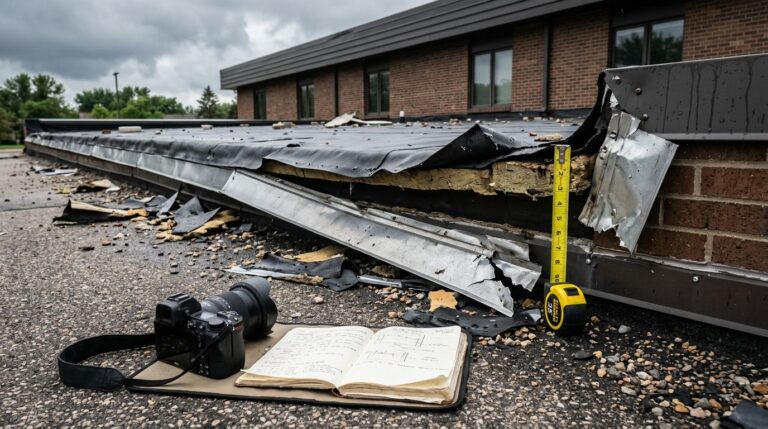
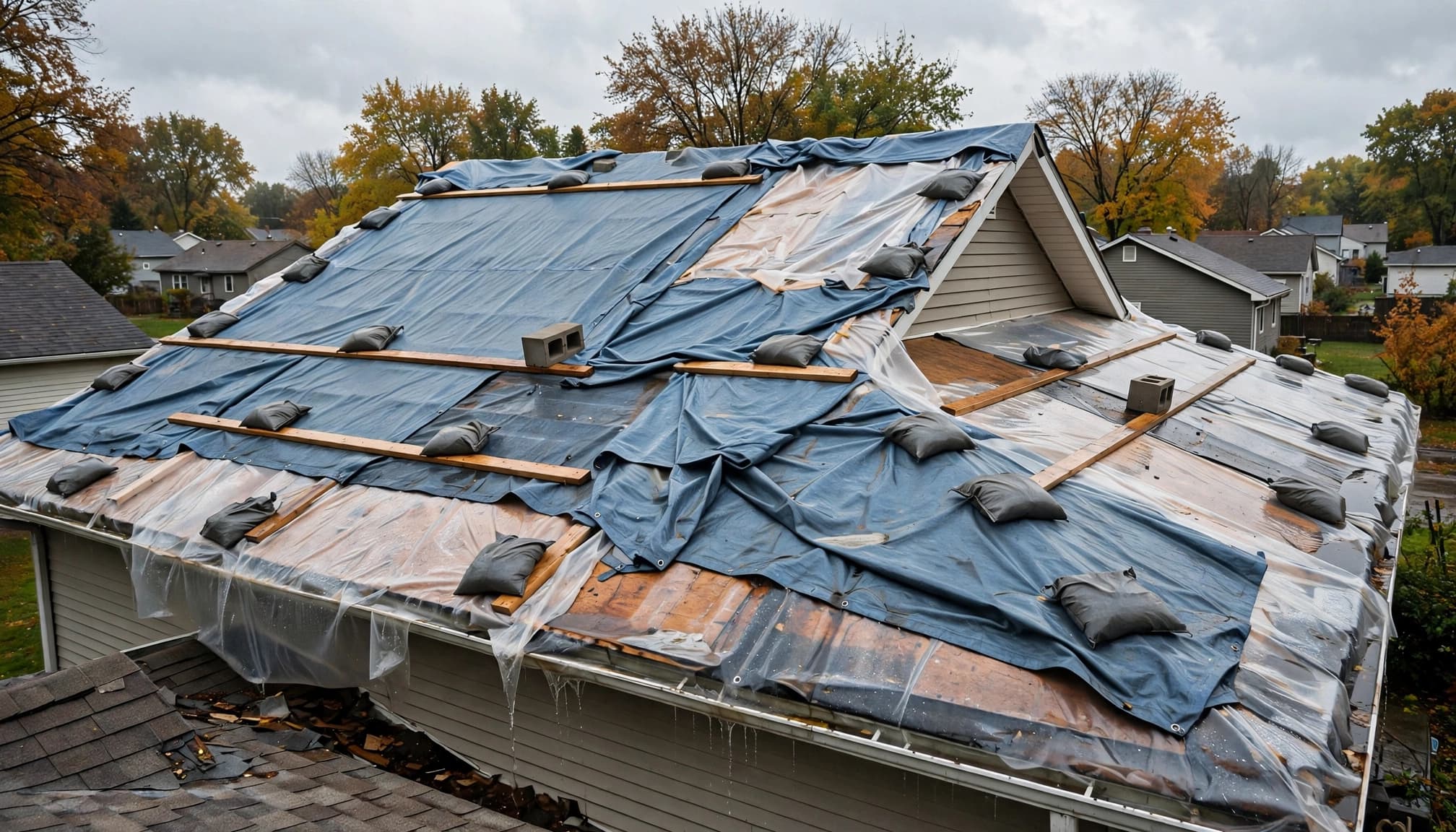
This applies when shingles or another roof covering have been removed and the replacement assembly isn’t weather-tight. Bare decking has no reliable protection against rain. Water can enter through panel joints, nail holes, open penetrations, and unfinished roof-to-wall connections.
A properly installed protective layer reduces exposure, but its laps, fasteners, edges, and temporary exposure limits still matter. A loose sheet across the roof doesn’t establish a completed dry-in.
Rain outside doesn’t automatically mean the building is damaged. The outcome depends on how much roof is open, rainfall intensity, protection, and how quickly water is stopped.
Roof leaks in heavy rain on an intact roof present a different problem from tear-off exposure. Plumbing leaks, HVAC condensate, and attic frost also need separate diagnosis.
Why Minnesota Weather Complicates the Work
Twin Cities roofing projects face wind-driven rain, falling temperatures, and short drying windows. Freeze-thaw movement can also expose weak flashing or old deck deterioration during removal.
Ice dams create another water path. Meltwater backs beneath shingles at cold eaves, sometimes wetting decking before replacement begins. Ice dam removal addresses that blockage; temporary covering doesn’t correct attic heat loss or poor ventilation.
The crew should open only an area it can protect before weather arrives. Once thunder, strong gusts, or slick footing make access unsafe, worker protection takes priority. OSHA’s roofing safety guidance addresses fall hazards and protective systems.
How to Inspect and Document the Damage (Field Checklist)
What Should the Contractor Inspect?
The inspection starts with access and structural safety. Property owners should document from indoors or the ground, not walk an exposed or wet roof.
The contractor’s inspection should follow the water path:
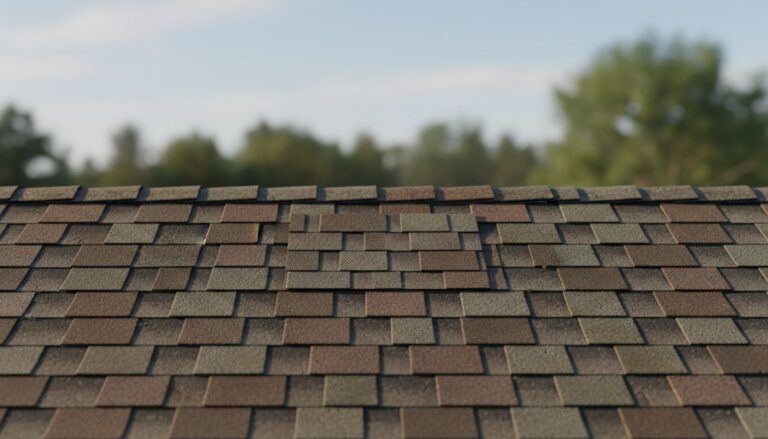
- Record shingle damage, including displaced shingles and granule-loss patterns, and separate impact marks from ordinary wear.
- Inspect roof edges and step flashing at roof-to-wall joints, then check for flashing separation at chimneys, skylights, and other penetrations.
- Check valleys for debris, damaged metal, and unfinished underlayment laps.
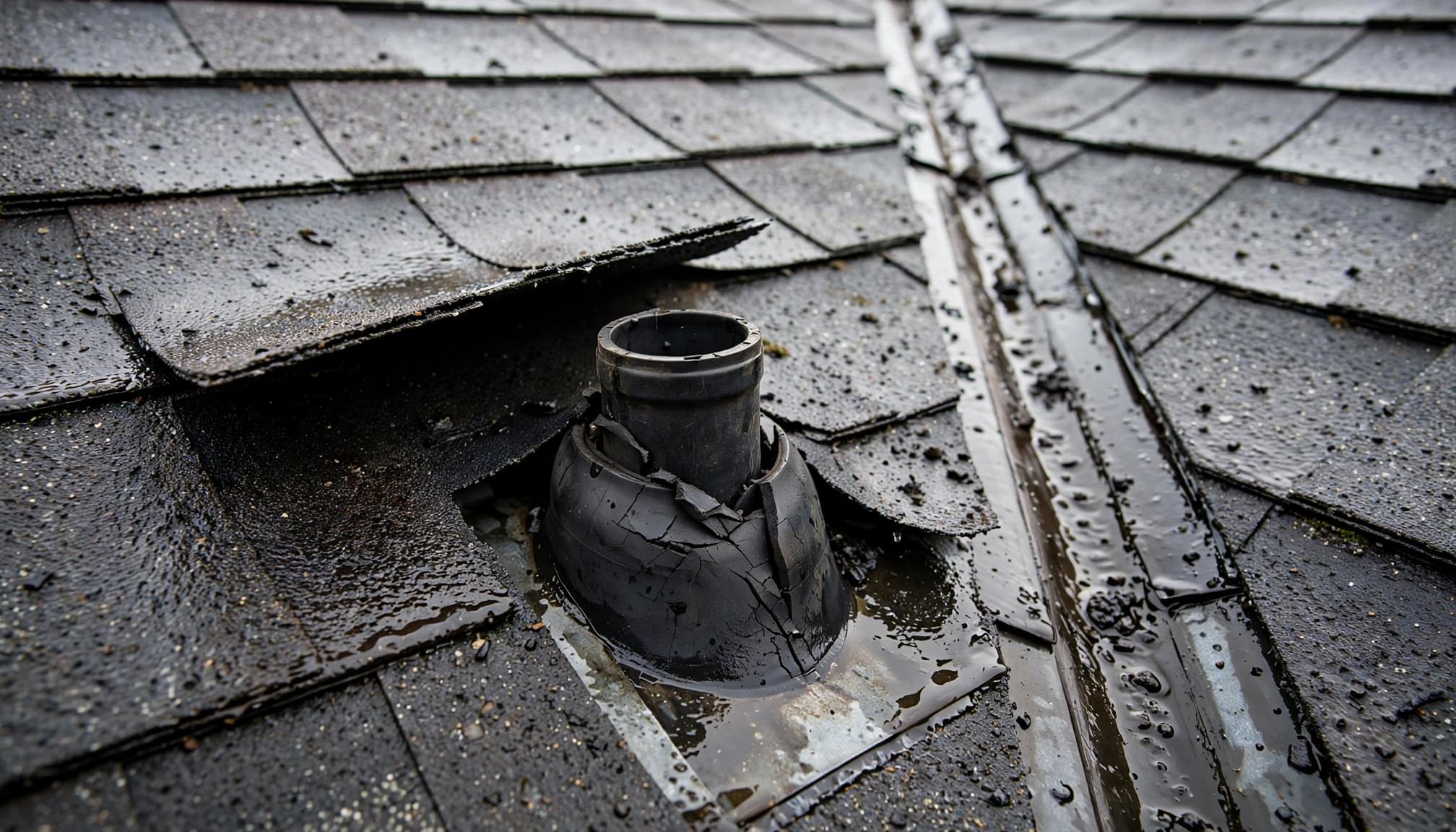
- Examine pipe boots for cracking, loose collars, and failed connections.
- Assess deck deflection, swollen panel edges, delamination, and weak fastening areas.
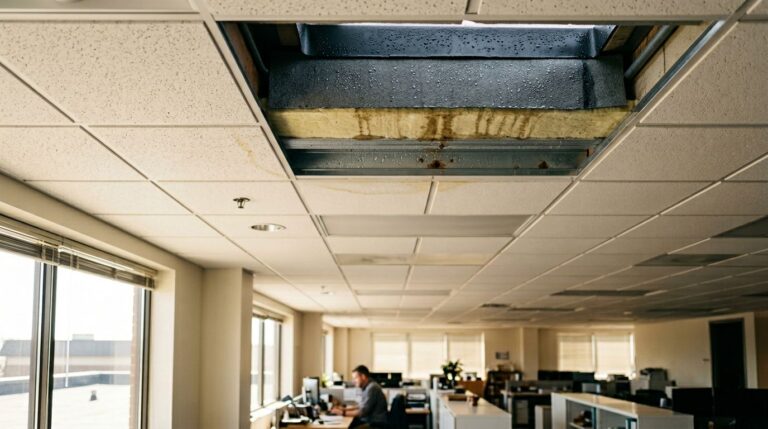
- Photograph wet insulation and interior staining, then map them against roof features.
Soft decking requires assessment before anyone loads that area with workers or roofing bundles.
How Do You Trace Water Beyond the Ceiling Stain?
Water can run along decking, rafters, trusses, or insulation before dripping indoors. The stain may be several feet away from the opening.
Record when dripping began, which roof section was open, and whether wind changed its intensity. A leak appearing only during angled rain often points toward an exposed lap or flashing connection.
Our post-storm roof inspection guidance covers the distinction between new storm damage and existing deterioration.
Photograph temporary protection before and after installation. Keep the original files and timestamps.
Repair vs. Replace: The Decision Framework
Can the Existing Roof Be Recovered Instead?
A re-roof, or recover, places new shingles over the existing layer. A tear-off removes the old covering so the contractor can inspect the roof deck before rebuilding.
A roof recover generally permits only one additional layer. A roof already carrying two layers usually needs removal next time. Badly damaged roofing, soft decking, and trapped moisture also rule against covering the problem.
A straightforward recover may take one or two days. Tear-off can add several days when removal, deck repairs, inspections, or weather interrupt production. Roof size and crew capacity prevent a universal schedule.
These conditions separate the options.
| Factor | Recover | Full tear-off |
|---|---|---|
| Initial cost | Lower removal and disposal expense | Higher labor, hauling, and disposal expense |
| Deck access | Existing covering conceals the deck | Exposes rot, weak panels, and moisture |
| Roof lifespan | Depends partly on the concealed assembly | New assembly starts over repaired decking |
| Insurance implications | Must match the covered repair scope | Hidden damage needs separate documentation |
| Material compatibility | Requires an eligible existing assembly | Allows reconstruction to specified details |
A lower bid has limited value if it leaves damaged decking beneath the new roof, which may affect home value.
When Does Localized Repair Make Sense?
Residential roof repair fits isolated damage when surrounding shingles remain serviceable and the deck is sound. Widespread deterioration, repeated leaks, or extensive wet materials support residential roof replacement.
A brief rain exposure doesn’t automatically require replacing every deck panel. Swollen, delaminated, rotten, or structurally weakened panels require a different response than sound wood that became damp.
Material Specs That Matter for This Repair or Replacement
Which Details Matter on Shingle Roofs?
GAF Timberline HDZ, CertainTeed Landmark, and Malarkey Legacy are named shingle options. Legacy carries a Class 4 impact rating, a laboratory classification, not a promise against every hailstorm.
Synthetic underlayment and asphalt felt have different exposure limits and installation requirements. Neither should be treated as unrestricted temporary roofing.
Tear-off can involve shingles, fasteners, flashings, vents, and existing ice-and-water membrane. Replacement scope must address each component. Failed or corroded flashing needs replacement, not another bead of caulking.
Where Must the Ice Barrier Extend?
The familiar 24-inch requirement is measured inside the exterior wall line, not simply 24 inches up from the roof edge. Eave overhang and slope affect membrane width. Valley protection follows the specified assembly.
Blaine’s roofing requirements explain local ice-barrier requirements under Minnesota’s code framework.
What Changes on a Commercial Flat Roof?
TPO roofing commonly includes 60-mil membrane. EPDM assemblies may use 45-mil or 60-mil sheets. Thickness alone doesn’t establish performance; attachment, seams, flashings, and substrate condition matter.
Modified bitumen and BUR systems also require compatible temporary tie-ins during phased removal. Water left beneath any new assembly can damage insulation and complicate attachment.
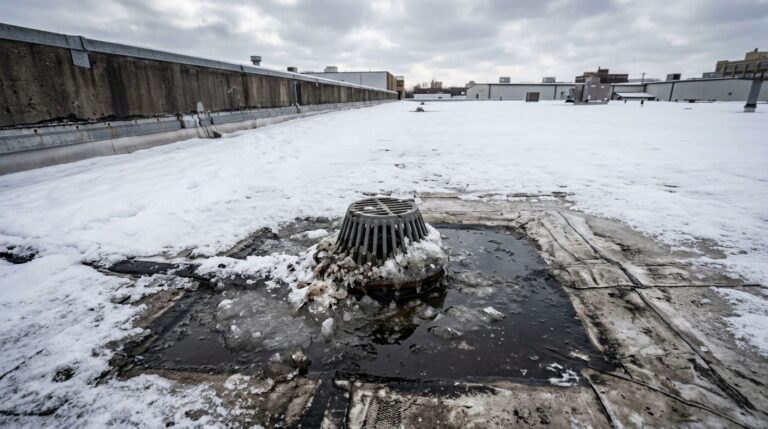
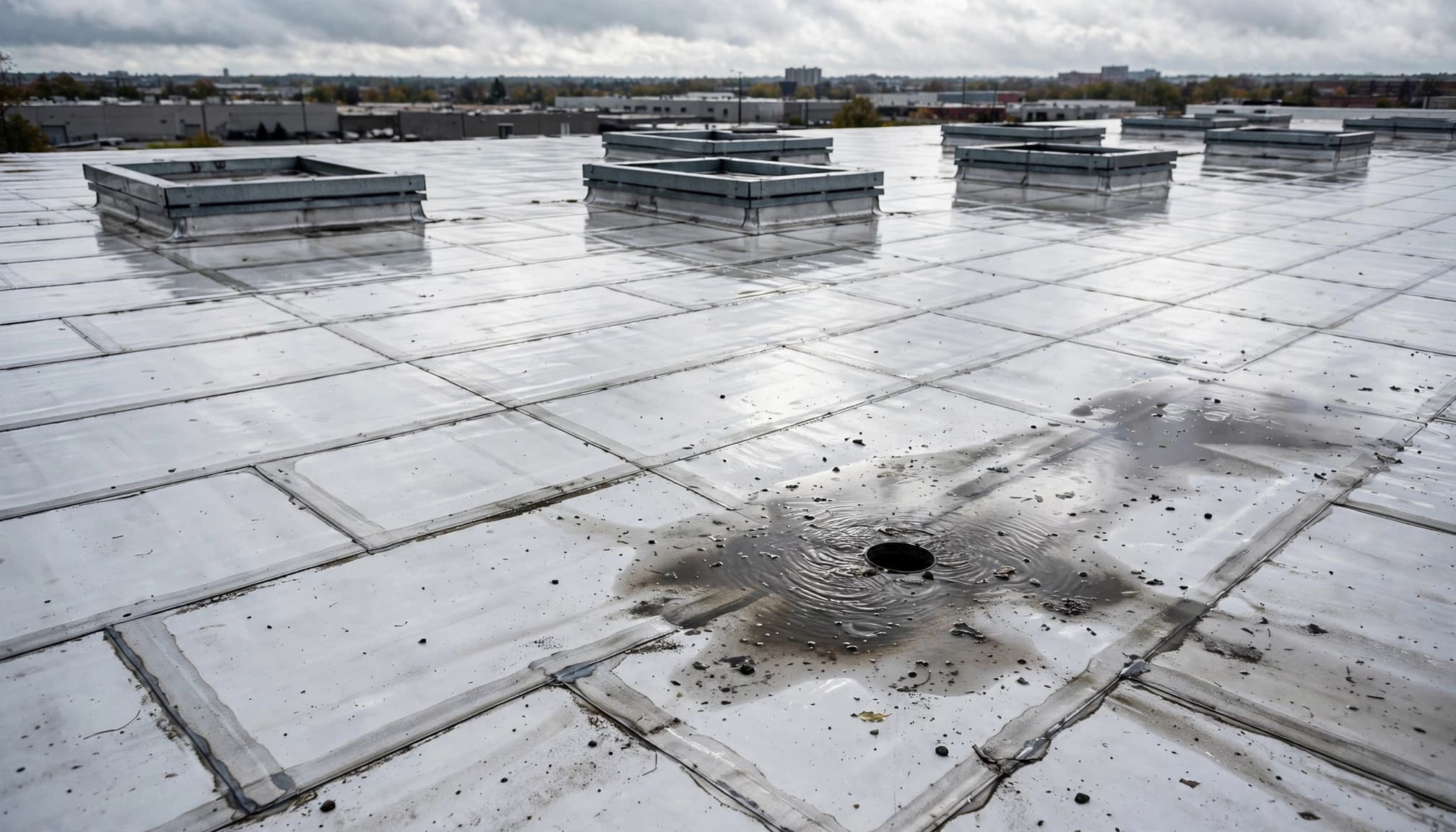
Ponding water that remains around 48 hours after rainfall warrants drainage assessment. It doesn’t prove the membrane is leaking. Commercial roof coatings cannot correct saturated insulation or an unsound deck.
For an interrupted commercial roof replacement, Get a Free Commercial Roof Inspection to establish the repair scope.
Insurance Documentation and the Claim Process
Who Handles Water Damage During Construction?
Rain damage during replacement may involve the owner’s property policy, the contractor’s liability coverage, or a dispute over temporary protection. Payment depends on policy language, cause, exclusions, and responsibility.
A storm damage roof claim and construction-related water intrusion aren’t automatically the same loss. Keep the original hail or wind damage separate from water entering after removal began.
The contract should identify weather-delay procedures, responsibility for temporary dry-in, interior-damage reporting, and authorization for additional deck work. Deck replacement allowances need a unit price and defined replacement conditions.
Don’t assume a weather delay excuses inadequate protection. Don’t assume every wet panel is covered damage, either.
What Evidence Supports the Claim?
Adjusters evaluate cause, policy coverage, and the proposed scope. Contractors document material condition, water pathways, quantities, and repair requirements.
Photograph hail strikes and surrounding shingles, lifted tabs, flashing displacement, wet decking, insulation, and interior contents. Include wide location shots alongside close-ups. Describe observations factually: “water staining below the north slope” is stronger than an unsupported cause.
Our roof leak documentation guidance explains the evidence needed for a roof insurance claim.
Save emergency invoices and drying records. If tear-off exposes additional damage, document it before replacement conceals the evidence. Code-required work may involve ordinance-or-law coverage, but a code requirement doesn’t erase exclusions for long-term rot.
What a Professional Roof Contractor Does Differently
Step-by-Step
- Stop additional removal and assess whether the exposed area can be protected without unsafe roof access.
- Restrict access beneath sagging ceilings. Move furniture, inventory, and electronics away from drips; contain water only where safe.
- Isolate affected electrical circuits only if the panel and access route are dry and safe. Otherwise, keep clear and obtain emergency assistance.
- Install secured temporary protection when conditions permit, with overlaps and drainage arranged to shed water rather than collect it.
- Record the exposure, inspect wet materials, and establish the drying and repair scope before roofing resumes.
Don’t puncture a bulging ceiling yourself. Keep people out of the area because wet drywall can collapse.
For uncontrolled water entry, Call 651-703-2336 for 24/7 emergency roof repair.
What Must Happen Before Shingling Resumes?
There isn’t a universal four-hour or next-day drying rule. Rain volume, temperature, humidity, airflow, deck material, and insulation condition control drying.
The deck must be dry enough for the specified products and structurally sound. Surface appearance alone can’t establish whether underlying insulation remains wet. Our commercial leak detection methods address concealed moisture assessment.
Unsound sheathing is removed back to supported boundaries, with replacement panels and fastening matched to the assembly. Failed pipe boots and flashing are replaced before concealment.
Ventilation also needs a net free area calculation. Where a 1:300 ratio is permitted, a 1,200-square-foot attic needs 576 square inches of combined net free vent area, distributed as required.
Cost Ranges for Rain-Interrupted Roofing in Minnesota
What Is a Reasonable Planning Allowance?
For preliminary Twin Cities roofing costs, $450 to $900 per architectural asphalt shingle square is a broad replacement allowance. One square equals 100 square feet of roof surface.
That puts a 20-square roof at roughly $9,000 to $18,000 before unusual conditions or interior restoration. This is a planning range, not our fixed price or a guarantee that every project fits it.
Pitch, height, access, removal layers, disposal, flashing complexity, and permit requirements affect the total. Metal roofing and commercial membrane assemblies need separate budgets.
White Bear Lake’s roofing guidelines address permitting and inspection requirements. Those requirements belong in the project schedule before removal starts.
Which Rain-Related Costs Need Separate Line Items?
Emergency protection, repeat mobilization, wet-insulation removal, deck replacement, interior drying, and ceiling repairs should remain identifiable. Combining them under “extras” makes authorization and insurance review harder.
A forecast delay doesn’t necessarily create a major additional charge. Concealed deterioration or an actual water-intrusion event can change the scope.
Tear-off also creates disposal waste. Old shingles may enter landfill or an eligible recycling stream. The EPA’s guidance on construction material recovery supports planning for reuse and recycling. The contractor’s disposal policy should identify the intended route.
Frequently Asked Questions
Can roofers tarp an exposed roof before the rain stops?
A trained crew may protect an open section before conditions become hazardous. Active lightning, strong winds, or unsafe footing stop that work. Property owners shouldn’t climb wet roofs; our rainy-weather tarping safety guidance explains the limits.
How much water can fall on an exposed roof during one storm?
One inch of rain over 1,000 square feet equals about 623 gallons before runoff losses. Only part may enter, but a small unprotected opening can admit substantial water. Rainfall duration alone doesn’t establish the amount of damage.
Does rain on new shingles automatically void the warranty?
Rain after correct installation is normal exposure. Installing over an unsuitable wet substrate or outside product requirements can create a workmanship or warranty problem. The installation conditions and actual warranty terms determine the issue, not the presence of rain alone.
What if the tarp blows loose overnight?
Keep people away from falling materials and unsafe ceiling areas. Photograph conditions from a safe location and request emergency protection. A displaced temporary covering can redirect water into another opening, so repeated indoor dripping needs reassessment even if the original spot appears covered.
Can wet insulation be left if the ceiling never leaked?
A dry ceiling doesn’t prove the assembly stayed dry. Water can remain inside insulation without appearing below. Commercial roof leak repair or commercial roof restoration decisions should follow moisture assessment. Covering saturated insulation can trap moisture and support mold growth.
Protect the Deck Before Work Continues
What Are the Key Takeaways?
Rain during tear-off calls for controlled protection, a documented inspection, and a sound drying decision. The amount of exposed roof matters more than whether the shower lasted five minutes or an hour.
A recover cannot resolve soft decking or concealed saturation. Temporary protection also needs follow-up inspection, especially after wind shifts or a second storm, because a covering that stayed in place may still have allowed water underneath.
What Should Happen Next?
Before replacement resumes, the work record should show the deck condition, any material removed, and the basis for accepting what remains. That record gives the owner a defined scope and preserves evidence if questions arise later.
For a Saint Paul or Minneapolis home, Get a Free Residential Roof Estimate covering the remaining roof work and any documented deck repairs. The next layer belongs over dry, sound decking, with flashing and drainage details completed as specified.
Need a roof inspection in Saint Paul or the Twin Cities? Call Sellers Roofing Company at +1-651-703-2336 or schedule a free estimate. We are a black-owned, NMSDC-certified MBE roofing contractor with 9+ years experience.