Last updated: 2026-08-01 by Ted Sellers, Owner
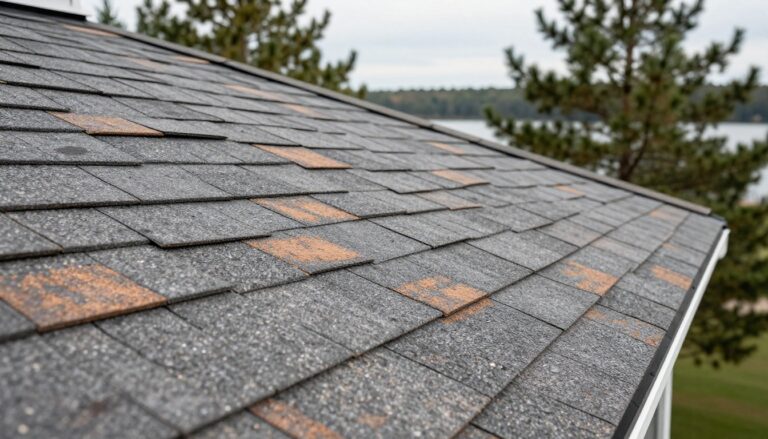
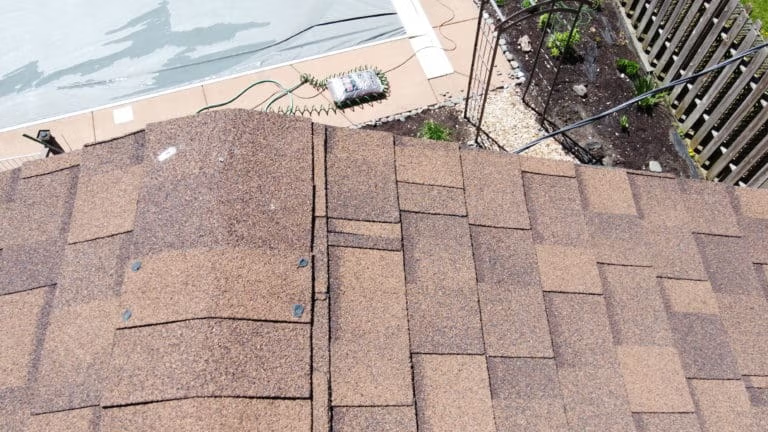
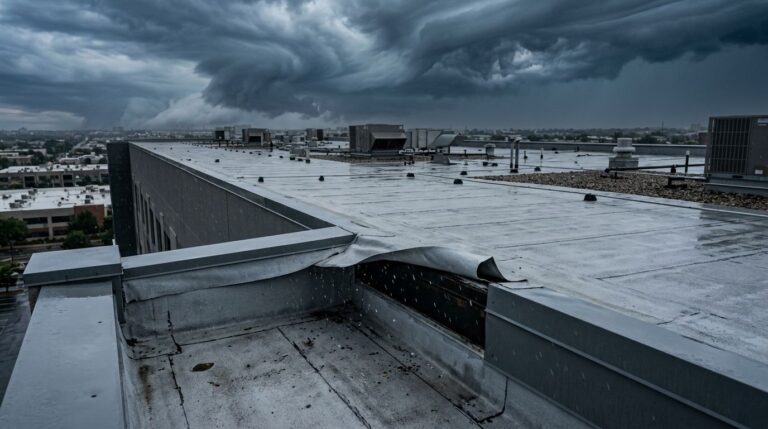
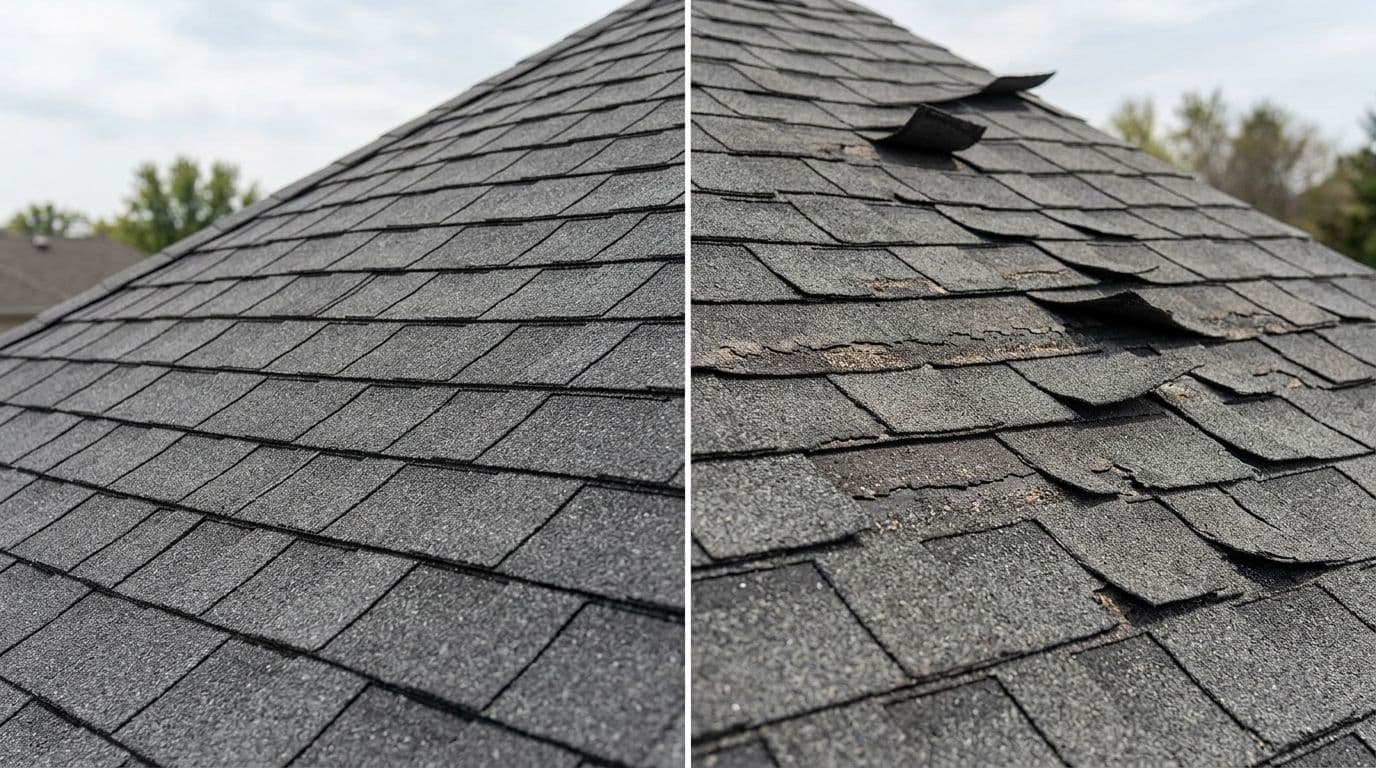
Creased shingles usually look like a clear, sharp bend line across a shingle tab where strong wind lifted it, then slapped it back down. In Minnesota, you’ll often see lifted corners, a shadow line at the fold, and missing granules along the crease. The shingle may not reseal, even on warm days, which raises leak risk.
When This Applies
This applies to shingle roofs after high winds
This guide fits commercial property owners who have asphalt shingle sections on their buildings, for example, small offices, retail buildings with pitched entry roofs, churches, and multi-family properties. It also applies when a Minnesota wind event hits and the roof looks “mostly fine” from the ground, but you suspect tabs lifted.
Wind creasing tends to show up after gusts catch the lower edges of tabs and break the seal. In early spring and late fall, that seal strip may already be stiff from cold nights. As a result, tabs can lift more easily, crease, then sit back down like nothing happened.
For context on recent conditions in your area, checking a local wind history can help you line up damage timing with a storm date, such as the data on Minnesota weather forecasts and wind conditions.
A true wind crease is a physical bend in the shingle mat, not just a scuff or a little waviness.
When it does not apply (and the closest look-alikes)
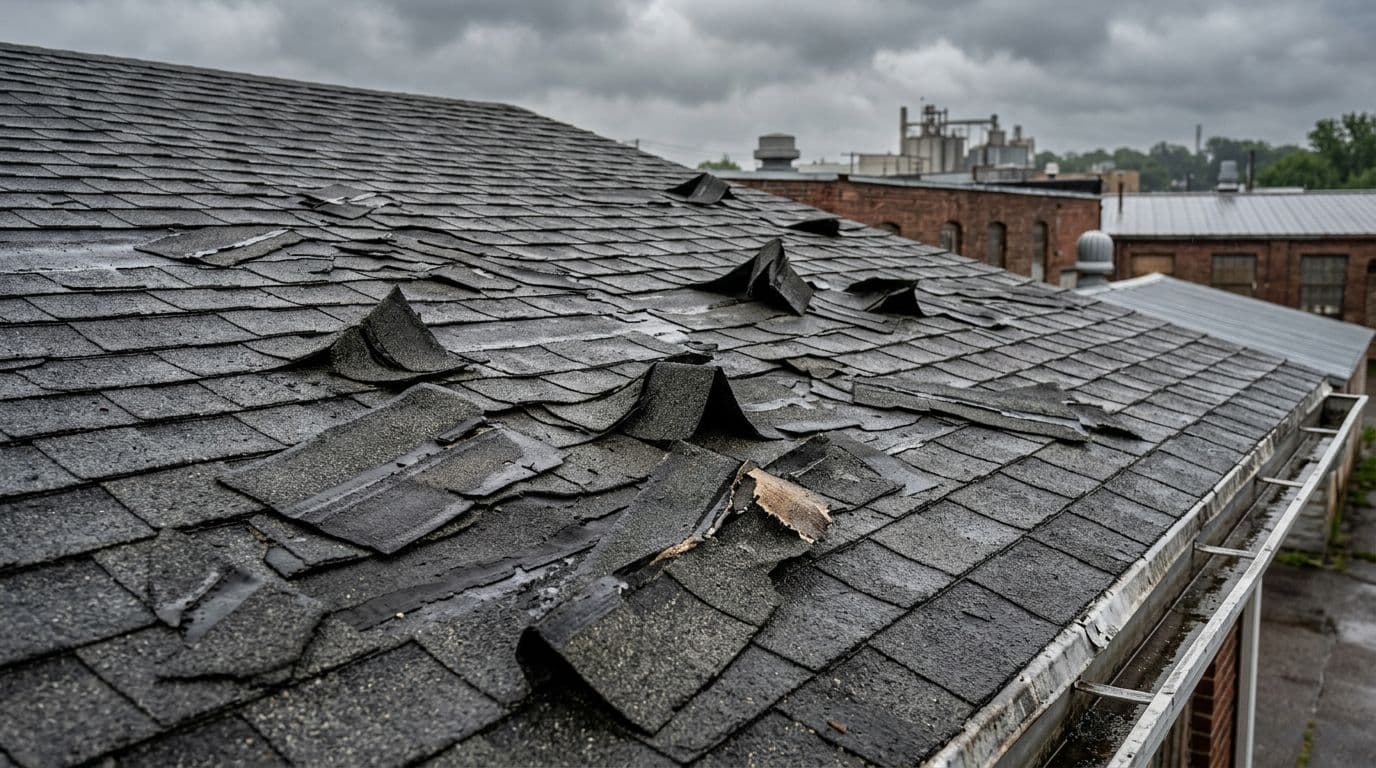
If your building has a membrane system, creased shingles are not the issue because you don’t have shingles. In that case, you’re looking at edge uplift, punctures, or seam problems, which fall under commercial flat roof repair.
Creases also get confused with other marks. Don’t treat these as the same thing:
- Foot-traffic bends: Often near HVAC paths, with random direction and scuffs.
- Heat ripples: Gentle waves that change with temperature, not a sharp fold line.
- Manufacturing or install issues: Uniform pattern across many shingles, sometimes aligned with nail lines.
Edge case: “It lays flat again, so it’s fine”
A tab can settle back down and still be damaged. If the crease line remains visible (especially in low-angle light), the shingle mat likely took a set. That’s when water and wind can start working under the tab again.
If you manage a site with both roof types, it helps to have one contractor who can evaluate the whole system. This is where a local team like Sellers Roofing’s Saint Paul commercial roofing services can be useful, since wind damage doesn’t always respect roof transitions.
Step-by-Step
Confirm you’re seeing wind creasing (not normal aging)
- Start at roof edges and corners. Wind usually begins lifting tabs at rakes, eaves, and ridges, so check those areas first (from a safe vantage point).
- Look for a straight fold line across a tab. A crease often runs roughly horizontal across the shingle tab, with a “hinge” look.
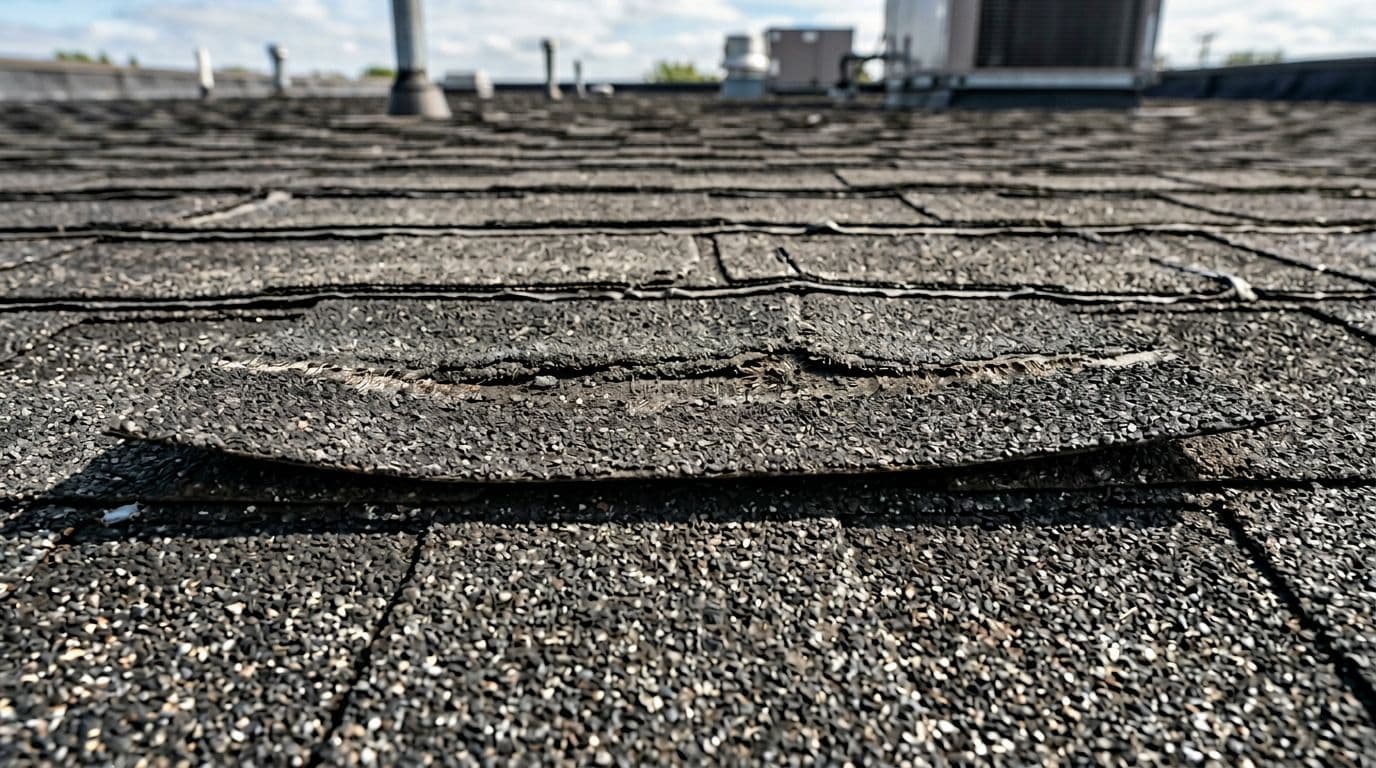
- Check for granular loss on the crease. Many creased shingles show a lighter, worn strip where granules popped off during the bend.
- Scan for a repeated pattern. If several creases line up in the same windward zone, wind uplift is a strong suspect.
Decide whether the roof can be repaired, or if replacement is the smarter call
- Test for tabs that won’t reseal (without forcing them). If corners stay lifted after warm afternoons, water can track under them. At that point, your commercial roof needs repair, even if leaks have not started.
- Count damaged shingles across each slope. A few isolated creases may be a repair job. Widespread creasing across multiple facets can push you toward a larger scope, sometimes even a commercial roof replacement for older roofs near the end of service life.
- Don’t ignore “almost missing” shingles. A tab that’s creased today can tear off in the next gust, exposing underlayment and fasteners.
Document the damage and protect the building interior
- Photograph creases in angled light. Early morning or late afternoon sun makes the fold line and shadow easier to capture.
- Record the location by roof plane. Note “north slope, near east rake, 6 feet up,” so repairs don’t turn into guesswork.
- Match exterior findings to interior clues. If you see ceiling stains, don’t assume the leak is directly above. Water can travel. For large buildings, commercial roof leak detection services in Saint Paul can help pinpoint the entry point before you pay for the wrong fix.
If you can’t safely access the roof, stop. A fast inspection isn’t worth a fall.
For an extra visual checklist of what wind creases tend to look like up close, compare your photos to the examples in Wind Creased Shingles guidance.
FAQs business owners ask after a wind event
Will creased shingles always cause a leak?
Not always, at least not right away. However, a crease often means the seal broke. That makes the shingle easier to lift again. Over time, repeated lift can drive water under the tab and into underlayment seams.
Can a roofer just reseal creased shingles with caulk?
Sometimes a contractor can resecure tabs, yet the crease itself remains a weak spot. In many cases, the better fix is replacing the damaged shingles. Caulk-only approaches can also complicate future repairs and inspections.
When a sealant-only fix makes sense
If a tab lifted but did not crease, resealing may work. Once the shingle mat folds, replacement is usually cleaner.
How do I tell creased shingles from hail damage?
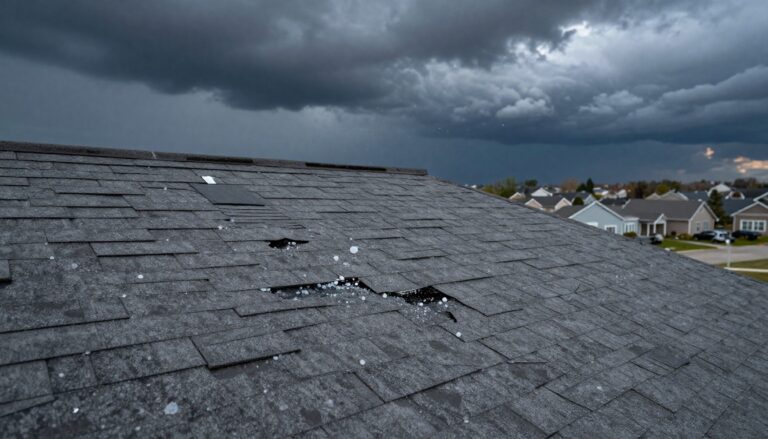
Hail usually leaves impact marks: bruises, pits, or granule loss spots, not a straight bend line. Wind creasing looks like a folded “hinge” across the tab. After Minnesota storms, you can have both, so document everything.
Should I call insurance before I call a roofer?
Call a roofer first if you need emergency stabilization or you’re unsure what you’re seeing. Clear photos and a roof condition summary help you speak to insurance without guessing. Keep dates, storm notes, and repair receipts in one folder.
What if my building has a flat roof, but I’m seeing shingles at the entry canopy?
Treat them as two systems. Your canopy can have creased shingles, while the main roof needs membrane work. That’s common on retail and office sites. Address both, because water can move between transitions and wall flashings.
A wind event can make a roof look fine from the parking lot, then fail quietly weeks later. If you’re seeing creased shingles, plan for a real inspection and a scope that matches the pattern of damage, not just one or two tabs. For help across the Twin Cities, Sellers Roofing Company can assess storm impact and recommend a repair or replacement path that protects your building and tenants. Small creases can turn into big leaks when the next gust hits.
Need a roof inspection in Saint Paul or the Twin Cities? Call Sellers Roofing Company at +1-651-703-2336 or schedule a free estimate. We are a black-owned, NMSDC-certified MBE roofing contractor with 9+ years experience.