Last updated: 2026-10-09 by Ted Sellers, Owner
Freeze-thaw cycles alone aren’t a reliable explanation for loose standing seam roof clips. A leak after a Minnesota thaw can indicate a seam, flashing, drainage, or attachment problem.
Clips must accommodate the movement permitted by their roof system. A system-specific inspection is needed to confirm clip failure and separate normal panel movement from damaged fastening.
Table of Contents
- When This Applies
- How Do Standing Seam Roof Clips Handle Movement?
- Which Winter Warning Signs Need Inspection?
- Step-by-Step
- Can Clips Be Repaired Without Roof Replacement?
- What Should an Inspection Report Include?
- Key Takeaways
- Frequently Asked Questions
- Conclusion: Confirm the Attachment Before Choosing Repairs
When This Applies
Which buildings need concealed-clip evaluation?
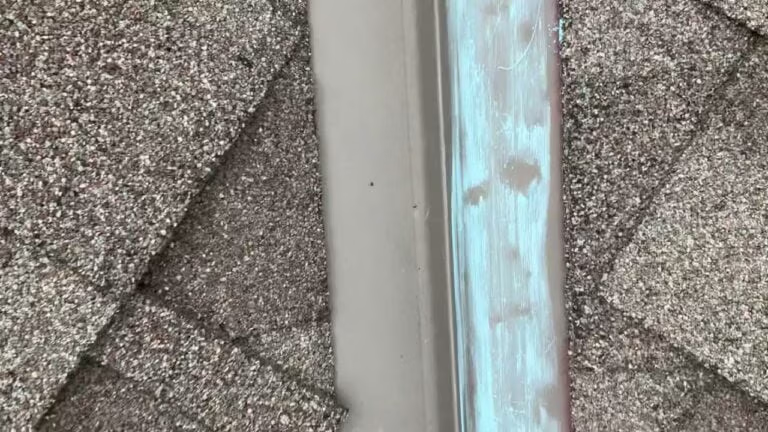
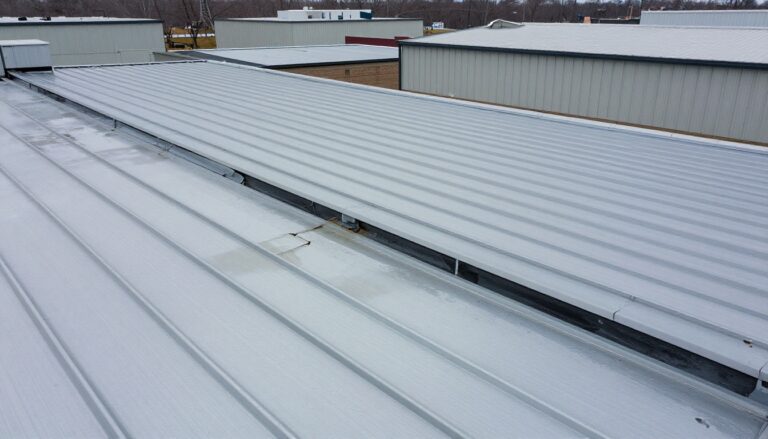
This applies to homeowners and commercial property owners with standing-seam metal roofing. The clips connect panels to an approved deck or structural support, usually beneath the seams.
Minnesota temperature swings make movement compatibility important, especially on long panel runs and roofs with repeated winter leaks. Evaluate additions, penetrations, and installed accessories that might restrain movement.
The concern also applies nationally wherever roofs experience substantial temperature changes. Saint Paul and Minneapolis add snow, ice, and uneven melting to the inspection conditions.
Which roof problems need a different diagnosis?
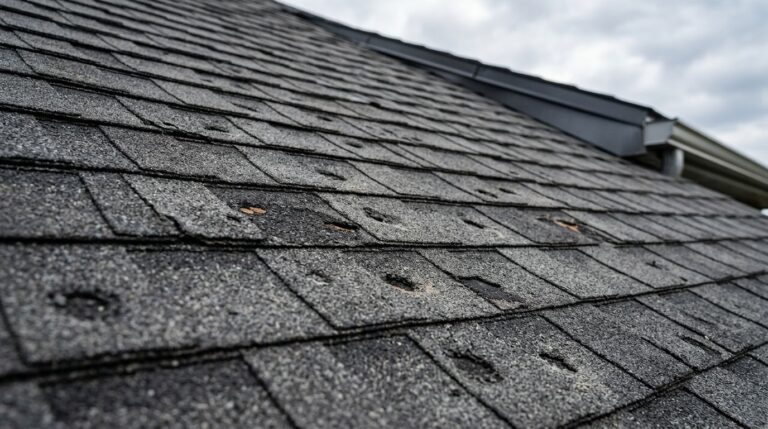
Exposed-fastener metal panels use a different attachment arrangement. Likewise, roof nails backing out beneath asphalt shingles don’t establish a concealed-clip problem.
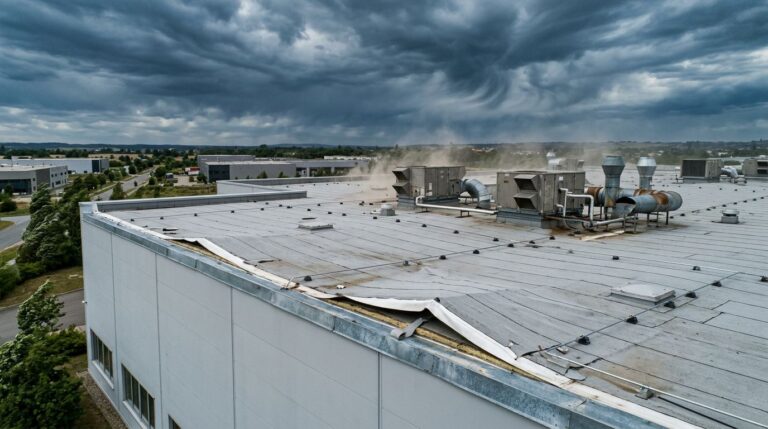
A commercial flat roof surfaced with TPO roofing, EPDM, modified bitumen, or BUR needs membrane-specific inspection. Mixed buildings may require separate evaluations of their metal and membrane sections.
A first-winter leak also deserves an installation review. New materials don’t rule out incompatible clips, incomplete seam engagement, or an incorrectly detailed penetration.
How Do Standing Seam Roof Clips Handle Movement?
What separates fixed and sliding clips?
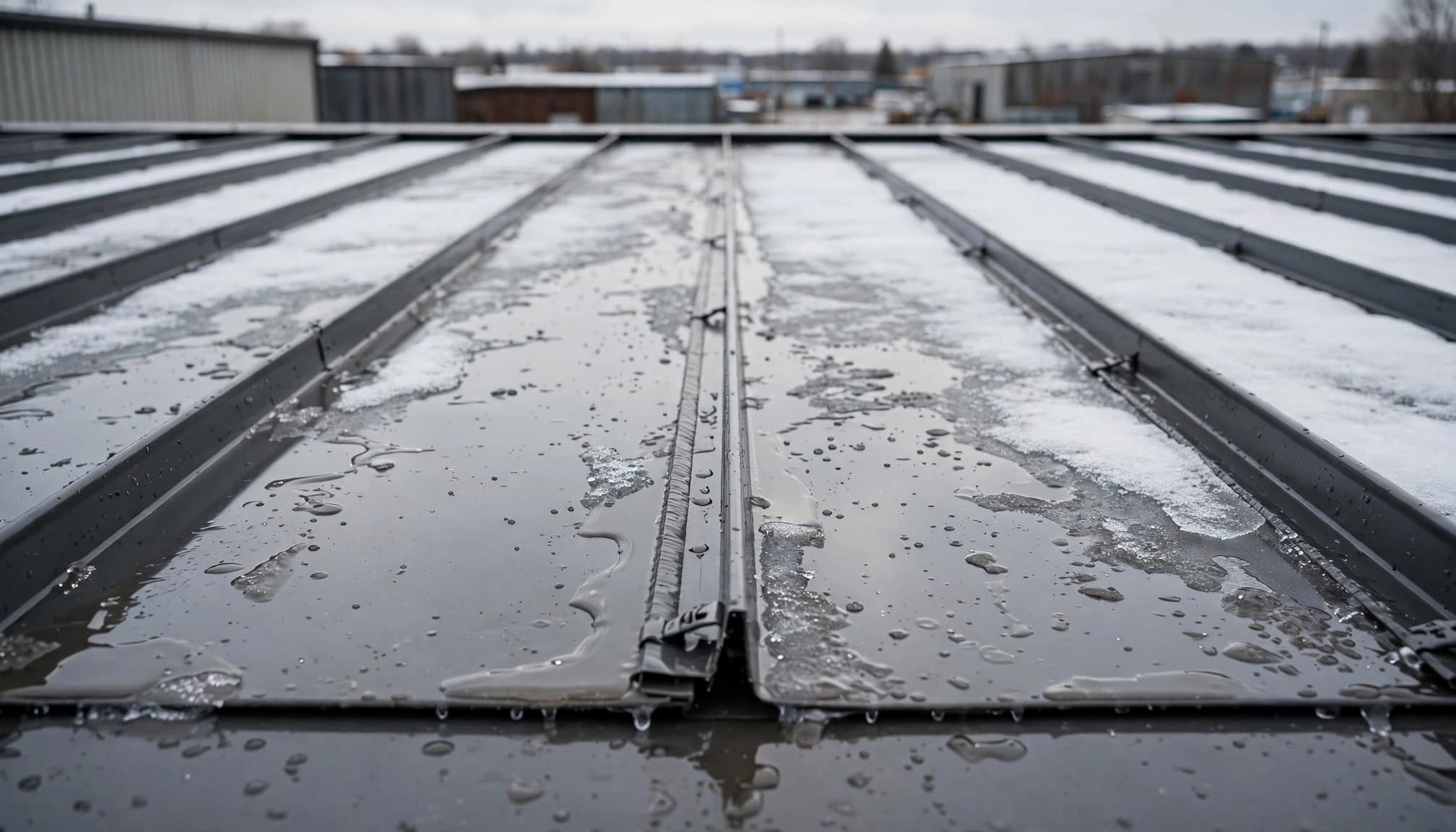
Clip selection depends on panel length, roof design, and the manufacturer’s assembly. IBHS explains that fixed and sliding clips have different movement functions; fixed clips are commonly associated with shorter panels.
MBCI’s guidance on standing-seam clip movement limits states that one-piece clips can permit movement within their profile, within limits.
A clip isn’t defective merely because the panel moves. The inspection must determine whether movement follows the assembly’s design or indicates failed attachment.
Why isn’t thermal movement the same as freeze-thaw damage?
Metal expands as its temperature rises and contracts as it cools. That movement occurs without water freezing.
Freeze-thaw exposure involves water changing between liquid and ice. It can aggravate vulnerable joints and water-entry details, but it doesn’t identify the condition of concealed clips.
Keep those mechanisms separate in the diagnosis. A roof may have a flashing leak, restricted panel movement, or weakened support material. Each finding requires different evidence, even when occupants first notice trouble during a thaw.
Which Winter Warning Signs Need Inspection?
What can owners observe safely?
Look from the ground or review accessible inspection photographs. New panel displacement, an opening at a seam, shifted trim, or repeated leakage deserves evaluation.
Record whether water appears during snowmelt, rainfall, or wind-driven weather. Note its location inside the building and whether the stain expands.
Oil canning, the visible waviness of metal panels, isn’t proof of clip failure. Neither are ordinary panel noises. Compare current conditions with earlier photographs before assigning a cause.
Where should the inspection concentrate?
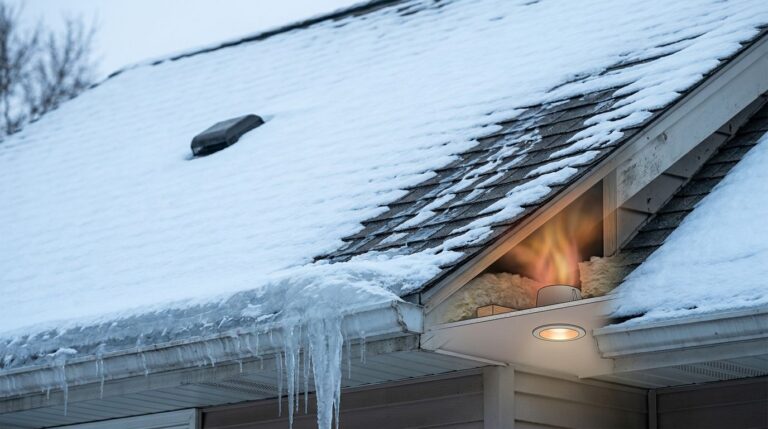
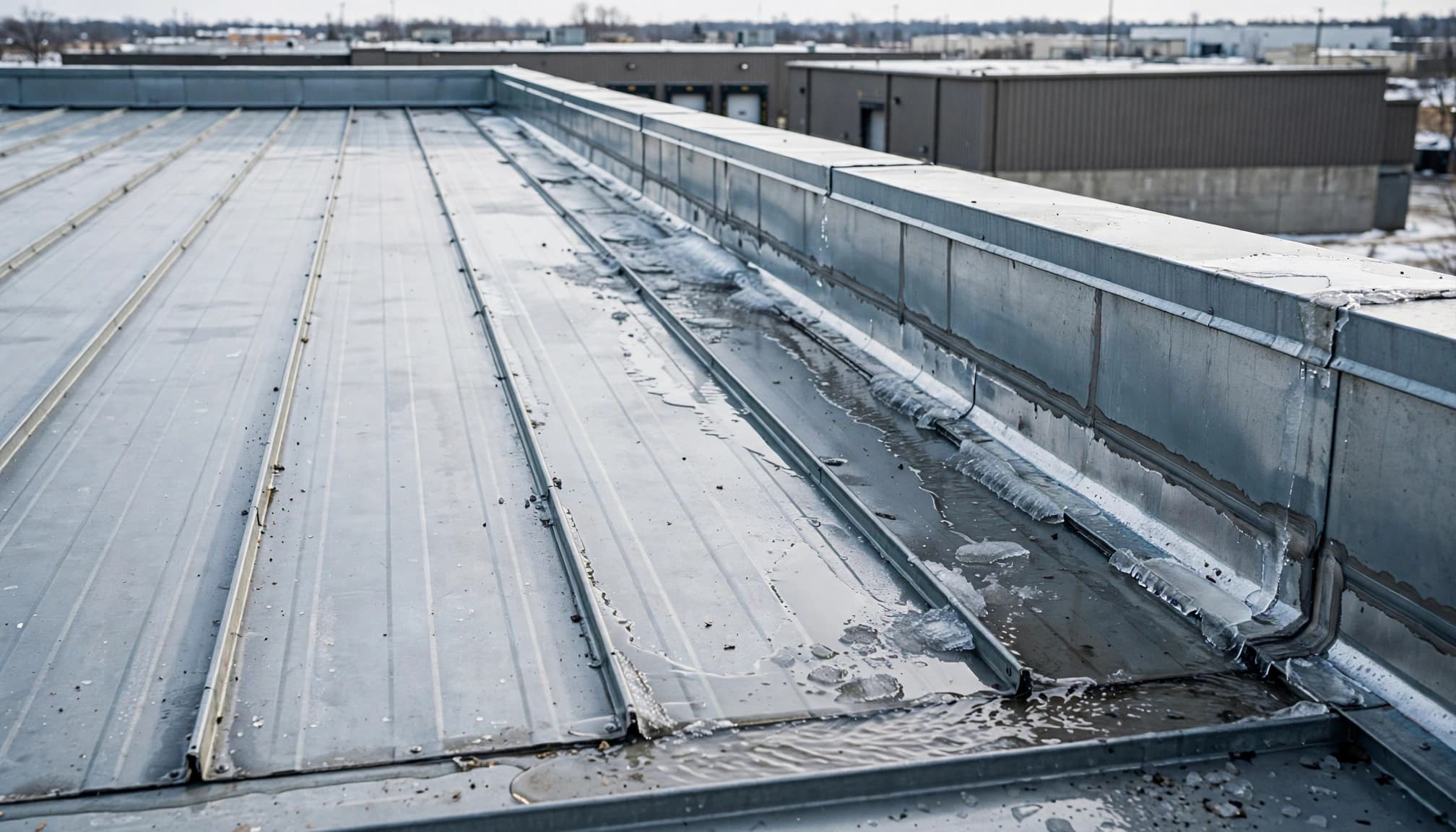
Eaves, valleys, roof-to-wall intersections, penetrations, and drainage routes deserve close attention. Ice and meltwater can obscure the actual opening.
The Metal Construction Association’s cold-climate roof design guidance addresses the added challenges of snowfall and freezing temperatures.
Check adjoining low-slope sections for winter roof drainage problems. Blocked drainage can produce leakage near a metal transition without any clip failure. A stain below that transition identifies where water emerged, not necessarily where it entered.
Step-by-Step
-
Record the symptoms before assigning a cause
Photograph interior stains, accessible exterior conditions, and visible ice accumulation. Record the date, recent weather, and whether dripping is active. Keep previous repair invoices and inspection photographs available. Don’t describe the condition as loose clips unless the attachment has been examined and documented.
-
Identify the exact standing-seam assembly
Ask for the panel manufacturer, seam profile, clip type, support material, and available installation records. These details determine how movement should occur. Similar-looking panels can use different attachments. A generic metal-roof assessment isn’t enough to establish whether the installed clip arrangement matches the roof design.
-
Request system-specific inspection and leak tracing
A commercial roof inspection should evaluate seams, flashings, attachment concerns, drainage, and evidence of concealed moisture. For active leaks, tracing commercial roof leaks helps separate the entry point from the interior drip. Moisture readings locate concerns; they don’t independently prove clip failure. Keep untrained staff off icy roofs.
-
Require findings that support the proposed scope
Ask the contractor to distinguish normal movement, an isolated water-entry defect, attachment damage, and support deterioration. The report should identify what was directly observed and what remains concealed. If inspection requires opening the assembly, request an explanation of access, weather protection, and manufacturer involvement before authorizing that work.
Can Clips Be Repaired Without Roof Replacement?
When can a localized scope make sense?
An isolated defect doesn’t automatically justify replacement. The decision depends on the surrounding panels, seams, attachment, support condition, and whether the proposed work addresses the confirmed cause.
Commercial roof repair may be appropriate for a limited flashing or seam defect while the remaining assembly performs properly. Concealed attachment work requires a separate assessment of access and system compatibility.
The same distinction applies to residential roof repair. A homeowner shouldn’t authorize residential roof replacement solely because leakage followed a thaw. Require photographs and a documented reason for the larger scope.
What makes a broader project reasonable?
Repeated failures across multiple areas, damaged supports, or widespread compromised attachment can change the decision. Commercial roof replacement should follow findings that show why localized work won’t provide a dependable result.
Commercial roof restoration and commercial roof coatings require sound underlying conditions. They don’t restore a failed concealed clip connection.
A coating proposal doesn’t answer an attachment question. The inspection must establish whether the panels remain securely connected before surface treatment is considered.
Avoid approving cosmetic work while the attachment diagnosis remains unresolved.
What Should an Inspection Report Include?
How should storm and winter evidence be separated?
The report should map affected locations and document seams, flashing, visible deformation, moisture findings, and accessible attachment conditions.
A hail-damage roof assessment must distinguish appearance from functional damage. Dents alone don’t prove loose clips. Storm damage involving displaced panels or opened seams needs its own evaluation.
For a roof insurance claim, preserve dated photographs, maintenance records, previous repairs, and the contractor’s findings. Don’t assume winter timing establishes a covered event. Coverage depends on the policy, documented cause, and insurer’s review.
What contractor qualifications matter for this work?
Ask about experience with the exact standing-seam system and access to its installation requirements. General roofing credentials don’t identify the installed clip or its permitted movement.
Sellers Roofing Company is based at 801 Transfer Road, Saint Paul, MN 55114, and serves Twin Cities property owners. It operates under MN Builder Contractor License 803862.
Its credentials include GAF certification and IUPAT Local 96 affiliation for union-built roofing work. For a metal-roof concern, request a scope that addresses panel attachment, water entry, and support condition rather than a surface-only estimate.
Key Takeaways
What does winter timing establish?
A leak following a thaw establishes timing, not the failure mechanism. Standing seam roof clips require evaluation against the specific assembly. Panel movement can be normal; displacement, seam openings, and deteriorated supports require investigation.
Separate water entry from attachment performance before deciding what needs repair.
What should owners avoid assuming?
Snow depth, panel noise, a ceiling stain, or a dent doesn’t establish clip failure. Neither does a recurring leak automatically justify replacement.
The useful finding is a documented defect tied to the proposed scope. An estimate should explain what failed, where it failed, and why the recommended work addresses it.
Frequently Asked Questions
Can snow guards interfere with roof movement?
They can if their installation restricts movement the system needs. ASC Building Products’ thermal movement and seam-clamp guidance addresses this concern. Ask whether the accessory matches the seam profile and preserves the assembly’s intended movement.
What if the roof only clicks during temperature changes?
Noise alone doesn’t establish failure. Record any change in frequency alongside visible movement, leaks, or displaced details. A contractor should compare those observations with the panel system and attachment design before recommending work.
Can ice dam removal prove the clips are sound?
No. Ice dam removal addresses accumulated ice and backed-up meltwater. It doesn’t evaluate concealed attachments. A leak that stops after removal still needs diagnosis if it recurs or leaves evidence of moisture entry.
What if the roof develops a visible sag?
Treat changed roof geometry as a structural concern, not a routine clip question.
Visible sagging or falling components
Keep people away from the affected area and seek immediate professional assessment. Don’t send maintenance staff onto the roof to investigate snow or attachment conditions.
Can an inspection happen while snow remains?
An assessment can begin with interior symptoms, records, and safely accessible areas. Snow may conceal seams, drains, and flashing. The report should state those limitations and identify which conclusions require a later, unobstructed examination.
Conclusion: Confirm the Attachment Before Choosing Repairs
Base the decision on observed failure
Minnesota winter exposure warrants inspection, but it doesn’t prove concealed clips have loosened. Confirmed attachment condition should drive the decision, alongside seam performance, drainage, and support integrity.
Request a system-specific evaluation
For a Twin Cities assessment, contact Sellers Roofing Company at 651-703-2336. Ask for documented findings that separate a water-entry repair from an attachment problem before approving replacement or coatings.
Need a roof inspection in Saint Paul or the Twin Cities? Call Sellers Roofing Company at +1-651-703-2336 or schedule a free estimate. We are a black-owned, NMSDC-certified MBE roofing contractor with 9+ years experience.