Last updated: 2026-08-01 by Ted Sellers, Owner
Yes. Sun damage can look a lot like hail damage on aging shingles, especially when granules wear off, the surface gets brittle, or heat creates blisters and cracks. Hail usually leaves random impact marks and fresh bruising. Sun wear shows more even aging. When the pattern is unclear, a documented inspection is the safest way to sort it out.
When This Applies
This mix-up happens most often on older asphalt shingles, especially on south- and west-facing slopes that take the most heat. It also shows up after a hot summer, when shingles have already lost granules and become stiff.
The question matters most when your commercial roof needs repair and you are deciding whether the problem is isolated damage or wider failure. Some business properties use shingles on entry roofs, dormers, or steep-slope sections. In those cases, the answer may affect a broader scope, including commercial roofing services in St. Paul if the issue is part of a larger building problem.
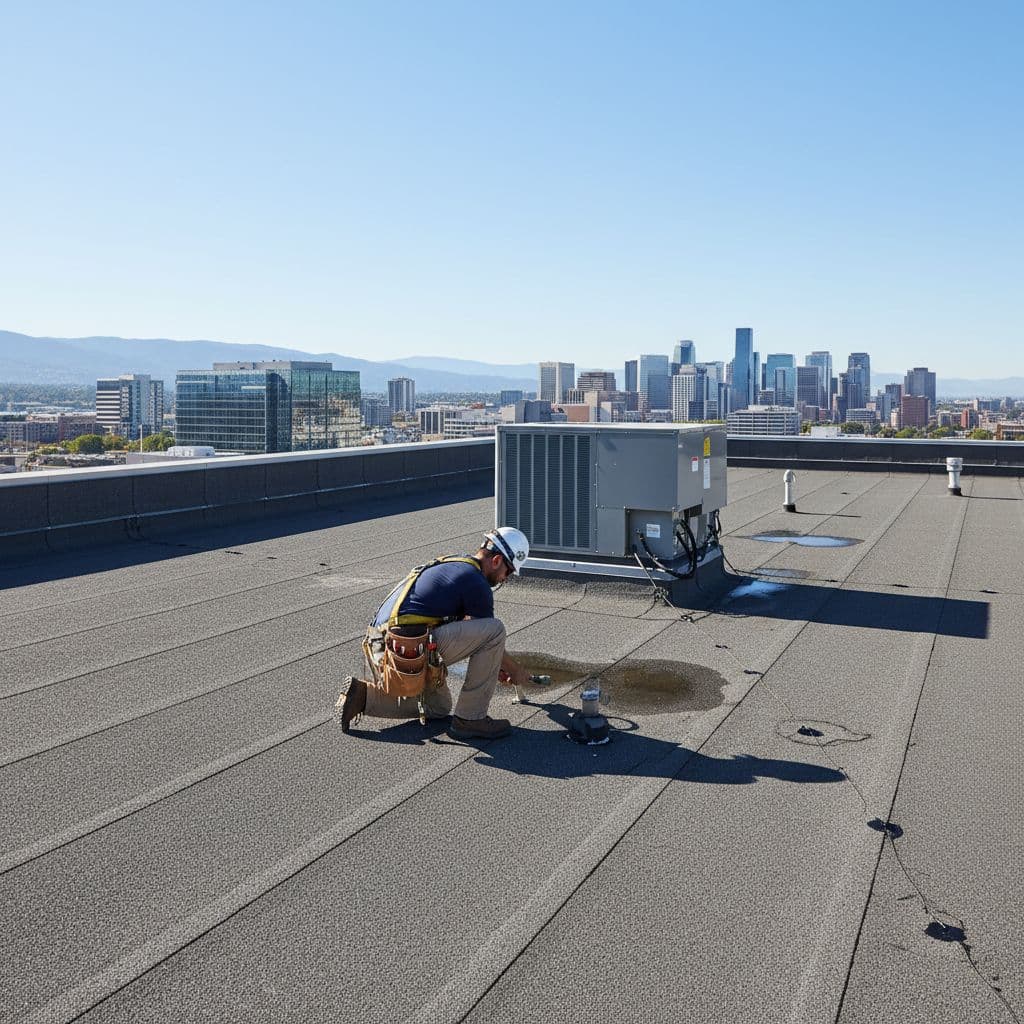
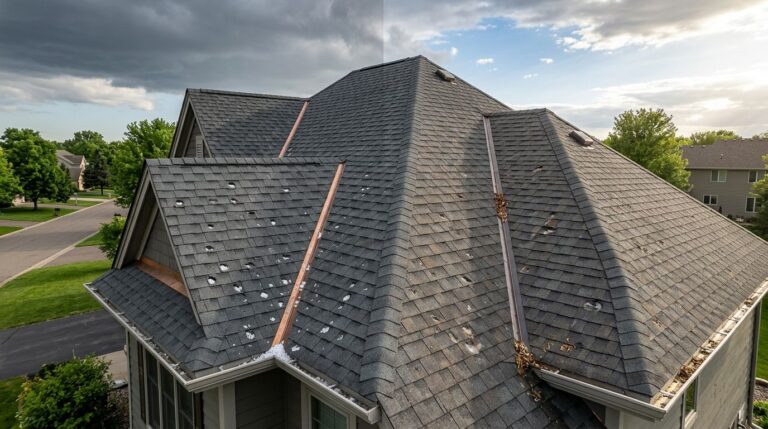
Fresh hail damage usually looks scattered. Sun damage usually looks older and more even.
Where the confusion shows up most
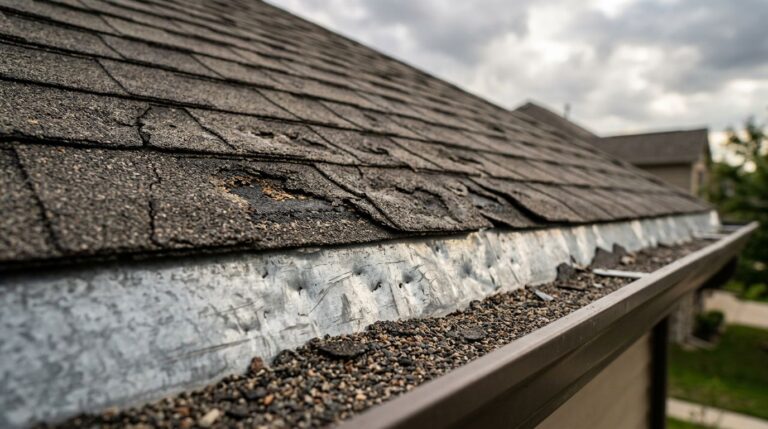
A roof can look storm-hit when it is really just worn out. Granule loss, faded color, curled edges, and brittle tabs can make old shingles look bruised from a distance. That is why a roof that looks tired is not automatically hail-damaged.
The confusion gets worse after a storm passes over a roof that was already near the end of its life. Hail can hit weak shingles and leave marks that look similar to age-related wear. For photo examples, how to identify hail damage on shingles gives a useful visual reference.
When it does not apply
Sometimes the difference is easy to see. If shingles show sharp splits, fresh bruises, or random damage across one slope, hail is more likely. If the roof shows broad fading, uniform granule loss, and slow curling, sun exposure is the better fit.
If the whole roof is brittle
A roof near the end of its service life can hide the answer. Old shingles may crack when handled, which makes storm analysis harder. In that case, a closer inspection matters more than the surface look.
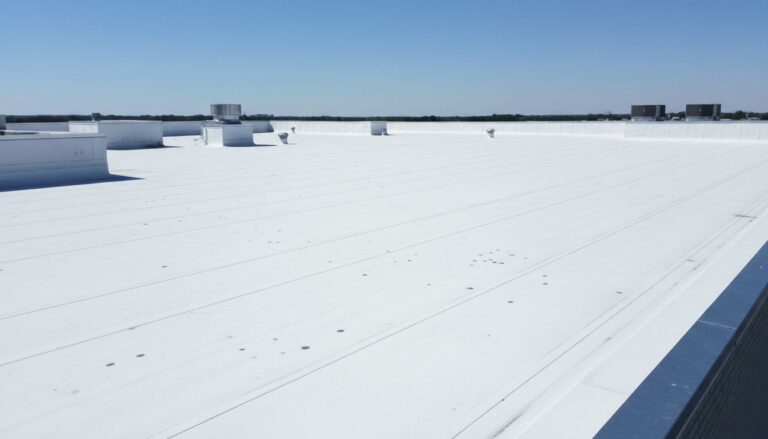
Low-slope roofs are different. If a building also has membrane areas, the damage may lead to commercial flat roof repair on one section and a separate repair on the shingle area. When damage is widespread, the file may point toward commercial roof replacement instead of a small fix.
Step-by-Step
The safest way to sort sun damage vs hail damage is to compare pattern, timing, and texture. Do that before you decide on repairs or an insurance claim.
Compare the pattern, then check the shingles
- Start with the slope pattern. Sun damage usually shows up across broad areas, often with the worst wear on hot, exposed sides. Hail damage often appears uneven and storm-facing.
- Look at the granules. Sun-worn shingles lose granules gradually. Hail can knock granules off in cleaner, more random spots and leave darker impact marks.
- Check the edges and tabs. Heat tends to curl, dry, and stiffen shingles. Hail can crack tabs, dent soft spots, or break the surface in a more abrupt way.
- Match the timing to weather. If the roof changed after a known storm, the case for hail gets stronger. If the damage was already there and worsened through heat, sun wear is more likely.
- Photograph everything before repairs start. Clear photos help compare the first inspection with later findings. That matters if the final scope needs a supplement or a recheck.
If you want a second visual reference, hail damage vs normal wear is useful when the roof looks aged but not obviously storm-hit.
When a second inspection helps
A second look is smart when the first answer feels thin. Sun damage and hail damage can overlap on old roofs, so one quick walk may not settle the issue.
That matters most on commercial properties with mixed roof types. A building can need one scope on shingles, another on membrane, and a broader plan if the roof system is failing in more than one place. If your commercial roof needs repair and the evidence is mixed, a fresh inspection can tell you whether the job stays small or moves toward commercial roof replacement.
For active leaks or unclear entry points, commercial roof leak detection services can help tie visible damage to the real source. That keeps you from paying for the wrong repair.
FAQ
Can sun damage really be mistaken for hail damage on shingles?
Yes. It happens often on older roofs. Sun damage fades shingles, strips granules, and makes the surface brittle. From the ground, that wear can look like a storm hit.
The difference usually shows up in the pattern. Sun damage tends to be broad and even. Hail is usually more random and more localized.
What is the clearest sign of hail damage?
Random impact marks are the biggest clue. Hail often leaves round bruises, clean granule loss, or cracked tabs in scattered spots. The pattern may also line up with the storm side of the roof.
A roof that only looks faded or dry is less likely to have hail damage. Age creates a slower, more uniform look.
Why do insurance adjusters care so much about timing?
Because timing helps show cause. If the damage appeared after a storm, the claim looks different than roof wear that built up over years. That separation matters when the carrier reviews whether the loss is covered.
If a claim is opened, check whether the payment is replacement cost or actual cash value. Recoverable depreciation can come later after the work is done and documented. Also confirm the deductible, policy limits, and any code coverage before you accept the first number.
Should I wait for a leak before I call someone?
No. A leak is already a later-stage sign. By the time water enters, the damage can spread into decking, insulation, or interior finishes.
A roof can look cosmetic at first and still be failing. If the surface is brittle or the marks are unclear, an inspection now is better than waiting for stains later.
What if my building has both shingles and a flat roof?
That is common on offices, apartments, and mixed-use properties. One section may need roof work on shingles, while another section needs commercial flat roof repair or a broader replacement plan.
The key is not to mix the scopes. A shingle problem and a membrane problem should be identified separately. If the damage is widespread, the right answer may be commercial roof replacement rather than patching both sections piecemeal.
Conclusion
Sun damage can absolutely be mistaken for hail damage on shingles, especially when the roof is old and the wear is uneven. The best clue is the pattern. Sun wear is usually gradual and broad, while hail leaves sharper, more random marks.
If the roof still looks unclear after a close look, stop there and get a documented inspection. That protects the repair scope, the budget, and the next decision.
A roof tells a different story when you compare the surface, the weather, and the timing. That story matters most before anyone starts cutting into it.
Need a roof inspection in Saint Paul or the Twin Cities? Call Sellers Roofing Company at +1-651-703-2336 or schedule a free estimate. We are a black-owned, NMSDC-certified MBE roofing contractor with 9+ years experience.