Last updated: 2026-10-23 by Ted Sellers, Owner
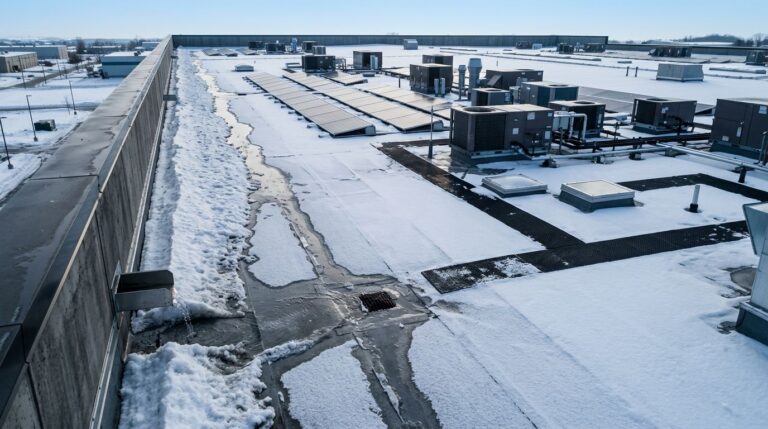
Yes. TPO roof shrinkage can cause edge leaks when the membrane pulls against perimeter flashing, fasteners, and welded details until gaps open. Water often enters at the roof edge before you see stains inside. The risk is higher on older roofs, roofs with repeated temperature swings, and systems that already have stressed seams or weak edge metal.
A roof edge leak often looks minor from the ground. On a commercial building, though, that small opening can soak insulation, stain walls, and keep returning after every storm.
The hard part is diagnosis. Water can travel well past the entry point, so the wet ceiling tile may sit nowhere near the failed edge detail.
When This Applies
Which buildings are most at risk
This applies most to commercial buildings with aging TPO membranes, especially large low-slope roofs with long runs to the perimeter. Warehouses, retail centers, offices, and multi-tenant buildings often fit the pattern. In Saint Paul, wide temperature swings add more movement stress to the roof system over time.
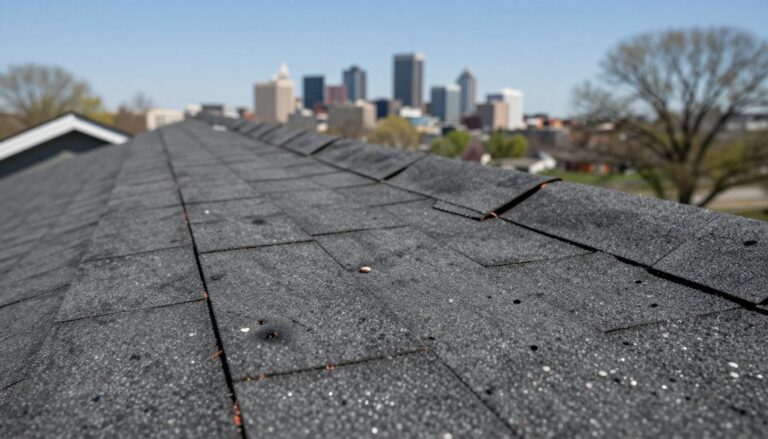
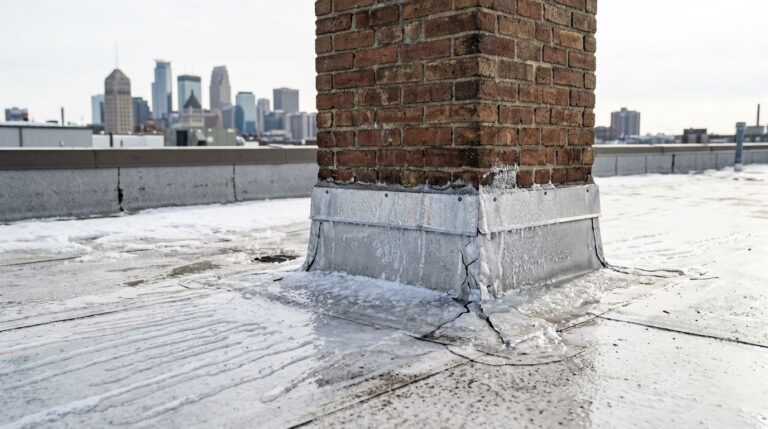
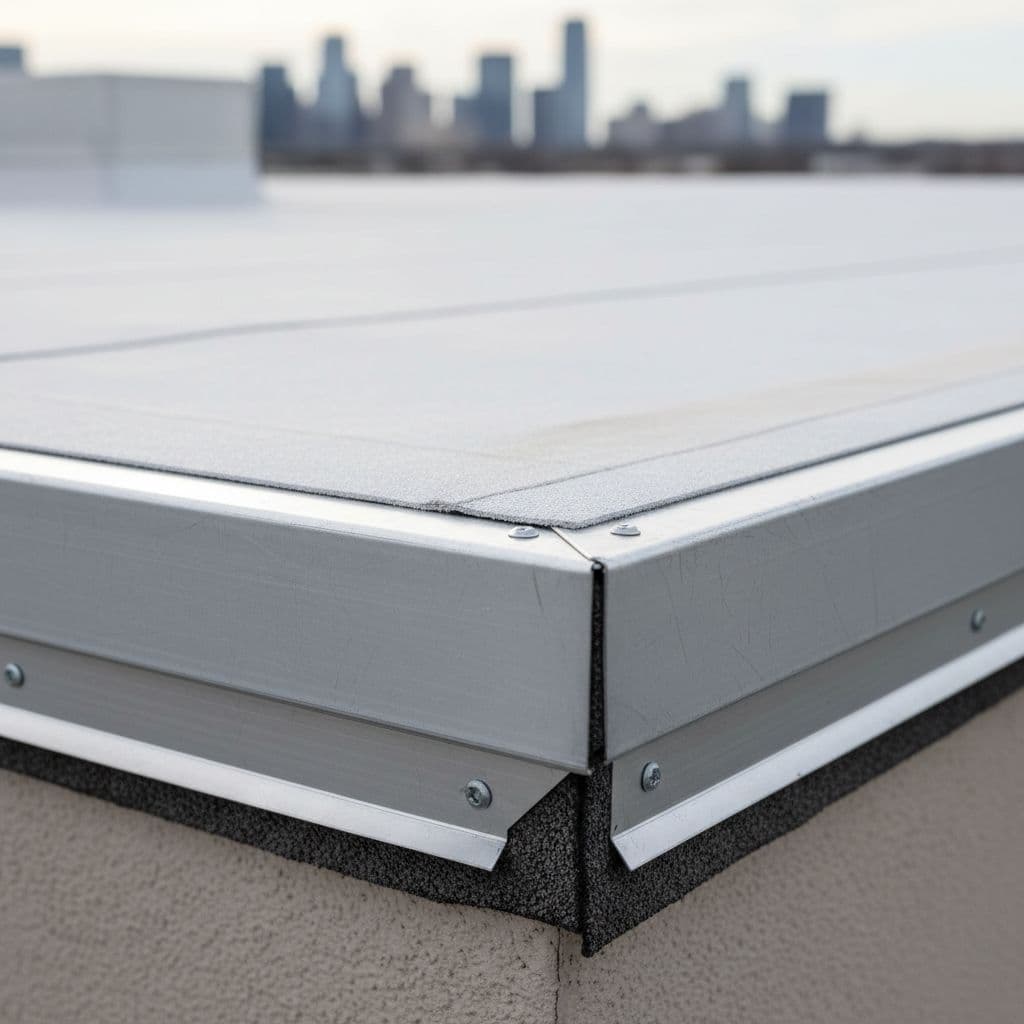
Shrinkage problems show up more often when the membrane has lost flexibility, when edge details were underbuilt, or when repeated repairs never addressed the root tension in the sheet. You may notice pulled flashing, wrinkled corners, exposed fasteners, or a gap where the membrane should sit tight under the edge detail.
When edge leaks may come from something else
Not every perimeter leak comes from shrinkage. A newer TPO roof with local damage may be leaking because of a puncture, bad heat weld, loose coping, failed wall flashing, or backed-up drainage. If the system is EPDM, modified bitumen, or metal, the cause and repair path are different.
A shrinking membrane also isn’t the only way edge metal fails. Wind uplift can loosen perimeter details. Foot traffic can damage corners near access points. Poor repairs can trap moisture and weaken the detail long before the current leak appears.
Edge cases that can confuse the diagnosis
Mixed roof systems create confusion fast. One section may need a membrane repair while another has a metal flashing problem. That’s why a clean inspection matters more than a quick guess. Field reports on common TPO roofing problems often mention shrinkage alongside seam stress, punctures, and ponding because these problems can overlap.
Ceiling stains rarely show the true entry point. On a shrinking TPO roof, the leak may start at the perimeter and travel inward.
Step-by-Step
How to confirm shrinkage before you approve work
Use this process before you sign off on repairs or open a larger claim.
- Start at the roof edge, not the ceiling stain. Look for membrane pull-back, corner stress, fishmouths, loose termination bars, split welds, and wrinkled flashing. Also check whether the edge metal has shifted or the fasteners are backing out. A good visual review often shows whether the membrane is pulling tight across the perimeter instead of lying flat.
- Check how far the moisture spread. Edge leaks rarely stay at the edge. Water can move through cover board and insulation before it shows inside. If you need proof, use commercial roof leak detection services to trace the entry point, map trapped moisture, and separate a local failure from a wider roof problem.
- Separate shrinkage from old wear or bad repairs. Previous patches do not erase coverage or prove cause by themselves. The real issue is whether the old work failed first or whether the membrane tension opened a new path for water. Signs like pulled edges and stressed seams are often treated as replacement warnings in this guide to TPO replacement signs, but your building still needs a roof-specific inspection.
- Stop more damage, but keep the work temporary if insurance is involved. Call the carrier right away, report the active leak, and ask for written approval for emergency mitigation while the inspection is pending. A small patch, tarp, drain clearing, or interior water control is usually reasonable. Large tear-off work is different. Keep every photo, labor ticket, moisture map, and receipt. If wet insulation must come out for safety, photograph it in place first and save a sample if possible.
- Decide whether the roof needs repair or a bigger scope. If the shrinkage is isolated to one edge and the membrane still has life left, a commercial flat roof repair may hold. If several edges are pulling, seams across the field are stressed, or insulation is saturated over a broad area, the better answer may be commercial roof replacement. When a commercial roof needs repair, timing matters. Waiting through another storm cycle can turn a local problem into a larger loss.
Why roof edges usually fail first on shrinking TPO
What membrane tension does to perimeter details
A TPO membrane should move with normal temperature changes. Over time, though, age, heat, UV exposure, and installation conditions can leave the sheet under constant pull. That pull has to go somewhere. The perimeter often takes the load first because the edge detail anchors the membrane at a hard transition.
Once the sheet starts pulling, the stress can distort flashing, widen welded laps, and tug against fasteners and bars. Corners are even more vulnerable because the membrane changes direction there. Add wind pressure at the perimeter, and a small opening can become a repeat leak point.
This is why a quick bead of sealant rarely fixes the real problem. If the membrane still wants to pull back, the patch sits on a moving target.
How a small edge gap turns into a bigger leak
Water doesn’t need much space. A narrow opening at the roof edge can let in enough moisture to wet cover board, insulation, or the wall line below. In colder weather, freeze-thaw cycles make the area worse. In warmer months, trapped moisture spreads and weakens adhesives and fasteners.
By the time you see bubbling walls or stained ceiling tile, the leak path may already extend beyond the perimeter detail. That hidden spread is often what turns a simple repair call into a larger scope review.
Repair or replacement after TPO shrinkage
When a commercial flat roof repair still makes sense
Repair makes sense when the issue is truly limited. That usually means one edge or one corner, sound field seams, dry surrounding insulation, and a membrane that still welds well. In that case, a roofer may cut back the stressed area, re-secure the perimeter, replace damaged edge metal, and weld in compatible new material.
Good repair work also needs proof. Photos, moisture readings, and marked roof plans matter because they show whether the leak stayed local or not. If the scope is clean, a targeted fix can stop water without forcing a full reroof.
When commercial roof replacement becomes the better call
Replacement becomes the better spend when shrinkage shows on multiple edges, when the membrane is brittle, or when the field seams are starting to fail with the perimeter. Widespread wet insulation changes the math fast. So do repeated service calls for the same edge.
Code items can also push the decision. If the perimeter metal, substrate condition, or tie-in details require broad correction, patching may only postpone the cost. In those cases, compare the full scope, not only the first estimate total. A cheap patch that fails next season costs more than one well-scoped project.
Conclusion
TPO shrinkage can cause roof edge leaks, and the leak often starts earlier than it looks from inside the building. The main issue is not the stain on the ceiling. The main issue is membrane tension pulling apart the perimeter detail.
If the damage is local, repair may work. If the roof is pulling at several edges or moisture has spread, replacement usually makes more financial sense than chasing the same leak twice.
FAQ
Can a contractor fix TPO shrinkage without replacing the whole roof?
Sometimes. A local repair can work if the shrinkage is limited to one area and the rest of the membrane is still stable. Once the pull shows up on several edges or field seams, a patch usually becomes a short-term answer.
Does insurance cover leaks caused by shrinking TPO?
It depends on cause and policy language. Carriers often look closely at whether the problem came from age, wear, faulty prior work, or a sudden covered event.
When a claim gets harder
Claims get harder when permanent repairs start before inspection or when removed materials are thrown away. Temporary dry-in work is usually easier to justify than broad restoration.
How fast should I act if the leak only appears in heavy rain?
Act quickly. Intermittent leaks still wet insulation and wall assemblies. A leak that shows only during wind-driven rain often points to an edge or flashing opening, and those rarely improve on their own.
Can I remove wet insulation before the adjuster arrives?
Usually, wait so the material stays available as evidence. Photos, moisture readings, and samples matter if the scope later changes.
If removal can’t wait
If the insulation creates a safety issue or drives interior damage, document it in place first, notify the carrier, and save a sample when possible.
Will coating the roof edge stop a leak caused by shrinkage?
Not by itself. A coating can cover the symptom while the membrane keeps pulling underneath. If shrinkage is the cause, the roof needs a repair that relieves or rebuilds the stressed edge detail. For a roof-specific assessment, explore our commercial TPO roofing service.
Need a roof inspection in Saint Paul or the Twin Cities? Call Sellers Roofing Company at +1-651-703-2336 or schedule a free estimate. We are a black-owned, NMSDC-certified MBE roofing contractor with 9+ years experience.