Last updated: 2026-08-01 by Ted Sellers, Owner
A wind-driven roof leak usually enters on the windward side during wind-driven rain, then travels before it shows up inside. Identifying the source of a roof leak is the first step in proper roof maintenance for Minnesota property owners. To find it without climbing, document the wind direction, then take eight clear ground photos of roof edges, wall transitions, and penetrations. Look for staining, loose metal, failed sealant, and overflow marks, then compare those clues to where water appears indoors.
When This Applies
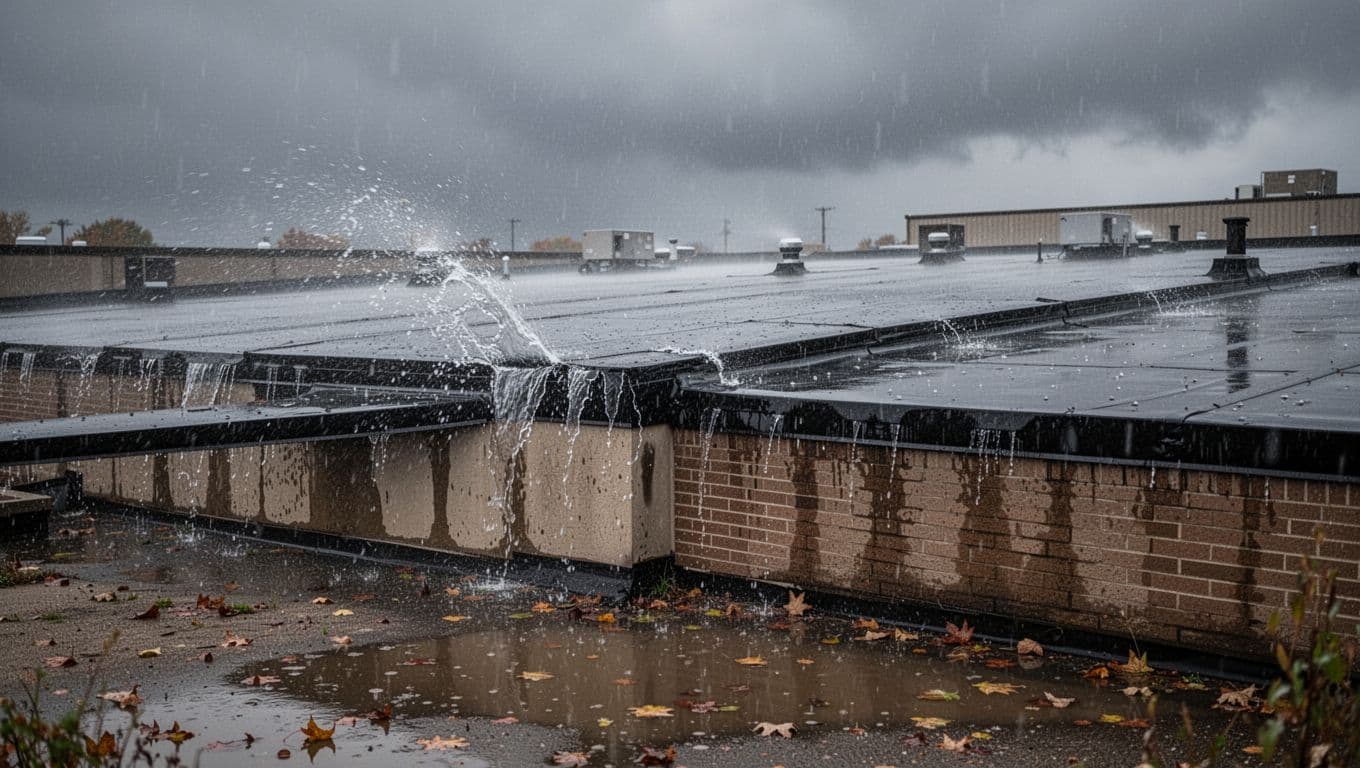
Why wind-driven rain leaks behave differently
Wind-driven rain, or lateral rain, acts like a sideways pressure washer. It can push water under edge metal, through tiny gaps in roof flashing, or behind wall caps. Then water runs along the deck or insulation until it finds a low point. As a result, the ceiling drip might be far from the entry point.
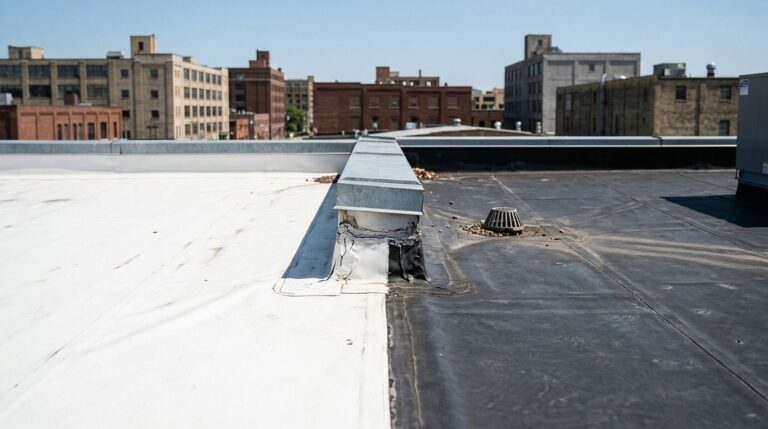
This pattern shows up a lot on low-slope and flat commercial roofs in Saint Paul, especially near parapet walls, rooftop units, and older edge details, where clogged gutters or drainage issues often exacerbate water intrusion through the building envelope. It also happens on steep-slope sections where a wall meets a roof (step flashing, counterflashing, dormer sidewalls).
If you manage a building and the leak only appears with wind from one direction, your most likely entry points sit on that wind-facing side. For a quick overview of common problem areas on low-slope systems, see this plain-language guide to common sources of commercial roof leaks.
When this checklist does not fit
This ground-photo method helps you narrow the suspect areas. However, it will not confirm hidden membrane splits, saturated insulation, or leaks that originate under rooftop equipment.
Key exceptions in Saint Paul
If you see any of the cases below, skip the photo hunt and move to professional testing:
- Active water near electrical panels or light fixtures.
- Repeated leaks after past patching, which often means water is traveling and may have saturated the attic insulation if the building has a finished ceiling or plenum space.
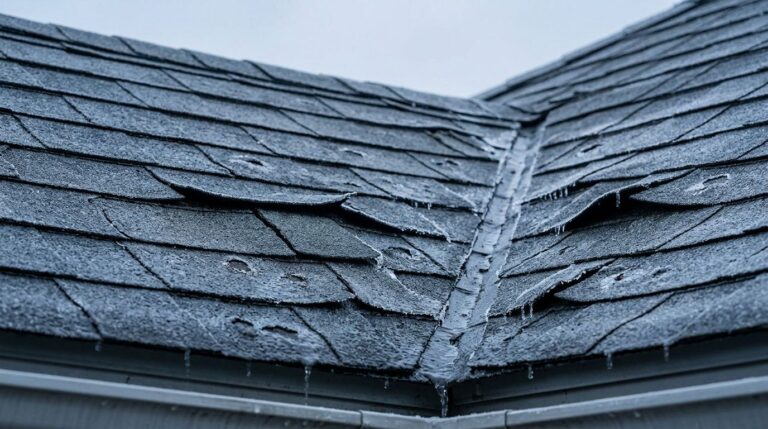
- Winter-only leaking tied to ice dams, snow, or freeze-thaw effects. (This Minnesota-focused piece explains why flat roofs leak in winter.)
- Interior damage like mold growth and water stains that grows quickly, which can signal widespread moisture.
If the leak happens only with strong wind, start your search on the windward edge and wall transitions, not above the ceiling stain.
Step-by-Step
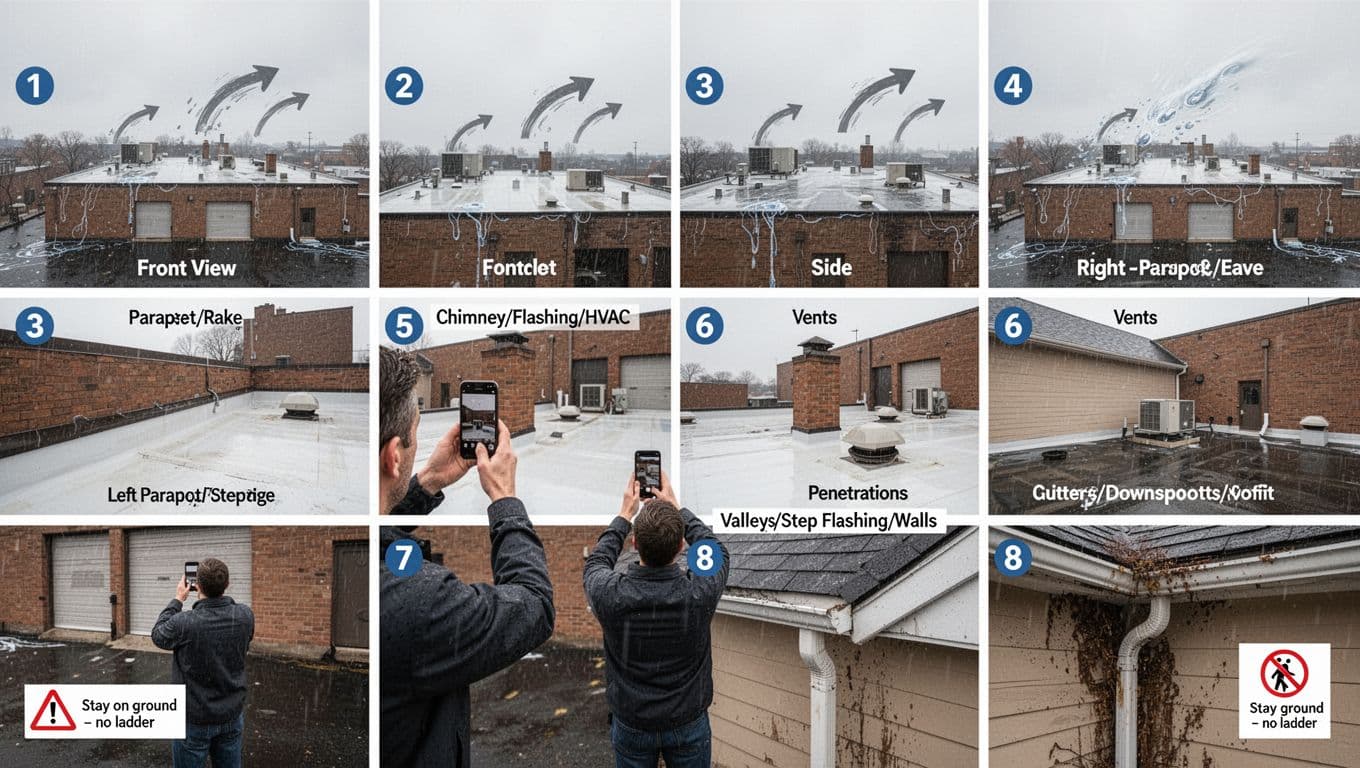
Set yourself up to get useful evidence
- Prioritize ladder safety and stay on the ground. Don’t use a ladder in wind or wet conditions, and don’t access the roof during a storm. Take photos from parking lots, sidewalks, or safe perimeter areas.
- Record storm context first. Note the time, wind direction, and where water showed inside (room name, grid location, or suite). A quick phone note helps later when you compare photos.
Take these 8 photos for a complete visual and ground-level inspection (in order) so nothing gets missed
- Photo 1, whole building from the front (wide shot). Capture roofline, parapets, corners, rooftop units you can see, and any wall caps. You’re looking for obvious edge damage, loose coping, missing metal, or sagging areas that suggest ponding.
- Photo 2, whole building from the back or opposite side (wide shot). This gives contrast. If staining appears only on one elevation, that often matches the windward exposure during the leak event.
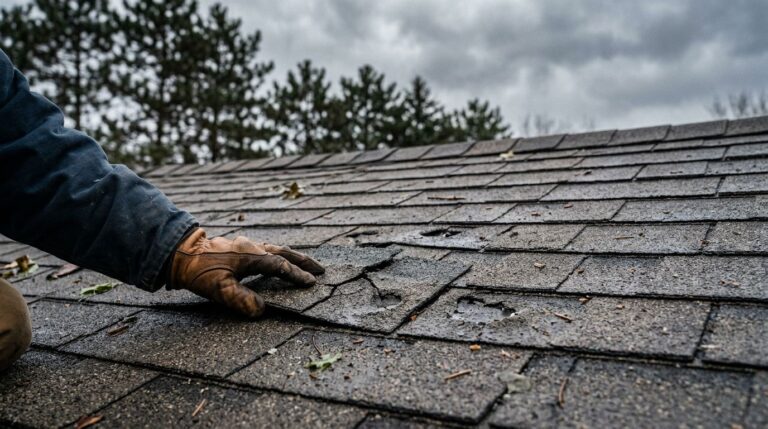
- Photo 3, left corner and edge detail (medium shot). Zoom in on the parapet coping or edge metal, termination bars, joints at the corner, and damaged shingles on any steep-slope transitions. Wind-driven rain loves corners because pressure changes can force water into small gaps.
- Photo 4, right corner and edge detail (medium shot). Look for separated seams, lifted metal, popped fasteners, or sealant that looks cracked or missing. If one corner shows more distress, it becomes your top suspect.
- Photo 5, chimney area or large curb (tight shot if visible). Many commercial buildings have a masonry stack, equipment curb, or wall penetration that behaves like one. Photograph chimney flashing lines, reglets, and any rust or streaking. Dark trails can mark repeated wetting.
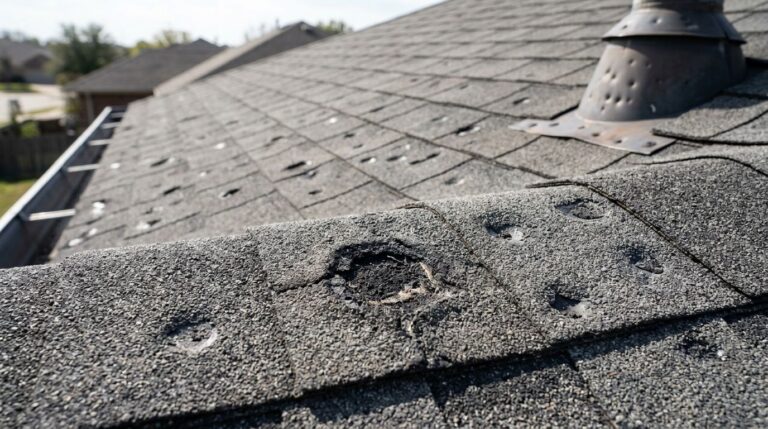
- Photo 6, plumbing vents and roof penetrations (tight shot). From the ground, you may only see taller vents. Still, photograph vent stacks, pitch pans, vent boots, and other roof penetrations you can spot. Wind can drive water uphill along a pipe if the boot is split or the sealant has pulled away.
- Photo 7, wall transitions and “roof meets wall” zones (angled shot). Focus on step flashing lines, termination points, and any change from roof to exterior walls, siding, brick, or EIFS. These transitions leak when flashing ends too low or when sealant fails at the top edge.
- Photo 8, gutters, downspouts, and staining below edges (wide plus detail). Even on parapet buildings, you may have scuppers, collector heads, or downspouts. Photograph overflow marks, algae lines, peeling paint, or stains on brick. Overflow during gusts can mimic a roof leak.
Compare your photos to what happened inside
- Match the leak timing to wind direction to help identify the source of a roof leak. If wind came from the east, prioritize east-facing edges, corners, and wall transitions in your photo set, even if the interior stain sits elsewhere.
- Decide what the evidence suggests, then choose the next action. If you see stained walls, loose metal, or failed flashing, your commercial roof needs repair before the next storm. If photos show widespread aging or repeated problem zones, ask about commercial roof leak detection Saint Paul to pinpoint the source of a roof leak, then plan repairs based on what testing finds. If the ground-level search fails to reveal the source of a roof leak, hiring a professional roof inspector who uses thermal cameras is the logical next step.
A good photo set doesn’t fix the leak, but it prevents guessing, and guessing is expensive.
FAQ
Can the leak source be far from the ceiling stain?
Yes. The source of a roof leak can be far from the ceiling stain. On low-slope roofs, water can travel along the membrane, insulation, or deck seams. A musty odor often accompanies hidden water intrusion. Wind-driven rain can also enter at an edge, then run to a penetration. That’s why the windward-side photos matter more than the interior spot alone.
What if I can’t see most roof details from the ground?
Focus on what you can document: edges, corners, wall caps, scuppers, downspouts, and staining. Then bring in a pro to check details like skylight seals and soffit vents for targeted testing. For broader service options, review professional commercial roofing Saint Paul so your inspection leads to a real scope of work.
When does this become commercial flat roof repair instead of a small fix?
If the same area leaks more than once, or if staining suggests overflow and chronic wetting that can rot roof sheathing over time, treat it as commercial flat roof repair, not a tube-of-sealant job. Small patches can help short term, but they often miss the real source of a roof leak.
Should I plan commercial roof replacement if the leak is wind-only?
Not automatically. Wind-only leaks can come from one failed detail. Still, if your photos show repeated edge failures, damaged shingles, widespread metal movement, or multiple patched areas, commercial roof replacement may cost less over the next few years than constant emergency calls.
What’s a safe temporary step while I wait for a roofer?
Move inventory, protect equipment, and catch water inside to limit damage. If accessible, consider an attic inspection for early signs of water intrusion. Avoid roof access during wind or rain. If conditions are safe later, a contractor can install a temporary cover, then use a moisture meter or controlled garden hose test to verify the path.
Leaks that only show up during sideways rain feel mysterious, but they follow patterns. Use the eight ground photos to narrow the source of a roof leak, then act fast so a wind driven roof leak doesn’t turn into soaked insulation, ruined finishes, and avoidable downtime. Regular roof maintenance serves as a key preventative strategy.
Need a roof inspection in Saint Paul or the Twin Cities? Call Sellers Roofing Company at +1-651-703-2336 or schedule a free estimate. We are a black-owned, NMSDC-certified MBE roofing contractor with 9+ years experience.