Last updated: 2026-08-01 by Ted Sellers, Owner
Yes. Exposed nails can leak after high winds because gusts can loosen fasteners, crack sealant, and open a path for water under flashing or metal trim. On commercial buildings, the trouble usually starts at edge details, penetrations, ridge caps, and older repair spots. The leak may show up far from the nail, so the source needs tracing before anyone approves a fix.
When This Applies
Which commercial roofs are most at risk?
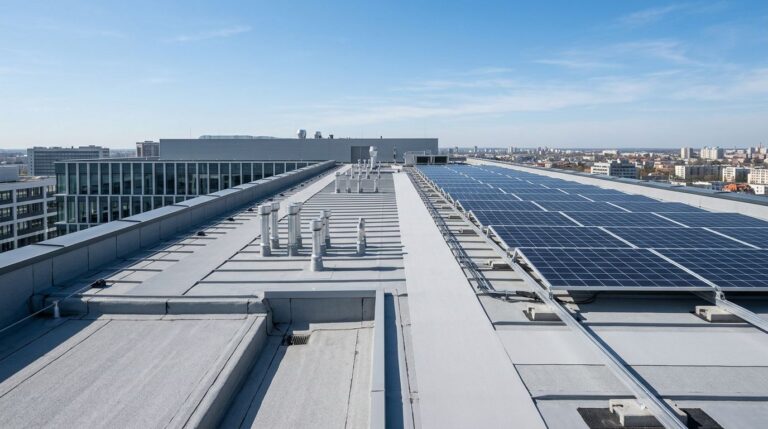
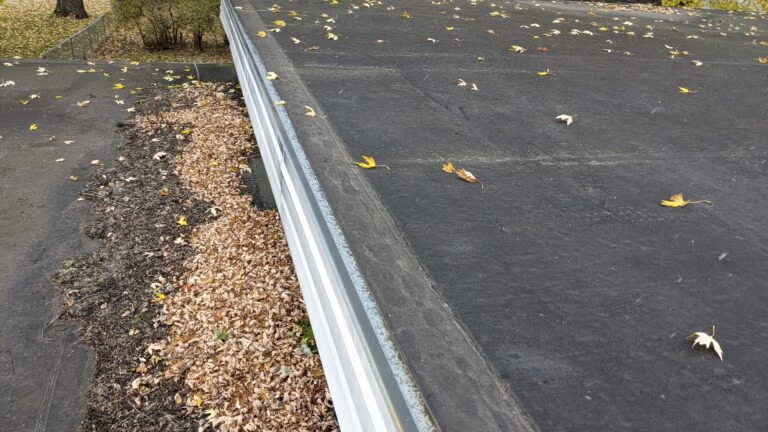
This applies to commercial buildings with exposed fasteners at vulnerable details, not usually across the whole roof field. Common trouble spots include edge metal, counterflashing, wall flashings, ridge caps, curb details, metal transitions, and older patches where someone surface-fastened a repair.
It also fits mixed roof systems. A building might have TPO or EPDM on the main deck, then metal or synthetic slate over entry features or upper façades. In that setup, a wind-loosened fastener on the steep-slope section can send water into areas that make the flat roof look guilty.
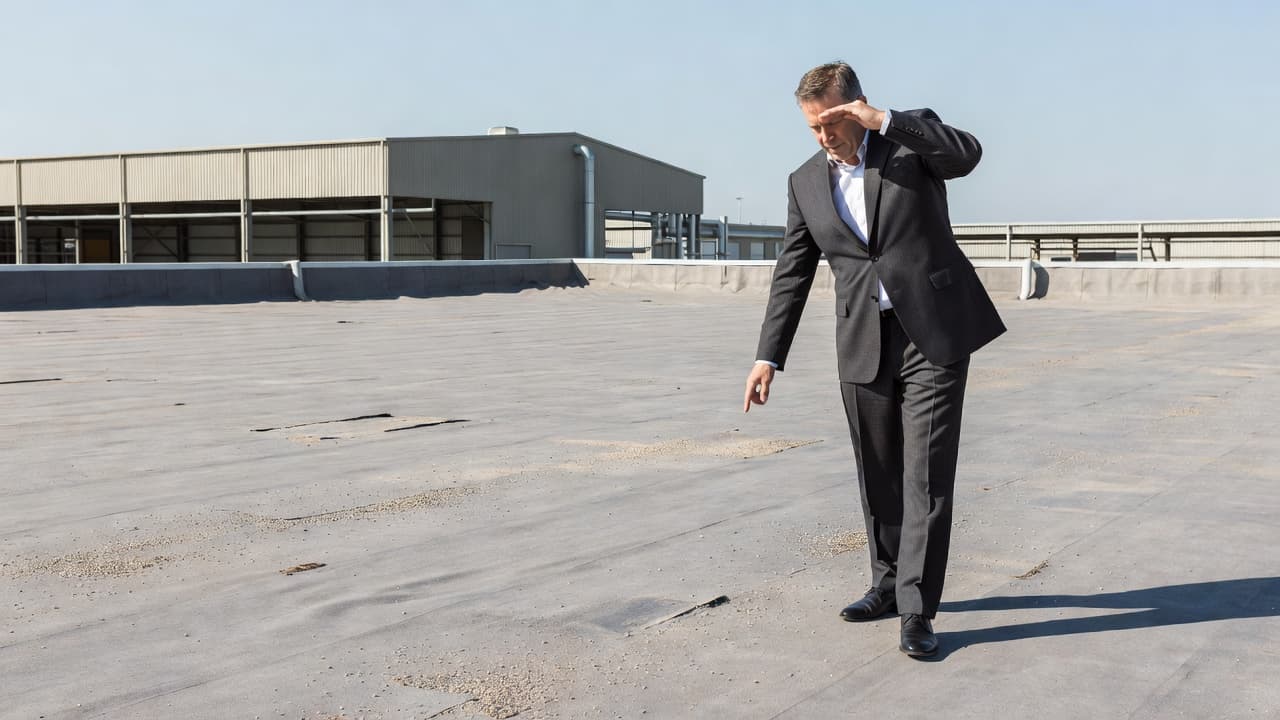
High winds do not need to tear off a roof to start a leak. They only need enough force to flex metal, loosen a nail shank, or split the seal around a fastener head. Once that happens, water can work below the surface. If edge metal is loose, seams have opened, or insulation has gotten wet, a commercial roof needs repair right away.
When exposed nails probably are not the source
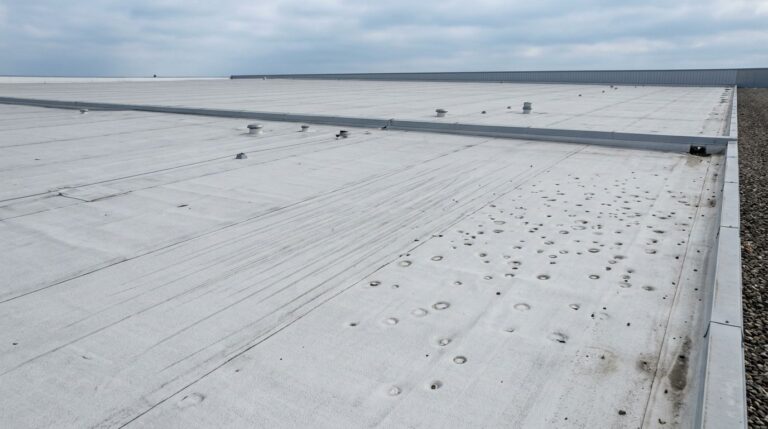
This does not fit every roof leak after a storm. Many single-ply roofs have no exposed fasteners in the membrane field, so the leak may come from a puncture, split seam, drain, curb, or HVAC penetration instead. Likewise, many standing-seam metal roofs hide their main fasteners. On those systems, wind can damage clips or seams while the visible fastener heads are not the real cause.
The same caution applies when the stain indoors appears long after the wind event. A late leak may still trace to storm damage, but it may also come from old shrinkage, failed sealant, or a drain problem that the storm only exposed.
Exceptions that change the call
A single backed-out nail can be a small repair. The larger issue is the movement around it. If wind also bent flashing, lifted laps, or pulled perimeter metal, the fastener may only be the first clue.
Older patchwork roofs add another wrinkle. A fresh storm opening can still be covered even when nearby repairs are old. What matters is cause. If the new leak started when the wind opened a detail that had been holding for years, age alone does not settle the question.
Why High Winds Make Exposed Nails Leak
Wind creates movement before it creates holes
Wind pressure works roof edges and metal details over and over. That repeated movement can back a nail out, enlarge the hole around it, or crack the sealant that once protected the head. After that, rain does not need much help.
On commercial roofs, the first signs often show up at perimeters, wall transitions, and curbs because those areas take the hardest gusts. Once one edge loosens, the next storm can lift it farther. A minor failure on Friday can become a much bigger opening by the next round of weather.
Small openings can soak insulation faster than most owners expect
A nail hole looks minor, but low-slope roofs rarely leak in a neat vertical line. Water can run along laps, cover board, deck ribs, or the underside of metal before it drips into a suite below.
A ceiling stain rarely points straight to the failed fastener. The real entry point may sit several feet away.
That is why quick guessing leads to repeat leaks. If the wet area stays limited and the surrounding roof still bonds well, targeted commercial flat roof repair often works. If soft spots spread, seams fail across connected areas, or the roof has already been patched again and again, commercial roof replacement may be the lower-cost answer over time.
Step-by-Step
1. Protect people, inventory, and interior finishes first
Move stock, protect electrical areas, and place containers under active drips at once. Water damage spreads the same day, while approvals and inspections often take longer.
If the roof is unsafe to access
Do not send maintenance staff onto a wet membrane, storm-damaged deck, or area near live equipment. A trained roofer with fall protection is the safer choice.
2. Photograph the suspect fasteners and the surrounding roof area
Take dated photos of exposed nail heads, cracked sealant, lifted flashing, bent edge metal, and interior leak signs. Then step back and photograph the larger roof section so the location is clear.
What to capture
Include parapet walls, drains, rooftop units, and the direction of the wind-hit edge. Closeups help, but wide shots matter because they show pattern, not only damage.
3. Keep temporary work temporary
If water is entering, approve only what stops more damage now. That may mean a tarp, temporary seam sealant, drain clearing, or a small patch over the opening.
Do not jump straight to tear-off unless safety demands it. Full restoration before the source is documented can erase the best proof of what failed and when.
4. Trace the leak path before approving the fix
A roofer should inspect more than the nail itself. They need to follow the water path, check nearby flashings, and test whether wind opened other details in the same section. On large buildings, that means looking at edges, seams, curbs, and transitions together.
If the source is still unclear, commercial roof leak detection services can help locate hidden water movement before you pay for the wrong repair. A stain under one suite often starts elsewhere.
5. Match the scope to the actual damage
When the problem is isolated, repair is often enough. That usually means one or a few fastener points, dry insulation below, and surrounding materials that still have good attachment and tear strength. In those cases, crews can replace damaged flashing, resecure trim, seal the right way, and patch the affected area without major disruption.
If the field membrane still bonds well and test cuts stay dry, repair remains practical. That is the point where a measured repair beats a rushed overspend.
When replacement is the wiser move
The answer changes when wind uplift has lifted large connected sections, moisture is widespread, or the same area has failed more than once. At that point, patching one fastener line may only buy time. If edges, seams, and flashings keep opening together, the leak is part of a larger roof failure.
6. Keep a clean record if insurance becomes part of the job
Write down the storm date, when staff first saw water, and what emergency steps you approved. Save photos, proposals, moisture readings, field notes, and labor tickets in one folder.
That record matters because adjusters often separate old wear from fresh wind damage. If the leak came from a new opening after high winds, your file should show it clearly.
For larger losses, a commercial roofing contractor in Saint Paul can document whether the job supports localized repair or a broader scope. If later inspection finds wet insulation or wider attachment failure, that can change the claim from a small patch to a larger covered repair.
7. Re-check the area after the next rain
A good repair should stop the leak. Still, commercial owners should watch the repaired area during the next rain or thaw because water often follows more than one path.
Ask for photos of the completed repair and keep them with your records. If water returns, your roofer can compare the old condition with the new one and decide whether the first opening was only part of the problem.
Conclusion
The nail is often the clue, not the whole story
Yes, exposed nails can cause leaks after high winds. On commercial roofs, that small fastener often points to a bigger issue, such as moving metal, lifted edges, or hidden moisture.
Fast mitigation, clear photos, and a proper inspection protect both the building and the repair budget. When damage is limited, repair is enough. When wind has spread failure across connected areas, fixing only the nail leaves the next storm plenty to work with.
FAQ
Can one exposed nail really cause a leak in a large commercial building?
Yes. One failed fastener can let water in, and the roof can carry that water far from the entry point. A small drip inside does not mean the damage above is small.
What happens if the nail backed out but there is no leak yet?
Repair it soon. A backed-out fastener often means the surrounding detail moved during the wind event. The next storm can widen the opening and turn a warning sign into an active leak.
Does sealant over a nail head solve the problem?
Sometimes, but only when the fastener is still sound and the surrounding metal has not shifted. If the hole is enlarged, the flashing is bent, or the attachment below failed, surface sealant is only a short-term patch.
Can my maintenance team handle this without a roofer?
Only if the conditions are safe and the work stays temporary
Interior protection and basic leak control are reasonable. Roof access after a wind event is different. Wet surfaces, hidden soft spots, and electrical hazards make professional inspection the better call.
How do I know if the commercial roof needs repair or replacement?
Look at spread, not only the visible leak. Dry insulation and limited damage usually point to repair. Wide wet areas, repeated failures, lifted field sections, or weak attachment across connected areas push the decision toward replacement.
Need a roof inspection in Saint Paul or the Twin Cities? Call Sellers Roofing Company at +1-651-703-2336 or schedule a free estimate. We are a black-owned, NMSDC-certified MBE roofing contractor with 9+ years experience.