Last updated: 2026-08-01 by Ted Sellers, Owner
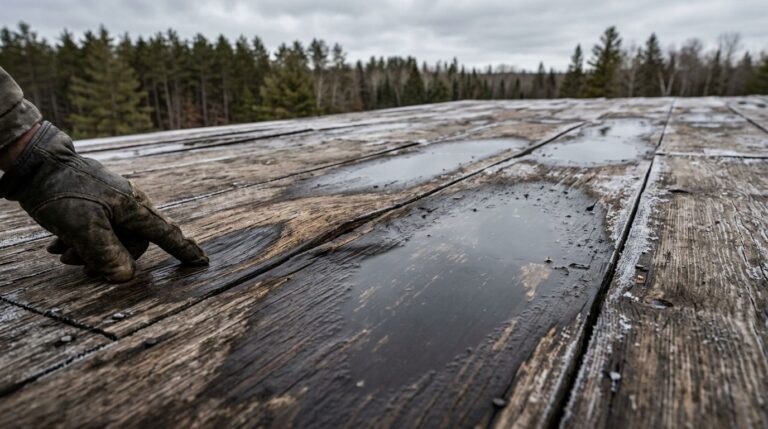
Water stains on ceilings help you narrow the search, but they rarely mark the exact roof leak. Start by confirming the stain is active, then check what sits directly above it (roof deck, drains, HVAC curbs, or plumbing). Next, trace the most likely uphill water path on the roof to find the leaky roof, focusing on seams, penetrations, flashing, roofing sealant, and ponding areas.
When This Applies
You’ve got a real roof leak, not just a cosmetic spot
A new brown water stain or yellow patch on a tile or drywall often means water entered the building envelope. For commercial owners, the risk isn’t only the stain. Moisture can spread through insulation, rust decks, and cause water damage to inventory before anyone notices.
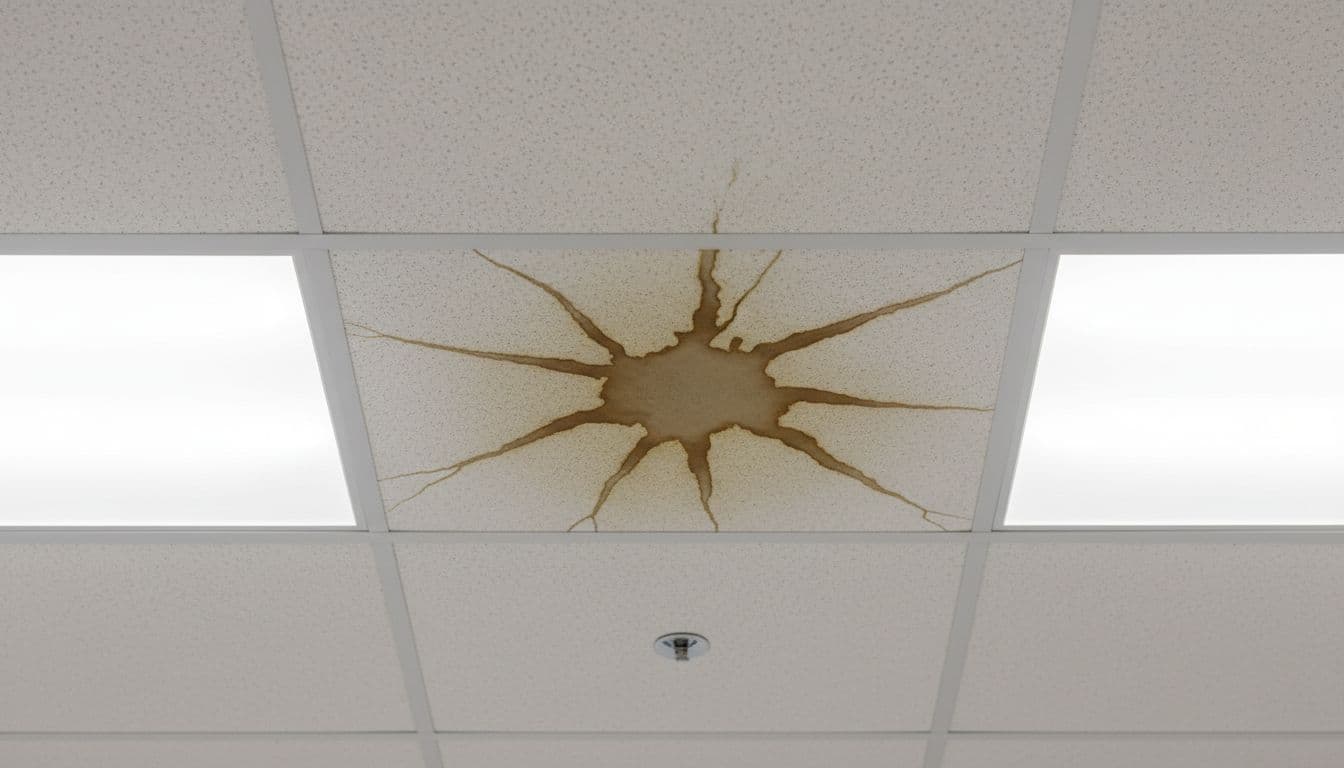
This approach applies best when:
- The stain grows after rain, snowmelt, ice dams, or freeze-thaw cycles (common in Minnesota each March).
- The space above the ceiling is part of the roof assembly (not an upper tenant with plumbing).
- You manage a low-slope system where water can travel sideways before it drops.
It applies less well when the “stain” is old. A decades-old spot can darken again from high humidity, even without a new leak. In that case, you’ll need proof of active moisture before chasing the roof.
When a ceiling stain doesn’t point to the leak location
Commercial leaks play tricks because water moves like a slow, hidden river. On flat and low-slope roofs, it can run along seams, follow insulation joints, or drip from the nearest opening in the deck, not from the entry point.
Flat roof water travel is the biggest exception
If you’re dealing with a roof leak ceiling stain on a TPO, EPDM, or built-up roof, assume the source may be 10 to 50 feet away. Wind-driven rain and ponding make the path even less direct.
“Not the roof” look-alikes to rule out
Condensation can mimic a leak, especially near supply ducts and rooftop units. Plumbing leaks from vents, cracked drain lines, and overflowing condensate pans can also stain ceilings. If the stain appears only during HVAC system use, or only under a restroom group, don’t start on the roof.
A ceiling stain is a symptom, not a map. Treat it like a smoke smell, you still have to find the fire.
For a structured way to think about cause, see NRCIA’s overview of roof leak cause determination steps.
Step-by-Step
Trace the stain inside before anyone goes on the roof
- Confirm it’s active by touching the tile edge (gloved) or using a moisture meter on drywall, then note “wet” or “dry.”
- Document everything with time-stamped photos, including the room name, grid line, and distance from exterior walls.
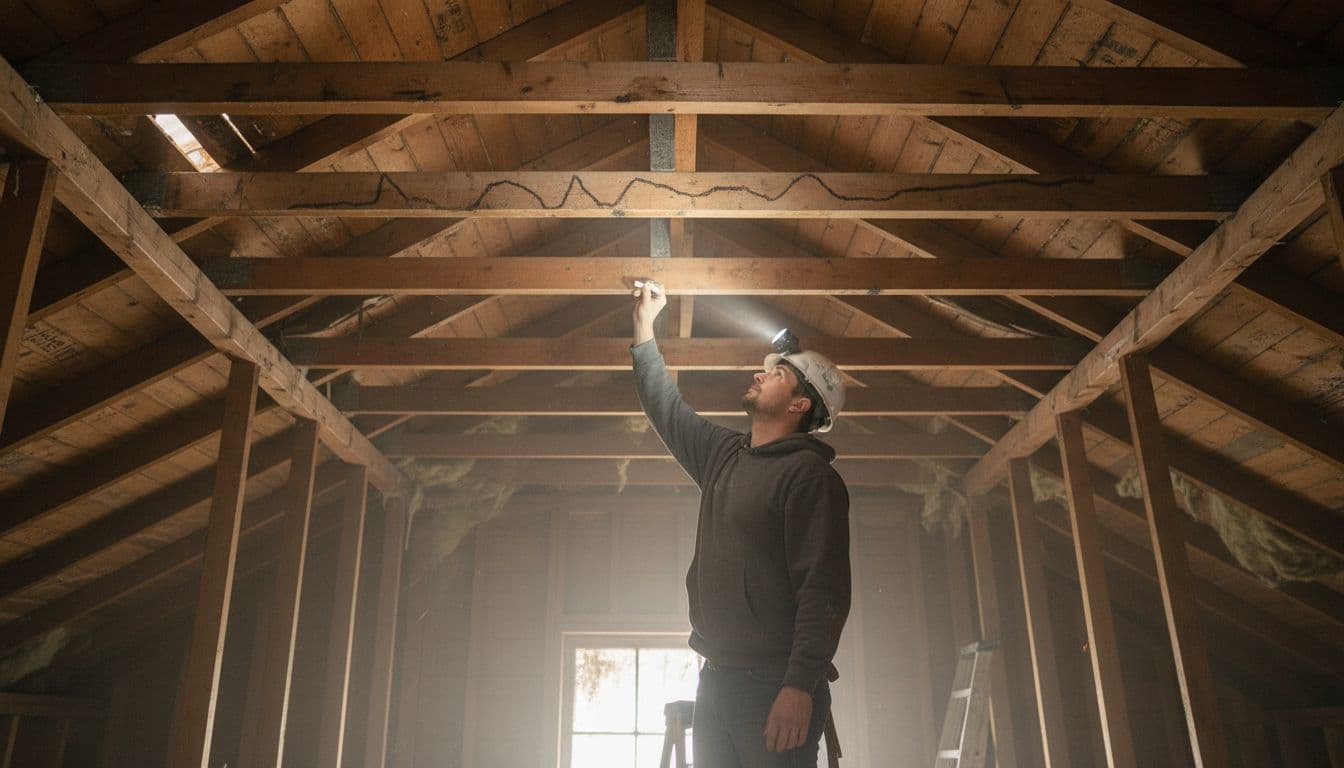
- Look for the highest wet point above the stain (above-ceiling space, plenum, underside of deck, or attic insulation), because first drip points often mark the trail.
- Check nearby non-roof sources first, including HVAC condensate lines, duct sweating, restroom plumbing, and any sprinklers above the ceiling.
- Mark the spot from below by measuring off two fixed references (for example, the north wall and a column line), so you can relocate it on the roof.
- Estimate the “uphill search zone” on low-slope roofs, because water usually travels toward openings, seams, and penetrations before it drops.
Inspect the roof in the right order (and avoid false fixes)
- Start with a formal roof inspection by following roof safety rules (harness, edge awareness, trained personnel), because a rushed leak hunt can become an incident.
- Start with drainage: clear strainers, check scuppers, and look for ponding marks, since standing water raises leak odds fast.
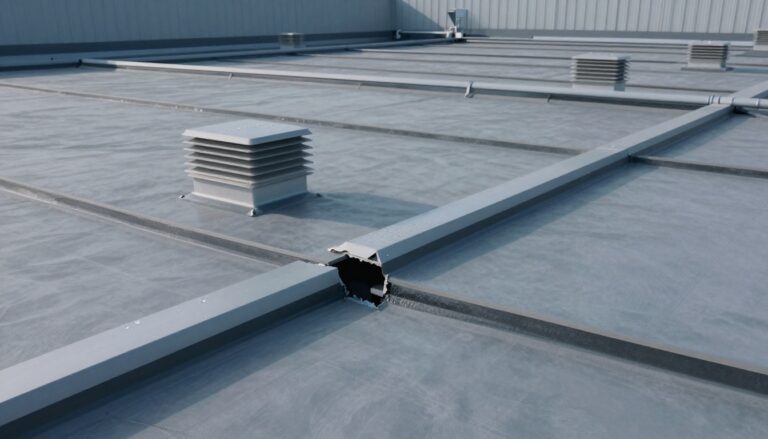
- Inspect penetrations first (HVAC curbs, vent pipes, skylights, chimney flashing), because roof flashing failures cause many commercial leaks.
- Walk the seams and transitions on TPO and similar membranes, watching for open laps, fishmouths, or stress cracks at terminations; check for missing shingles on sloped sections.
- Check edges and parapet walls for loose coping, failed counterflashing, or deteriorated sealant joints that let wind-driven rain in.
- Look for punctures and traffic damage near rooftop equipment and service paths, then circle anything suspicious for repair planning.
- Match the roof findings to your interior map to pinpoint the source of the leak, and only then choose the fix, whether it’s a targeted patch to repair the leak, commercial flat roof repair, or a larger section replacement.

If you’re getting repeat stains, don’t guess. Professional diagnostics (infrared, electronic testing, and moisture mapping) by a roofing contractor can prevent paying twice. Scheduling commercial roof leak detection in Saint Paul is often the fastest way to pinpoint the entry point without unnecessary tear-offs.
If the same stain returns after a “patch,” assume the source wasn’t fixed, or there are multiple breaches.
When you find widespread seam failures, saturated insulation, or multiple leak points, your commercial roof needs repair at a system level. At that stage, a long-term plan may include restoration or commercial roof replacement, especially if the membrane is near the end of service life. For broader options and scope planning, review these commercial roofing Saint Paul services.
FAQ
Why does the stain show up far from the actual leak?
Water stains on ceilings often appear far from the source of the leak because water travels along the deck ribs, insulation joints, and vapor barriers before it drops. Flat roofs make this worse because water can move sideways instead of running straight down. As a result, the wettest ceiling tile may be the first “opening,” not the entry point.
What if the stain appears days after a storm?
Delayed stains are common. Water can pool on the roof, soak into insulation, then drip later as temperatures change or the building warms up. Snowmelt can also feed a slow leak without a big rainfall event. In practice, timing helps, but it doesn’t confirm the source by itself.
Quick tip for delayed stains
If the stain grows during warm afternoons after a cold night, suspect trapped moisture releasing slowly. Also check exhaust fans and attic ventilation to rule out interior moisture.
Should maintenance cut the ceiling open to trace the leak?
Only if you can do it safely and you need immediate answers. A small inspection opening can reveal active dripping, rust, mold growth, or structural damage. Still, ceiling work won’t show the roof entry point on many low-slope systems. If you open anything, photograph it and protect occupants from debris.
When is a ceiling stain an emergency for a business?
Treat it as urgent when you see sagging ceiling tiles, active dripping near electrical, wet light fixtures, or water over inventory and equipment. Also act fast if the stain sits under a rooftop unit curb or near a drain, because those leaks can escalate quickly during heavy rain.
For more warning signs that support a leak diagnosis, review critical signs your roof is leaking.
Will insurance care about how we documented the stain?
Yes. Insurers often want dates, photos, and a clear cause narrative. Keep a simple log: when the stain appeared, weather conditions, what areas were impacted, and what temporary steps you took. A professional leak report can also help when interior damage or business interruption becomes part of the claim.
Conclusion
Water spots are your starting flag, not your finish line. When you treat a roof leak ceiling stain like a trail and work “upstream,” you avoid wasted patches and repeated disruptions. If your roof shows multiple weak points, such as roof flashing, plan repairs early, before insulation and decking costs pile up. Once the leak is fixed, applying a stain-blocking primer to the ceiling drywall is the standard cosmetic repair. The smartest next move is the one that stops the leak and protects the building long-term.
Need a roof inspection in Saint Paul or the Twin Cities? Call Sellers Roofing Company at +1-651-703-2336 or schedule a free estimate. We are a black-owned, NMSDC-certified MBE roofing contractor with 9+ years experience.