Last updated: 2026-08-01 by Ted Sellers, Owner
A TPO roof leak at HVAC curb corners is found by narrowing the leak path from the interior, then inspecting every curb corner detail on the TPO membrane: welds, flashing, termination, fasteners, and sealant transitions. Finally, confirm the exact breach with controlled water testing or professional methods like infrared or electronic leak detection, because water often travels far through the building structure from the entry point.
Water stains inside rarely sit under the real problem on a flat roof. That’s why HVAC curb corners are tricky. They’re compact, crowded, and full of transitions where materials meet.
If you need a documented, building-friendly approach (especially for tenants and insurance), start with a professional roofer for commercial roof leak detection Saint Paul so you don’t waste money repairing the wrong spot.
When This Applies
You have a leak near an HVAC unit (but the source keeps shifting)
This applies to business owners with a low-slope TPO single-ply membrane roof and one or more rooftop HVAC units. It’s most relevant when stains appear near mechanical rooms, break areas, corridors, or tenant spaces under a unit. It also fits cases where the leak returns after “patching” around the curb.
HVAC curbs concentrate common failure points in one small area: membrane-to-metal transitions (where ignoring leaks can lead to water damage and mold and mildew), inside and outside corners exposed to UV rays that degrade the TPO membrane over time, and foot traffic from service work. If you’ve had recent HVAC maintenance, schedule a roofing inspection, as that timing matters. A dropped screw, kneeling on a seam, or moving a line set can start a pinhole leak.
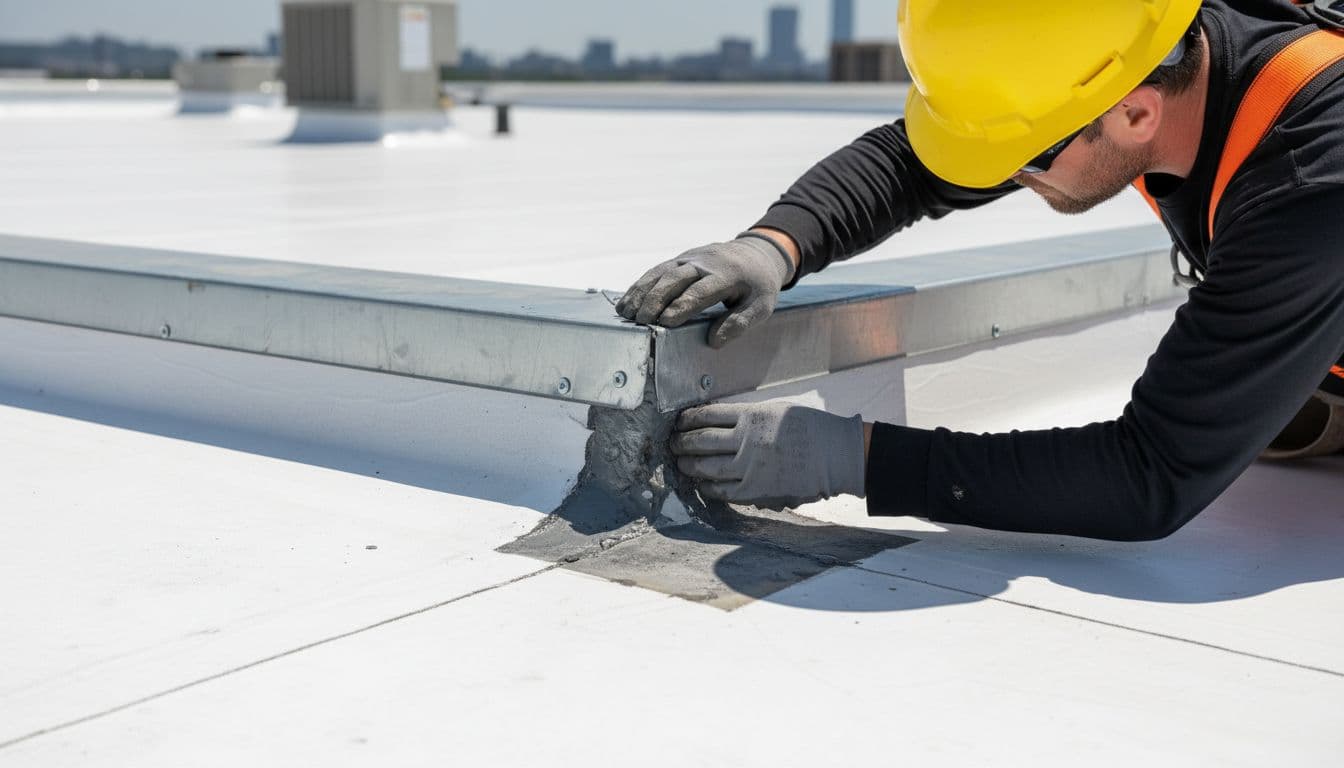
On a TPO roof, water can enter at a curb corner and show up indoors far away. The stain is a clue, not a map.
For a simple reference on how seams are commonly checked (including probing for weak welds), see InterNACHI’s TPO inspection guidance.
It’s probably not the curb corner (even if it’s nearby)
Sometimes the curb looks guilty because it’s close to the leak, but the actual entry point is elsewhere. If the roof has ponding water upstream due to drainage system issues, a small seam split or puncture can feed water toward the curb area. Likewise, clogged drains can raise water levels and push moisture into details that normally stay dry.
Edge case: “leaks” caused by HVAC condensation or ice
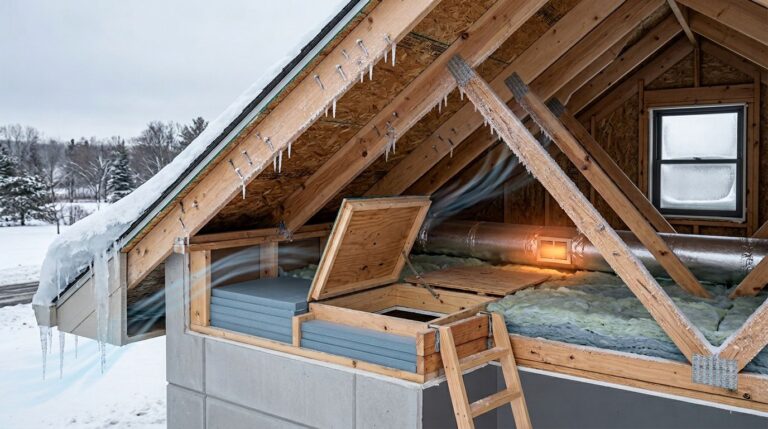
If the issue shows up during cooling season, check for condensate overflow or disconnected drain lines. During winter, ice buildup and freeze-thaw can mimic a roof leak, especially if warm air escapes around duct penetrations and melts rooftop snow.
Step-by-Step
Start inside, then narrow the suspect corner
- Document the interior leak area (photos, date, weather, and which HVAC unit was running), because patterns help isolate the source.
- Check ceiling plenum direction and obstacles (joists, ducts, beams), since water often follows paths dictated by structural integrity before it drops.
- Map the leak to the roof by measuring from exterior walls or columns, then mark an approximate zone around the HVAC curb.
Inspect the HVAC curb corners like a checklist, not a guess
- Walk the curb perimeter and look at all four corners first, because corner folds and transitions fail more often than straight runs; have a professional roofer examine the TPO membrane and roofing seams.
- Probe TPO welds at corner patches and flashing edges with a seam tool or dull pick, assessing welding quality and the condition of existing TPO patches, stopping if you find a fishmouth or lift.
- Check termination points where the TPO membrane ends into metal or a termination bar, since incorrect installation can lead to loose fasteners that open a capillary path.
- Look for “service damage” signs (scuffs, punctures, dropped screws, tool marks), especially on the upslope side where water hits first.
Prove the leak location before spending on repairs
- Dry the area and run a controlled hose test starting low and moving upward, because starting at the top can mask the true entry point.
- Test one corner at a time (10 to 15 minutes each), while someone inside watches, so you don’t mix results.
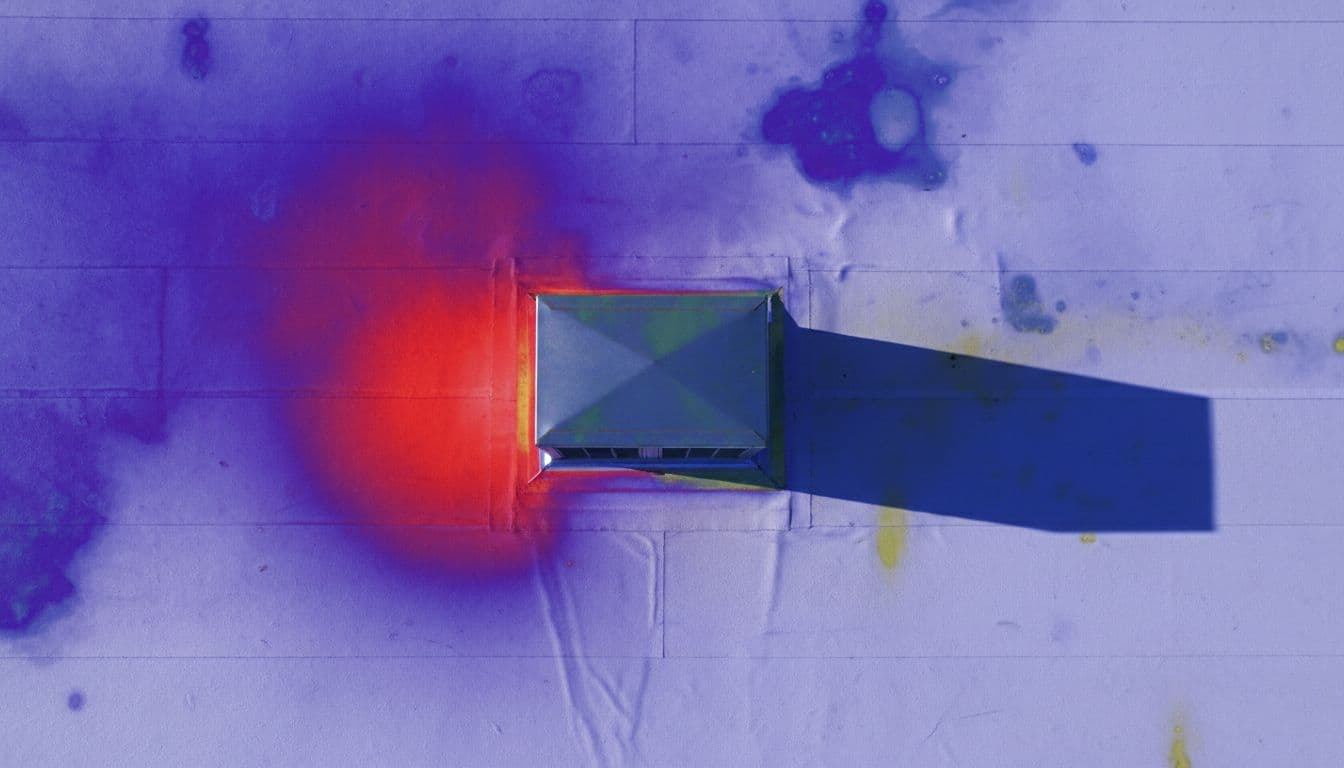
- Confirm with professional roofing inspection and scanning when results aren’t clear, since infrared and electronic methods can pinpoint a breach without random cutting. For ongoing issues, work with a professional roofer like Saint Paul commercial TPO roofing experts who can document findings and recommend the right fix.
FAQ
Why does a TPO roof leak at a curb corner show up far from the unit?
Water moves sideways on flat roofs, then drops where it finds a gap in the deck or an opening around penetrations. Insulation can also spread moisture like a sponge. As a result, the interior stain may be several rooms away from the curb corner breach.
What if the HVAC contractor just worked on the unit?
Treat it as a high-probability clue. Foot traffic and tools often land at curb corners. Ask what was moved, where they knelt, and whether screws or panels fell onto the membrane. Then inspect for fresh scuffs, small punctures, and disturbed edge sealant. Regular maintenance helps prevent such tool damage in the future.
Is hose testing around an HVAC curb safe for the building?
It can be, but only if you control it. Use low pressure, isolate one area, and avoid flooding. Don’t test during freezing weather. If the roof assembly is already saturated, a hose test may add more damage, so professional leak testing is the safer call.
How do I know if I need commercial flat roof repair or commercial roof replacement?
If the leak is isolated to one curb corner detail and the membrane is otherwise sound, TPO roof repair often makes sense. If multiple curbs leak, seams fail across large areas, insulation becomes saturated (compromising energy efficiency), or water damage is extensive, the roof may be near end-of-life. At that point, roof replacement can preserve property value and cost less than repeated disruptions.
Will caulk alone fix an HVAC curb corner leak on TPO?
Usually not for long. Many curb corner leaks come from failed welds, poor corner detailing, or membrane movement, not a simple surface gap. A lasting fix typically needs proper TPO-compatible materials and heat-welded repairs, plus correcting what caused the corner to open.
Conclusion
Finding a TPO roof leak at HVAC curb corners comes down to isolating the path, inspecting corner details closely, then proving the breach with controlled testing that accounts for weather conditions. When the same leak keeps returning, assume the detail is failing as a system, not just at one pinhole. If your commercial roof needs repair with TPO roof repair, confirming the source first protects your budget and avoids repeat ceiling damage. Regular maintenance and a timely roofing inspection are the best ways to protect your commercial roof long-term.
Need a roof inspection in Saint Paul or the Twin Cities? Call Sellers Roofing Company at +1-651-703-2336 or schedule a free estimate. We are a black-owned, NMSDC-certified MBE roofing contractor with 9+ years experience.