Last updated: 2026-08-01 by Ted Sellers, Owner
Yes. It is entirely possible for a chimney cricket to leak even when your shingles appear to be in perfect condition. The cricket acts as a miniature roof designed to divert water around the chimney, but it can fail due to issues within the chimney flashing, degraded sealant, or cracks in the masonry rather than the surrounding roofing material. Because water can enter uphill of the structure and travel underneath the roofing layers, you may notice leaks indoors that seem far removed from the actual entry point.
Key Takeaways
- Leaks don’t require missing shingles: Water intrusion often occurs through compromised flashing, degraded sealant, or masonry cracks while the surrounding roof surface remains visually intact.
- Water follows hidden paths: Because moisture travels along rafters and underlayment, the location of a ceiling stain is rarely a reliable indicator of the exact point where water is entering the roof assembly.
- The cricket is a complex junction: The chimney cricket serves as a critical water-diversion point; failures here are often caused by poor metal laps, rust, or debris buildup that allows water to pool on the uphill side of the chimney.
- Prioritize documentation: Before authorizing repairs, trace the leak path and document moisture patterns, as this helps differentiate between a localized chimney repair and a broader structural roofing issue.
When This Applies
Roofs with chimneys, steep slopes, and uphill water flow
This issue shows up most on buildings that feature a masonry chimney that interrupts a sloped roof. That includes restaurants, churches, older offices, mixed-use buildings, and some retail properties with pitched roof sections.
A chimney cricket is the small peaked saddle behind the structure. Its job is simple: to divert water and shed water so that moisture moves around the broadside of the chimney instead of piling up against it. When that area fails, the roof can leak with no missing shingles at all.
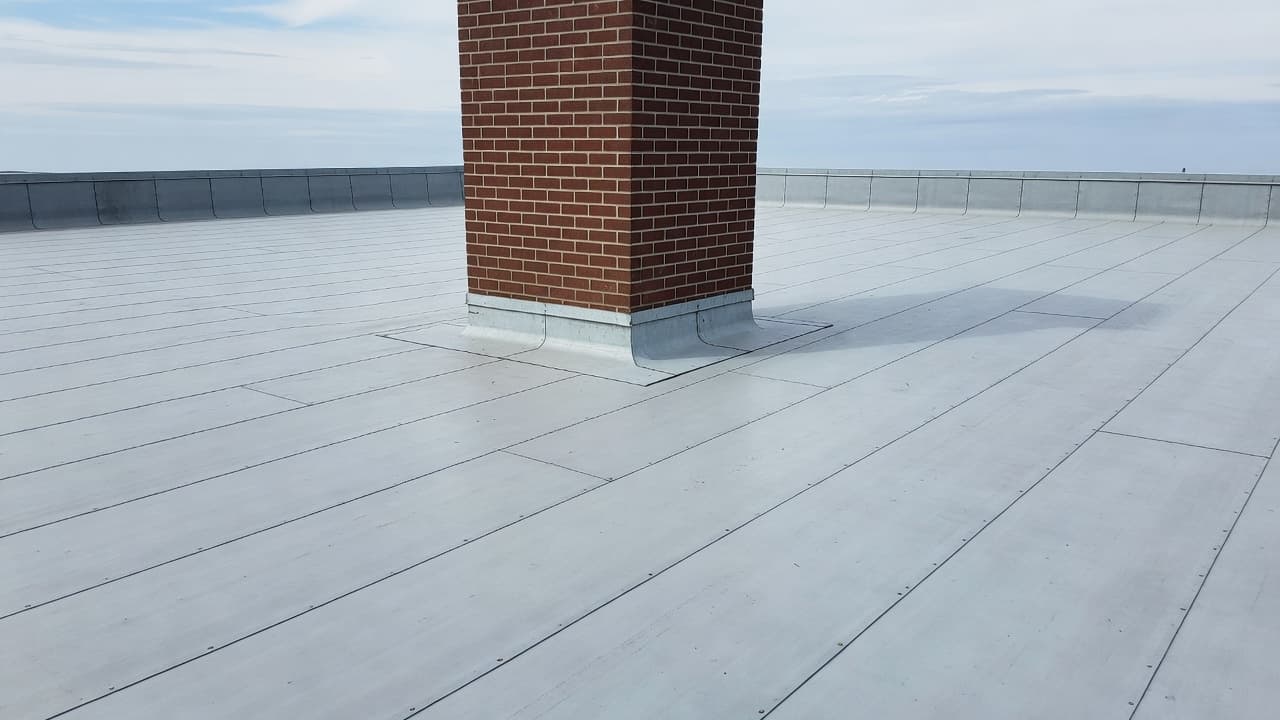
Many owners look for bare spots first. That makes sense, but it can mislead you. As several examples of hidden causes of roof leaks show, flashing and underlayment often fail before shingles do.
When the leak probably is not the cricket
Sometimes the stain is near a chimney, but the cricket isn’t the cause. Water may come from step flashing on the sides, counterflashing cut into the brick, cracked mortar joints, a chimney cap, or a roof penetration uphill.
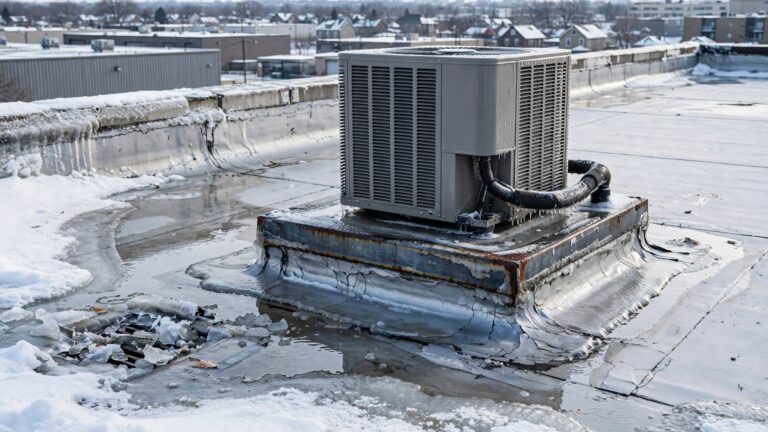
On commercial buildings with both low-slope and steep-slope areas, the trouble may come from the flat section instead. In that case, the right fix may be commercial flat roof repair, not chimney work.
Key exceptions that confuse the diagnosis
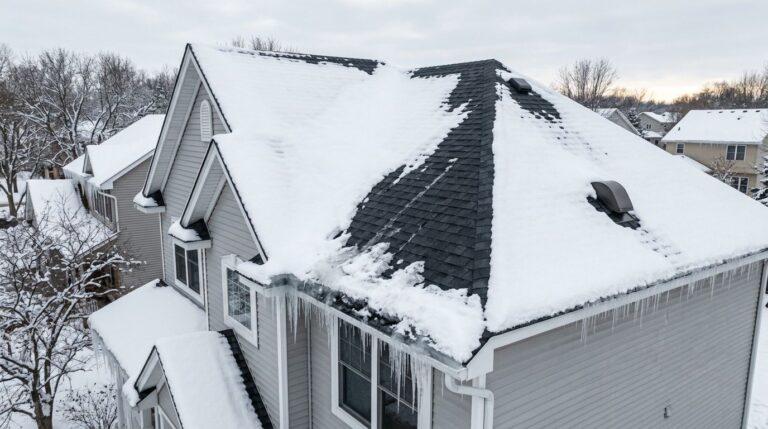
If the building has no cricket, then you are dealing with flashing or chimney detail failure, not a leaking cricket itself. Also, if the leak appears only during ice dam conditions, the main issue may be trapped meltwater rather than storm entry at the cricket.
How a Chimney Cricket Starts Leaking When Shingles Look Fine
Metal details fail before shingles do
The weak point is often the metal components around the cricket. Specifically, the cricket flashing, step flashing, and counter-flashing are prone to issues like rust, loose fasteners, poor laps, and failed sealant joints. This improper flashing creates small paths for water to enter your home. Because these openings hide under the shingles, the roof surface often appears completely normal when viewed from the ground.
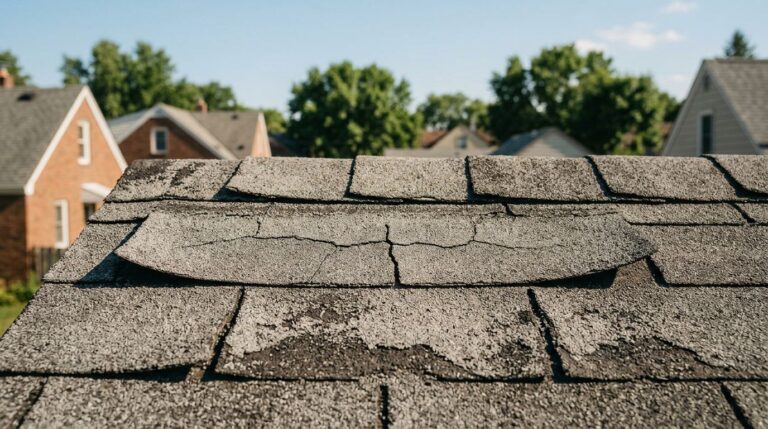
That is why a roof can leak even when no tabs are missing. Even articles about whether missing shingles always cause leaks point to the same truth: visible shingle loss is only one failure path.
Missing shingles are easy to spot. A failing chimney cricket is harder, because the leak often starts under the roofing system.
Water rarely drips straight down
Water likes to travel. It can move along the underlayment, nail lines, rafters, and wood sheathing before it finally appears inside your home. Because of this, the ceiling stain may sit several feet away from the chimney.
That matters for commercial owners. A tenant may report a drip in one suite while the actual opening sits uphill near the chimney saddle. If you patch the spot directly above the interior stain, you may miss the real source of the intrusion.
Masonry can feed the leak
The cricket is only part of the assembly. Brick and mortar also matter. Cracks in mortar joints, open reglets, and a damaged chimney crown can let water reach the cricket area from above.
Snow makes this worse. Meltwater lingers on the uphill side of the chimney, and freeze-thaw cycles widen gaps over time. A small crack then acts like a funnel, directing moisture exactly where it can cause the most damage.
Step-by-Step
1. Trace the leak path before authorizing repairs
Start with timing. Does the water entry appear only during wind-driven rain, only during snowmelt, or after every storm? That pattern helps narrow the source.
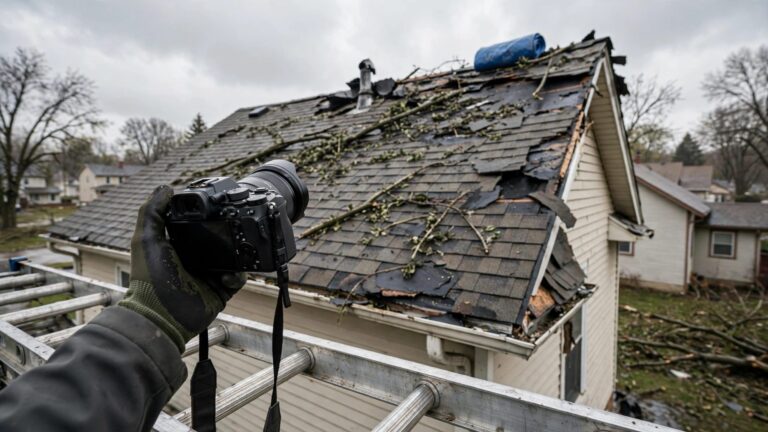
Next, photograph the ceiling stain, the chimney, and the roof areas uphill of it. If water is still entering, document dates, weather, and where it first showed up. For an accurate assessment, consider hiring a home inspector to document these findings. On commercial properties, that record matters because cause, not guesswork, decides the repair scope and often the insurance response.
If the stain is far from the chimney
Don’t rule the cricket out. Water can travel well away from the point of entry before it drips inside.
2. Inspect the full chimney assembly, not only the shingles
A good inspection checks the cricket covering, step flashing, counterflashing, mortar joints, chimney crown, and sealant at transitions. The uphill side deserves extra attention because that is where water and organic debris collect.
Look for bent metal, pinholes, loose flashing, exposed fasteners, cracked mortar, and worn sealant. On older roofs, mixed roofing materials can also create problems. A past patch does not cancel a new storm loss, but it can confuse the source if no one documents the condition well.
When storm damage is part of the story
If wind or hail hit the building, the question is causation. A new opening at the flashing or cricket can still be covered even if older repairs exist elsewhere.
3. Separate a local chimney fix from a wider roof problem
Sometimes the chimney detail is the only failure. Then a targeted repair makes sense. In other cases, the cricket leak is the first visible sign of wet decking, bad underlayment, or failing roof sections uphill.
That is where commercial owners need a broader view. If moisture has spread, or if adjacent roof areas are breaking down, a qualified roofing contractor can determine if the commercial roof needs repair beyond the chimney zone. For local support, commercial roofing services in St. Paul can document moisture spread and help separate a focused fix from a larger scope.
A practical dividing line
If the damage stays isolated to flashing and a small roof section, repair is usually enough. If multiple roof planes, wet substrate, or repeated leaks show up, the job may grow fast.
4. Do temporary protection first, then permanent work
If water is active, stop further damage with a temporary dry-in. That may mean a tarp, a small seal, or interior protection. Keep receipts and photos before and after.
Avoid tearing out large sections before the cause is clear. Once materials are removed, you lose evidence. That matters if a carrier later claims the problem was only maintenance. On commercial properties, partial coverage is common when one detail is old but a fresh opening caused new water damage.
When a Repair Is Enough and When the Roof Problem Is Bigger
A local chimney cricket repair works in clear, limited cases
Repair is usually the right call when a chimney cricket leak comes from one specific detail, such as failed counterflashing, a small metal split, or a narrow underlayment gap behind the chimney. The roof around it should still be dry, well attached, and in decent condition.
A competent roofer may replace metal, reset flashing, rework the cricket covering, and restore the surrounding shingles. For many buildings, that solves the issue without major disruption.
Bigger warning signs point past the chimney
Repeated moisture issues, soft decking, or widespread water damage tell a different story. If you notice a persistent roof leak, rot in the surrounding wooden components, or soffits sagging near the chimney chase, the problem is likely deeper than a simple surface patch.
In those cases, patching the cricket may only buy time. If hidden damage spreads across the slope, the honest answer may be commercial roof replacement for that section. This often involves installing replacement sheathing to restore the structural integrity of the roof deck. The right scope of work ultimately depends on moisture readings, tear-off findings, and the overall age of the system.
Conclusion
A chimney cricket can allow water intrusion even when the surrounding shingles appear to be in perfect condition. Most failures occur where water changes direction, specifically at the junctions of metal, masonry, and hidden material laps.
For a business owner, the safest move is a cause-based inspection. Trace the path of the water, document the evidence, and repair the full source of the roof leak rather than just addressing the spot where the internal stain appears. By taking this thorough approach, you ensure the problem is fixed once instead of paying for the same repair twice.
FAQ
Can a bad chimney cricket leak only during heavy rain?
Yes. Wind-driven rain can push water under flashing laps that hold during light showers. Snowmelt can do the same thing, especially when water backs up on the uphill side of the chimney.
What happens if the cricket was patched before?
A prior patch does not automatically mean the old repair caused your current chimney cricket leak. The real issue is whether that earlier work failed, or whether a new storm or a new opening in the surrounding shingles created the current water entry.
Can a chimney leak look like a roof leak inside the building?
It can. Water may enter through brick, flashing, or the cricket, then travel along rafters before it shows indoors. That is why ceiling stains often mislead owners about the true source of the water entry.
Does intact flashing mean the cricket is fine?
No. Chimney flashing can look acceptable from a quick ground view and still have open laps, pinholes, or failed sealant. Hidden underlayment damage can also leak even when the metal components seem perfectly intact.
What if the building has both a chimney and a flat roof nearby?
Then the leak path needs more careful testing. Water may come from the chimney detail, the transition between roof types, or the flat section itself. Mixed roof systems often need a wider inspection before anyone picks a repair scope.
Need a roof inspection in Saint Paul or the Twin Cities? Call Sellers Roofing Company at +1-651-703-2336 or schedule a free estimate. We are a black-owned, NMSDC-certified MBE roofing contractor with 9+ years experience.