Last updated: 2026-08-01 by Ted Sellers, Owner
Short answer: Yes. Hail can crack, bruise, or pull apart roof sealant around vents and flashing, especially on older commercial roofs. The impact can open small gaps where metal meets membrane. Those gaps may not leak right away, but they often let water in during the next rain, thaw, or wind-driven storm.
When This Applies
Which commercial roofs are most exposed
This applies most often to low-slope and flat commercial roofs with a lot of penetrations. Vent pipes, exhaust fans, HVAC curbs, skylight frames, and pitch pans all depend on sealant to close tight transition points. When hail hits these raised details, the force lands on edges, corners, and joints instead of a broad flat surface.
Age changes the risk. Sealant gets harder with sun, heat, and cold. In Minnesota, freeze-thaw cycles speed that up. Once the bead turns brittle, even moderate hail can chip it, split it, or break the bond between the sealant and the metal.
One common clue that a commercial roof needs repair is fresh cracking around penetrations after a storm, especially when the roof had no active leak before. You may also see new dents in vent collars, counterflashing, or metal trim right beside the failed joint.
Hail often hits the weak point first. Around vents and flashing, that weak point is usually the sealant line.
When hail isn’t the whole story
Hail is not always the only cause. Sometimes it exposes a detail that was already close to failure. Old caulk, poor surface prep, rust, loose fasteners, and daily expansion and contraction can all weaken the joint before the storm shows up.
That distinction matters because the repair scope changes. If only a few penetrations failed, targeted sealing and flashing work may solve it. If the roof also has membrane tears, wet insulation, recurring leaks, or widespread damage, simple patching may only delay a larger repair bill.
When cosmetic dents do not mean sealant failure
Small dents in metal flashing do not always mean the sealant below is compromised. If the sealant is still flexible, fully bonded, and free of splits, the damage may be cosmetic only. The same can be true on newer roofs that took light hail with no punctures, no displaced metal, and no fresh openings at joints.
Still, cosmetic from the ground can look different up close. If ceiling stains appear days later, or if rooftop units and vents sit near the leak path, the roof needs a closer inspection.
What Hail Damage Looks Like Around Vents and Flashing
Signs that point to sealant failure
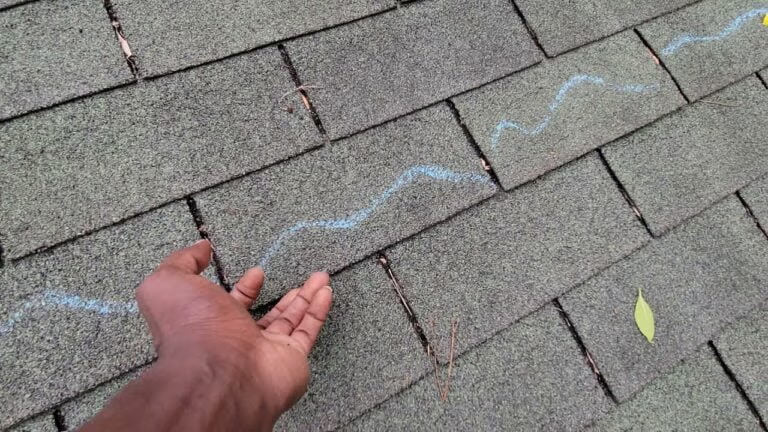
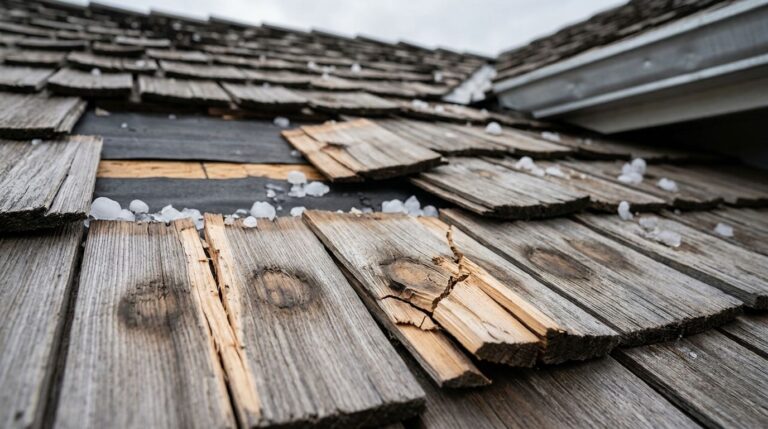
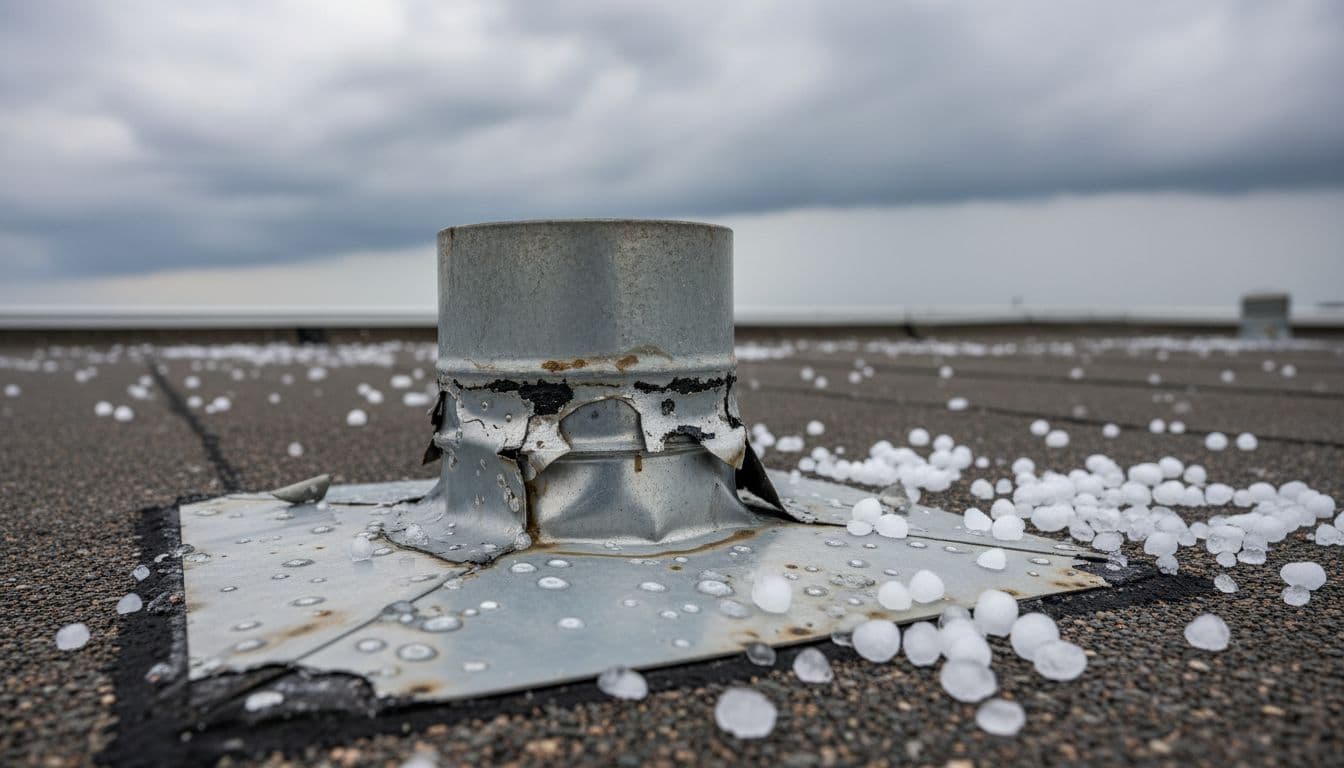
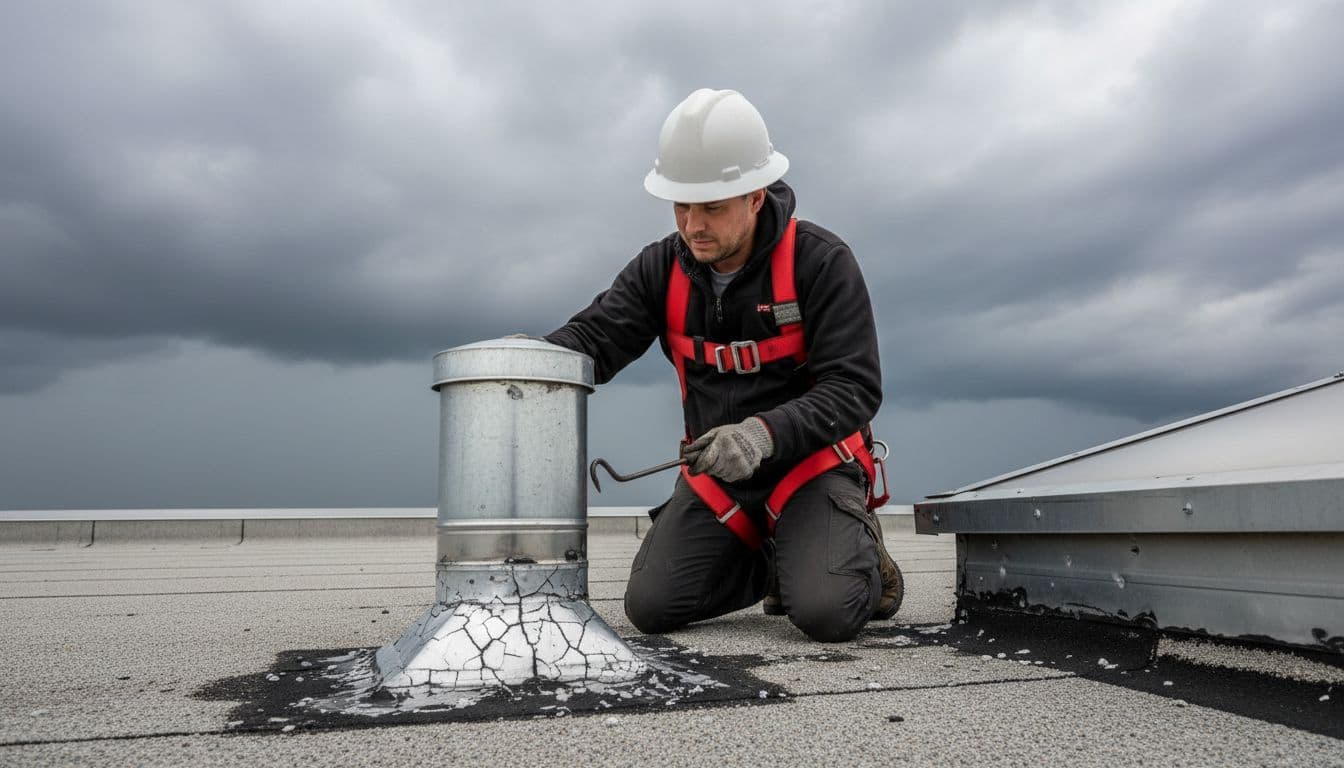
Hail-damaged roof sealant usually looks rough and broken, not simply old. You might see sharp cracks, chipped edges, missing chunks, or a bead that has peeled back from the metal. On some roofs, the sealant stays in place but loses adhesion. In that case, a thin gap opens between the bead and the flashing.
The metal detail often tells part of the story. A dented vent collar or bent flashing edge can shift enough to break the seal. Even a small change in alignment can let water track under the joint.
Inside the building, the signs may be delayed. Water can move along decking, insulation, or fasteners before it shows up indoors. Because of that, the stain on the ceiling may not sit directly below the failed vent or flashing.
Signs that point to a larger roof problem
Sometimes the damaged sealant is only one part of the issue. If hail also bruised the membrane, loosened seams, or punctured field areas near penetrations, the leak source may be broader than the visible crack. Multiple failed details on the same roof also change the decision.
At that point, the question is no longer whether hail can damage the sealant. The question becomes how much of the roof system took a hit, and whether the roof still has reliable service life left.
Step-by-Step
Document the storm and protect the building
- Record the storm date, time, and hail size if you can. Save weather alerts, photos, and staff reports. That record helps with warranty questions, insurance discussions, and repair planning. It also helps separate recent storm damage from older wear.
- Check the building interior before anyone goes on the roof. Look at top-floor ceilings, wall tops, mechanical rooms, and areas below rooftop penetrations. Fresh stains, damp insulation, or drips after a storm tell you where water is moving, even if the entry point sits several feet away.
- Protect operations next. Move sensitive inventory, cover exposed equipment, and place catch containers where needed. Fast action limits disruption while you decide whether the issue calls for a small repair or an emergency response.
Inspect vents, flashing, and nearby roof areas
- Review the sealant around vent pipes, curbs, and flashing laps. Look for splits, missing sections, peeling edges, and places where the bead has pulled away from the substrate. Hail damage to roof sealant often leaves sharper fractures than the smoother shrinkage seen with normal aging.
- Check the metal around those joints. Dented flashing, loosened counterflashing, bent collars, and backed-out fasteners can break the seal even when the caulk still looks present. On single-ply systems, inspect the membrane next to the detail for bruises, punctures, or scuffs.
- Don’t stop at the first crack you find. Water often enters at one point and travels before it drips indoors. If the leak path is unclear, use advanced leak detection for roof penetrations. That helps confirm whether the failure is at the vent, the flashing lap, or another nearby detail.
Decide whether repair is enough
- Approve a localized repair when damage is limited to a few penetrations and the surrounding roof system is still dry and sound. In that case, commercial flat roof repair may include removing failed sealant, cleaning the surface, tightening metal, re-sealing the joint, and reinforcing the detail where needed.
- Expand the scope when multiple penetrations fail across the roof. If hail opened joints at many vents, damaged field seams, or let water soak insulation, spot repairs may not hold. A contractor may recommend section work, a coating plan in select areas, or full commercial roof replacement when the damage is widespread.
- Ask for photos and marked-up roof plans before you approve work. Business owners need more than a verbal summary. Clear documentation shows how many penetrations were hit, where the damage sits, and whether the proposal solves the cause or only the symptom.
- Bring in Saint Paul commercial roofing experts when the roof has repeat leaks, storm damage across several details, or safety concerns. On a commercial building, the right fix is the one that stops water, matches the roof system, and avoids paying twice for the same area.
Final Takeaway
What to remember after a hailstorm
Hail can damage sealant around vents and flashing, and those small failures can create expensive leaks. On commercial roofs, the risk is highest where metal, membrane, and movement come together at one detail.
The main point is simple: don’t judge storm damage by dents alone. Check the sealant bond, the flashing position, and the areas around penetrations. If the roof shows fresh cracking, separation, or delayed interior moisture, hail-damaged sealant should move to the top of your repair list.
FAQ
Can small hail still break sealant if the flashing looks fine?
Yes, especially on older roofs. Small hail may not bend the metal much, but it can still chip brittle sealant or break its bond to the substrate. That is common when the joint was already dry, shrunken, or stressed by seasonal movement.
Will insurance cover damage to sealant around vents and flashing?
It depends on the policy and the proof of storm-related damage. Insurers often want clear documentation that the hail caused a sudden change, not that the sealant simply aged out. Photos, storm dates, and inspection notes help support the claim.
If the sealant was already worn
Coverage gets harder when the joint was near failure before the storm. In that case, hail may have exposed an old defect rather than created a new one.
How soon can a leak show up after hail hits the roof?
Sometimes the leak appears the same day. In other cases, it shows up during the next heavy rain or after a thaw. Water can sit in small openings for a while, then move once wind, ice, or ponding pushes it farther into the assembly.
Can maintenance staff apply caulk as a temporary fix?
They can stop active drips in an emergency, but temporary caulk is rarely a full repair. Compatibility matters, and bad surface prep can trap moisture or hide a broken flashing detail. On a commercial roof, a quick patch should lead to a documented inspection, not replace it.
What happens if water gets under the flashing but ceilings still look dry?
The roof can still be taking on damage. Moisture may soak insulation, rust metal, or spread along the deck before interior signs appear. By the time a stain forms, the repair is often larger than the original failed joint.
Need a roof inspection in Saint Paul or the Twin Cities? Call Sellers Roofing Company at +1-651-703-2336 or schedule a free estimate. We are a black-owned, NMSDC-certified MBE roofing contractor with 9+ years experience.