Last updated: 2026-08-01 by Ted Sellers, Owner
On an asphalt shingle roof, roof leak detection usually takes 30 minutes to 2 hours. Harder cases can take 3 to 4 hours, especially after storms, on larger commercial buildings, or when water has traveled through decking or attic spaces. If the leak isn’t active, the visit may split into inspection now and confirmation during the next rain.
When This Applies
Which properties fit this timing
This applies to commercial buildings with steep-slope asphalt shingle sections, such as small offices, churches, mixed-use buildings, multifamily properties, and retail strips. It also fits larger sites that use shingles on entries, mansards, or dormers.
A simple leak stays within this time range when the roof is safe to walk, the stain is fairly recent, and the roofer can reach the attic or ceiling area. In those cases, the clues line up fast.
When the estimate no longer fits
This estimate doesn’t fit TPO, EPDM, BUR, or metal roofs. Those systems use a different process, and expert leak detection for commercial roofs may take longer because water can travel sideways before it shows indoors.
Common exceptions
Ice dams, condensation, masonry cracks, and HVAC leaks often look like roof trouble. Also, if crews find storm-wide damage, the visit may shift from leak tracing to a broader damage review.
Sometimes an owner assumes the commercial roof needs repair above the ceiling stain, but the source sits higher on the slope, beside a wall, or under worn flashing. If the roof is snow-covered, unsafe, or blocked by access limits, the first visit may end with interior tracing and a return trip.
The same is true when a roofer must lift ceiling tiles, inspect sealed soffits, or document several suspect areas for insurance. In short, the simpler the path, the faster the answer.
Step-by-Step
How roof leak detection usually works
- First, the roofer starts inside the building. They look at ceiling stains, wet insulation, bubbling paint, and deck marks, then ask when the leak appears. A stain during wind-driven rain points to a different source than a stain after melting snow.
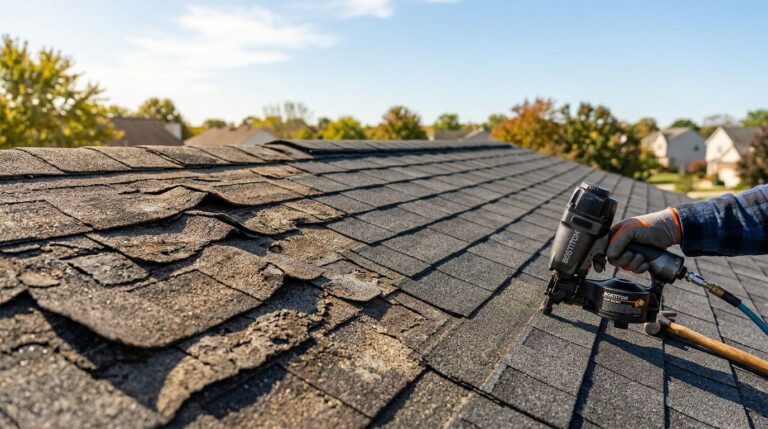
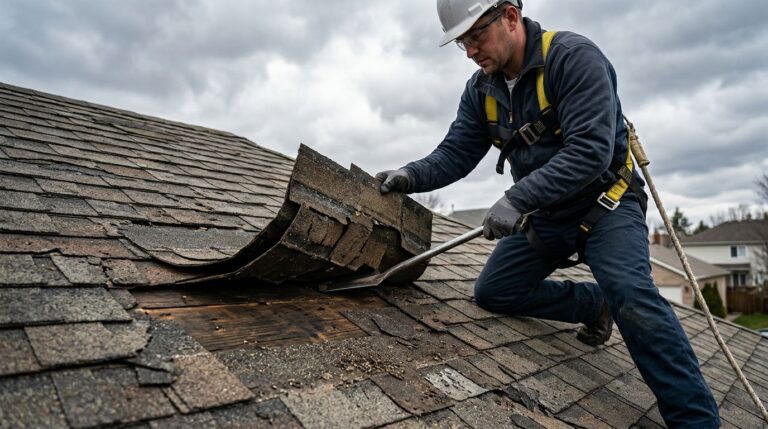
- Next, the roofer inspects the roof surface. On asphalt shingles, they check missing tabs, creased shingles, exposed fasteners, valleys, step flashing, pipe boots, chimneys, and wall transitions. On shingle roofs, flashing failures often cause the leak, not the field shingles.
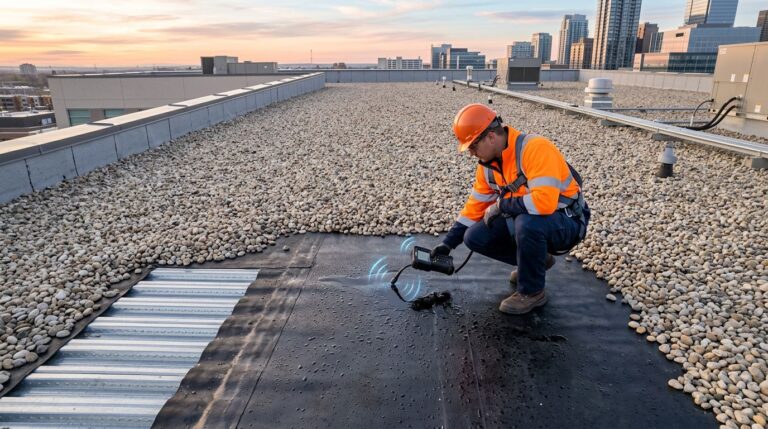
- If the source still isn’t clear, they narrow it with moisture tools or a careful water test. That step takes patience because water can slip under one course, follow the deck, and appear far from the entry hole.
- Then they confirm the path from below, or by lifting a small area if surface clues conflict with interior evidence. The goal is to find the actual opening, not just the place where water shows up.
- Last, you get a plain-language report. If damage is isolated, the fix may be a small repair. If the deck is soft, flashing is failing in several spots, or shingles are worn out, the discussion may shift to commercial roof replacement instead. That keeps you from paying for the wrong patch.
What Changes the Timeline
Why one leak takes 45 minutes and another takes half a day
A few factors have the biggest effect on timing.
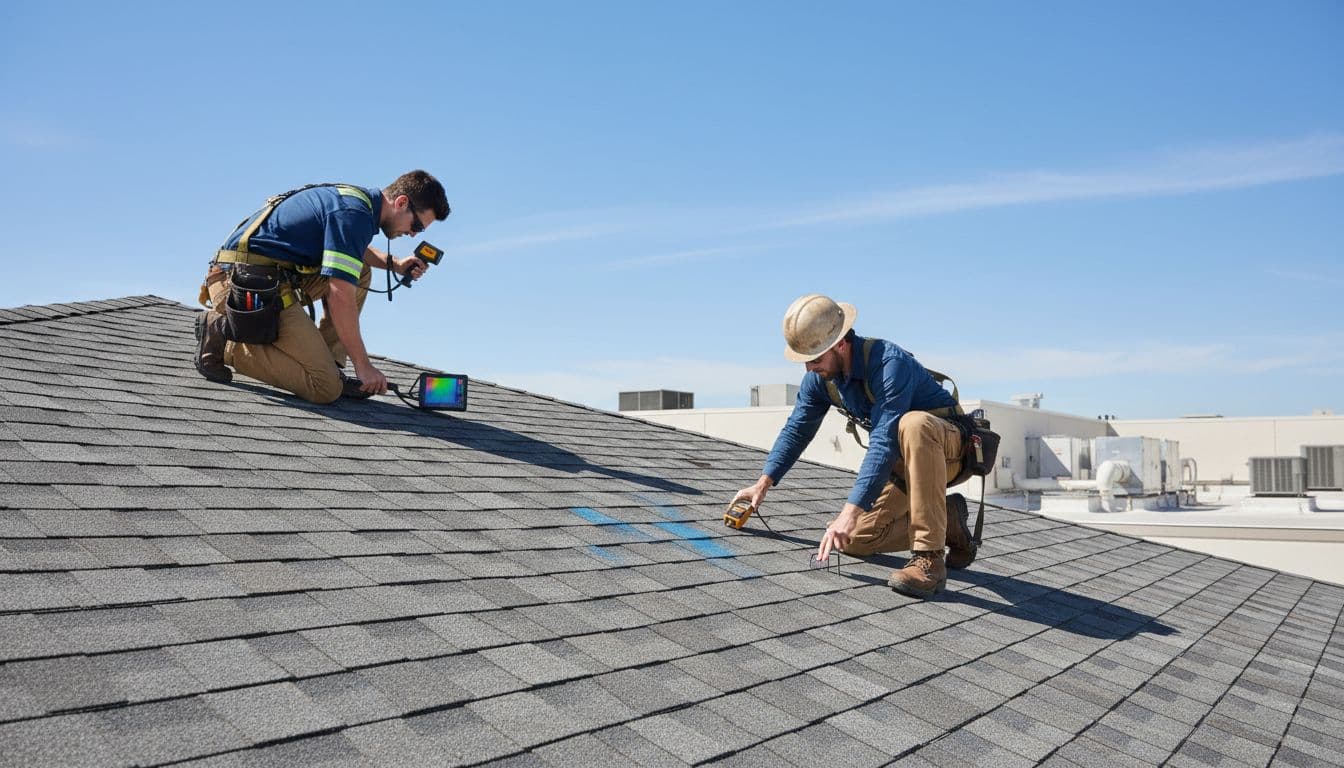
This quick table shows the biggest time drivers:
| Situation | Likely detection time | Why |
|---|---|---|
| Active leak after recent rain | 30 to 90 minutes | Moisture trails are fresh |
| One clear suspect area | 1 to 2 hours | Fewer surfaces to inspect |
| Multiple roof planes or additions | 2 to 3 hours | Water can cross sections |
| Old brittle shingles or hidden deck damage | 3 to 4 hours | The source is less visible |
| Snow, ice, or no attic access | Longer or second visit | Confirmation is harder |
Fresh evidence speeds up roof leak detection. A leak that showed up this morning leaves better clues than a stain that dried two weeks ago.
Roof shape matters too. A two-story office with easy attic access moves faster than a complex building with vaulted ceilings, added sections, and several wall flashings. Water acts like a back-road driver, it follows the easiest path, not the shortest one.
Mixed roof systems also slow things down. A shingle slope that ties into a membrane section can turn a shingle call into a commercial flat roof repair question. If you manage several roof types on one site, a broader commercial roofing review for Saint Paul businesses can help you avoid chasing the wrong source.
Past patch jobs can hide the truth as well. Old caulk, layered repairs, and brittle shingles make leaks harder to read, much like following footprints after several people crossed the same floor.
Frequently Asked Questions
Can leak detection happen during the rain?
Yes, light rain can help because the moisture trail is active. Still, safety comes first, so many crews inspect inside during the storm and finish the roof surface once the shingles are safe to walk.
Why does water show up far from the damaged shingle?
Water rarely drops straight down. It can run along underlayment, decking, rafters, or fasteners before it appears indoors. That’s why a ceiling stain often points near the leak, not at it.
What if the leak only happens in winter?
Ice dams change the diagnosis
Winter leaks often come from backed-up meltwater rather than an open shingle seam. In that case, the roofer checks attic heat loss, ventilation, and eave conditions along with the roof surface, because the fix may involve more than patching.
Will the roofer have to remove shingles to find the leak?
Not always. Many leaks show enough clues through lifted tabs, bad flashing, rusted fasteners, or wet decking below. A small test lift happens only when the visible signs and the interior evidence point in different directions.
When does leak detection become a bigger repair decision?
If the deck is rotted, insulation is soaked, or many shingles fail at once, detection becomes a planning visit. That’s when you learn whether the commercial roof needs repair in one area or whether a larger section, or even replacement, makes better financial sense.
Bottom Line
When to schedule help now
On most asphalt shingle roofs, roof leak detection wraps up in one visit, often within two hours. The faster you schedule it, the easier the source is to trace and the smaller the repair bill tends to be. If the leak follows storms, shows up in winter, or keeps returning, act before a small stain turns into damaged decking and lost time.
Need a roof inspection in Saint Paul or the Twin Cities? Call Sellers Roofing Company at +1-651-703-2336 or schedule a free estimate. We are a black-owned, NMSDC-certified MBE roofing contractor with 9+ years experience.