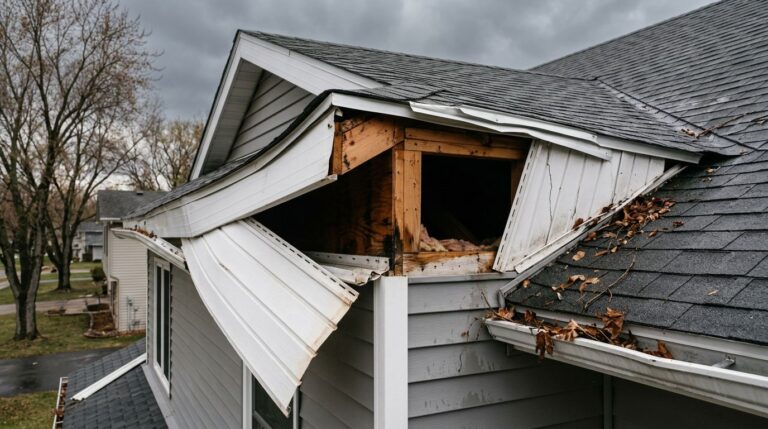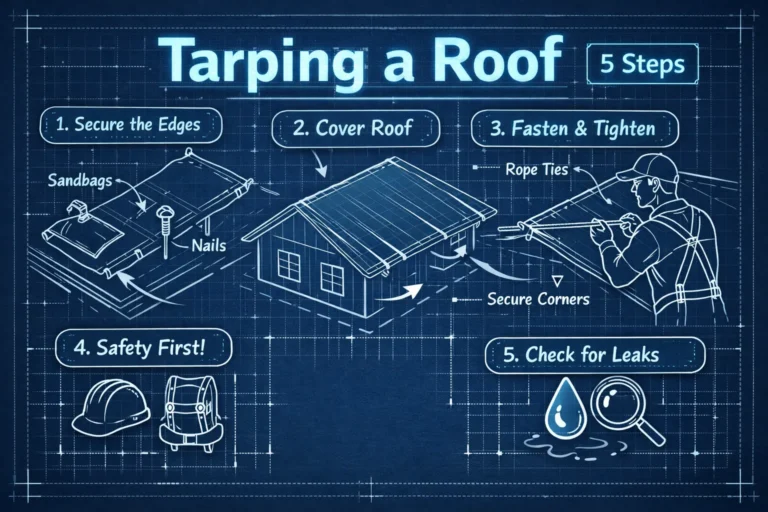
Last updated: 2026-08-01 by Ted Sellers, Owner
Asphalt shingle freeze-thaw damage from the freeze-thaw cycle usually shows up as shingle cracking in tabs, curling edges, lifted corners, blistering, and granule loss creating bald spots.
The damage often clusters near eaves, valleys, and shaded slopes, because trapped moisture undergoes expansion and contraction, freezing and expanding to slowly break the shingle surface apart.
Key Takeaways
- Asphalt shingle freeze-thaw damage shows as clustered cracking in tabs, curling edges, lifted corners, blistering, and granule loss creating bald spots, especially near eaves, valleys, shaded slopes, and ice dam areas.
- Inspect coldest, wettest roof sections first—north-facing slopes, roof edges—for patterned wear rather than uniform age, hail marks, or wind uplift.
- Confirm with interior signs like water stains or damp insulation; early targeted repairs often suffice over full replacement.
- Poor ventilation worsens damage; ice and water shields plus gutter maintenance help prevent moisture infiltration and escalation.
- Differentiate from other issues: freeze-thaw clusters where moisture lingers, not random impacts or whole-roof wear.
When This Applies
This fits buildings with asphalt-shingle roof sections
This applies to offices, churches, retail buildings, and multi-unit properties that have sloped asphalt-shingle sections, and the principles extend to any residential roofing system with similar materials. In Minnesota, those sections often sit above entries, storefronts, or decorative rooflines, even when the main roof is low-slope.
Asphalt shingle freeze-thaw damage tends to show up where snow hangs on longest, including north-facing slopes, shaded valleys prone to ice dams, roof edges, and spots below ice buildup with uneven snowmelt. Poor attic ventilation or inadequate attic insulation can slow snowmelt further and worsen shingle cracking in these areas. One rough winter may expose a weak area. Repeated winters usually make the pattern clearer.
If one roof slope looks older every spring, moisture and shade are often part of the reason.
For business owners, this matters because the damage can look minor at first. A few instances of shingle cracking may not seem urgent. Still, once water gets into those weak spots, the repair cost can rise fast.
When it probably isn’t freeze-thaw damage
Not every worn shingle points to winter expansion. Uniform wear across the whole roof often means age. Round impact marks with fresh granule loss may point to hail. Loose shingles after a storm may come from wind uplift damaging seal strips, not ice.
If your building has TPO, EPDM, or BUR, this topic doesn’t fully apply. Those systems fail in different ways and often call for commercial flat roof repair, not shingle work. The same goes for metal roofs, which show freeze damage through fasteners, seams, or roof flashing details stressed by expansion and contraction instead of broken tabs.
A first-winter roof can still have install issues
If a newer roof shows damage in one small area, poor nailing, weak ventilation, or bad flashing may share the blame with winter weather.
Step-by-Step
How to spot the damage and decide what comes next
- Start your roof inspection with the coldest and wettest roof sections. Look first at eaves, valleys, roof-to-wall lines, and north-facing slopes. These areas stay damp longer, so trapped water has more time to freeze and cause thermal shock. Use binoculars from the ground or review inspection photos if you manage a larger property. You’re looking for one slope that seems rougher, patchier, or older than the rest.
- Look for the surface changes freeze-thaw causes. The clearest signs are curled shingles, cracked tabs, lifted corners, cupping, blistering, fishmouth openings, and dark bald patches where granules are gone. Asphalt shingle freeze-thaw damage affects the fiberglass mat at a molecular level. Some shingles look scuffed, like winter wore the surface down with sandpaper. Others split along the lower edge because moisture got in and expanded.
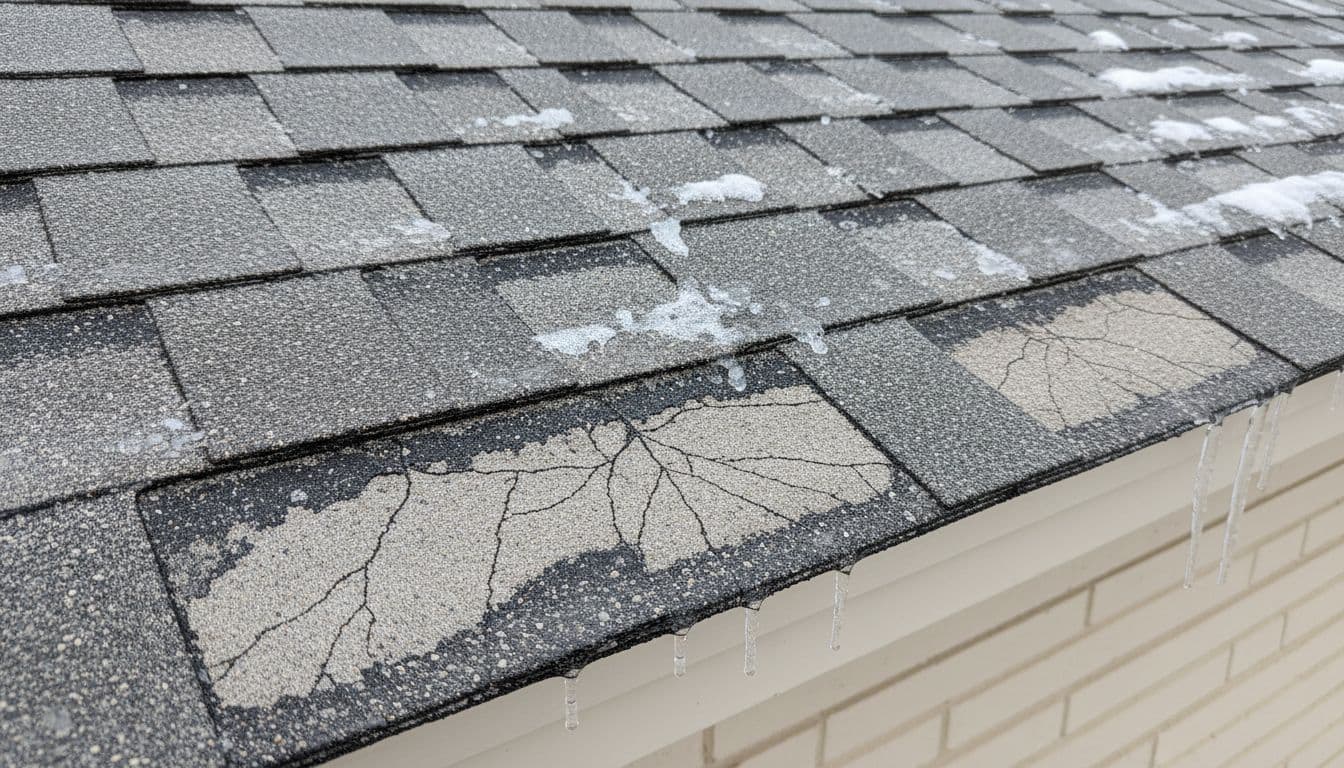
3. Check how the damage is patterned. Freeze-thaw damage rarely appears as random marks across the whole roof. Instead, it often forms in clusters near gutters with ice backup, beside flashing, or below areas where drifting snow melts and refreezes. If one side of the building has most of the wear, shade and drainage are likely helping the problem along.
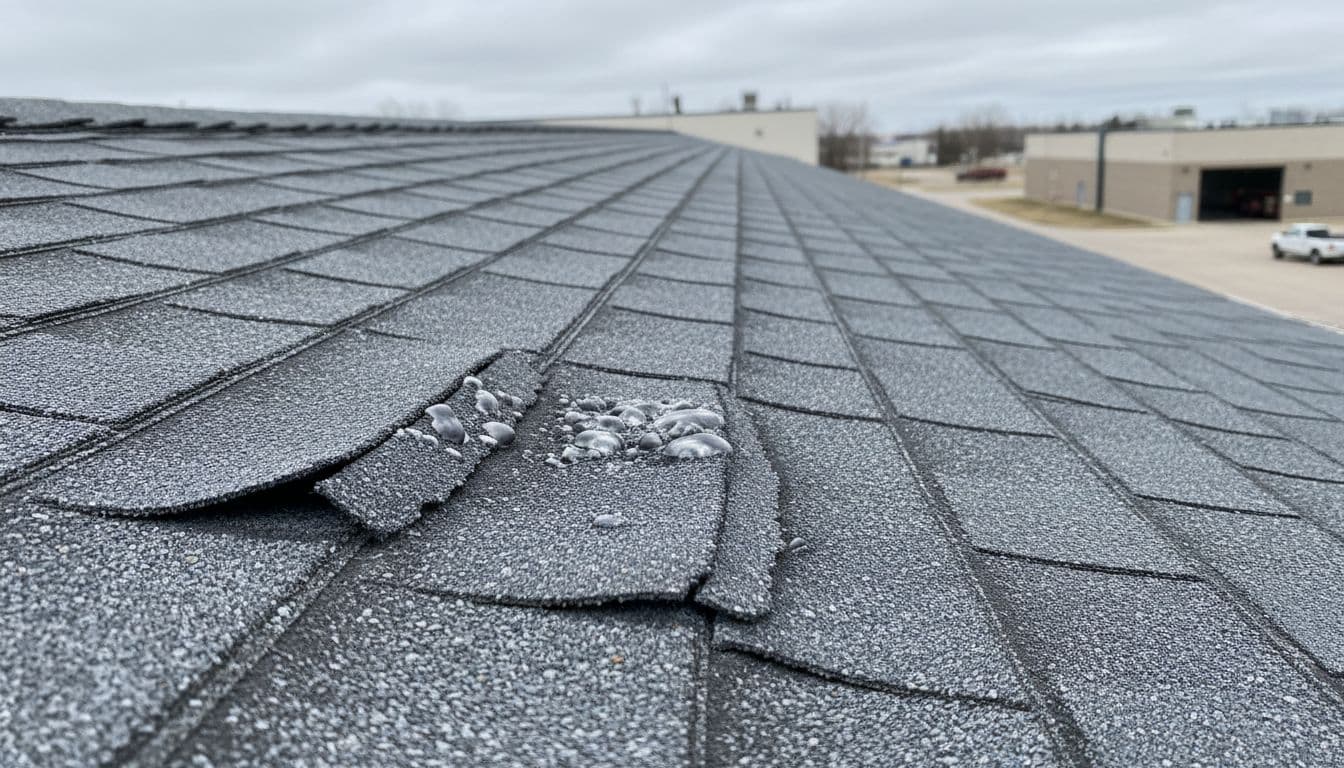
4. Confirm the roof signs with what you see inside. Water stains near exterior walls from moisture penetration, damp attic sheathing, compromised roof decking, musty insulation, or drips after a thaw all support what you found outside. At that point, your commercial roof needs repair, even if the interior leak seems minor. When the source isn’t clear, professional leak detection for commercial roofs can help pinpoint the real entry point. 5. Decide whether the damage is local or widespread. A small cluster of failed shingles on one slope may only need targeted repair and roof flashing work. Wide granule loss, repeated leaks, brittle tabs, or soft decking across several sections usually push the job toward a full roof replacement. In future installs, incorporating an ice and water shield can prevent moisture infiltration around vulnerable areas like roof flashing. If your property mixes shingle areas with low-slope roofing, a full review from Saint Paul commercial roofing services can separate an isolated shingle problem from a broader roof issue.
FAQ
Can I see freeze-thaw damage from the ground?
Sometimes, yes. Bald patches, curled edges, and uneven roof color often show from ground level. Fine cracks and early fishmouthing usually don’t. On larger properties, a roof inspection with photos or drone views gives a much clearer answer.
Will shingles flatten back down in warm weather?
As roofs near the end of their asphalt shingle lifespan, the shingles turn into brittle asphalt and become more susceptible to the freeze-thaw cycle. A slightly lifted edge might relax when temperatures rise. Cracked, cupped, blistered, or split shingles won’t heal. Once the surface breaks, the roof stays more vulnerable to rain and the next freeze.
Can this damage cause leaks months after winter ends?
Yes, and that surprises many owners. Winter damage opens the door, then spring rain or summer storms push water through the weakened shingle. By then, the roof problem looks new even though winter started it.
How is freeze-thaw damage different from hail damage?
Hail usually leaves sharper, more isolated impact marks. Freeze-thaw damage looks more like clustered wear, shingle cracking, curling, and granule loss in places that hold moisture or ice. The pattern is often the best clue.
What if the building has both shingles and flat roofing?
Treat each roof type as its own system
Mixed roofs can fail in two different ways at once. The shingle section may show freeze-thaw cracking, while the low-slope section leaks through seams, drains, or roof flashing. One stain inside doesn’t always mean one roof problem.
Freeze-thaw damage rarely starts with a dramatic leak from the freeze-thaw cycle. It starts with small cracks, granule loss, and curled edges that winter keeps widening.
If one slope looks rougher every spring, don’t write it off as simple age. Catching asphalt shingle freeze-thaw damage early usually means a smaller repair bill, a cleaner budget decision, and less disruption for your business. Proper gutter maintenance helps prevent ice dams that threaten the structural integrity of your residential roofing system. Schedule a roof inspection regularly, and if leaks occur during a thaw, contact a professional roofing contractor for emergency roof repair to avoid the need for full roof replacement.
Need a roof inspection in Saint Paul or the Twin Cities? Call Sellers Roofing Company at +1-651-703-2336 or schedule a free estimate. We are a black-owned, NMSDC-certified MBE roofing contractor with 9+ years experience.