Last updated: 2026-08-01 by Ted Sellers, Owner
A dormer roof leak is usually found by tracing water backward from the first interior stain to the highest wet point, then checking the dormer’s flashing, valleys, and shingle courses above that spot. Start inside (attic or ceiling), mark the drip line, then inspect uphill around step flashing and the dormer cheeks. If needed, run a controlled hose test in sections to pinpoint the entry point.
When This Applies
When this dormer-focused method is the right fit
This approach fits buildings with steep-slope shingle sections that include one or more dormers, such as offices, retail buildings, churches, or mixed-use properties. Even if most of your facility is low-slope, a dormer detail often sits over an entry, lobby, or decorative façade where shingles meet walls and trim.
It’s also the right method when the leak shows up after wind-driven rain or spring melt. Dormers have more joints than a straight roof plane, so water has more chances to sneak in.
If you’re not sure whether the problem is isolated, treat it as a business risk signal. Repeated staining, wet insulation, or odor can mean your commercial roof needs repair, even if the symptom looks small.
When it’s probably not “a dormer leak” at all
Dormers get blamed for leaks that start elsewhere. Water can travel along decking, nails, or rafters before it shows up indoors, like coffee running along a table edge before it drips.
Edge cases that change the search
If any of these apply, broaden the inspection area:
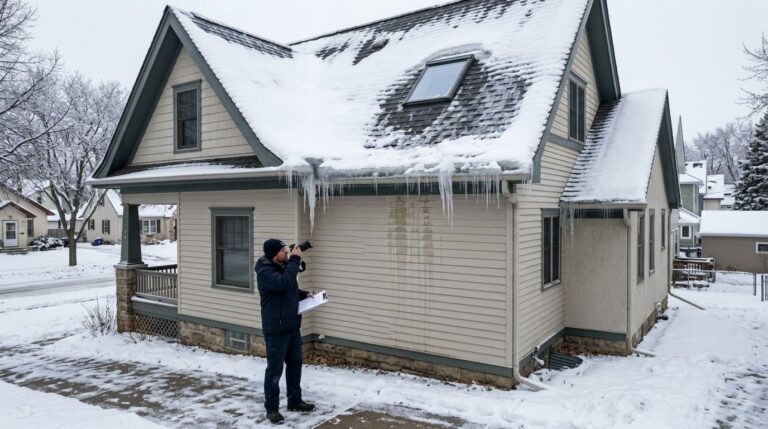
- Ice dams at eaves can push water up under shingles and send it toward dormers.
- Wall leaks (siding, windows, or parapet caps) can mimic roof leaks.
- Low-slope transitions above the dormer can feed water into the shingle field.
For background on how shingle leaks can “appear” far from the entry point, see this explanation of locating a leak in a shingle roof.
Clues that point to dormer flashing vs. a shingle field issue
Use this quick guide to decide where to start looking first.
| What you see inside | Most likely area to check first | Why it matters |
|---|---|---|
| Stain at dormer ceiling corner | Step flashing on dormer sidewall | Sidewalls rely on layered flashing, not sealant |
| Drip after windy rain | Dormer cheek wall and counterflashing | Wind can drive water sideways under laps |
| Stain in a straight line below dormer | Valley beside dormer or crickets | Valleys concentrate water and debris |
| Leak only during snow melt | Nail pops, ice-dam backup, underlayment laps | Meltwater moves slowly and finds tiny openings |
The takeaway: if the stain sits near a dormer wall line, flashing is the first suspect, not the shingles.
Common leak locations around dormers (what to focus on)
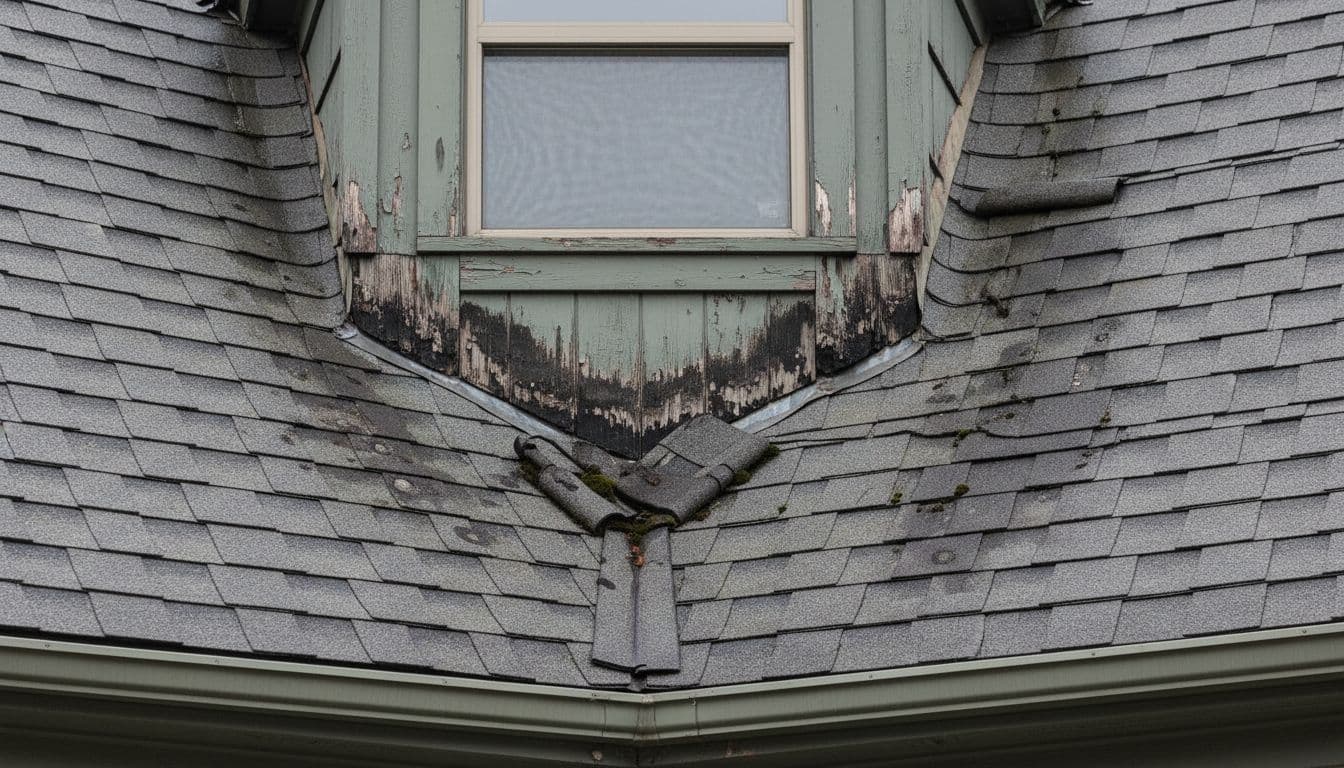
Dormer leaks most often start at: step flashing along the sidewalls, the apron flashing at the front, the back-pan area (or cricket) behind the dormer, and any valley that terminates nearby. A small gap at any of these joints can act like a funnel.
If someone “fixed” the area with roof cement or heavy caulk, treat it as a clue, not a solution. Those patches often hide the real opening.
Step-by-Step
Start where the water shows up (and work uphill)
- Turn off power to wet ceiling areas if water is active, then protect inventory and equipment.
- Find the first visible sign: a ceiling tile stain, bubbling paint, or a drip at a light fixture.
- If you have attic access, inspect above the stain with a bright flashlight and mark the wettest point on framing.
- Look for dark nail tips, damp insulation, or water lines on wood, then note how far “uphill” they point.
Inspect the dormer intersection on the roof (highest payoff checks)

- Set safety rules first. For most business owners, that means hiring a qualified crew, not sending staff onto a steep roof.
- Check the step flashing along each dormer side. Each shingle course should have its own step piece, layered like shingles.
- Look for lifted shingles, missing fasteners, rusted metal, or sealant beads bridging joints (a common failure).
- Inspect the apron flashing at the dormer front. Pay attention to corners where wind can push water in.
- Examine the back side of the dormer. Debris buildup, short cricket details, or worn shingles can hold water.
- Follow nearby valleys. Cracks, pinholes, or worn granules in valleys can send water toward dormer walls.
For a simple refresher on typical shingle leak points like valleys and flashing, this guide on finding an asphalt shingle roof leak aligns with what often fails around dormers.
Pinpoint the exact entry point with a controlled water test
- Choose a dry day, and have one person inside on the phone while another runs the hose outside.
- Start low and go slow. Wet a small area for 5 to 10 minutes, then wait.
- Test in sections: first the shingle field below the dormer, then the sidewall flashing line, then the valley, then the back-pan area.
- Stop as soon as the leak appears inside, then mark the roof area you just tested.
- Repeat one more time on a tighter area to confirm the exact joint, not just the general zone.
Decide what the finding means for your building
- If the issue is a single flashing defect, a targeted repair often solves it without disruption.
- If multiple joints are suspect, don’t “spot-patch” blindly. That’s how budgets get wasted on the wrong area.
- If the leak path is unclear or the roof has multiple systems, schedule professional diagnostics. A methodical scan can be faster than repeated callbacks, especially when water travels.
- For larger properties, consider commercial roof leak detection in Saint Paul when the source keeps moving or interior damage is growing.
Also, keep the bigger picture in mind. Some facilities have dormer leaks on a shingle section while the main roof needs commercial flat roof repair elsewhere. When both areas show age or recurring moisture, you may be comparing repair cycles versus a commercial roof replacement plan.
FAQ: Dormer Roof Leak Questions Business Owners Ask
Why does the leak show up far from the dormer?
Water often travels along the underside of the decking or a rafter before it drops. Insulation can hide the route, then release water hours later. That’s why the “stain location” is a starting clue, not proof.
Can we just seal around the dormer with caulk?
Caulk can slow a drip, but it rarely fixes the layering problem. Dormer flashing works because it overlaps in the right order. Sealant over bad laps can trap water and speed up rot.
When sealant makes sense
If a counterflashing joint has a small gap, the right sealant in the right place can help, but only after confirming the metal laps are correct.
What’s the most common cause of a dormer roof leak on shingles?
Improper or damaged step flashing tops the list, especially where shingles meet the dormer sidewalls. Valleys packed with debris and worn apron corners are close runners-up.
How fast should we act if there’s only a small stain?
Act as if water is still moving. A small stain can mean soaked insulation, reduced R-value, and hidden mold risk. Even one wet cycle can warp decking over time.
When should we stop searching and call a commercial roofer?
Call when roof access is risky, when the building has multiple roof types, or when prior repairs didn’t work. If operations or inventory are at risk, it’s cheaper to verify the source once than to chase it for months. For ongoing service options, see Saint Paul commercial roofing services.
Finding a dormer leak is part detective work, part patience. Trace the water uphill, focus on flashing details, and confirm with a controlled test. When the same area leaks twice, treat it as a system problem, not bad luck.
Need a roof inspection in Saint Paul or the Twin Cities? Call Sellers Roofing Company at +1-651-703-2336 or schedule a free estimate. We are a black-owned, NMSDC-certified MBE roofing contractor with 9+ years experience.