Last updated: 2026-08-01 by Ted Sellers, Owner
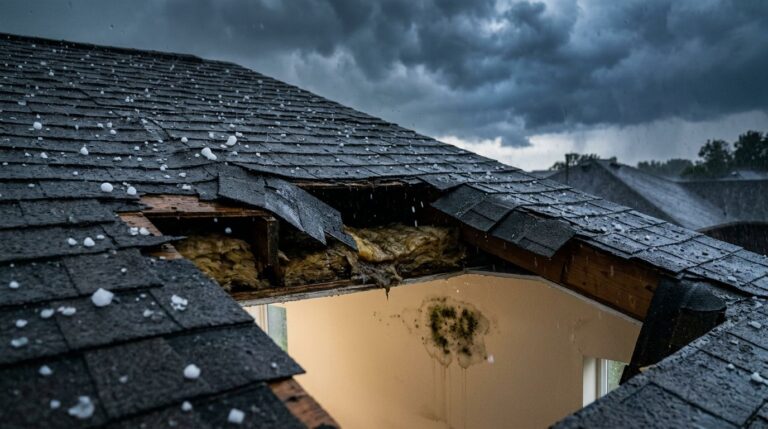
Most hail damage from hail shingle bruising happens the moment hailstones hit the underlying layers, but it often shows up 24 hours to 2 weeks later as granules loosen and the shingle surface dries, revealing visible indentations. In some cases, bruises stay hard to spot for 30 to 90 days, then become obvious after sun, rain, and foot traffic expose soft spots or granule loss.
When This Applies
This timeline matters for commercial buildings with asphalt shingle slopes
Many commercial properties in Saint Paul have more than one roof type. You might have a flat membrane over the main footprint, plus asphalt shingles on entry canopies, dormers, mansards, or steep mechanical penthouses with metal roofing.
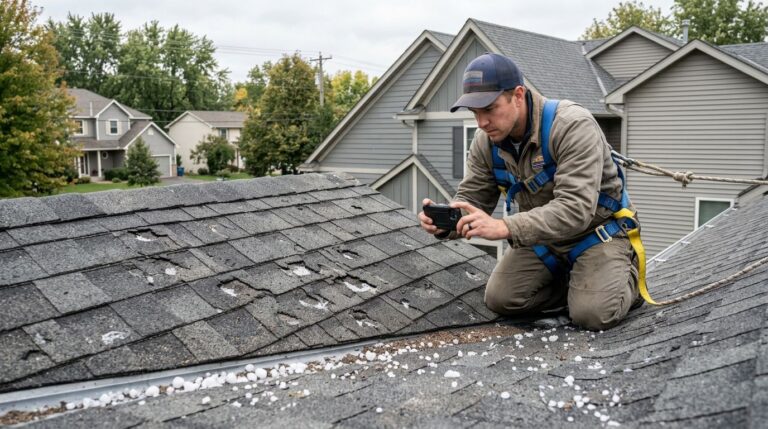
On shingles, a “bruise” is like a bruise on fruit or bruised shingles. The skin can look fine, but the structure under it is crushed, compromising the structural integrity. With hail, the impact can fracture the shingle mat under the protective granules, even when the surface still looks “okay” from the ground. Over time, UV rays accelerate granule shedding to expose the damage. That’s why you can walk your site the next day and miss it.
If you want a visual primer on what counts as shingle bruising, this shingle bruising definition and examples helps explain what inspectors look for.
Most common “show up later” scenarios
A delayed reveal is more likely when:
- The shingles were wet during the storm, which hides scuffs and displaced granules.
- Temps drop fast after hail, which reduces immediate granule shedding.
- The roof is dark, steep, or high, so angle and lighting limit what you can see.
- The shingles are older and brittle (unlike impact-resistant shingles), so damage expands as the roof heats and cools.
When it doesn’t apply (and what to watch instead)
If your building is mostly single-ply (TPO, PVC, EPDM) or built-up roofing, you won’t get “shingle bruises.” You can still get hail damage, but it shows up as punctures, fractured seams, or crushed insulation at impact points. In that case, the bigger concern is whether commercial roof needs repair because it can lead to water damage and roof leaks; water can travel far before it shows inside.
For facility teams, a practical reference is this roof hail damage checklist for facilities. It’s geared toward safe, first-pass observations and documentation.
Edge case: “Sub-severe” hail can still bruise shingles
Hail doesn’t need to be baseball-sized to cause problems. Smaller hailstones can still create bruising patterns that become clearer later. If you want the science angle on this gray area, see this research on sub-severe hail and asphalt shingle risk.
If you’re waiting for an interior leak to confirm hail damage, you’re usually waiting too long. Shingle bruises can exist without a leak, until the next storm finds the weak spot.
Step-by-Step
Steps to confirm hail shingle bruising before it turns into a bigger claim
- Log the storm damage details the same day. Save the date, time window, and hail size reports you can verify, then share it internally so everyone documents the same event.
- Photograph collateral damage first. Snap dents on metal caps, gutters and downspouts, HVAC guards, sign bands, and window wraps. That “story” supports roof findings later.
- Do a ground scan at two times of day. Morning and late afternoon light can reveal scuffs and granule disturbance that noon sun hides.
- Mark suspect slopes and limit access. Don’t let vendors or staff walk steep shingle areas until an inspection plan is set, because foot traffic can dislodge already-loose granules and muddy the timeline.
- Schedule a targeted storm-damaged roof inspection within 7 to 14 days. That window often balances safety, visibility, and documentation, since bruises and granule loss tend to present better after the roof dries.
- Ask for test squares and close-up documentation. A proper roof inspection often includes chalked test areas, photos of impact marks from hail damage, and notes on soft spots, mat fracture signs, and granule displacement. For a plain-language guide to what inspectors look for on asphalt, this how to identify hail damage on asphalt shingles is a helpful reference.
- Decide: repair, monitor, or replace based on spread and function. Isolated damage might be manageable, but widespread bruising across slopes often points toward replacement planning and insurance claim support.
Steps to protect the rest of the building while shingles get sorted out
- Check rooftop drainage and interior leak indicators. After hail, verify downspouts are moving water and ceiling tiles aren’t staining from moisture infiltration or roof leaks, because a second issue can start during the same weather cycle.
- Separate shingle findings from low-slope needs. A steep-slope claim can happen while you also need commercial flat roof repair from punctures, seam stress, or crushed insulation on the main roof.
- Use professional leak tracing if water shows up. If staining appears weeks later, the entry point may be far from the drip line. Start with commercial roof leak detection Saint Paul so you don’t spend money repairing the wrong area.
- Build a budget path early. If damage is broad, you may be looking at commercial roof replacement or roof replacement on one or more sections. Even when insurance is involved, scope and timing affect tenants, inventory, and downtime.
- Coordinate next steps with one accountable roofing professional. A single point of responsibility reduces gaps between shingle work, flashing, gutters, and low-slope details. For Twin Cities owners who want one team across systems, start with Saint Paul commercial roofing services.
FAQ
Can shingle bruises appear months later even if the roof looked fine after the storm?
Yes. Hail damage from bruising can stay subtle until heat cycles, rain, and light foot traffic loosen granules over time. When the top layer wears faster at impact points, the spot becomes easier to see and feel. That’s why early photos and a dated inspection report matter. Note that roof blistering can sometimes be confused with bruising, so distinguish carefully during checks.
Do shingle bruises always cause leaks?
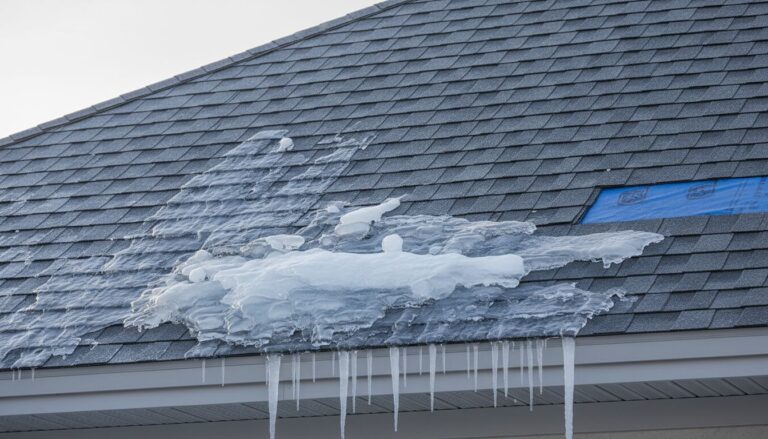
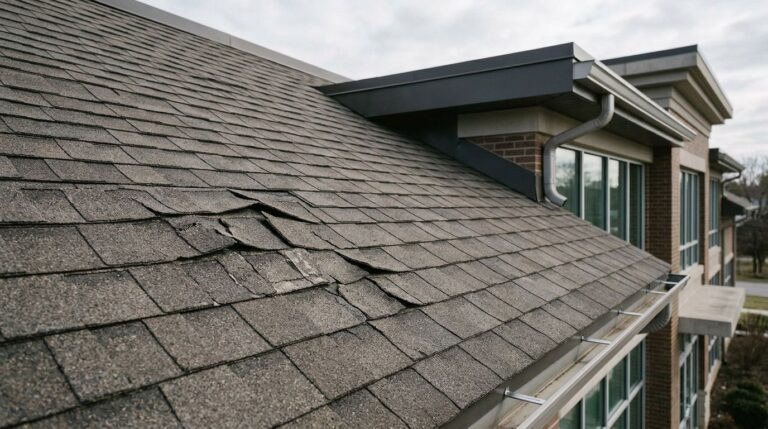
No. Bruised shingles often reduce shingle life without leaking right away. Still, they can become leak points when wind-driven rain hits, or when ice and thaw cycles widen micro-cracks that lead to cracked shingles. For commercial owners, the risk is surprise interior damage during the next storm.
What if my building has both shingles and a flat roof, which should I inspect first?
Start with anything tied to business interruption. If inventory, electrical rooms, or tenant spaces sit under the flat roof, prioritize that. Then inspect shingle slopes next, including attic ventilation and roof vents for overall roof health, because bruising is easier to document within the first few weeks.
Can an insurance adjuster deny a claim because bruises “aren’t visible yet”?
They can dispute severity if documentation is weak. Strong insurance claims usually include dated storm data, collateral photos, test square photos, and a clear diagram of affected slopes. A second inspection after the roof dries can also strengthen the file before the insurance adjuster arrives.
Is it safe for my maintenance team to walk shingle areas to check for bruises?
Only with proper fall protection and training. Even then, walking can damage softened or aged shingles and complicate the evidence. A professional roof maintenance inspection is safer, and it keeps documentation consistent if you need to escalate the claim.
Hail bruises don’t run on your schedule, they show when the roof starts to “age fast” in those impact zones from storm damage. Treat the first two weeks as your best window for clean documentation, then keep monitoring for granule loss and soft spots. If you suspect hail shingle bruising, act while the evidence is fresh and your options are widest.
Need a roof inspection in Saint Paul or the Twin Cities? Call Sellers Roofing Company at +1-651-703-2336 or schedule a free estimate. We are a black-owned, NMSDC-certified MBE roofing contractor with 9+ years experience.