Last updated: 2026-10-18 by Ted Sellers, Owner
Choosing between EPDM and TPO comes down to priorities: durability in cold weather and long life, or reflectivity and energy savings. EPDM generally gives a proven, long-lasting rubber membrane at lower upfront cost, and it handles Minnesota winters well. TPO offers a heat-welded thermoplastic membrane that can cut rooftop heat gain and lower cooling costs in buildings with high solar loads.
Match the membrane to the building type and rooftop use to get the best result. Low-penetration warehouses and industrial roofs with minimal rooftop traffic often fit EPDM, while downtown offices, retail spaces and schools with high solar exposure and significant cooling loads usually benefit from white TPO.
Consider rooftop equipment counts, frequency of access and local contractor skill before deciding, since frequent service or many penetrations can change the recommended system.
Quick summary
Here are the main points to keep in mind when you ask “is epdm or tpo flat roof better” for your property. EPDM performs well in cold climates, tolerates ponding better and usually costs less to install and repair. TPO delivers better reflectivity and can lower cooling loads on sun-exposed roofs, but it relies on skilled welding crews for seams.
- EPDM: lower upfront cost, wide-sheet options and easier patch repairs.
- TPO: reflective white surface, heat-welded seams and potential energy savings in warm climates.
- Cost vs value: compare per-square-foot installed price, expected lifespan and local energy use.
- Maintenance: schedule inspections in spring and fall, clear drains and check seams after storms.
- Bid process: request side-by-side, itemized quotes and document penetrations, slope and insulation.
Quick verdict: which membrane fits your building
Short answer to “is epdm or tpo flat roof better”: EPDM is the better choice when long life, simple budgets and cold-weather performance matter; TPO makes sense when reflectivity and lower cooling costs are priorities. EPDM is often the go-to for low-rise warehouses or roofs with few penetrations, while TPO suits urban offices and retail with heavy solar exposure. Product quality, roof complexity and local installer skill can change the recommendation, so weigh those factors along with membrane properties. For a deeper comparison, see EPDM Roofing Vs Other Materials: A Comparison Guide.
- Warehouse with few HVAC stacks: EPDM offers durable, economical protection and straightforward repairs.
- City retail store with extensive rooftop HVAC: white TPO lowers cooling demand and rooftop temperatures.
- Facilities with frequent technician access: choose the membrane that withstands traffic and simplifies regular maintenance.
Cost comparison: installed price and life-cycle value
Price per square foot is a starting point, but life-cycle value gives a clearer picture. Expect EPDM around $7 to $14 per square foot and TPO roughly $8 to $16 per square foot, with higher ranges in regions with strict codes or frequent storms. Membrane thickness, insulation R-value and attachment method all affect final installed cost.
EPDM commonly lasts 25 to 50 years; TPO usually lasts 20 or more years depending on product and installation quality. In warm climates, TPO’s reflectivity can cut cooling loads by roughly 20 to 30 percent, which may translate into substantial annual savings on larger, high-load buildings. Factor replacement timing, warranty coverage and projected energy savings into a net present cost view to compare options over a 10- to 20-year horizon.
- Membrane thickness and warranty tier
- Insulation R-value and attachment method
- Deck repairs, tear-off versus overlay
- Penetrations, curbs and custom metal flashings
Always request itemized quotes and compare projected energy savings alongside replacement cycles to see true value. The next section covers seams, ponding and real-world durability so you can protect your investment. For further guidance on choosing between systems in different scenarios, review Choosing Between EPDM And Other Roofing Materials.
Durability and performance: seams, ponding and weather
Seams, drainage and the local climate determine how long a roof actually lasts. TPO’s heat-welded seams are generally strong but require experienced installers and quality welding equipment, while EPDM uses adhesive or taped seams that are simpler to work with in cold or wet conditions. EPDM’s wide rolls can reduce seam counts, making patching straightforward; TPO’s welds can lower seam-related leaks when installed correctly.
Repairs differ by membrane: EPDM patches are typically faster and less expensive, while TPO repairs often require hot-air welding and certified technicians. Factor repair access and local contractor expertise into your choice, since frequent repairs or heavy rooftop traffic favor systems that local crews can service quickly.
For high-traffic or high-wind roofs, specify thicker membranes, proper fastening or ballast and certified installers to reduce common failure modes. Industry guidance such as the NRCA roofing guidelines can help define certification and installation expectations.
Ponding water accelerates deterioration regardless of membrane and highlights the role of roof design in long-term performance. EPDM can be stressed at adhesive seams by trapped water; TPO’s welded seams resist seam leaks better but still suffer from standing water. Improve drainage with tapered insulation, additional drains or scuppers and crickets around equipment to protect any single-ply system.
- Tapered insulation to create slope
- Additional or larger drains and scuppers
- Crickets and saddles around equipment and curbs
Wind uplift, punctures and freeze-thaw cycles tend to expose weak points faster than marketing claims suggest. EPDM’s elasticity helps it tolerate thermal movement and cold climates, while TPO’s durability depends on membrane thickness and manufacturer formulation. For roofs exposed to severe conditions, require appropriate fastening, edge details and installation certification to protect the assembly.
Energy efficiency and sustainability: real savings explained
Reflectivity directly affects rooftop temperature and HVAC load, so material color matters. White TPO reflects a large portion of solar radiation and can keep roof surfaces significantly cooler than black EPDM, which absorbs heat and raises rooftop temperatures. For many buildings with high daytime occupancy and cooling demand, a reflective membrane paired with adequate insulation yields measurable operating savings.
A white TPO membrane can reflect roughly 80 to 87 percent of incoming solar radiation, while black EPDM reflects much less and runs hotter under sun. In practice a reflective surface can be 50 to 60°F cooler on a hot day and reduce cooling energy use by around 20 to 30 percent in warm climates. The solar reflective index (SRI) is one metric used to quantify this effect, and federal cool-roof resources provide technical guidance on performance and testing (cool-roof guidance).
Not every building sees the same gains. Hot and mixed climates with significant cooling loads get the largest benefit from reflectivity, while cold-dominated buildings may see smaller or even negative net savings because reduced solar gain increases winter heating needs. Use site-specific utility data to estimate payback before choosing a reflective membrane.
A payback estimate using your utility history and roof specifications will clarify whether a reflective membrane pays off for your property. Work with your contractor to model savings, factoring in insulation upgrades and expected maintenance. The following section explains installation details and warranty choices to help those savings last.
Maintenance, repairs and warranties: what you will live with
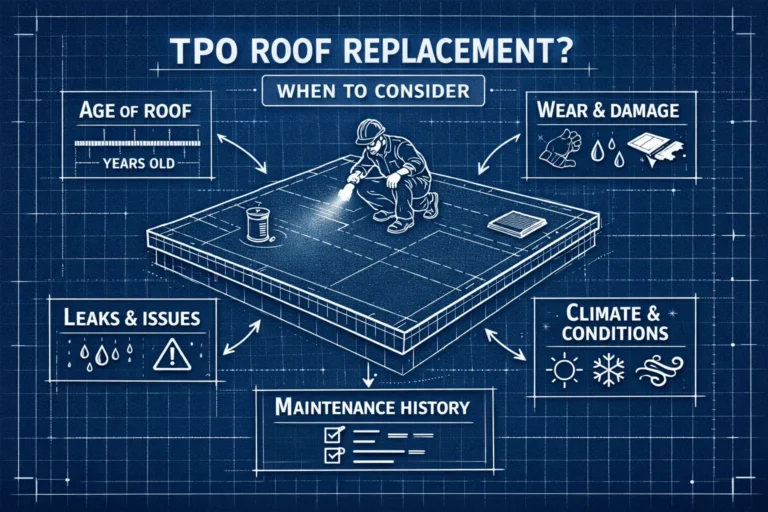
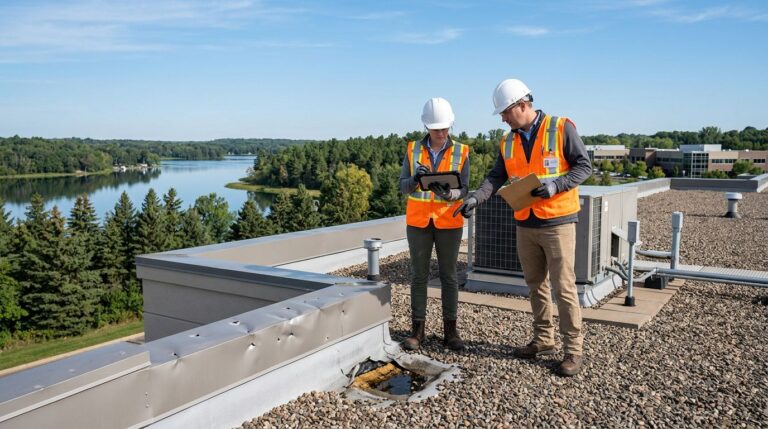
A practical maintenance plan keeps small issues from turning into expensive problems. Twice-yearly professional inspections in spring and fall, plus checks after severe storms, help catch seam separation, blocked drains and punctures early. Keep a simple in-house checklist and call a qualified roofer for suspected damage to avoid compounding repairs.
Watch for warranty exclusions such as ponding water, lack of documented maintenance and improper installation. Insist on written seam warranties, a clear scope of work and documented inspection requirements to keep coverage valid. Understand manufacturer versus contractor warranties and what each covers before you sign the contract. For a plain-English primer on typical warranty terms and how they apply to TPO systems, see this TPO roofing warranties explained.
Decision checklist: how to choose and what to ask your contractor
Compare bids on an identical scope so you judge apples to apples. Normalize each quote to a per-square-foot installed price and ask for a total cost-over-life estimate to see long-term value rather than just first costs. Aim to collect at least three bids and ask detailed questions when prices differ significantly.
Use this checklist to compare proposals and verify details before you decide. Confirm membrane type and thickness, seam method, insulation R-value and whether the job includes tear-off or overlay. Also document the number of penetrations, curb details and warranty specifics to avoid surprises later.
- Membrane type and thickness
- Seam method and quality control
- Insulation R-value and scope of work
- Substrate preparation, removal versus overlay
- Number of penetrations and curb details
- Warranty specifics and O&M expectations
Ask these contractor questions before you sign. Confirm manufacturer certification and who issues the warranty, ask how they handle ponding and curb details, and request recent local references and project photos. Verify insurance, licensing and installation certifications for the membrane you choose.
- “Is EPDM or TPO flat roof better for my building?”
- “Are you manufacturer-certified for this membrane and who issues the warranty?”
- “How do you handle ponding, equipment curbs and rooftop drains?”
- “Can you provide references and recent local project photos?”
Red flags include ultra-low bids with no itemization, missing proof of insurance or licenses, lack of manufacturer certification, or refusal to provide a written maintenance plan. Call references and request certificates; review jobs completed in similar Minnesota climates before awarding a contract.
Is EPDM or TPO flat roof better for your building?
The best choice depends on your building, climate and priorities. If upfront cost and simpler repairs matter most, EPDM often provides predictable, lower installed costs and easier patching; if energy savings and seam performance are the priority, TPO can deliver measurable reductions in cooling load. Keep two takeaways in mind: compare installed price against life-cycle value and inspect seams, drainage and ponding risk before you decide.
Schedule a free roof inspection and request a side-by-side TPO versus EPDM estimate to get a clear recommendation for your property. Sellers Roofing Company’s licensed team serves Saint Paul and the Twin Cities, documents seams and ponding areas and provides a transparent written quote you can use to plan maintenance and budget for replacement. Book an on-site assessment to protect tenants, minimize downtime and extend your roof’s service life through Minnesota weather.
Need a roof inspection in Saint Paul or the Twin Cities? Call Sellers Roofing Company at +1-651-703-2336 or schedule a free estimate. We are a black-owned, NMSDC-certified MBE roofing contractor with 9+ years experience.