Last updated: 2026-08-01 by Ted Sellers, Owner
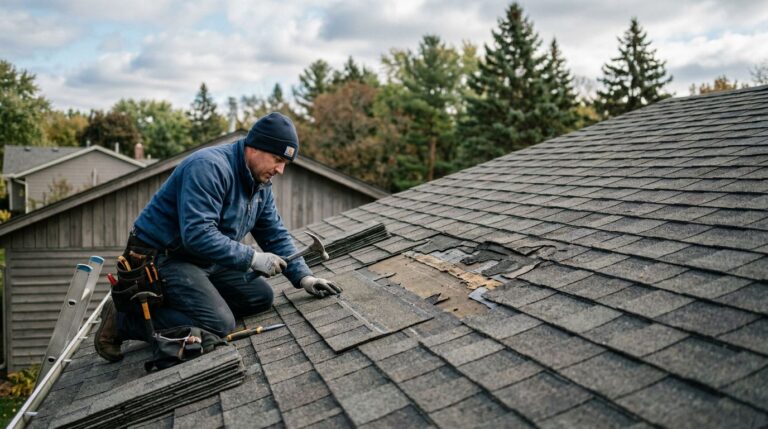
Yes. Wind can damage starter shingles even when every tab is still attached. The starter row sits on the most exposed edge, so it often takes the first hit. Lifted edges, broken sealant, creases, granule loss, and exposed fasteners all count as damage. On shingled commercial buildings, that deserves prompt inspection.
When This Applies
This applies to shingled commercial buildings
This issue shows up on offices, retail strips, churches, and multifamily properties with asphalt shingles. It matters most at eaves and rakes, where wind grabs the roof first. If your property has both steep-slope shingles and a low-slope section, don’t assume only one area was affected.
Older roofs show it sooner because adhesive gets brittle and granules wear away. Buildings near open parking lots or higher exposures also take more uplift pressure.
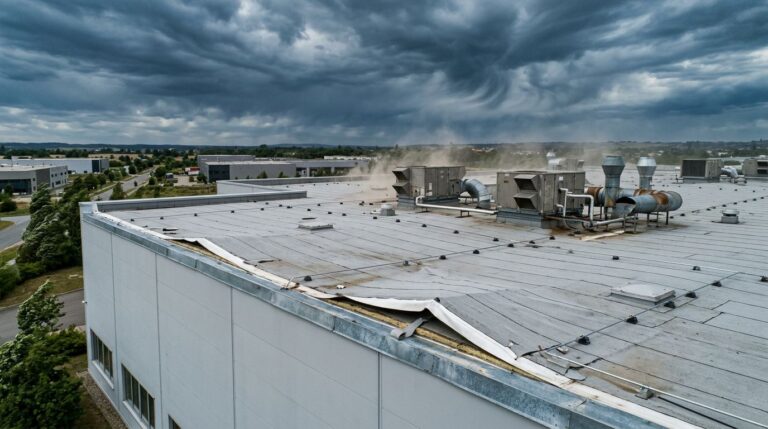
If your building uses TPO, EPDM, PVC, or modified bitumen, this is not a starter-shingle problem. That falls under commercial flat roof repair, because membrane seams, edge metal, and flashing fail in different ways.
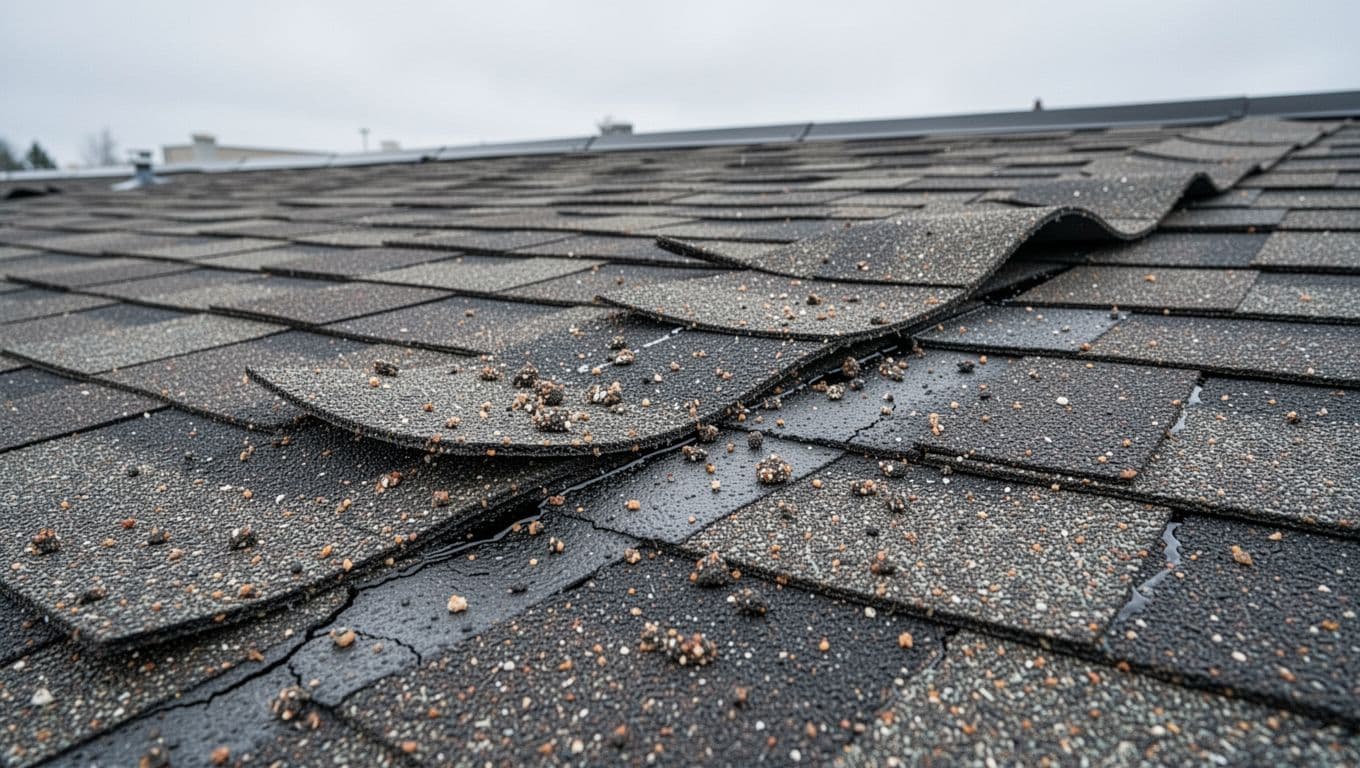
Missing tabs are not required for wind damage
Starter shingles work like the zipper at the roof edge. When that zipper loosens, the first course above it has less support. Wind can lift the strip, crack its adhesive, crease the mat, or tear around nails, while the visible tabs still look normal from the ground.
That is why starter shingle wind damage often hides in plain sight. Loose granules in gutters, slight edge lift, uneven shadow lines, and exposed sealant can all point to a problem.
Key exceptions to keep in mind
Cold weather can delay sealing on newer shingles, and poor installation can mimic storm damage. A trained roofer should separate age, installation error, and true wind uplift before repairs start.
When it does not apply
If the edge looks clean, the seal strip is intact, and there is no creasing, you may be dealing with normal wear instead of storm damage. The same goes for roofs where impact damage, foot traffic, or gutter work bent the edge after the storm.
Still, if water showed up inside, don’t guess. A roof can leak from a small edge failure long before a tab blows off.
Step-by-Step
1. Confirm the roof type before you inspect
First, verify that the building has asphalt shingles at the edge in question. Some commercial properties mix shingled entrances or mansards with low-slope roof areas. If the damaged section is membrane, use a different path and call Saint Paul commercial roofing experts for the right inspection.
2. Inspect the starter row at the eave and rake
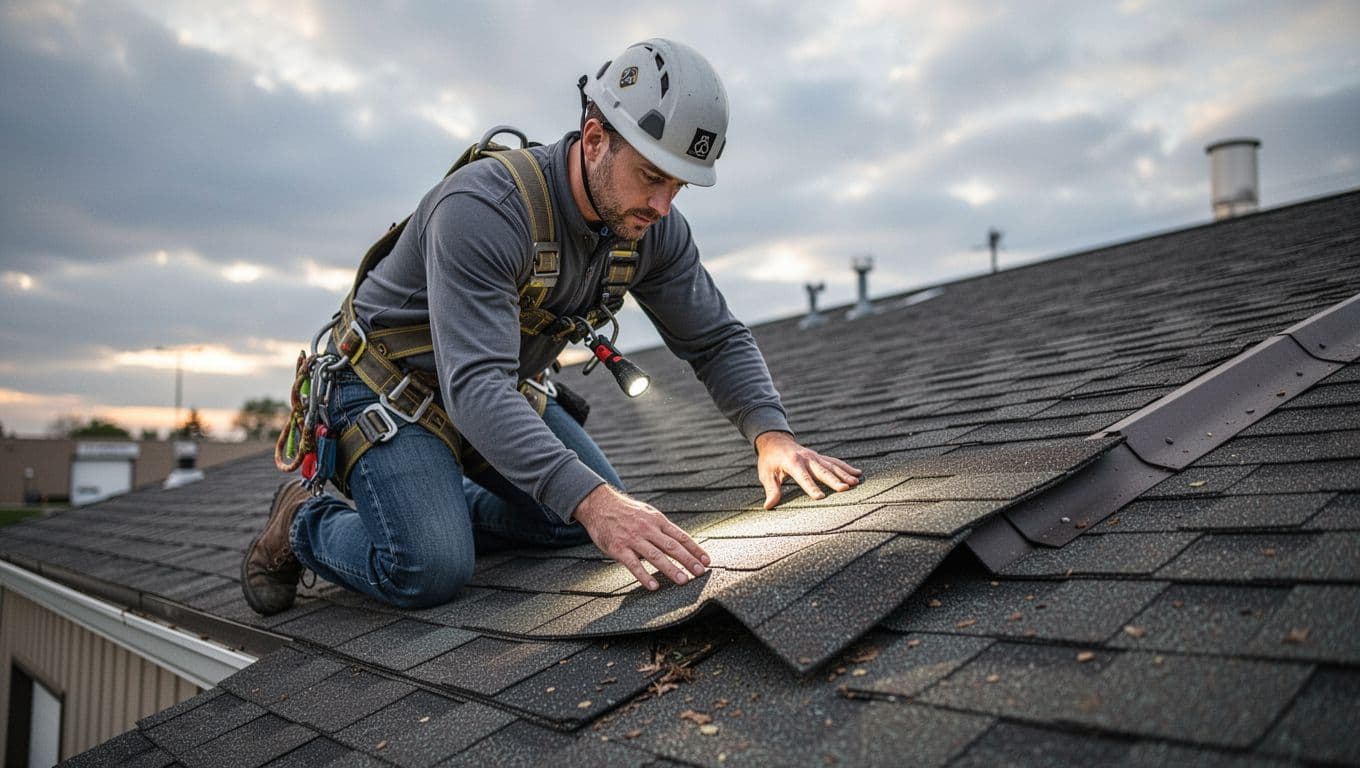
Look closely at the first strip under the visible shingles. You’re checking for lifted corners, broken adhesive, creases, torn nail zones, and fresh granule loss. Compare several sections, because subtle damage usually shows as a pattern, not a single mark.
Also note whether the drip edge is bent or the starter strip no longer sits tight to it. Wind often damages these parts together.
3. Compare the windy side to the protected side
Wind damage often clusters on the windward edge, roof corners, and spots near open fields or taller parapets. If one slope shows more lift, that helps explain the cause. If every edge looks worn the same way, age or poor fastening may be the bigger issue.
When a small defect is still a real problem
A two-inch lift at the starter row can be enough to let the next storm pry higher. Small edge damage rarely stays small for long.
4. Check inside the building for moisture
After the roof check, look for damp insulation, stained ceiling tiles, wet wall tops, or musty smells near exterior walls. Water can travel before it shows up. If you suspect hidden entry, schedule professional leak detection services St. Paul so you fix the source, not the symptom.
5. Decide if you need repair or replacement
Targeted repair often works when the damage is limited to one edge and the rest of the roof is sound. However, if the starter course, first shingle course, underlayment, or decking are compromised, the scope grows fast.
A good report should show where damage starts, how far it runs, and whether repairs will restore the warranty path. If the edge has repeated failures, the commercial roof needs repair now, and an older system may justify commercial roof replacement instead of repeated patches.
FAQs About Starter Shingle Wind Damage
Can a roof look fine from the ground and still have starter damage?
Yes. Ground views usually miss lifted seal strips, creases, and torn fastener areas at the edge. That’s why many owners only notice the issue after a later leak.
Will insurance care if no tabs are missing?
Sometimes, yes. Carriers usually care more about documented functional damage than a dramatic look. Photos, close-up inspection notes, and storm timing matter.
What helps support the claim?
Clear images of lifted starter shingles, broken sealant, creases, and related interior moisture make the claim stronger.
How fast should starter shingles be repaired after a wind event?
As soon as practical. The first storm may only break the seal. The next one can pull higher courses loose and let water reach the deck.
Can wind damage show up on only one side of the building?
Absolutely. Wind direction, nearby structures, tree cover, and roof shape all change pressure at the edge. One slope can take most of the hit while another shows little or none.
What happens if I ignore lifted starter shingles?
The roof edge becomes weaker. Then water, ice, and future gusts can work farther into the system. A small repair can grow into decking work, interior cleanup, and business disruption.
Wind doesn’t need to rip off tabs to weaken a shingle roof. If the starter row lifts, creases, or loses its seal, the edge is already compromised.
For business owners, quick documentation beats waiting for the next rain. If storm signs showed up this week, schedule an inspection before a minor edge issue turns into a larger repair.
Need a roof inspection in Saint Paul or the Twin Cities? Call Sellers Roofing Company at +1-651-703-2336 or schedule a free estimate. We are a black-owned, NMSDC-certified MBE roofing contractor with 9+ years experience.