Last updated: 2026-08-01 by Ted Sellers, Owner
A commercial metal roof leak at panel seams is detected by tracing the interior water path, inspecting the roof upslope from the drip point, checking seams for gaps or failed sealant, and confirming the source with moisture testing or controlled water testing. In many cases, the visible stain is only the last stop, not the entry point.
When This Applies
Which buildings fit this problem
This applies to commercial buildings with standing seam or exposed-fastener metal roofs, especially warehouses, retail buildings, offices, and light industrial sites. It matters most on low-slope roofs where water can creep uphill at laps or travel sideways before it drops inside.
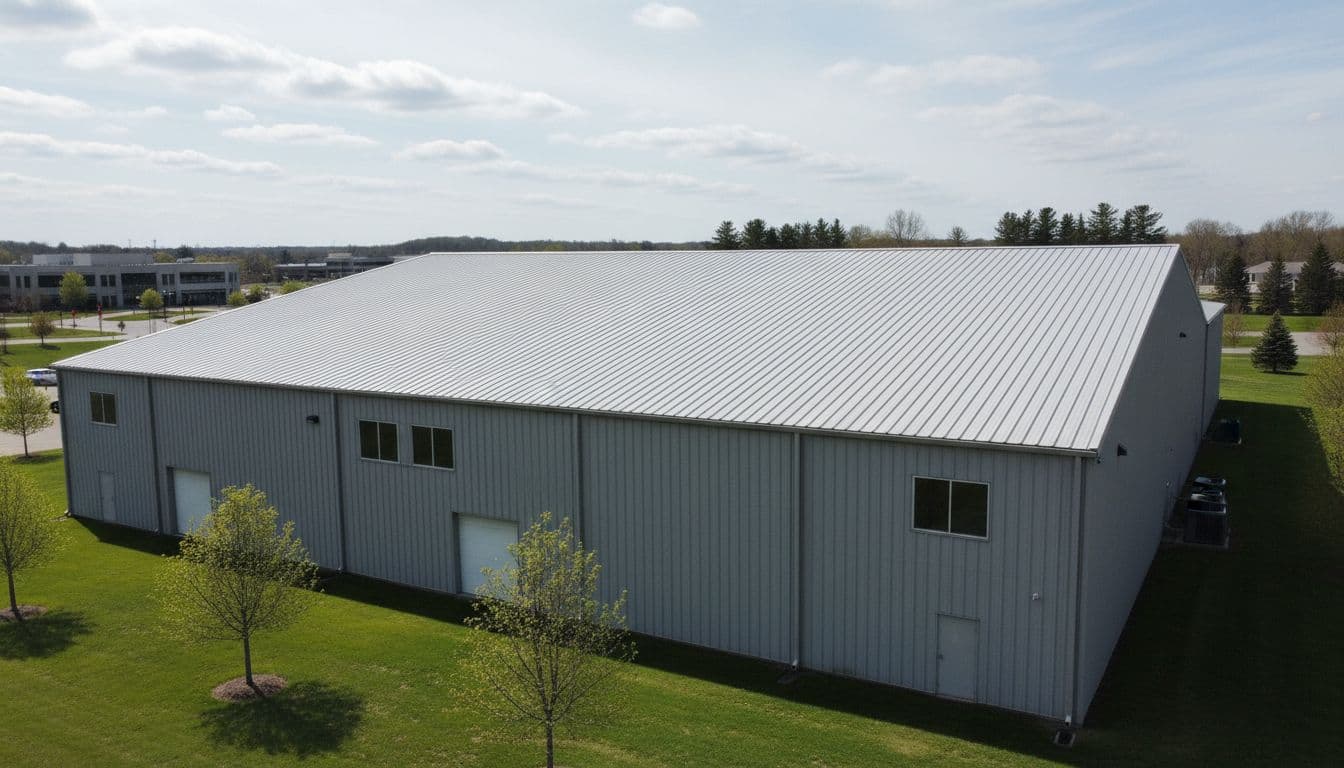
Age and movement raise the risk. Metal expands in heat and tightens in cold. Over time, that motion can pull at seam sealant, clips, end laps, and trim. Add wind-driven rain, snow, or ponding near details, and small openings start acting like a loose zipper.
On metal roofs, the drip point is often a clue, not the source.
This also applies when leaks happen only in certain weather. If water shows up during hard rain from one direction, the seam may open only under pressure. If the stain appears after snow melt, the leak may be higher than you think.
When panel seams aren’t the top suspect
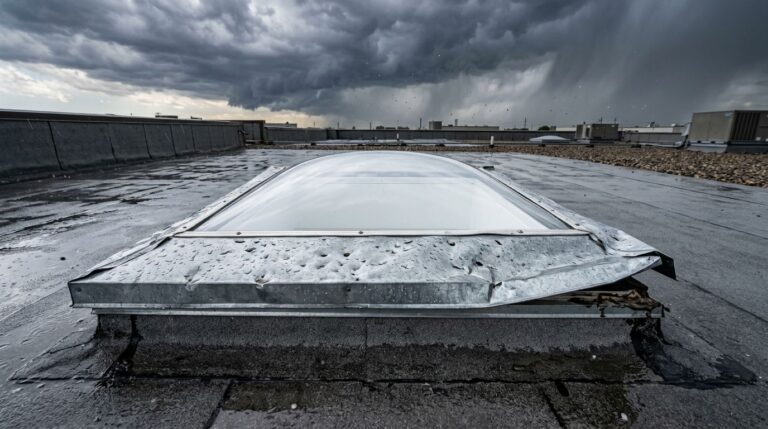
Not every leak on a metal roof starts at a seam. Skylights, pipe boots, curb flashing, ridge caps, roof-to-wall transitions, and gutters can all mimic a seam failure. If the building has a membrane roof, this is a different repair path, more like commercial flat roof repair than metal seam diagnosis.
Also, if corrosion is widespread, insulation is soaked, or leaks repeat across many areas, the issue may be larger than one failed joint. At that point, professional commercial roof leak detection helps confirm whether the roof has isolated trouble or needs broader action.
Step-by-Step
Use this inspection sequence
- Map the leak from inside first.
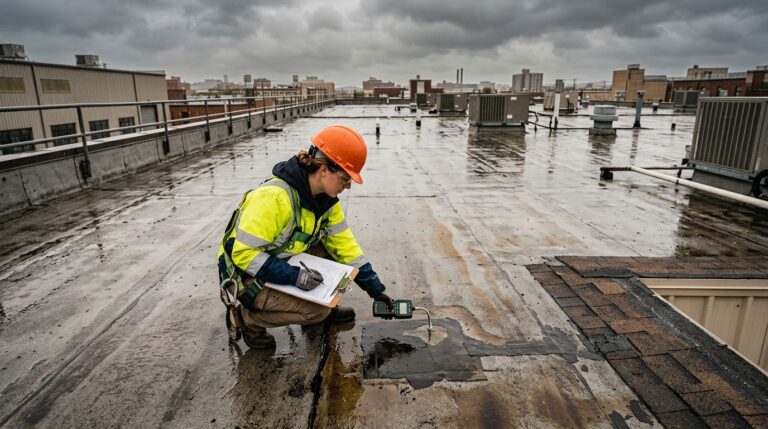
Start below the stain, drip, or wet insulation. Note the exact bay, purlin line, ceiling opening, and weather conditions when the leak appeared. If it leaks only during wind from one side, that clue matters because it narrows the search. - Trace the path uphill, not just above the stain.
Water often rides along the underside of the panel, a purlin, or insulation facer before it drops. So, move upslope and sideways from the interior point. On some buildings, the source sits 10 to 30 feet away from where water shows inside. - Inspect the panel seams closely.
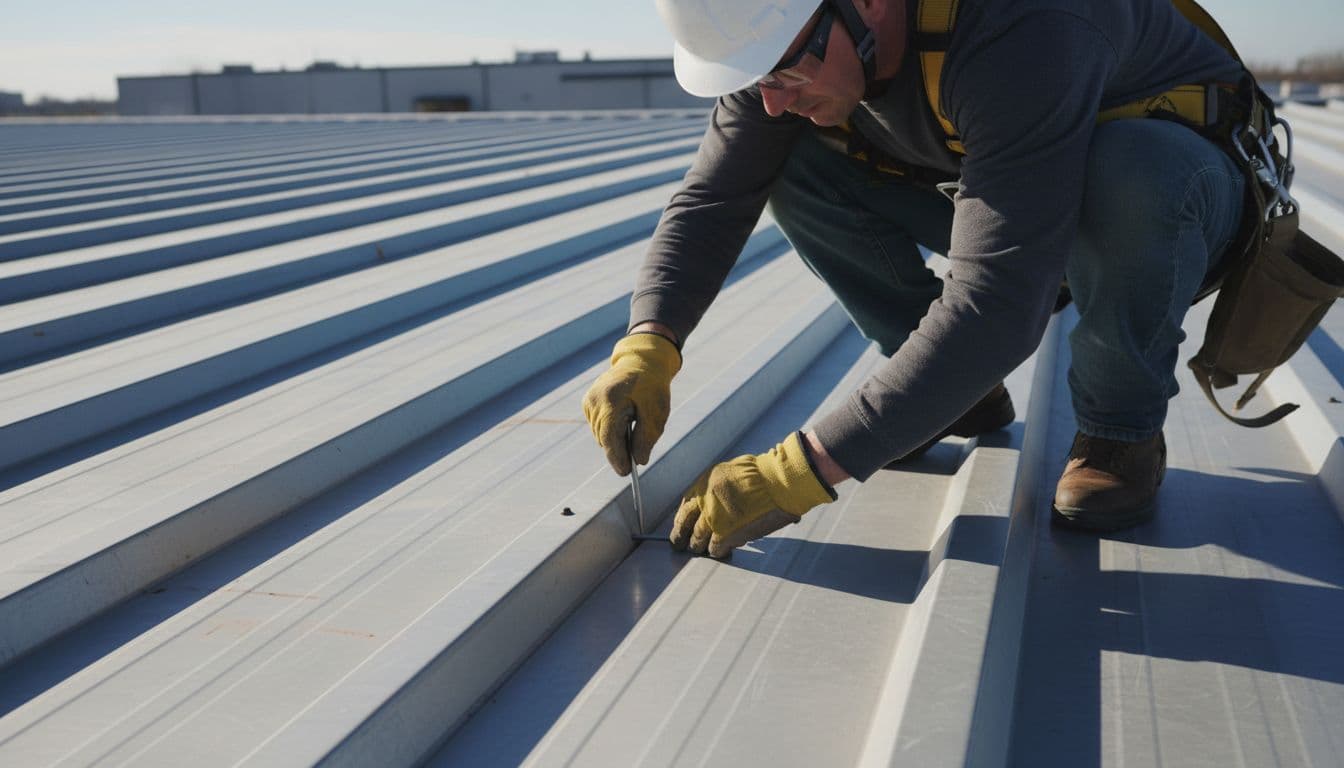
Look for separated vertical seams, failed butyl tape at end laps, cracked sealant, rust staining, lifted edges, clip stress, and backed-out fasteners near seam areas. Even a hairline opening can pull water in by capillary action. Dirt trails also help, because they often mark the path of repeated moisture. - Check nearby details that stress the seam.
A seam may fail because something next to it moved first. Review curbs, penetrations, snow guards, transitions, ridge details, gutters, and areas with foot traffic. If a rooftop unit shifts or the panel oil-cans badly, the seam can open little by little. - Confirm the source before making repairs.
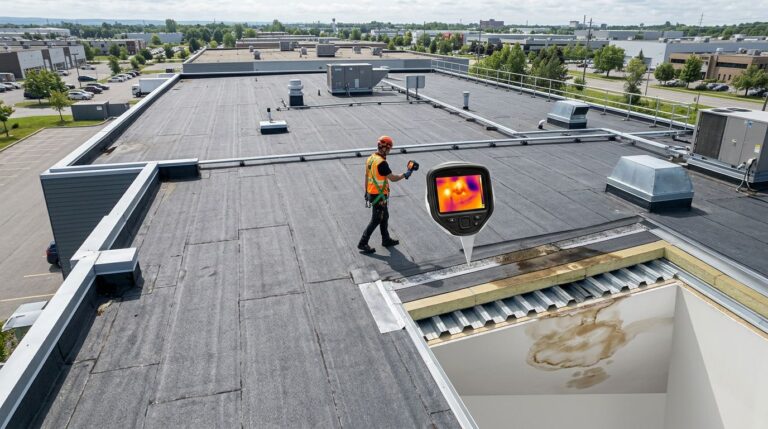
Guessing wastes money. Use a moisture meter, infrared scan, or a controlled hose test on one small section at a time. Start low, then move higher. Never flood the whole roof at once, or you’ll lose the trail. If the source still hides, a commercial metal roof leak inspection by trained crews is the safer call. - Choose repair or replacement based on the pattern.
One open seam or failed lap usually means targeted repair, such as re-sealing, re-fastening, or replacing a damaged panel section. However, if several seams have failed, clips are loose, metal is corroded, or insulation stays wet, the commercial roof needs repair on a larger scale. In older systems, repeated seam leaks often point toward commercial roof replacement, not another short patch.
FAQ About Commercial Metal Roof Seam Leaks
Can water enter at one seam and show up somewhere else?
Yes. Metal roofs let water travel along panel ribs, purlins, and the underside of the roof before it drops. That’s why patching the spot above the stain often fails. The true source is usually uphill or off to one side.
Should you use sealant as a quick fix?
A temporary sealant patch can slow active leaking, but it rarely solves the root issue by itself.
When a temporary patch makes sense
Use it only to control water until a full inspection happens. If the seam is dirty, wet, or moving, the patch may peel away fast.
Why does the leak only happen during wind-driven rain?
Wind can push water into seam openings that stay dry during calm rain. Pressure changes also force water uphill at laps and trims. If the leak appears only in one storm pattern, track the wind direction and the roof slope together.
How do you know when repair is no longer enough?
Watch for repeat leaks, multiple open seams, rust-through, wet insulation, or failed details in several roof zones. Those signs mean the problem is systemic, not isolated. In that case, get an evaluation from Saint Paul commercial roofing experts before spending more on spot repairs.
Will insurance cover a seam leak?
Sometimes, but it depends on the cause.
What to document
Take photos, note the storm date, save maintenance records, and record interior damage right away. Sudden storm damage may qualify, while age, wear, and long-term neglect often do not.
Bottom Line
The best way to find a seam leak is to follow the water path backward, not forward. Start inside, inspect upslope seams and nearby details, then confirm the source before you repair anything. Act early, because one small seam opening can grow into soaked insulation, rust, and far higher costs.
Need a roof inspection in Saint Paul or the Twin Cities? Call Sellers Roofing Company at +1-651-703-2336 or schedule a free estimate. We are a black-owned, NMSDC-certified MBE roofing contractor with 9+ years experience.