Last updated: 2026-08-01 by Ted Sellers, Owner
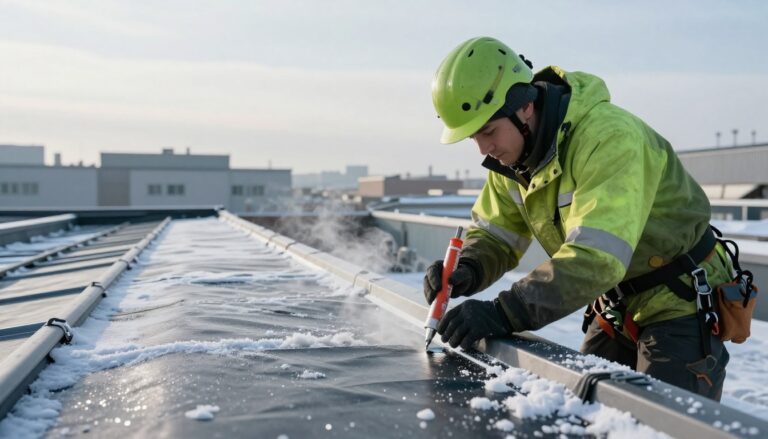
Yes, infrared scans can often find likely wet insulation on EPDM roofs by showing temperature differences between damp and dry areas, usually after sunset. Still, a scan is not final proof. The best practice is to confirm suspicious spots with a roof inspection, moisture testing, and a few small core samples.
That distinction matters to commercial building owners. A smart scan can narrow the search, reduce guesswork, and help you decide whether a local repair is enough or if hidden damage points toward a larger project.
When This Applies
Infrared scans work best on exposed EPDM roofs
Infrared testing fits low-slope commercial roofs with exposed EPDM membranes, especially when leaks seem to move or show up far from the source. Water on a flat roof can travel sideways, so ceiling stains rarely tell the full story.
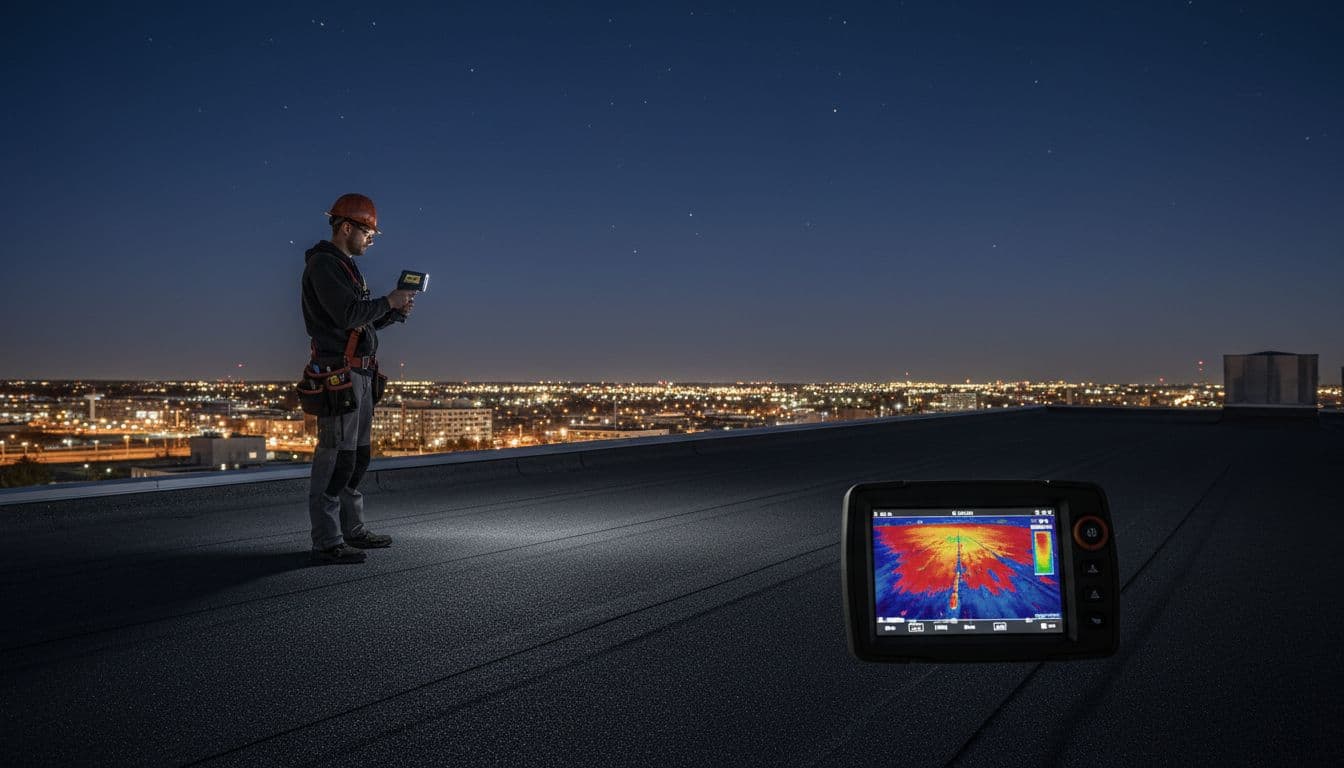
This method works best after a sunny, dry day and during a calm evening. Black EPDM often helps because it absorbs heat well, then releases it at a different rate than wet insulation below. That contrast can make problem areas stand out. The hand-held infrared camera guidance from NRCA supports that nighttime timing.
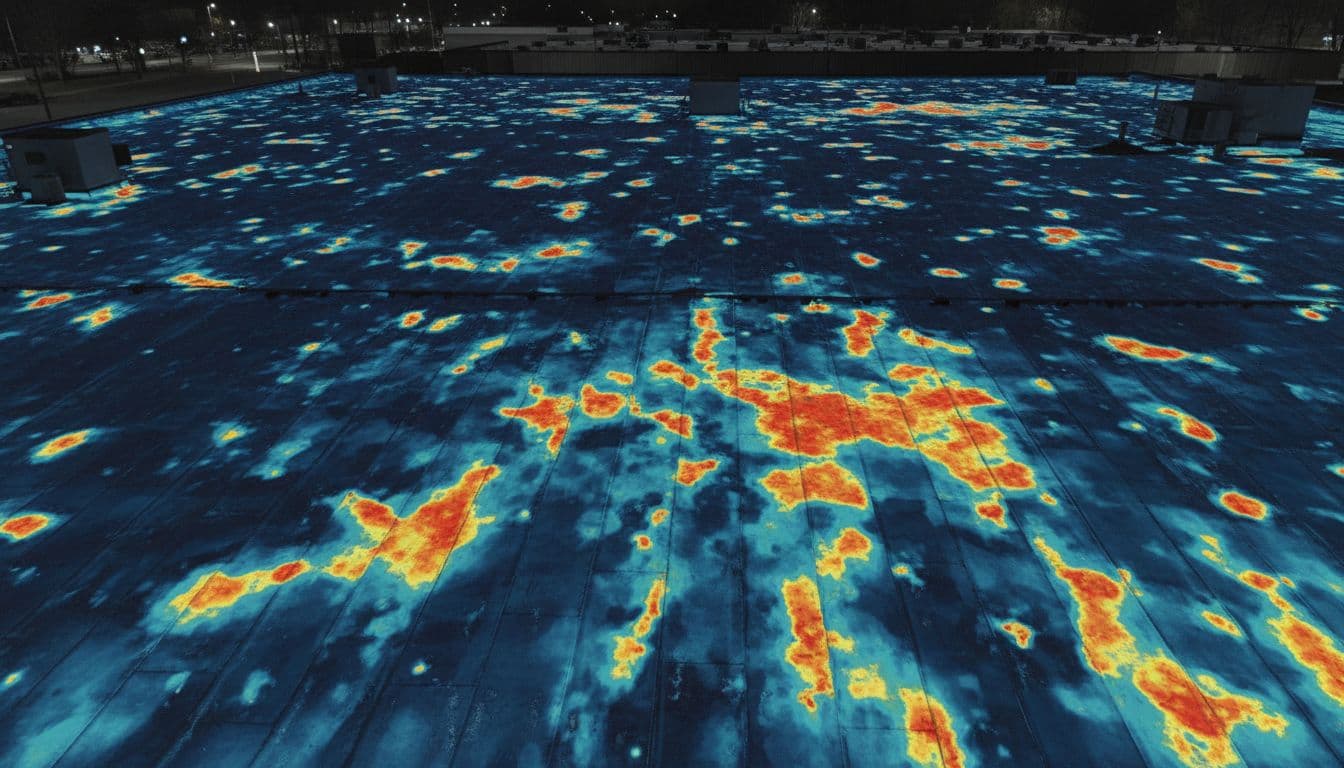
If your building has recurring leaks, rising energy bills, or a roof nearing midlife, infrared can be a strong screening tool. It also helps before budgeting a major repair. In some cases, it shows that a roof section is still dry, which can avoid unnecessary tear-off.
When scans can mislead or add noise
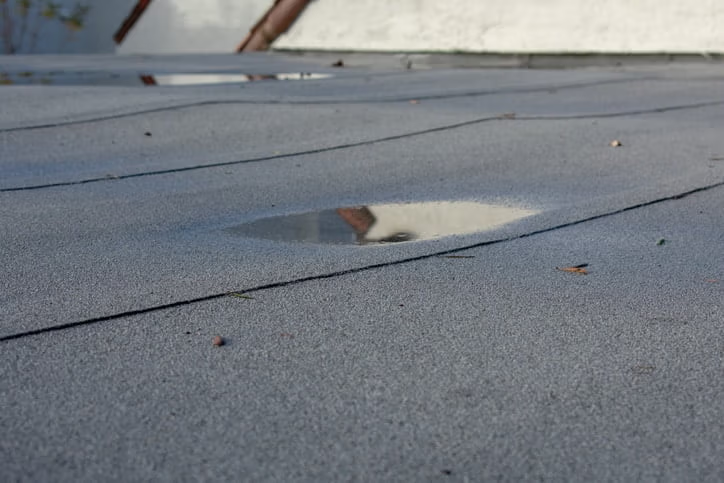
Infrared is less helpful when the roof is covered by ballast, pavers, snow, frost, or heavy surface water. It also struggles after recent rain, during windy nights, or where rooftop exhaust creates odd heat patterns. A fully saturated roof can be tricky too, because there may be little temperature contrast left.
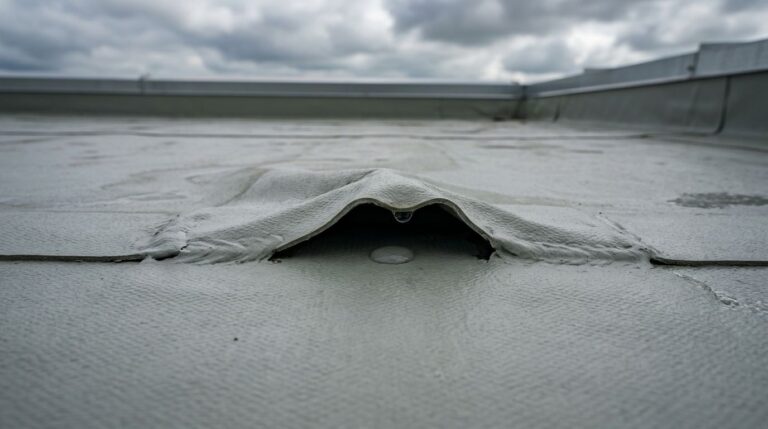
An infrared scan maps temperature patterns, not the exact hole in the membrane.
That is why a scan should never stand alone. According to an NRCA summary of roof moisture detection research, no single non-destructive method is reliable enough by itself to remove the need for some verification.
So, when does this not apply? If the roof has widespread age-related failure, open seams across many areas, or soaked insulation in multiple zones, the question may no longer be where the moisture is. At that point, a focused scan may confirm what a broader commercial roof infrared leak detection review already suggests.
Step-by-Step
Before you schedule the infrared survey
- Confirm the roof type. Make sure the roof is an exposed EPDM system and not buried under stone, pavers, or a thick coating.
- Choose the right weather window. Pick a dry day with decent sun, then scan after sunset when the roof begins to release stored heat.
- Collect the leak history. Mark ceiling stains, wet walls, and past repair areas on a roof plan. That gives the scan a starting point.
How to turn scan results into an action plan
If the wet area looks limited
- Scan and mark anomalies. A technician should map warm or cool areas, depending on conditions, and flag each spot on the roof.
- Verify the findings. Open small test cuts or use moisture tools at select points. This confirms whether the suspected EPDM roof wet insulation is real.
- Repair the actual cause. If moisture is isolated, targeted commercial flat roof repair may be enough. That could mean fixing seams, flashing, penetrations, or a puncture, then replacing only the wet insulation in that section.
If wet insulation appears widespread
- Measure the spread against roof age. A ten-year-old roof with one wet pocket is different from a twenty-year-old roof with moisture across several zones.
- Compare repair cost to replacement value. If the insulation is soaked in many areas, repeated patching may only delay failure. In that case, a commercial roof replacement can be the smarter long-term move.
- Set the next inspection date. Even when the scan shows limited damage, follow-up matters. Not every thermal anomaly means the commercial roof needs repair in that exact square foot, because moisture can migrate.
FAQs
Can infrared find the exact leak hole in an EPDM membrane?
No. Infrared points to wet insulation or suspicious temperature changes. To find the exact breach, the roofer still needs close membrane inspection, and sometimes electronic testing or test cuts.
If interior leaks seem far from the roof problem
That is normal on low-slope systems. Water often travels before it drips inside.
How fast should wet insulation be removed?
As soon as practical. Wet insulation loses thermal value, can trap more moisture, and may damage decking over time. Delay usually turns a smaller fix into a larger one.
Can infrared help before buying a commercial building?
Yes, it can support due diligence. It gives buyers a better picture of hidden moisture, likely repair scope, and whether the roof has years left or needs near-term capital planning.
What if the whole roof shows a similar temperature?
That can mean the timing was poor, the roof is uniformly wet, or surface conditions masked the contrast. In that case, the survey may need to be repeated under better weather, then verified with core samples.
Is an infrared scan enough for insurance or warranty decisions?
Usually not by itself. It helps document conditions, but insurers, consultants, and manufacturers often want more, such as photos, repair history, moisture readings, and physical verification.
The Bottom Line
What to do next
Infrared scans are a strong way to narrow down hidden moisture on EPDM, but they work best as part of a verified inspection process. For business owners, that means fewer blind repairs and better budgeting. If you suspect trapped moisture, a full commercial roofing evaluation in Saint Paul can help you choose between repair, section replacement, or a full reroof before the damage spreads.
Need a roof inspection in Saint Paul or the Twin Cities? Call Sellers Roofing Company at +1-651-703-2336 or schedule a free estimate. We are a black-owned, NMSDC-certified MBE roofing contractor with 9+ years experience.