Last updated: 2026-08-01 by Ted Sellers, Owner
Short answer: Cosmetic hail damage on a metal roof means metal roof hail damage like dents, dings, or surface marks that change the look of the panels but don’t stop the roof from shedding water. Even with dings, the roof remains a functional barrier to elements. In other words, the panels still lock together, fasteners still hold, and you don’t have holes or leaks. In Minnesota, it still matters because the finish coat can scuff, warranties can be affected, and insurance may treat “cosmetic” differently.
When This Applies
Who cosmetic hail damage affects (and who it doesn’t)
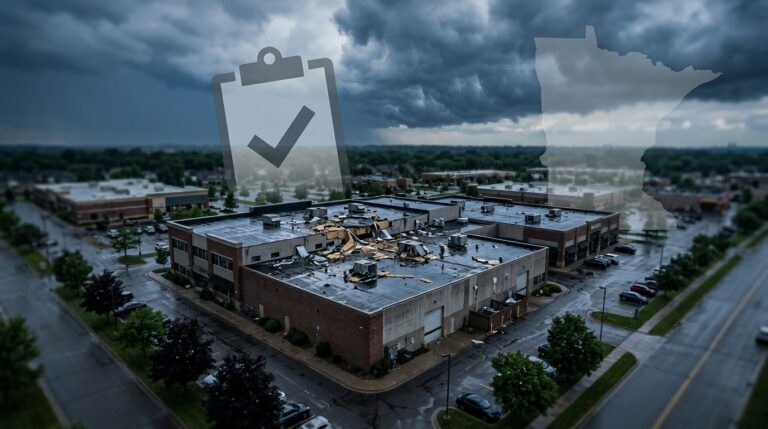
Cosmetic hail damage shows up most on commercial metal roofing where large, open roof planes catch hail at high speed. Think warehouses, retail centers, schools, churches, and office buildings with standing seam metal roofs or exposed-fastener steel or aluminum panels.
In Minnesota, it’s common to see dents that only appear at certain angles, especially on sunny winter days when low light skims across the panels. Factors like metal thickness gauge and roof slope can influence how visible the dents are. Many owners notice it after a storm because tenants or visitors point it out, not because water gets inside.
This applies when:
- You see visible denting on panels, ridge caps, gutters, or fascia, but the building stays dry.
- Hail marks are scattered and shallow, with no obvious punctures.
- The roof is newer and still tight, so water-shedding performance hasn’t changed.
It often does not apply when the roof is already near end of life, has past repairs, or has known drainage issues. In those cases, hail can push a borderline roof into real failure. If you manage multiple roof types (for example, metal over the entry and a low-slope system over the main footprint), it’s smart to review the whole asset with a local crew that understands metal roofing for MN businesses, not just the dents you can see on exterior metal materials.
When hail dents turn into functional problems
A dent can be “only cosmetic” and still be a warning sign. The key is whether the storm damaged the roof’s protective layers, connections, or structural integrity. Engineering investigations often separate cosmetic versus functional by asking one question: did the hail reduce water-shedding ability or expected service life? The case study perspective in this hail damage investigation overview is helpful because it explains the practical triggers that move a claim from appearance to performance, particularly with a cosmetic damage endorsement.
Here’s a quick way to sort what you’re seeing, distinguishing punctures vs denting and marring or pitting:
| What you observe on the metal roof | Often cosmetic | Often functional |
|---|---|---|
| Shallow dents in flat panel areas | Yes | No |
| Cracked paint, chipped finish, marring or pitting, bare metal showing | Sometimes | Yes |
| Seams, locks, laps, or fasteners shifted or loosened | No | Yes |
After a Minnesota freeze-thaw cycle, a coating break can become corrosion. Likewise, a dent at a seam can stress the lock over time.
Gotcha: “No leak today” doesn’t always mean “no damage.” Hail can weaken details that fail later, after wind, snow load, or ice.
Coating damage is the quiet risk
Even if the panel didn’t puncture, hail can bruise the finish. Watch for chipped paint, scratches that expose shiny metal, or denting that creates a tiny pocket where moisture sits longer. Even if the surface is dented, the underlayment often remains protected.
Seams and fasteners change the conversation
Standing seam roofs depend on panel locks. Exposed-fastener roofs depend on screw seating and washer condition. If hail impacts deform ribs, seam edges, or fastener lines, you may be past cosmetic concerns.
Step-by-Step
Secure, document, and preserve proof
- Restrict roof access until it’s safe, especially if snow or ice is present.
- Photograph dents, striations, or rib rollers with a ruler or coin for scale, then take wide shots for location, since striations or rib rollers can sometimes mask minor metal roof hail damage.
- Record the storm date, time window, hail size reports you can verify, and wind direction.
- Save samples only if they’re already detached (don’t remove panels without guidance).
Get an inspection that focuses on function, not looks
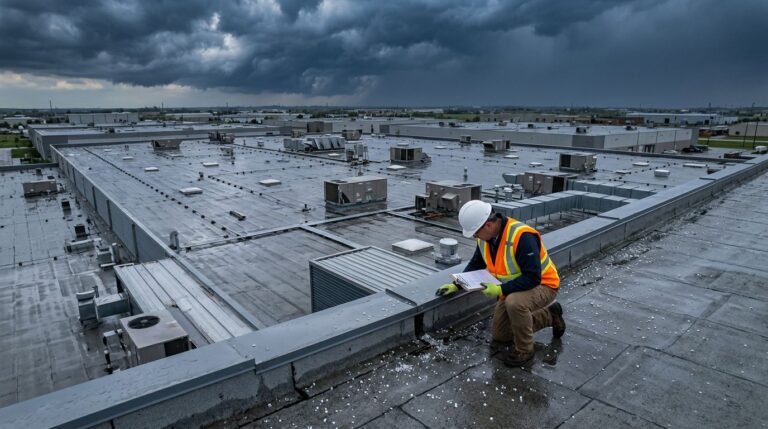
- Schedule a professional roof inspection, and ask for notes on seams, locks, flashings, and penetrations.
- Request a check of rooftop units, curbs, pipe boots, and edge metal, since hail often damages the “details” first.
- If you suspect water entry, book commercial roof leak detection St. Paul so you don’t chase stains in the wrong spot.
- Ask the professional roof inspector to document coating breaks, displaced fasteners, and any panel deformation that could trap water.
- If the report suggests your commercial roof needs repair, prioritize punctures vs denting, openings, seams, and flashing before cosmetic fixes.
Decide what action fits your building and budget
- If damage is cosmetic only, set a monitoring plan, then recheck after heavy rain or spring melt.
- If coating is broken, price targeted sealing or refinishing to slow corrosion.
- If hail hit multiple roof areas, plan combined scopes (for example, metal panel work plus commercial flat roof repair on adjacent low-slope sections).
- If panels, seams, or structural details are compromised, prepare for partial replacement or a full commercial roof replacement, based on age and overall condition.
- If you’re pursuing insurance, submit photos, the inspection report, and repair estimates promptly.
- Keep tenant communications simple: explain that you’re addressing performance first, then appearance.
- Evaluate financial impacts by comparing replacement cost coverage to actual cash value policies, while accounting for wind and hail deductibles.
If your policy mentions a cosmetic damage exclusion
- Review the insurance policy coverage wording with your risk team or legal counsel before assuming insurance policy coverage, whether commercial or like a homeowners insurance policy.
- Ask your roofer to separate “appearance-only” items from performance-related damage in the report.
- For context on how courts may treat hail dents and cosmetic damage exclusions, read this Minnesota-focused discussion of the Minnesota federal court ruling on cosmetic damage exclusions and metal roof dents.
Frequently asked questions about cosmetic hail damage on metal roofs
Will cosmetic dents cause rust faster in Minnesota?
They can, but only under certain conditions. If the hail impact cracked paint or exposed bare metal, moisture and road-salt air can speed up corrosion or rust, especially near eaves and gutters. On the other hand, a dent with an intact finish often stays stable for years. The inspection should call out coating breaks, not just dent count.
Can cosmetic hail damage affect a metal roof warranty?
Yes, sometimes. Many warranties focus on watertightness, while finish coat warranties cover manufacturing defects and paint system failures. If hail chipped the finish coat, a manufacturer may treat it differently than simple denting. Keep storm documentation and photos. Also, avoid unapproved touch-up products, since the wrong paint system can create adhesion problems later.
How do adjusters decide “cosmetic” vs “functional” on metal roofs?
Adjusters typically look for evidence that hail changed performance beyond UL 2218 impact resistance ratings: holes, fractures, displaced seams, loosened fasteners, or damaged flashing details. Some insurance policies also define cosmetic damage exclusion in endorsements, which impacts insurance policy coverage. Legal summaries can show how these terms get applied in real disputes regarding insurance policy coverage, like this overview, Dents Don’t Count: Court Clarifies Hail Damage Coverage, which discusses a Minnesota decision and the role of exclusions.
What if there’s no leak, but tenants complain about how it looks?
Treat it like a brand and asset issue, not a maintenance annoyance. First, confirm it’s truly cosmetic with a roof report, since a homeowners insurance policy might handle such claims under a hail damage waiver. Next, decide whether appearance affects leasing, signage visibility, or customer trust; a homeowners insurance policy might handle such claims differently based on policy terms. Sometimes a localized panel swap on high-visibility elevations solves the problem without touching the whole roof.
When appearance becomes a business risk
If your building is customer-facing, dented entry canopies and parapet caps can hurt curb appeal more than you’d expect, even when the roof still performs.
Should we coat or paint over a hail-dented metal roof?
Only after you confirm the roof is dry and stable. Roof surfacing over trapped moisture can cause bubbling and peeling, and it can hide future damage. If the goal is corrosion control, focus on prep quality and compatible materials. A contractor should test adhesion and confirm the roof surfacing system matches the roof’s finish type.
Cosmetic dents can feel like a small problem, like a fender ding on a fleet vehicle. Still, Minnesota weather has a way of turning small issues into expensive ones. Treat cosmetic hail damage metal roof findings from metal roof hail damage as a trigger for a performance check, then choose repairs that protect service life first and appearance second. Prioritize future risk vs present performance and structural integrity for steel or aluminum panels, regardless of roof slope or metal thickness gauge. If you want a clean plan, start with documentation, a functional inspection, and a scope that matches how your building actually operates while maintaining the functional barrier to elements.
Need a roof inspection in Saint Paul or the Twin Cities? Call Sellers Roofing Company at +1-651-703-2336 or schedule a free estimate. We are a black-owned, NMSDC-certified MBE roofing contractor with 9+ years experience.