Last updated: 2026-08-01 by Ted Sellers, Owner
Sometimes. In Minnesota, commercial insurance usually covers roof code upgrades only when a covered loss such as hail or wind makes that extra work legally required to complete the repair. If the upgrade is elective, age-related, or tied to wear and tear, the owner often pays the gap unless the policy adds ordinance or law coverage.
When This Applies
Covered claims that can trigger roof code upgrades in Minnesota
As of March 2026, Minnesota business owners have a stronger position than many assume. If storm damage affects part of a commercial roof, and current code requires added insulation, fastening, sheathing, or curb work to pass inspection, those costs may belong in the claim.
That matters in both commercial flat roof repair and full commercial roof replacement. Minnesota Statute 65A.10, along with a 2025 Minnesota Supreme Court ruling in Great Northwest Ins. Co. v. Campbell, supports payment for code-required work tied to a covered repair, even when some related components were not visibly damaged.
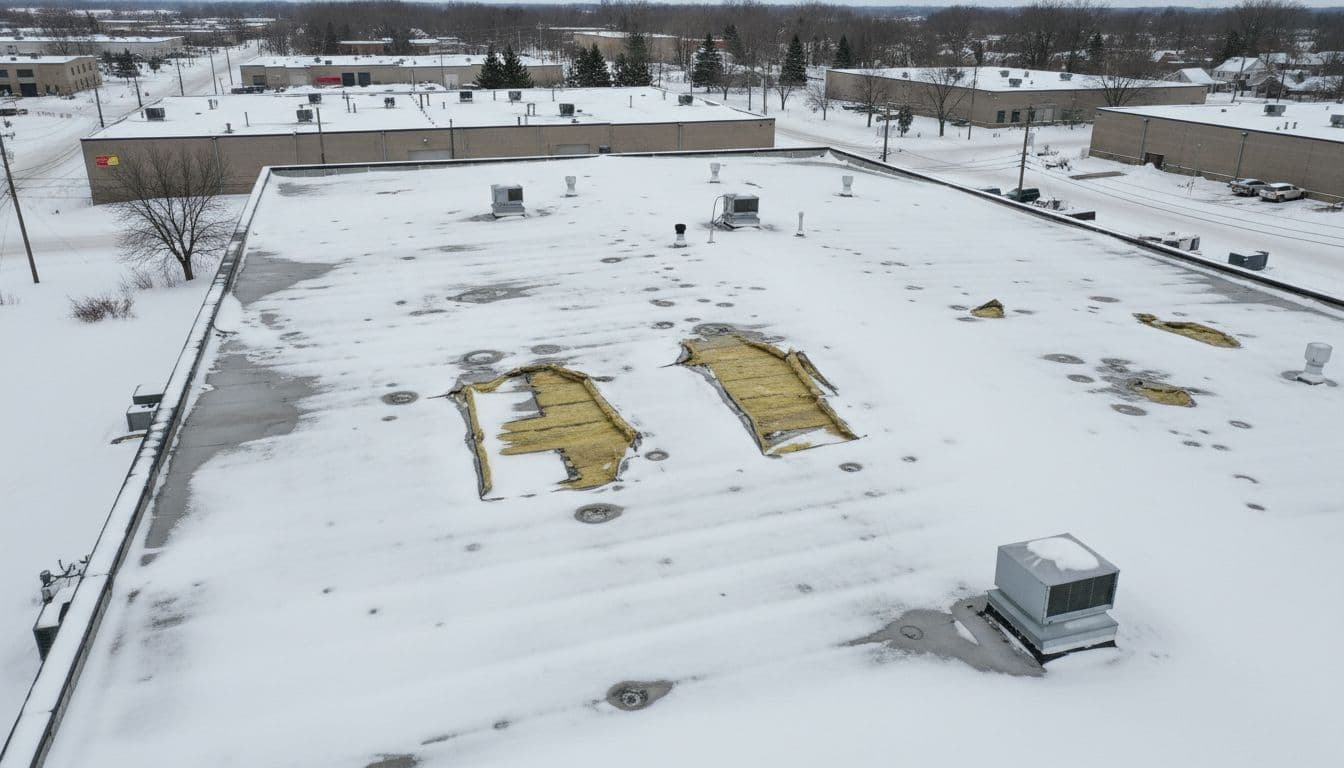
Use this quick comparison before you assume the claim will, or won’t, include code work.
| Scenario | Likely covered? | Why |
|---|---|---|
| Hail damages a TPO roof, and code requires thicker insulation during repair | Often yes | The repair cannot pass inspection without it |
| Old roof is replaced because it reached the end of its life | Usually no | There is no covered loss driving the work |
| Damaged roof section requires undamaged sheathing or curb work to install legal repairs | Often yes | The added work is part of completing the covered repair |
The key is simple: the upgrade must be required, not merely helpful.
If code-required work is necessary to finish a covered repair legally, it belongs in the claim discussion, not on a side invoice.
Minnesota’s code picture also changes over time. For example, the Minnesota DLI guidance on rooftop curbs and the commercial energy code shows how insulation and rooftop unit details can affect commercial roof scopes.
When insurance usually won’t pay
Insurance usually resists code upgrade costs when the roof problem comes from age, deferred maintenance, ponding that developed over years, or a voluntary retrofit. If the insurer says the damage is wear and tear, the code issue often becomes your problem, not theirs.
The same happens when an owner wants to improve the roof beyond what code demands. Better drainage, a new system type, or extra insulation above minimum standards may be smart, but they are often outside the claim. A contractor familiar with building code upgrades for MN commercial roofs can help separate required items from owner upgrades. For a broader claim framework, see this code upgrade coverage overview.
If only part of the roof was hit
This is where disputes grow. The insurer may want to pay for the damaged area only, while the city inspector may require connected work on adjoining sections so the final assembly meets code. That’s often the pressure point in roof code upgrades Minnesota claims.
Step-by-Step
Use this claim process before authorizing work
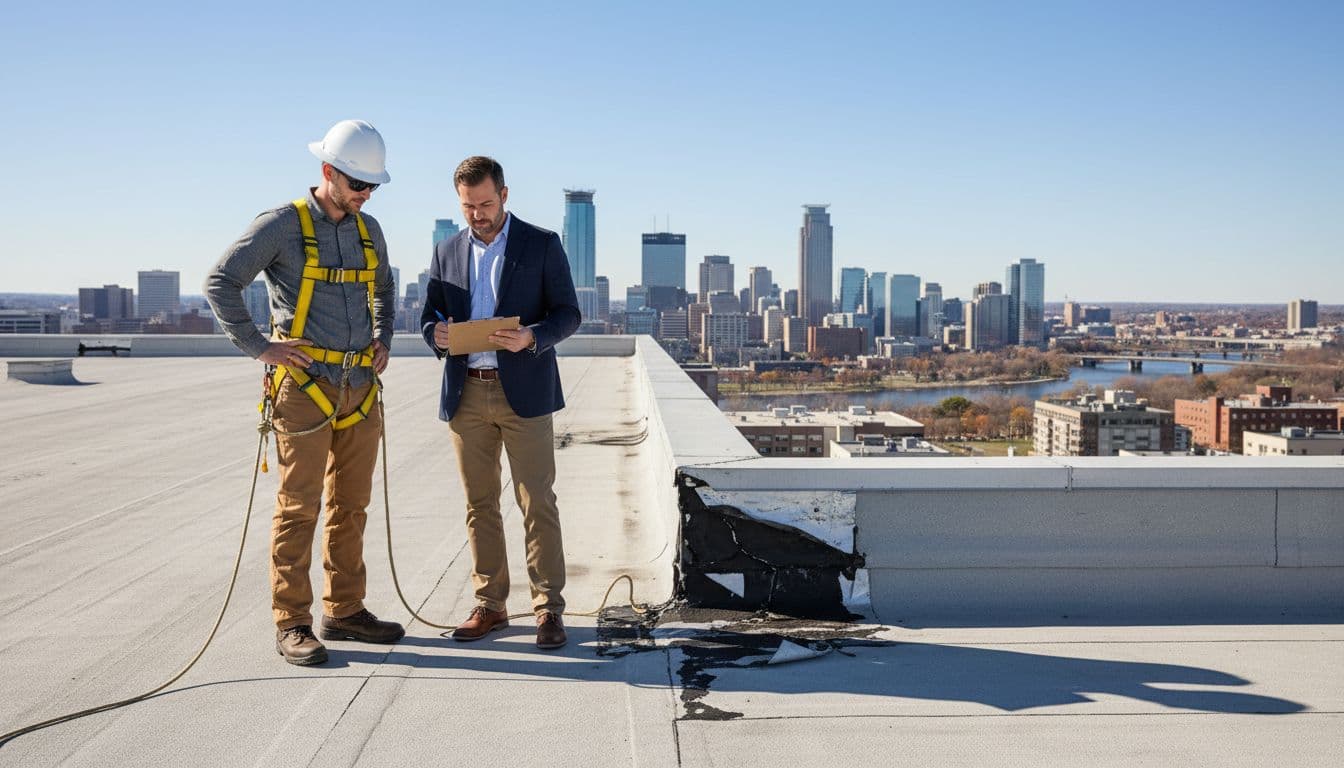
- Check the cause of loss first. Confirm the claim is for hail, wind, or another covered event. Then read the policy for ordinance or law wording, roof exclusions, cosmetic limits, and replacement-cost terms.
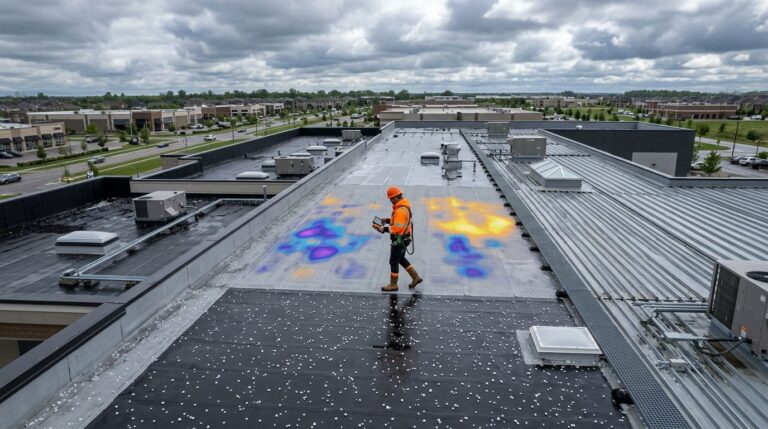
- Get a full inspection, not a drive-by opinion. Moisture, seam failure, saturated insulation, and hidden deck issues can expand the scope. This matters most when a commercial roof needs repair after a storm but the interior signs look minor.
- Ask for a line-by-line scope. Your roofer should separate storm damage from code-required work. Membrane, insulation, fastening, flashing, curbs, permits, and tear-off details should each appear clearly.
- Meet the adjuster on the roof. Photos alone miss a lot on low-slope systems. A joint inspection reduces arguments over wet insulation, damaged flashings, and whether the job is a repair or a larger section replacement.
- Verify permit requirements before work starts. If the city will require added insulation, curb changes, or attachment upgrades, get that in writing. Permit notes often carry more weight than a verbal opinion.
- Submit supplements fast if the first scope is short. When the insurer omits code items, send the revised estimate, inspection notes, photos, and permit support right away. The same process works whether the job ends in a patch, section rebuild, or full commercial roof replacement.
FAQ
What if the adjuster approves only a patch?
Don’t assume the patch scope is final. If current code or the permit reviewer requires more work to complete a legal repair, you can ask for a revised scope and supplement with documentation.
Does ordinance or law coverage still matter in Minnesota?
Yes. Minnesota law helps when code-required work is tied to a covered loss, but ordinance or law coverage can still fill gaps, raise limits, or cover added construction costs the base policy may not handle.
Where owners get caught
Some owners have the right argument but not enough coverage limit to pay the full difference.
Will insurance pay for a full commercial roof replacement?
Only sometimes. If storm damage is widespread, or if code makes partial repair impractical, a full replacement may be justified. If the roof is simply old, the insurer will usually not buy a new one.
Can I start repairs before the carrier decides?
You can do emergency protection to stop further damage. Tarping, temporary sealing, and water control are usually fine. Permanent work should wait unless the insurer approves it, or you risk a scope dispute.
How do I prove hidden water damage?
Use moisture maps, photos, test cuts, and written findings. Early professional leak detection for Minnesota commercial roofs can show trapped moisture and leak paths that a surface look might miss.
What if my roof was already old before the storm?
Age does not cancel a covered loss. Still, the insurer may argue the damage came from wear, not weather. Clear inspection records and storm-specific evidence matter more when the roof was already aging.
The short answer still holds: insurance may cover code work in Minnesota, but only when that work is tied to a covered loss and required by current code. The fight is rarely about the rule alone. It’s usually about proof.
Before you approve major roof work, line up the policy, the permit requirements, and the contractor’s scope. Roof code upgrades Minnesota claims go smoother when those three pieces match from day one.
Need a roof inspection in Saint Paul or the Twin Cities? Call Sellers Roofing Company at +1-651-703-2336 or schedule a free estimate. We are a black-owned, NMSDC-certified MBE roofing contractor with 9+ years experience.