Last updated: 2026-08-01 by Ted Sellers, Owner
Yes, you can often get a close match for faded asphalt shingles, but an exact match is rare on an older roof. The best results come from matching the shingle style first, then the closest color blend, and, when possible, using spare or donor shingles. For a small repair, the goal is a patch that blends from ground level and stops water entry.
When This Applies
This works on small shingle sections, not every commercial roof
This applies to business properties with a shingle-covered section, such as a mansard, entry canopy, office addition, or mixed-slope roof. Many commercial buildings do not have that setup. If the damaged area is TPO, EPDM, PVC, or modified bitumen, you need commercial flat roof repair, not shingle matching.
A patch also has to stay small. If only a few shingles blew off, cracked, or slipped, matching can make sense. If the deck is soft, flashing failed, or water spread under several courses, the job is no longer cosmetic.
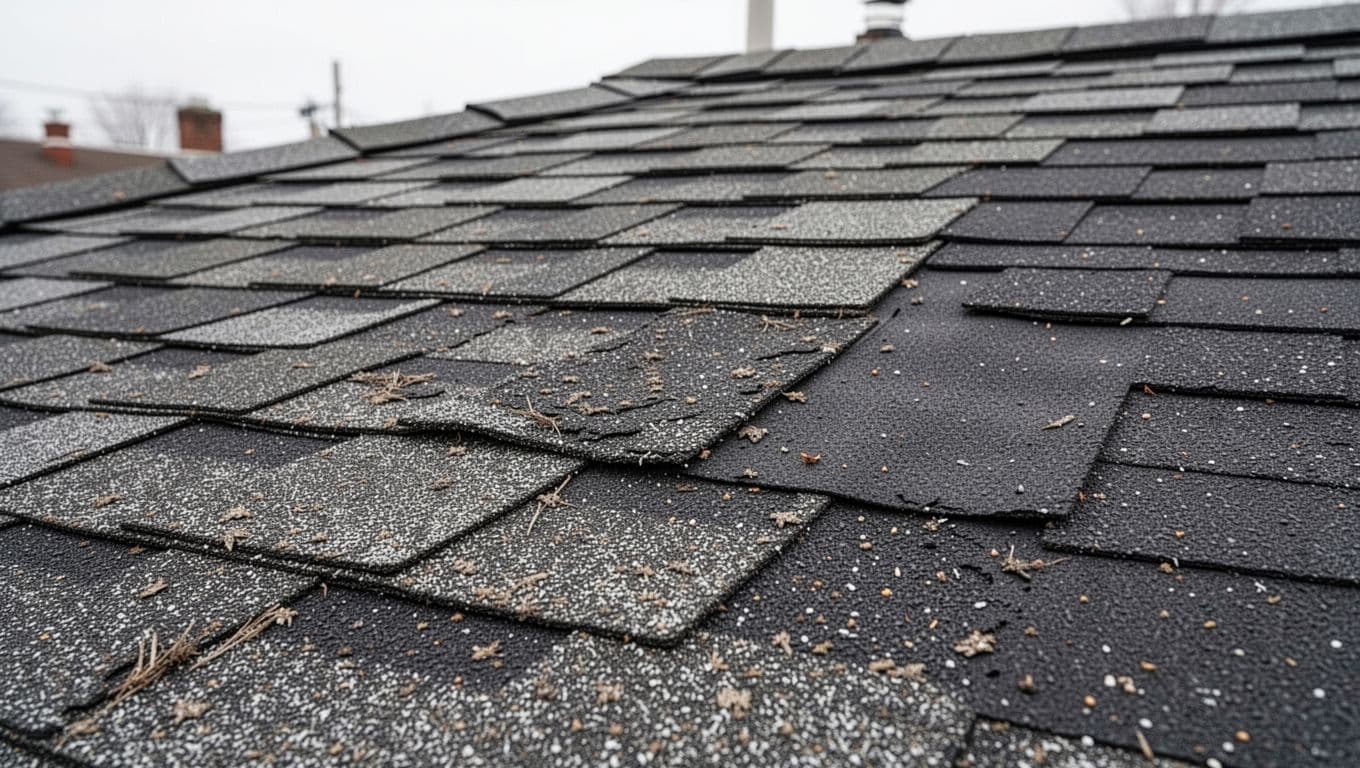
Faded asphalt shingles do not age evenly. South-facing slopes bleach faster. Shade can keep one section darker. Granule loss also changes how light reflects, so two shingles with the same original color can look different years later.
The real target is a repair that blends from normal viewing distance, not a factory-fresh color chip match.
Owners usually judge the result from the parking lot or sidewalk. That matters more than a hand sample under office lights.
When a close match still won’t look right
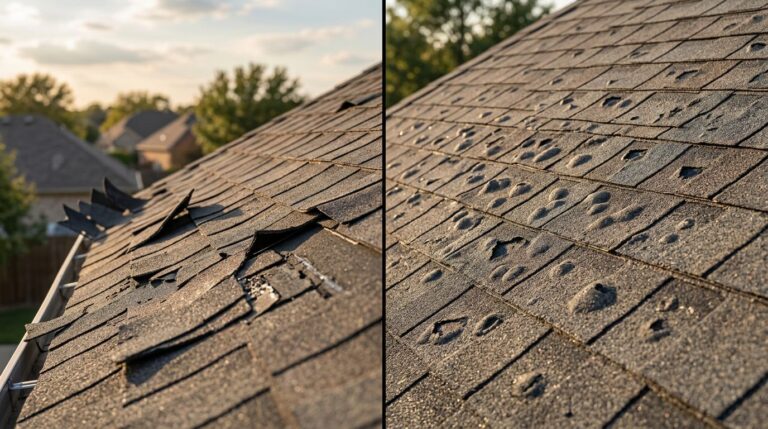
Some roofs are too far gone for a clean-looking patch. Brittle shingles crack during removal. Discontinued products leave no true replacement. In other cases, the color is close, but the profile is wrong, so the repaired spot still stands out.
Three-tab and laminated shingles, for example, do not blend well. Color names can mislead too, because manufacturers change blends over time.
If the damage started with a ceiling stain or active drip, find the source first. A missing shingle may be the symptom, not the cause. In that case, a commercial leak inspection helps separate a simple patch from a moisture problem.
Cases where repair stops making sense
When granule loss is widespread, several slopes look patchy, or the same area leaks again, commercial roof replacement often makes more financial sense than repeated small fixes.
Step-by-Step
How to get the closest match
- Confirm that the damaged section is actually asphalt shingles. Mixed-use buildings often have both shingles and membranes. If your commercial roof needs repair on a low-slope section, matching shingles is the wrong fix from the start.
- Remove one full shingle sample, if the roof still has enough flexibility to do that safely. The crew should check the brand, profile, exposure, and any bundle wrappers left from the original install. Spare bundles stored on-site are the strongest match available.
- Match the profile before the color. A shingle with the wrong thickness, shadow line, or tab pattern will catch the eye even if the color seems close. Shape usually gives away a repair faster than shade does.
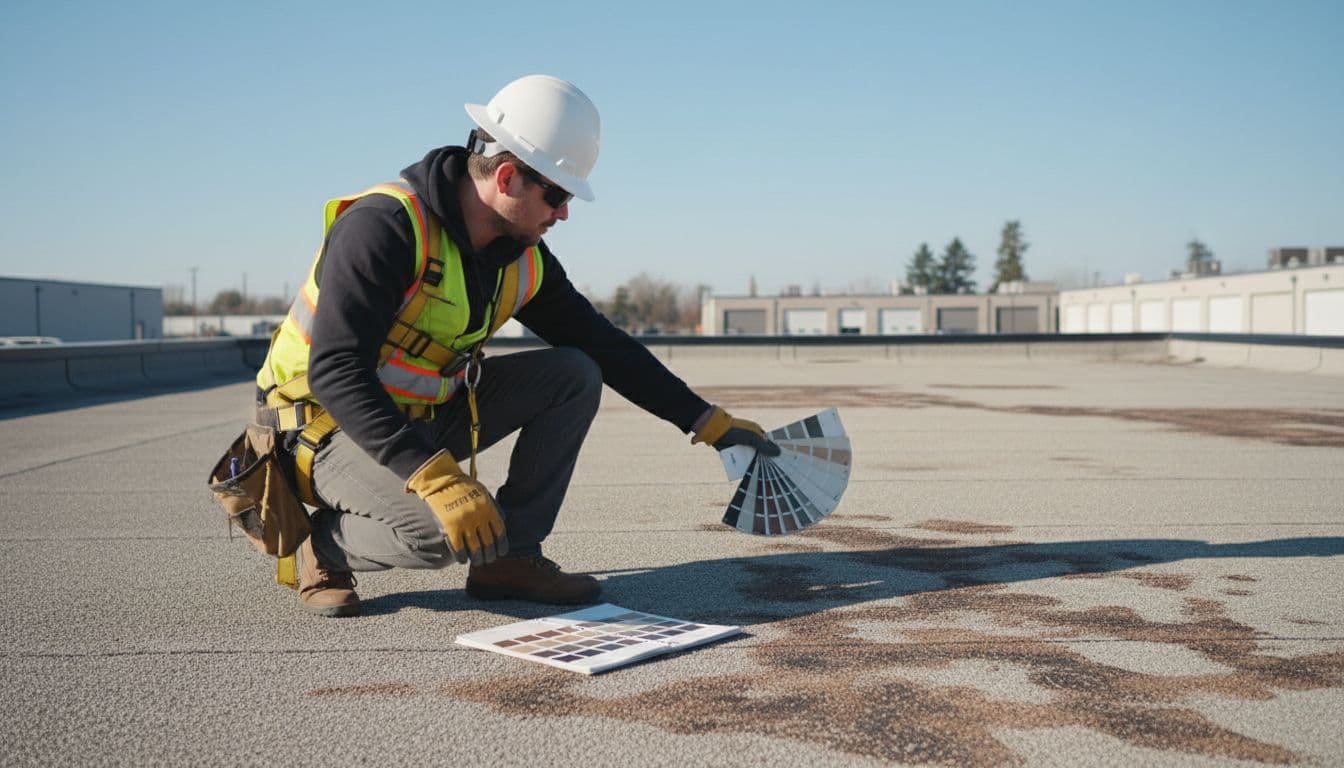
- Compare samples on the roof in daylight. Indoor lighting hides differences. Bring a few options onto the actual slope, then step back to ground level. Often, the best match is not the darkest or newest-looking sample.
- Use donor shingles if appearance matters most. A roofer can sometimes move weathered shingles from a hidden rear slope and install newer material in the low-visibility area. That keeps the visible section looking more consistent.
- Widen the repair area when a tiny patch would create a dark square. Replacing one or two shingles in the middle of a faded field often looks worse than replacing a slightly larger section. The eye notices hard edges and abrupt color breaks.
- Fix the cause, not only the surface. Faulty flashing, exposed fasteners, or poor ventilation may have shortened the life of the shingles. A contractor with Saint Paul commercial roofing expertise can tell you whether a blend repair is realistic or whether a larger scope is smarter.
Final Thoughts
Matching old shingles is possible, but “good enough to disappear from normal view” is the standard that matters. Business owners usually want two things, a dry roof and a repair that does not call attention to itself.
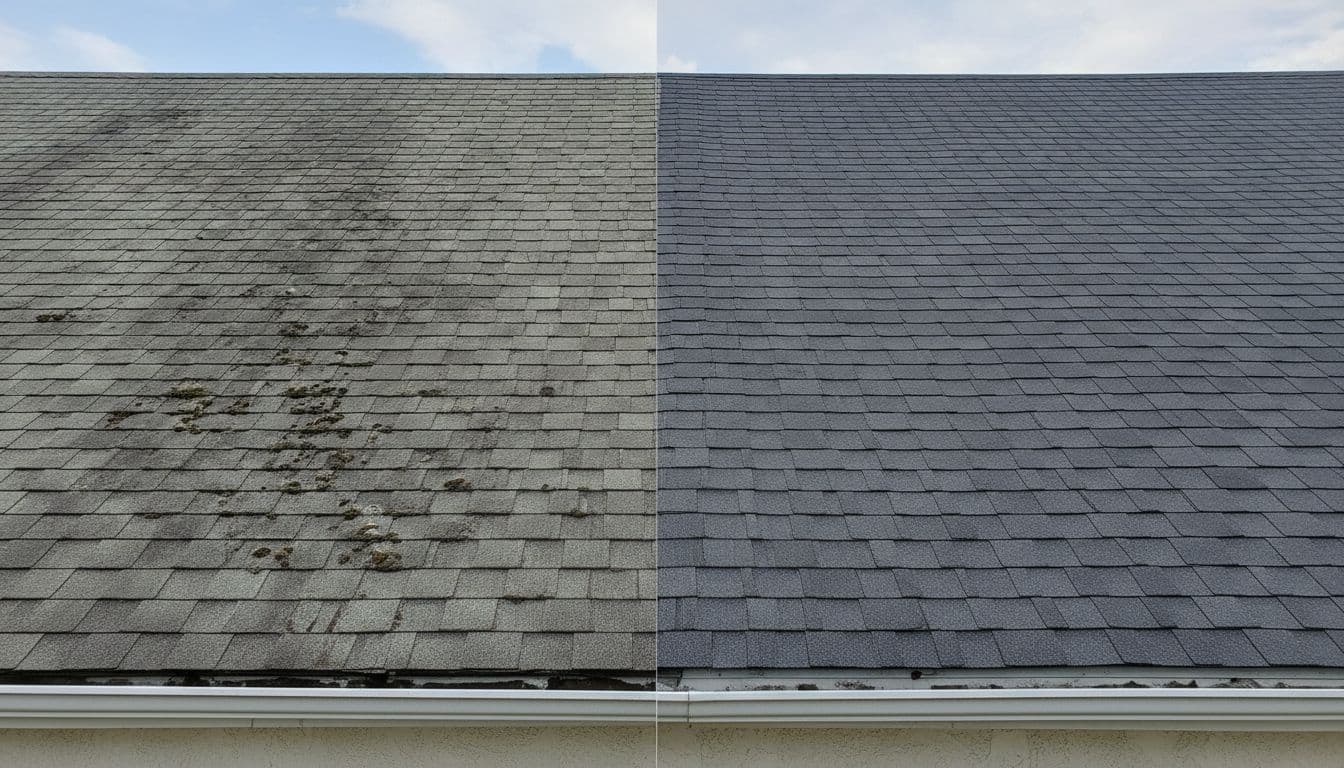
If the roof is brittle, heavily faded, or patched in several places already, a larger repair or replacement may be the cleaner answer. If the damage is isolated and the contractor matches profile, color blend, and weathering well, a small patch can work.
FAQ
Will new shingles fade enough to blend later?
Usually, yes, but not on a fixed timeline. Sun, shade, roof pitch, and ventilation all affect fading. A patch that looks slightly darker now may soften over time, but it may never become invisible.
Can a roofer paint or coat shingles to force a match?
This usually creates more problems
Painting shingles can change how they shed heat and weather. It also tends to look uneven after a short time. Most owners get a better result from a close blend match or donor shingles.
What if the repair area is above the main entrance?
That raises the appearance standard because people see it up close every day. In that case, a contractor may suggest a larger blended repair, donor shingles, or replacing a full slope section instead of patching a few pieces.
Should I replace one whole slope instead of a few shingles?
Sometimes, yes. If the shingles are discontinued, the area is highly visible, or the roof is near the end of its service life, replacing one slope can look better and reduce repeat labor.
Can insurance pay if the new shingles do not match?
Policy wording decides this
Some policies pay only for direct physical damage. Others may address visual mismatch when matching materials are unavailable. The answer depends on your policy language, local rules, and whether the original shingle line is still made.
Need a roof inspection in Saint Paul or the Twin Cities? Call Sellers Roofing Company at +1-651-703-2336 or schedule a free estimate. We are a black-owned, NMSDC-certified MBE roofing contractor with 9+ years experience.