Last updated: 2026-05-26 by Ted Sellers, Owner
Hail damage is bad for a roof because it breaks the roof’s protective surface, then water and sun speed up wear until small problems turn into leaks, rot, and early replacement. If you’re asking, Why Is Hail Damage Bad for a Roof, the simple answer is that roof hail damage weakens the materials that keep your home dry, even when you don’t see a leak right away.
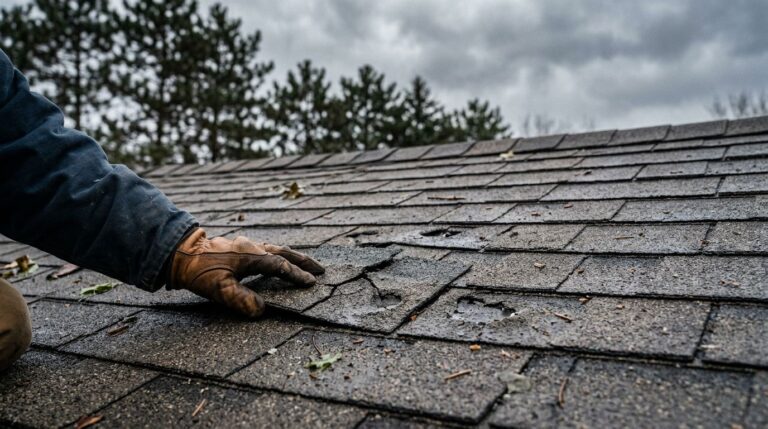
In plain language, hail damage means bruising (soft spots), cracks, granule loss on shingles, dents in metal, and sometimes punctures. Those hits strip away the top layer that’s supposed to shed water and block UV rays. Once that shield is compromised, shingles can dry out, split, and lose their seal, and water can start working its way under the system.
This matters in Minnesota, especially around the Twin Cities, where hail storms can show up fast and vary block by block. Many homeowners don’t notice trouble until weeks or months later, when the sun bakes exposed areas and the next hard rain finds a path inside.
In this guide, you’ll learn what hail does to common roofing materials, why leaks often show up later, and what to do next, including when it’s smart to schedule a documented inspection like a Hail Damage Roof Inspection St. Paul.
Why hail damage is bad for a roof, the short answer and the real reasons
Why Is Hail Damage Bad for a Roof? Because it strips away the roof’s protective surfaces and creates hidden weak points. After the storm, sun, heat, rain, and freeze-thaw cycles take over and turn “small” hail marks into faster aging, loosened shingles, and leaks that show up later. In other words, roof hail damage is often less about one dramatic hole and more about slow failure that spreads.
It knocks off protection, then sun and rain do the rest
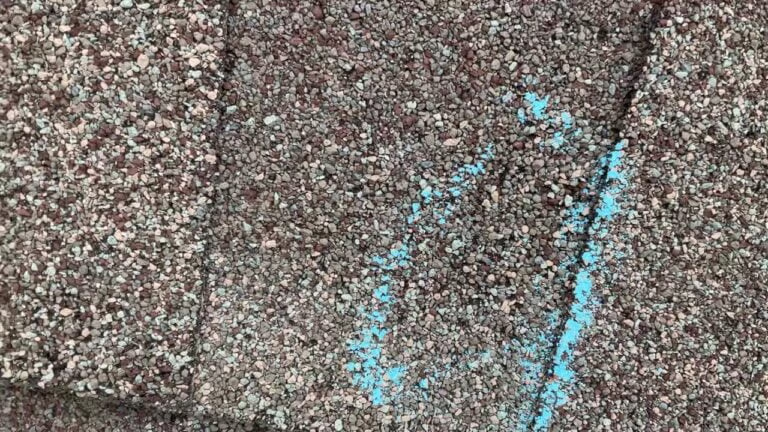
On an asphalt shingle roof, the top layer you see is covered in gritty mineral granules. Those granules are not decoration. They’re the roof’s sunscreen and armor. When hail hits, it can knock granules loose and scuff the shingle surface, even if you don’t see a clear “missing patch” from the yard.
A helpful comparison is a nonstick pan. If you scrape off the coating, the pan still looks like a pan, and you can still cook on it, but it won’t perform the same. It sticks, it wears faster, and it degrades with every use. Granule loss is similar. Once that protective layer is thinned out, UV rays bake the exposed asphalt, drying out the shingle and speeding up brittleness. Rain then works on the weakened surface, washing away more granules and widening tiny defects.
This doesn’t only apply to asphalt shingles. Hail can:
- Fracture tile (clay or concrete) in hairline ways that are hard to spot from the ground.
- Crack or craze slate and break corners, especially on older, more brittle pieces.
- Dent metal panels (sometimes cosmetic, sometimes not) and stress fasteners or seams depending on the system.
- Bruise composite shingles by compressing the mat and top layer without an obvious puncture.
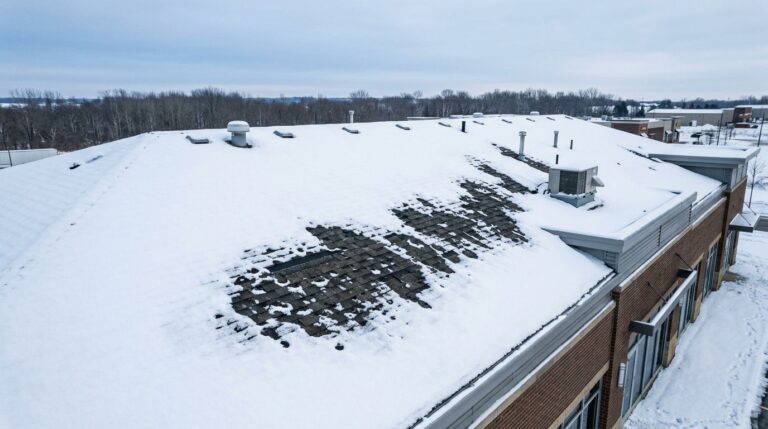
One reason roof hail damage causes so many surprises is that the worst harm can be “quiet.” From the street, the roof may look fine. Up close, the story changes: bare spots, softened impact zones, and damaged edges that are now aging faster than the rest of the roof. Industry discussions on how shingles age and lose water-shedding ability back up this idea that surface damage can reduce service life even without immediate leaks, as described in an IIBEC overview of asphalt shingle damage and aging.
It creates weak spots where water can sneak in later
A roof doesn’t need a gaping hole to leak. It just needs a path. Hail creates those paths in subtle ways, and that’s why you can have no leak today but still have a real problem.
Common “sneak-in-later” weak spots include:
Hairline cracks: A shingle or tile can crack so slightly that it blends into the texture. After a few hot days and cool nights, the crack opens and closes, and water starts to work into it.
Bruised shingles: Bruising happens when hail impacts compress the shingle layers. The spot can feel soft, and the granules may look embedded. Water might not get in right away, but the bruised area is weaker and more likely to split later.
Loosened seals: Asphalt shingles rely on adhesive strips to stay sealed. Hail impacts and wind-driven shaking can weaken that seal. Once it lifts, wind-driven rain can push under the shingle, especially on lower slopes.
Punctures and torn details: The roof’s “busy areas” take a beating. Ridge caps, pipe boots, roof-to-wall flashing, and vents can get cracked or punctured. Even small hits around a vent flange or ridge cap can become a leak point when the next heavy rain hits at the right angle.
Delayed leaks happen because water often has to build up enough volume or hit the right direction. A light rain might not show anything. A sideways storm, ice dam conditions, or a spring thaw can. The water may also travel along decking or framing before it shows up inside, so the stain on your ceiling is rarely directly below the entry point.
If you want a more technical explanation of why even smaller hail events still matter for asphalt shingles over time, research is increasingly focused on “sub-severe” hail and cumulative damage mechanisms, including granule loss and fracture risk, as outlined in this Frontiers in Materials study on asphalt shingle hail risk.
It shortens roof life and can force an early replacement
Most homeowners plan on a roof lasting “a couple decades,” not “until the next storm season.” In plain terms, typical life ranges often look like this (with normal weather and good ventilation):
- Asphalt shingles: often around 15 to 30 years (varies by shingle grade and install quality)
- Metal roofing: often 40 years or more
- Tile and slate: often 50 years or more (but repairs can be more specialized)
Hail can cut that timeline fast because it doesn’t just cause one type of damage. It creates compounding problems that feed each other.
Here’s what that looks like in real life:
A storm knocks granules off a few slopes. Those exposed spots dry out and crack sooner. Cracked shingles lose flexibility and don’t lay as flat. Once shingles aren’t lying flat, wind can get under them more easily. Now you’re not only dealing with hail marks, you’re also dealing with tabs that lift, nails that loosen, and edges that are more likely to tear off in the next high-wind event. Each “small” repair becomes harder to match and harder to keep watertight, especially if multiple sections of the roof are aging at different speeds.
It’s also common for hail to concentrate damage on certain facets of the roof. South and west slopes tend to see more heat and UV. If hail strips protection there, those slopes can look “old” years earlier than the rest. That uneven aging is one reason a roof can move from “repairable” to “replacement makes more sense” sooner than expected.
The core point is simple: roof hail damage often turns a long, steady aging process into a faster slide. If you keep patching symptoms while the surface is still deteriorating across a wide area, the roof can reach a tipping point where you are paying for repeated repairs but getting less real protection each season.
It can raise costs fast, inside the house too
When people hear “roof damage,” they picture shingles. The bigger expense can be what happens after water gets past the roof system, even in small amounts.
Once moisture enters, costs can expand into parts of the home you don’t see every day:
- Insulation can lose performance when it gets wet, which can raise heating and cooling costs.
- Drywall can swell, soften, stain, and crumble at seams.
- Paint can bubble and peel, even from slow leaks.
- Flooring (especially hardwood and laminate) can warp or cup if moisture migrates down walls.
- Trim and framing can start to rot if the leak becomes repeat traffic.
Mold is another practical concern. It doesn’t require a flood. It requires moisture plus time. A slow leak into an attic corner or behind a ceiling can create the kind of damp environment that turns a “roof fix” into cleanup and rebuild work.
There’s also a basic safety angle that homeowners sometimes overlook: water and electricity don’t mix. Moisture near light fixtures, bathroom fans, attic wiring, or junction boxes is a good reason to act quickly and have the area checked.
Delaying usually costs more because damage spreads quietly. The entry point might be small, but the wet area can expand with each rain. By the time you see a ceiling stain, you may be dealing with more than cosmetic repair. If you’re weighing whether to address it now or later, a homeowner-focused overview like this guide to fixing a hail-damaged roof does a good job explaining why early documentation and repairs help prevent the “small problem, big bill” cycle.
What hail does to different roof types (and why some damage is easy to miss)
Roof hail damage is tricky because each roofing material fails in its own way. Some roofs show obvious dents or broken pieces right away. Others look “fine” from the ground while the real damage is hiding in the surface layer, seams, or underlayment. That hidden damage is a big reason Why Is Hail Damage Bad for a Roof even when you do not see a leak the next day.
The goal after a storm is not just spotting the dramatic hits. It is understanding what changed in the roof’s protective system, and where water can start winning over time.
Asphalt shingles: granule loss, bruising, and exposed asphalt
Asphalt shingles are built like a layered shield. The gritty top layer is made of mineral granules, and those granules do several jobs at once: they protect the asphalt from UV rays, add fire resistance, and help the shingle shed water. When hail hits, it can knock granules loose or drive them into the shingle. Either way, the shingle loses protection.
Bare spots matter because exposed asphalt dries out faster in sun and heat. Think of it like a sunburn on your roof. It might not leak today, but it ages faster than everything around it. That uneven aging is where cracking starts, especially after freeze-thaw cycles and summer heat.
Another common problem is bruising. A bruise is an impact spot where the shingle mat and asphalt are compressed. It can look like a dark mark, and it often feels soft when pressed. Bruised areas are weak points. As the roof warms and cools, those weakened spots can split into cracks, and cracks are how water begins to move under the shingle course. Guides like Progressive’s hail damage signs also call out granules and cracking as common clues homeowners can notice.
Hail can also mess with the shingle’s self-sealing strip (the adhesive line that helps shingles bond together). Even if the shingle is not torn, an impact can loosen the seal or make tabs easier to lift in wind. Once tabs lift, wind-driven rain can push uphill, and that is when “no leak” turns into a ceiling stain weeks later.
Clues you can often spot without getting on the roof include:
- Granules in downspouts or at splash blocks: After a storm, check gutter outlets for sand-like grit.
- Dark spots or “bald” patches: These are areas where granules are missing or embedded.
- Uneven texture on a slope: A roof can look mottled or rougher where impacts concentrated.
- Soft hits you cannot see from the yard: Hail can bruise shingles without leaving a clean crater.
If you are comparing a storm mark versus a manufacturing issue, the “bruise versus blister” confusion is real. A helpful explanation of documentation differences is in this bruising vs blistering overview. The key homeowner takeaway is simple: if the protective surface is compromised, roof hail damage can shorten shingle life even before the first obvious leak.
Metal roofs: dents, bent seams, and fastener problems
Metal roofs usually take hail better than standard shingles, but they are not “hail-proof.” The big misunderstanding is assuming every dent is purely cosmetic, or assuming dents never matter. The truth depends on where the dent is and what type of metal system you have.
Cosmetic dents are the ones most people picture: shallow dimples in flat panel areas where the coating is still intact, seams are tight, and water pathways are unchanged. Those dents can still affect curb appeal, but they might not create a leak by themselves.
Functional damage is different. What matters most after hail is the roof’s connection points and water-shedding details:
- Seams and locks: Standing seam or interlocking systems rely on precise folds. A hard hit near a seam can distort the lock and reduce its ability to resist wind-driven rain.
- Panel laps and end laps: If hail deforms the edge of a lap, capillary action and wind pressure can pull water into a joint.
- Flashing edges: Metal flashing at walls, chimneys, and transitions can bend or “kick up,” creating a gap that was not there before.
- Fasteners and washers: On exposed-fastener metal roofs, hail can loosen screws, crack neoprene washers, or enlarge fastener holes. That is a direct path for water.
Large hail can also dent a panel in a way that creates a slight “dish” in the metal. That can hold water longer than intended. Standing water is not normal for steep-slope metal roofing, and it can speed up sealant wear at penetrations.
Another easy-to-miss issue is coating damage. If hail chips paint or protective finish at a cut edge or fastener head, corrosion risk goes up, especially if the roof is older or the coating was already thin.
If you want a straightforward explanation of what inspectors look for on metal, InterNACHI’s metal roof inspection guidance does a good job summarizing hail concerns across different metal roof types.
Bottom line: dents in the middle of a panel may be mostly cosmetic, but dents at seams, penetrations, or fasteners can change how the roof sheds water. That is one more reason Why Is Hail Damage Bad for a Roof is not a one-size-fits-all answer. On metal, the details decide whether roof hail damage stays visual or becomes a leak.
Tile and slate: cracks that turn into broken pieces
Tile and slate roofs can last a long time, but they can also be unforgiving when struck. These materials are brittle. They do not “give” like asphalt. A hailstone can create a hairline crack that is hard to see from the ground, and that crack can later turn into a broken corner or a full split.
The danger is not only the broken tile itself. It is what happens under it. Tile and slate systems rely on an underlayment as the true waterproofing layer, with the tile acting as the main shed surface. When one tile cracks, it can:
- expose underlayment to direct sun (which speeds up aging),
- allow more water to reach the underlayment in concentrated streams,
- route water toward nail holes, laps, or weak spots,
- and in colder climates, let water freeze in cracks and break the piece wider.
One cracked tile can also change how water flows across the roof. Instead of running cleanly down the surface, water can slip under the tile course and reach the deck in places the roof was not designed to handle long-term wetting.
Hail damage on slate can include cracks, punctures, or broken edges, and some pieces can look “almost fine” until you are close enough to see the fracture line. Resources like InterNACHI’s slate roof inspection overview explain how slate can break from impacts, even when the roof otherwise looks durable.
A practical warning for homeowners: do not climb on tile or slate to inspect it. These roofs can crack under foot traffic, even when they are in good condition. After a hailstorm, the risk is higher because pieces may already be fractured and ready to snap. A slip hazard is also real, since tile surfaces can be dusty or slick, and broken pieces can shift.
If you are trying to gauge severity from the yard, look for new fragments on the ground, tile chips in gutters, and isolated “fresh” color spots where a surface layer flaked off. But do not assume “only one crack” means “only one problem.” With tile and slate, small cracks are often the first chapter, not the last.
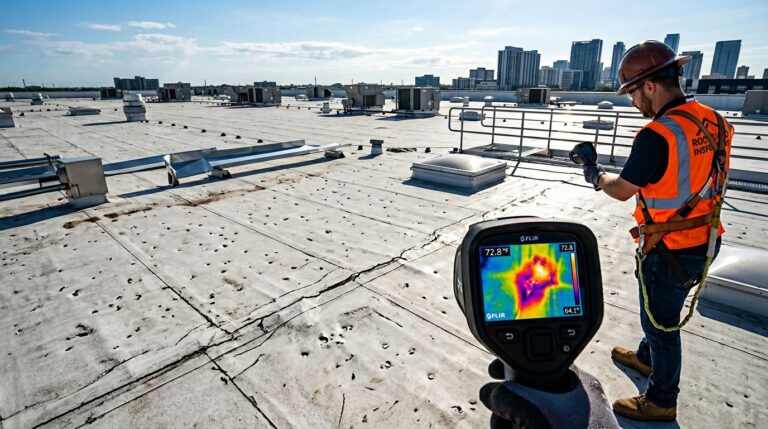
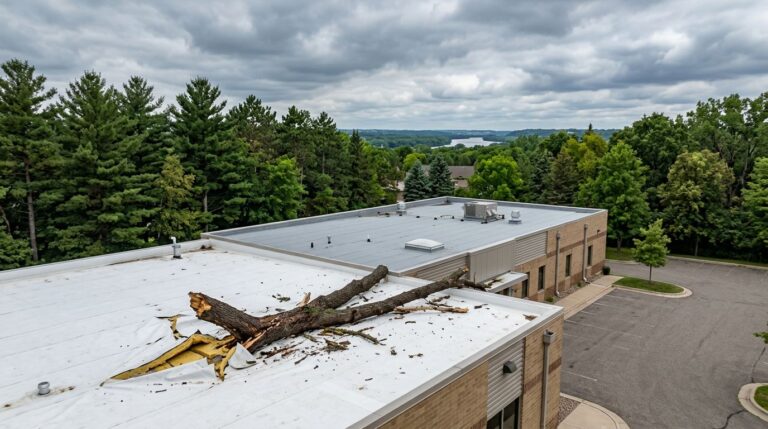
Flat and low-slope roofs: punctures and membrane bruises that leak slowly
Flat and low-slope roofs (common on many commercial buildings and some homes) behave differently because they do not shed water as fast. Many use single-ply membranes such as TPO, along with other membrane systems. These roofs can be tough, but hail can still damage them in ways that are easy to miss until water has time to work.
Two hail problems show up often:
1) Punctures and cuts: Larger hail, or hail driven by strong wind, can puncture a membrane. Sometimes the hole is obvious. Sometimes it is a tiny cut near a seam, edge, or penetration that slowly opens with temperature swings. Once water gets under a membrane, it can travel and show up far from the entry point.
2) Membrane bruising and seam stress: Even when hail does not punch through, it can bruise the membrane or compress insulation beneath it. That impact can stress seams and adhesive points. Over time, seams can loosen or become more likely to split during thermal movement.
One reason low-slope roof hail damage is so frustrating is the delay. Water can collect above a compromised area, then migrate laterally before it drips inside. By the time you see a stain, the wet area can be much larger than you expect.
Drainage makes all of this worse. After hail, it is common to find:
- clogged drains or scuppers from storm debris and granules,
- displaced ballast on ballasted systems, exposing more membrane to UV and impacts,
- dented or damaged rooftop accessories that direct water the wrong way.
A roof can be “mostly okay” and still leak because a drain clogged and ponding water found the one bruised seam. That slow leak can soak insulation, which reduces energy performance and can lead to more repairs later.
For a deeper, plain-English look at impact mechanisms on single-ply roofs, this overview of TPO impact damage research highlights why hail can cause damage without a dramatic visible hole.
With flat roofs, the takeaway is simple: roof hail damage often shows up as small breaches and stressed seams, then leaks appear later because water sits longer and travels farther. That delayed timeline is exactly why inspections after hail are so important, even when interior ceilings still look perfect.
When hail damage matters most, and when it might not be a big deal
After a storm, it’s tempting to look up from the driveway, see no missing shingles, and move on. But Roof Hail Damage is one of those problems that can hide in plain sight. The real question is not “Do I see dents?” It’s “Did the storm change how my roof sheds water and handles sun, heat, and cold?”
Use the guide below to sort urgent situations from the ones that may be mostly cosmetic. Either way, if you’re asking Why Is Hail Damage Bad for a Roof, the answer usually comes down to one thing: hail can weaken the protective layers, then normal weather finishes the job over the next few months.
You should take roof hail damage seriously if any of these are true
If even a few items on this list match what you’re seeing, treat it as a real risk, not a “wait and see.” You don’t need to climb on the roof to do these checks. Most are visible from the ground, in the yard, or inside the attic.
- Hail size and wind were significant: If hail was around the size of a nickel or larger, or the storm came with strong gusts, impacts and lifted shingle edges become more likely.
- You see fresh hits on gutters, downspouts, siding, or window wraps: Hard surfaces act like a “storm report” for your house. If they’re dented, your roof probably took hits too.
- Granules are collecting where they shouldn’t: Look for sand-like grit in downspout elbows, at splash blocks, or in gutter cleanouts. A sudden spike in granules after a storm often means the shingle surface took damage.
- Missing shingles, lifted corners, or torn tabs: Any missing piece is an open invitation for wind-driven rain. Even one lifted corner can funnel water the wrong direction.
- Attic clues show up: Damp insulation, dark spots on decking, rusty nail heads, or musty smells can mean moisture is getting past the roof system, even if ceilings still look fine.
- Your roof is older or already worn: An older roof has less “flex” left. Hail that a newer roof might shrug off can fracture a brittle shingle faster.
- You’ve had prior storms in the last 1 to 3 years: Hail damage can be cumulative. A roof that was “mostly okay” last time can tip into real failure after the next event.
- Trees and shade make damage hard to spot: Heavy tree cover can hide bruising and granule loss. It also drops debris that can clog gutters, backing water up under edges after storms.
If you’re unsure whether marks are hail or something else (blisters, foot traffic, age wear), it helps to compare symptoms with a focused guide like hail damage vs other roof problems.
Cases where damage may be mostly cosmetic (but still worth checking)
There are times when hail marks look alarming but don’t change how the roof sheds water, at least not right away. The catch is that “cosmetic” is not the same as “ignore it.” It means the roof may still function today, but you should confirm the impact didn’t affect seams, fasteners, coatings, or the shingle mat.
A few scenarios that are more likely to be mostly cosmetic:
Small dents on thick metal panels, away from seams and edges. If you have a heavier-gauge metal roof and the dents are shallow, not near locks, panel laps, trim, ridge, or penetrations, the roof may still be watertight. The key is location. A dent in the flat field is one thing, a dent that distorts a seam is another.
Impact-resistant shingles with no granule loss or mat fracture. Some shingles are built to take more abuse. If close inspection shows no bare spots, no cracked corners, no soft bruises, and no granule shedding, the storm may not have caused functional damage. (You still want a trained eye, since bruises can be subtle.)
Hail that clearly hit softer surfaces but spared the roof. Sometimes hail is small, partly melted, or short-lived. You may see pock marks in soft landscaping, but nothing on gutters, vents, or other hard roof components. That pattern can point to a lower-risk event.
Still, keep a healthy caution flag up. Cosmetic today can become functional later if:
- Paint or protective coating cracks on metal, which can invite rust around fasteners and cut edges.
- Fasteners loosen after repeated vibration from hail plus wind, creating tiny entry points over time.
- Micro-fractures grow with temperature swings, turning “fine this season” into “leaking next season.”
This is a big part of Why Is Hail Damage Bad for a Roof. Even when hail doesn’t punch a hole, it can shorten the life of the materials that keep water out.
Why “it’s not leaking” is not a reliable test
No leak does not mean no damage. It often means the roof is still “holding on,” at least under today’s conditions. Roofs are layered systems, and water can take a long, sneaky route before it shows up inside.
Here’s how homeowners get fooled:
Water doesn’t always drip straight down. Rain can enter high on the roof, travel along the underside of shingles or flashing, run along the roof deck, then finally drip at a seam or light fixture far away. By the time you see a stain, the entry point might be nowhere near it.
Underlayment can mask problems for a while. Many roofs have underlayment that acts like a backup skin. After hail, that layer might keep water out temporarily even if shingles are bruised, cracked, or degranulated. That sounds reassuring, but it can delay the warning signs until the underlayment ages, tears, or gets saturated.
Minnesota weather can pry open small defects later. In Saint Paul and the Twin Cities, you can get warm afternoons and freezing nights in the same week. When water slips into a tiny hail crack, it can freeze, expand, and widen the crack. Then spring melt and wind-driven rain find the new gap. Add snow load, ice, and shifting roof temperatures, and a hairline fracture can become a real leak path by the next season.
A good way to think about it is a windshield chip. The glass might look “fine” today, but one cold snap or pothole later, that chip spreads. Roof hail damage works the same way. Waiting for a leak is like waiting for the crack to cross your whole windshield. By then, the fix is rarely small.
Step-by-step: what to do after a hailstorm to protect your roof and your wallet
A hailstorm can leave Roof Hail Damage that looks minor from the street but gets expensive later. The goal in the first 24 to 72 hours is simple: stay safe, capture proof while it’s fresh, stop water from getting in, and line up a real inspection before small problems grow. Think of it like a windshield chip, if you document and fix it early, you avoid the full crack later.
Step 1: Check for safety issues first, then do a ground-level walkaround
Start with safety, not the roof. After a storm, the hazards are often at eye level.
Watch for downed or sagging power lines, damaged service masts, and tree limbs resting on lines. If you see anything suspicious, keep your distance and call the utility company. Also treat wet decks, patios, and grass as slick surfaces, especially if hail is still melting. A fall can cost more than any shingle repair.
Once it’s safe, do a slow walkaround from the ground and look for “hard-surface clues.” Hail often tells on itself by denting the softer metals and vertical surfaces first. From the yard or driveway, check:
- Gutters and downspouts for dents, bends, and fresh scuffs (especially on the side the storm came from).
- Fascia, soffit, and siding for peppered impact marks.
- Window screens for tears or pushed-in mesh (a common sign hail had enough force to damage shingles).
- Outdoor AC fins for dings (another quick “storm intensity” hint).
- Shingle debris in beds, on patios, or near downspout exits.
If you have binoculars, use them to scan roof planes, vents, and ridge areas without leaving the ground. Avoid climbing a ladder if you’re not trained. Wet rungs, loose granules, and damaged shingles make roofs unpredictable right after hail.
Step 2: Document everything in a way that helps later
Good documentation does two things: it supports your insurance claim, and it keeps contractor quotes honest because everyone is working from the same visible facts. It’s also one of the simplest ways to protect your wallet after Roof Hail Damage.
Use a basic plan you can finish in 15 to 30 minutes:
- Wide shots of each side of the home (front, back, left, right), then a wide shot of each roof slope you can see.
- Close-ups of collateral damage like gutter dents, downspout hits, damaged screens, and siding marks.
- Include scale in close-ups (a coin, tape measure, or even your finger) so dents and impacts don’t look “tiny” in photos.
- Capture timestamps by keeping your phone’s date/time on, and take a screenshot of the storm alert or local weather summary the same day.
- Save receipts for any temporary materials (tarps, plastic, shop vac rental, dehumidifier). Many policies require you to prevent more damage, and receipts help.
Create one folder on your phone or computer called “Hailstorm, (date)” and keep everything there: photos, videos, notes, and names of anyone you spoke with. If you want a neutral overview of what inspectors and insurers look for, see the NRCIA hail damage inspection and insurance guide.
Step 3: Look inside for early leak clues
This step is where a lot of homeowners save real money. Exterior hail marks are one thing, but interior moisture is what turns Why Is Hail Damage Bad for a Roof into drywall repairs, insulation replacement, and mold cleanup.
Check the attic (or top-floor ceilings if you don’t have attic access) as soon as it’s safe. Bring a bright flashlight and look for:
- Wet or matted insulation, especially near exterior walls and valleys.
- Water stains on roof decking or rafters (brown rings or darkened wood).
- A musty or moldy smell, even if you don’t see obvious water.
- Light showing through around roof penetrations or decking joints.
- Damp areas around vents, chimneys, skylights, and bathroom fan ducts.
If you find active dripping, don’t panic, contain it. Put a bucket down, move valuables, and poke a small drain hole in a bulging ceiling spot if it’s holding water (only if you’re comfortable doing so). Then call for help. Temporary tarping should be handled by a pro, because an untrained tarp job can be dangerous and can make water travel into new areas.
Step 4: Get a professional roof inspection and understand your options
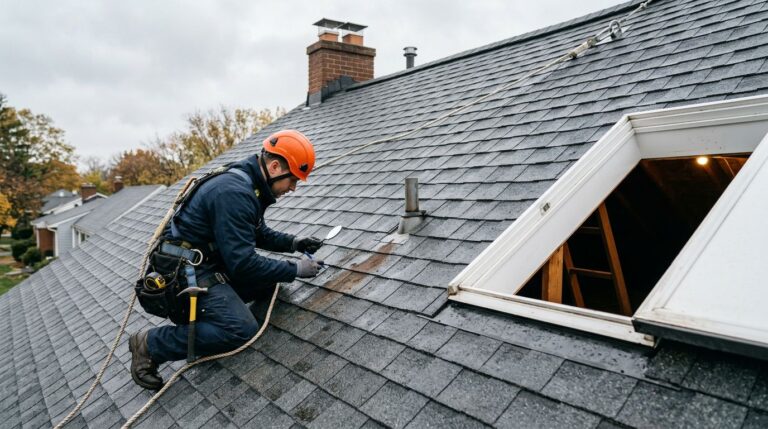
A real hail inspection is more than a quick glance and a handshake. A good pro will document the roof like they’re building a case file, because that’s often what the next steps require.
Expect an inspection to include:
- Measured test squares on shingles (checking for bruising, granule loss, cracks, and exposed mat).
- A close look at flashing, pipe boots, vents, ridge caps, valleys, and transitions (many hail leaks start at the details, not the open field).
- Gutters and downspouts checked for dents, loosened hangers, and proper drainage.
- Photos of each slope and each damaged component, labeled clearly.
Then comes the decision: repair vs replacement. Repairs make sense when damage is isolated and shingles can be matched well enough to stay watertight and look consistent. Replacement often makes sense when multiple slopes show functional damage, or when the roof is already older and widespread impacts will shorten its life.
Matching can be harder than homeowners expect. Even the same “color name” can vary by batch, sun fade, and age. That mismatch can affect curb appeal and can also signal uneven aging later.
Step 5: Handle the insurance process without common mistakes
Insurance can cover hail, but the process rewards homeowners who are organized and quick. Report the loss promptly. Waiting months can make it harder to tie interior stains to a specific storm, and it can complicate approvals for Roof Hail Damage.
A few smart, neutral guardrails:
- Know your deductible before you commit to any scope. If your deductible is high, that changes the best path.
- Be present for the adjuster visit if you can, and share your photos and notes. If you have a contractor, ask them to meet the adjuster too so damage isn’t missed.
- Get the scope in writing (what’s included, what’s excluded, quantities, and line items). Verbal promises don’t age well.
- Don’t sign over benefits or sign anything you don’t understand. Ask what you’re authorizing, and what it means if there’s a dispute later.
Also understand how payment works. With replacement cost coverage, the insurer often pays in parts: an initial payment, then the rest after work is completed and invoiced. With depreciation, the insurer holds back value for age and wear. In plain terms, depreciation is what they say the old roof “already used up.” Keep your paperwork tight so you can recover what your policy allows after the job is done.
FAQ: common questions homeowners ask about roof hail damage
After a hailstorm, most homeowners have the same problem: you want a clear answer, but your roof doesn’t always “show its work” from the driveway. These FAQs cover the real-world questions people ask once they understand why Roof Hail Damage is such a big deal, and why Why Is Hail Damage Bad for a Roof is not always obvious on day one.
How big does hail have to be to cause roof damage?
Hail size matters, but it’s only one piece of the puzzle. Damage depends on hail size, wind speed, roof age, and the roofing material. Think of it like dropping a ball on two different surfaces. A newer, flexible shingle can absorb impact better, while an older, dried-out shingle can crack from the same hit.
Here’s the simple way to frame it:
- Smaller hail can still cause problems, especially on older asphalt shingles. It often shows up as granule loss (the gritty protective coating gets knocked loose). Your roof may still shed water today, but those thin spots can age faster in sun and heat.
- Larger hail is more likely to bruise, crack, or puncture, depending on what it hits. Asphalt shingles can bruise and fracture, tile can crack, and metal can dent (sometimes only cosmetic, sometimes not, especially near seams and fasteners).
- Wind-driven hail hits harder. A storm with strong gusts can turn “not huge hail” into impacts that behave like larger stones. Wind also changes the angle of impact, which can stress shingle edges, ridge caps, and flashing details.
If you’re trying to estimate storm severity, don’t rely on one “magic size” number. Instead, look for collateral clues around the house. Dents on gutters, downspouts, soft metal vents, or damaged window screens often mean the roof took meaningful hits too. For a homeowner-friendly overview of common signs and next steps, see this hail damage roof identification guide.
Can roof hail damage cause mold inside the house?
Yes, it can, and it often happens through a chain reaction that starts small. The biggest risk is hidden leakage, where water gets in but you don’t see a ceiling stain right away.
The usual chain looks like this:
- Hail damages the roof surface or a roof detail (shingle bruising, a cracked pipe boot, a loosened flashing edge, a stressed seam).
- Water sneaks into the attic or wall cavity during later rain, melting snow, or freeze-thaw cycles.
- Insulation and wood stay damp, especially in low-airflow attic corners or inside closed framing cavities.
- Mold begins to grow, and that can affect odors and indoor air quality.
Mold risk rises when moisture stays trapped. A short, one-time wetting event that dries quickly is less likely to cause a mold problem. A slow leak that keeps feeding water into insulation is where trouble starts.
If you suspect mold (musty smell, damp insulation, dark spotting on wood), take a practical two-step approach:
- Stop the leak first. If the roof keeps letting water in, cleaning alone turns into a repeat problem.
- Then address the moisture. Remove wet insulation if needed, dry the area, and consider a qualified mold professional if growth is widespread or you have health concerns.
This is one reason Why Is Hail Damage Bad for a Roof: the roof can look “fine,” but the first real symptom may be an attic moisture issue that quietly builds.
Is it okay to wait until next season to fix hail damage?
Waiting is usually risky, even if the damage looks minor. Hail doesn’t just create one problem, it creates weak spots that the next weather cycle can exploit. In Minnesota, the big accelerants are freeze-thaw swings, wind-driven rain, and snow and ice.
Here’s what can happen when you wait:
- Freeze-thaw can widen tiny cracks. Water enters a small fracture, freezes, expands, and forces it open more.
- More storms compound the damage. Hail weakens a shingle’s surface and seal, then the next storm adds wind lift and more impacts.
- Small problems become expensive ones. A loosened flashing edge today can become wet decking, wet insulation, and stained ceilings later.
- Insurance and warranty timing can work against you. Many policies have reporting timelines, and delays can make it harder to tie interior issues to one storm date. Manufacturer warranties also don’t usually “cover” storm damage, and prolonged exposure after damage can complicate coverage discussions.
There is a narrower case where waiting briefly may be fine: a documented inspection shows no functional damage, no compromised details, and no moisture issues inside. That doesn’t mean “ignore it.” It means you have written proof that the roof is still performing, and you can monitor it without guessing.
If you decide to wait at all, don’t do it casually. Take photos, check the attic after heavy rain, and keep an eye on gutters and downspout areas for fresh granule buildup. If you want a structured explanation of why inspection documentation matters for coverage decisions, the NRCIA hail inspection and insurance guide breaks down how roof damage is commonly evaluated.
Will a roofer always recommend a full replacement after hail?
No. A good roofer recommends what the roof actually needs, and sometimes that’s a targeted repair. The replacement decision usually comes down to a few factors that homeowners can understand without getting lost in roofing jargon.
Here’s what drives repair vs replacement after Roof Hail Damage:
- Spread of damage: Is it isolated to one slope, or scattered across multiple facets and key details?
- Functional damage to the shingle mat: Bruises and fractures can shorten life even if the shingle isn’t missing. A roof with widespread mat damage is hard to “patch” back to reliable.
- Brittle or aged shingles: Older shingles don’t repair cleanly. Lifting them to swap pieces can cause more cracking, which turns a small repair into a bigger disturbance.
- Repairability and matching: If a repair can’t be matched (color, style, availability), you may end up with a roof that looks uneven and ages unevenly. Matching issues also matter if multiple repairs are likely in the next few years.
- Code needs and system condition: Sometimes the roof is near end of life, ventilation is poor, or underlayment and flashing are already worn. Hail becomes the event that reveals the roof was already at its tipping point.
If you’re worried about being pushed into a replacement you don’t need, ask for two things every time:
- Clear photos of each damaged area, including close-ups and wider shots that show location.
- A written scope that explains what’s being repaired or replaced, and why that scope makes the roof watertight again.
That paperwork keeps everyone honest, including the insurance process if you file a claim. It also helps you compare estimates in a meaningful way, instead of comparing vague summaries.
What if my roof looks fine, but my neighbors are getting new roofs?
This happens all the time, and it doesn’t automatically mean you’re fine or that they’re overreacting. Hail damage can vary house by house, even on the same street.
A few common reasons:
- Storm pattern differences: Hail often falls in bands. One block can get harder hits than the next.
- Different roof ages: A 5-year-old shingle roof can handle impacts that crack a 20-year-old roof.
- Different materials: Metal, asphalt, cedar, tile, and flat roof membranes all show hail differently. Some show dents, others show bruises or micro-cracks that you can’t see from the ground.
- Different slopes and orientation: One home’s west-facing slope might take the brunt of wind-driven hail, while another home’s trees or roof geometry changes how impacts land.
- Hidden damage vs visible damage: Some roofs look normal until you check the details, ridge caps, soft metals, and test areas up close.
Instead of guessing, focus on documentation. Walk your property and look for signs that act like a “receipt” for storm intensity, such as dents on gutters, downspouts, metal roof vents, window screens, and AC fins. Those clues matter even when shingles look fine from the yard.
Then schedule an inspection and keep the results in writing. Even a simple report with photos can help you decide what to do next, and it prevents the common mistake of waiting for a leak as your first confirmation. If you want to compare what homeowners can spot versus what pros document, this how to tell if a roof is hail-damaged guide lays out the typical visual clues and why some damage hides in plain sight.
Conclusion
Hail doesn’t have to punch a hole to cause trouble. Roof Hail Damage is bad because it breaks the roof’s protective layers, knocks off granules, bruises mats, cracks edges, and stresses the details that keep water out. Once that surface is compromised, sun and temperature swings speed up drying and splitting, and the next rain finds a path under shingles, flashing, or vents. That’s why homeowners often see leaks weeks later, not the morning after the storm.
Ignoring hail marks usually costs more, not less. Minor damage can turn into wet insulation, stained ceilings, mold risk, and rotted decking, all while your roof ages faster than it should. The plain answer to Why Is Hail Damage Bad for a Roof is that it turns a weather-tight system into one that is slowly failing, even when it still looks “fine” from the driveway.
Treat every storm like it matters. Take photos of dents and granules, note the date, and check the attic after the next heavy rain. Then schedule a documented inspection and handle repairs early so you’re fixing the cause, not chasing interior damage later. If a storm hit your neighborhood, what proof do you have today that your roof is still sealed?
Need a roof inspection in Saint Paul or the Twin Cities? Call Sellers Roofing Company at +1-651-703-2336 or schedule a free estimate. We are a black-owned, NMSDC-certified MBE roofing contractor with 9+ years experience.