Last updated: 2026-08-01 by Ted Sellers, Owner
Short answer: Detect an HVAC curb flashing leak by inspecting the curb’s corners, seams, and termination points, then confirming moisture paths with interior checks. Look for cracked roofing sealant, open welds, lifted membrane, rusted fasteners, and ponding that pushes water against the curb. If signs are mixed, use targeted moisture mapping or a controlled water test to verify the exact entry point.
When This Applies
You have a rooftop unit sitting on a curb (and the leak seems “close enough”)
This applies to most low-slope commercial roofs with packaged rooftop HVAC units, curb adapters, or economizer add-ons. Water often enters at the curb flashing, then travels inside the roof assembly causing water damage before it shows up on a ceiling tile. That’s why the drip inside may be feet away from the real breach.
A curb leak is more likely when you see any of these conditions:
- Ceiling water stains that worsen after wind-driven rain, not just heavy rain.
- Repeated leaks “around the same RTU,” even after patching nearby membrane.
- Old caulk at the curb, especially at the four corners.
If you’re in Saint Paul and you suspect the leak is traveling, a professional inspection saves time because commercial roofs hide water movement. Sellers Roofing Company’s approach to commercial roof leak detection is built for that reality.
When it’s probably not the curb flashing
Plenty of leaks get blamed on the curb because it’s an obvious rooftop feature. Still, the source may be elsewhere.
Common look-alikes that fool building owners
If any of these match your situation, broaden the search:
- Condensation: Duct sweat from the evaporator coil, condensation buildup in the drain pan, or unit pan overflow from a clogged condensate drain can mimic a roof leak, especially during humid swings.
- Drain and ponding issues: Water backs up and finds a weak seam down-slope.
- Wall or parapet leaks: Water enters at coping or counterflashing, then follows the deck.
If the interior leak shows up days after rain, think “stored water,” not “active hole.” Wet insulation can release water slowly.
Step-by-Step
Safe prep before you chase the leak
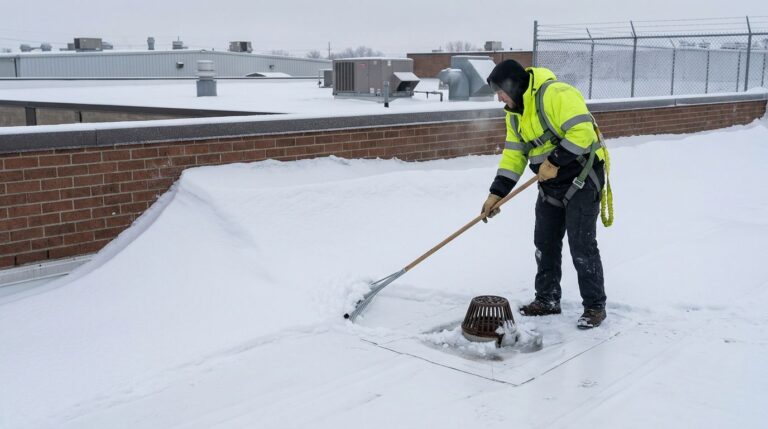
- Confirm roof access rules and fall protection requirements, then schedule around high winds or icy conditions.
- Pull basic history: when the leak happens, which ceiling tiles stain first, and whether HVAC service happened recently.
- Mark the interior leak location relative to columns or grid lines, because that map helps later.
- If your site can’t tolerate downtime, plan a same-visit repair option, since “test only” often turns into commercial flat roof repair once you find the breach.
On-roof inspection: what to check at the curb flashing
- Start up-slope of the curb and walk the “water path” toward it, because debris and ponding often point to the story.
- Inspect the curb’s four corners first. Corners fail like a folded paper cup due to flashing failure; they’re stressed and they separate.
- Check for open seams, fishmouths, split tape, or lifted edges where the roofing membrane turns up the curb.
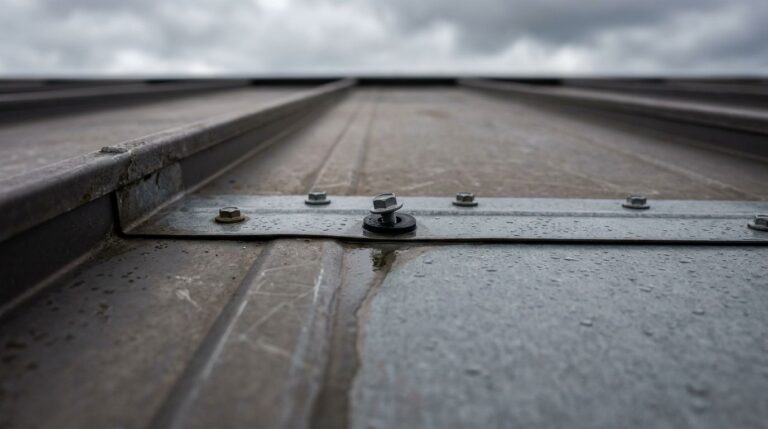
- Look closely at termination details (termination bar, reglet, counter-flashing, base flashing, or cap metal). A tiny gap can act like a funnel in wind-driven rain, undermining the watertight barrier.
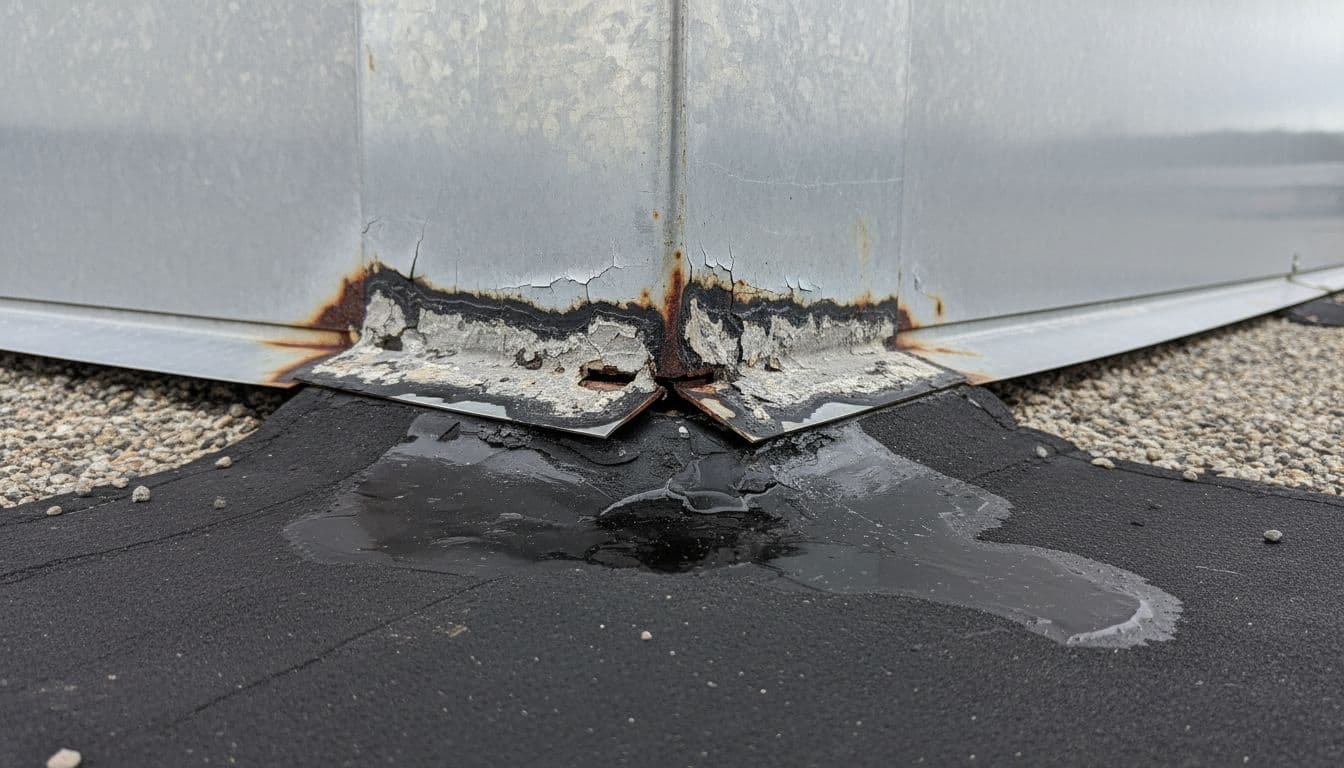
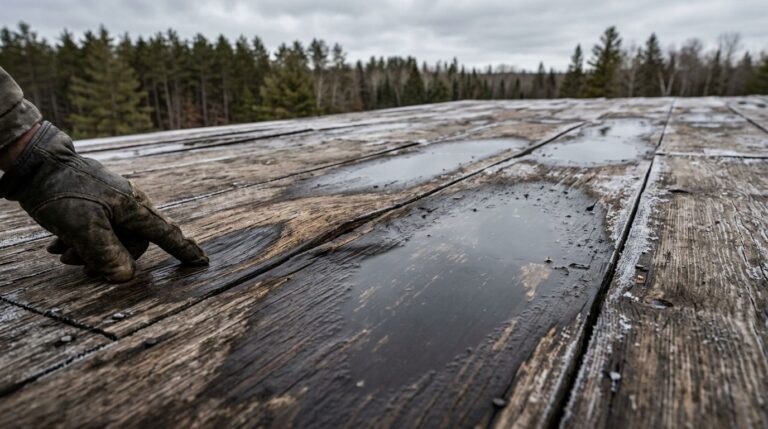
- Probe gently for soft spots or deteriorated roofing sealant at the curb perimeter of the HVAC curb mount. Spongy insulation near the curb raises the odds that your commercial roof needs repair beyond surface patching.
Confirm the source: moisture tracing and a controlled water test
- From inside, open the ceiling near the stain (if allowed) and check the underside of roof decking flutes. Water trails often show direction of water infiltration.
- If you have access to a thermal scan or moisture mapping, use it to outline wet insulation zones before you cut anything. This matters because water can travel sideways on low-slope roofs.
- Run a controlled water test only after the roof is dry and you can monitor inside in real time. Start low, then work up-slope in sections, keeping the spray gentle. For a visual example of the method, see this flat-roof water test video.
- If the curb looks questionable but the rooftop air conditioning unit is new, verify the curb type and adapter fit at this roof penetration. Bad transitions happen during retrofits. Manufacturers and curb system suppliers show common curb configurations, which can help you identify what you have (for example, roof curb system basics and rooftop curb manufacturing options).
- Document findings with photos and notes before repairs. Clear documentation helps warranty conversations and can support a claim if interior damage spreads.

Decide whether you need a repair, a rebuild, or replacement planning
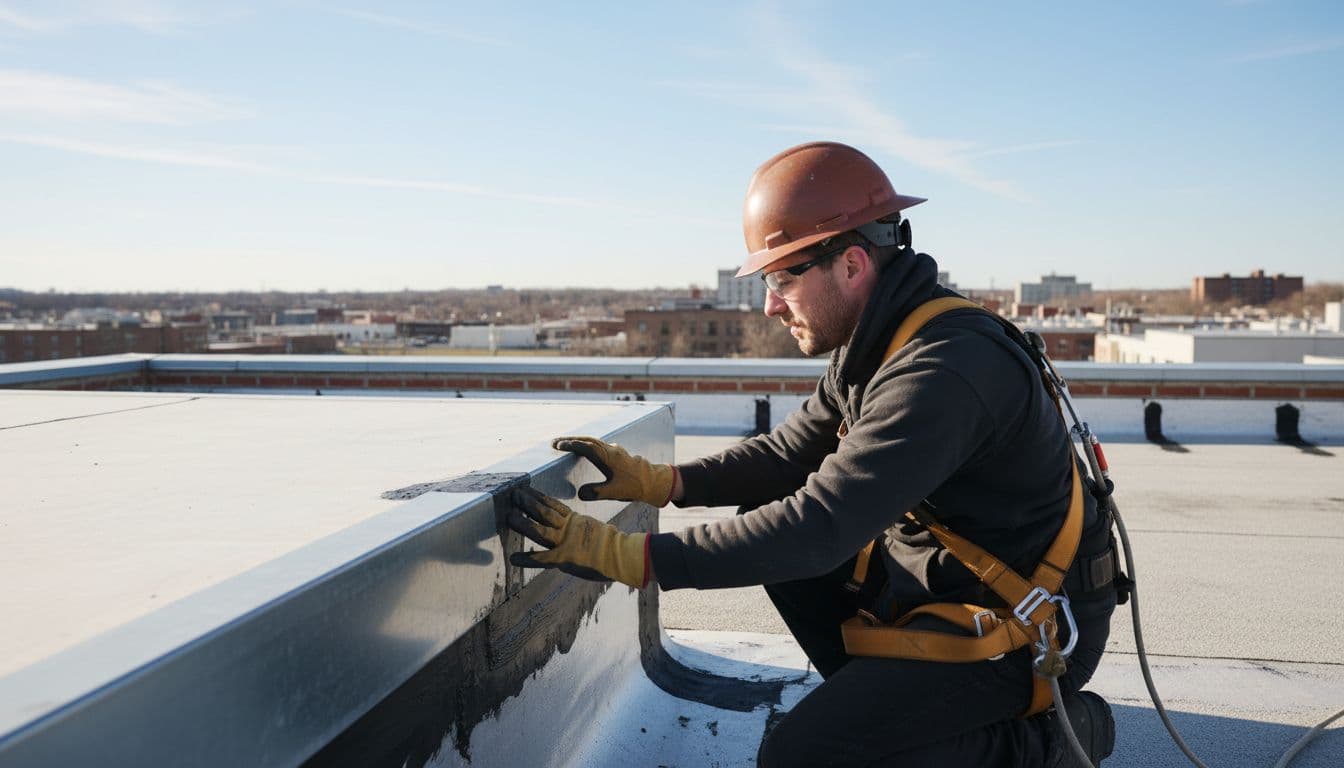
- Choose targeted repair when the membrane is sound and the breach is isolated (like a failed corner weld).
- Choose a curb rebuild when metal is rusted, fasteners are loose, or the curb face is no longer stable.
- Start budgeting for commercial roof replacement when multiple curbs show similar failure and moisture is widespread, because “one more patch” turns into repeat interior damage.
- If you want a contractor to confirm scope and options, start with a broader assessment from Saint Paul commercial roofing experts, especially when leak paths don’t match what you see on top.
FAQ: HVAC curb flashing leak follow-ups business owners ask
Why does the leak show up far from the HVAC curb?
Water rarely drops straight down on a commercial roof. It can run along the membrane surface, follow insulation seams, or travel inside metal deck flutes, aided by static pressure and the building’s negative pressure system that draws moisture inward. As a result, the interior stain becomes the “exit,” not the entry. Moisture mapping and selective test cuts help confirm direction without tearing up large areas.
Can HVAC technicians cause curb flashing leaks during service calls?
Yes, and it’s often accidental. Tools, kneeling, and foot traffic can scuff membrane, crack old sealant, or loosen edge metal. Also, new lines or conduit sometimes get added without proper flashing. If the leak started right after service, inspect around new penetrations and the curb corners first.
What to ask your HVAC vendor
Request photos of any rooftop work area and a list of modifications, even small ones.
Is caulk around the curb a real fix?
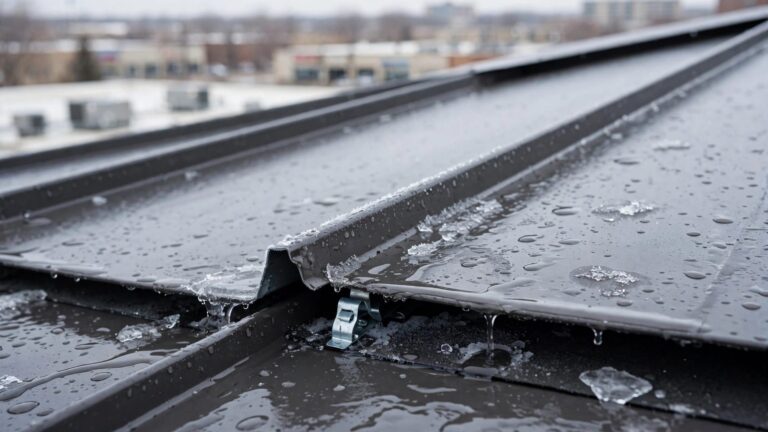
Caulk can help as a short-term seal, but it’s not a complete flashing system. Sun, temperature swings, and freeze-thaw cycles age sealant fast, especially on metal edges and corners. If the curb relies on exposed sealant as the primary waterproofing, plan for a proper flashing repair, not repeated re-caulking.
How do I tell condensation from a roof leak near an RTU?
Condensation usually tracks HVAC run times and humid weather, not storms, often from issues at the evaporator coil, p-trap, or condensate drain line. You may see wet duct wrap, sweating metal, or a full drain pan, and always check the secondary drain pan as a backup. A roof leak, on the other hand, often worsens after rain and can leave dirty water marks. If you’re unsure, check during a dry period with the unit running.
What happens if I ignore a small curb leak for “one more season”?
A small opening can soak a large insulation area over time. Wet roof insulation loses R-value, pushes energy bills up, and can lead to deck corrosion or mold growth in hidden cavities. What starts as a localized commercial flat roof repair can turn into structural work and business disruption, especially if multiple storms hit. Regular HVAC maintenance helps prevent these issues.
Conclusion
Detecting an HVAC curb flashing leak is about proving the entry point, not guessing from the ceiling stain. Focus on curb corners, terminations, and wet insulation patterns around the rooftop HVAC unit, then confirm with controlled testing when needed. If the same curb keeps leaking, treat it as a system detail failure, not a one-time patch. A clean diagnosis today prevents a much bigger repair from water damage tomorrow.
Need a roof inspection in Saint Paul or the Twin Cities? Call Sellers Roofing Company at +1-651-703-2336 or schedule a free estimate. We are a black-owned, NMSDC-certified MBE roofing contractor with 9+ years experience.