Last updated: 2026-08-01 by Ted Sellers, Owner
Yes. In Minnesota, attic frost often gets mistaken for a roof leak because it melts and drips onto insulation, framing, and ceiling tiles during a thaw. The key difference is timing and pattern. Frost comes from indoor moisture freezing inside a cold attic, while a true roof leak usually tracks back to exterior damage, failed flashing, or an opening in the roof system.
A winter ceiling stain does not always mean the roof failed. On many commercial buildings with attic space, moisture starts inside the building, rises into a cold roof cavity, freezes, and later falls as water.
That confusion matters because the fix for frost is different from the fix for a leak. A patch in the wrong place won’t stop the problem.
When This Applies
Buildings where attic frost fools people
This problem shows up most on commercial buildings with a real attic or roof cavity above occupied space. That includes churches, offices, schools, mixed-use buildings, condos, and older retail properties with pitched roof sections.
It is most common during long cold spells, then a warm-up. Moist indoor air leaks into the attic from restrooms, kitchens, break rooms, laundries, or disconnected exhaust ducts. Once that air hits cold roof sheathing, frost forms on wood, nails, and fasteners.
When it usually does not apply
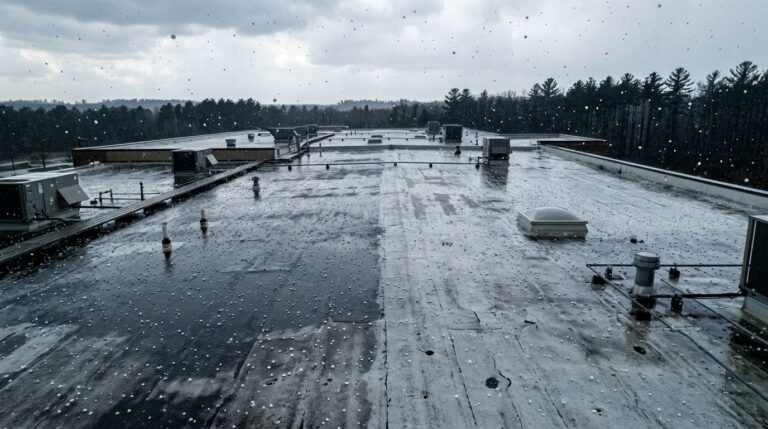
If your building has an open steel deck and no attic, this is usually not the issue. In that case, a ceiling drip points more toward membrane damage, flashing failure, a drain problem, or a puncture. That becomes a commercial flat roof repair question, not an attic condensation issue.
It also fits less often on newer conditioned attics that were built as sealed assemblies. Those spaces can still have moisture trouble, but the cause and repair path differ.
Edge cases that blur the line
Some buildings have both problems at once. Ice dams can push water under roofing near the eaves, while attic frost melts at the same time. Mixed roof systems also create confusion. A property may have a steep attic section above offices and a low-slope section above the rear addition.
In those cases, broad professional commercial roofing services in Saint Paul help sort out whether the moisture came from inside air leakage, exterior roof damage, or both.
How to tell attic frost from a real roof leak
The signs usually point in different directions
A quick comparison makes the difference easier to spot.
| Clue | More like attic frost | More like a roof leak |
|---|---|---|
| Timing | Shows up during a thaw after a cold snap | Shows up during rain, melting snow, or wind-driven storms |
| Attic pattern | White frost on sheathing, nails, or a wide area | A localized wet path or stain below one defect |
| Common source | Indoor humidity and air leakage | Missing shingles, open seams, bad flashing, punctures |
| Indoor stain | Often near top-floor ceilings and air leaks | May appear far from the source because water travels |
| Exterior roof | No fresh damage may be visible | Damage often appears at valleys, vents, walls, or edges |
| Repeat pattern | Comes back in cold weather cycles | Returns with each weather event until repaired |
The strongest clue is timing. Frost melt follows temperature swings. Roof leaks track with rain, snow melt, or storm damage.
If a stain appears after a thaw but not during rain, frost is often part of the story.
Why Minnesota weather makes the mix-up so common
Minnesota creates perfect conditions for this mistake. A building can sit through subzero weather for days with no visible interior drip. Then one sunny afternoon warms the roof deck enough to melt the frost, and water starts falling inside.
That looks like a leak, but the roof covering may be fine. On the other hand, if the same area leaks during rain, or after high winds, treat it as a possible roof failure until proven otherwise.
Step-by-Step
1. Track when the water appears
Start with the calendar and the weather. Write down whether the drip started during rain, after heavy snow, or during a thaw after bitter cold.
If the drip starts during a thaw
That pattern strongly suggests frost melt. A roof opening is still possible, but thaw-only drips deserve an attic inspection before anyone starts patching the roof surface.
2. Check inside the building before anyone climbs up
Look at ceiling tiles, wall tops, upper-floor corners, and mechanical rooms. Mark where stains or drips appear, and photograph them the same day.
On commercial buildings, the visible stain may not sit under the real source. Water can move along framing, insulation, or deck contours before it drops inside. Because of that, map the pattern instead of guessing from one wet tile.
3. Inspect the attic for frost patterns, not only wet spots
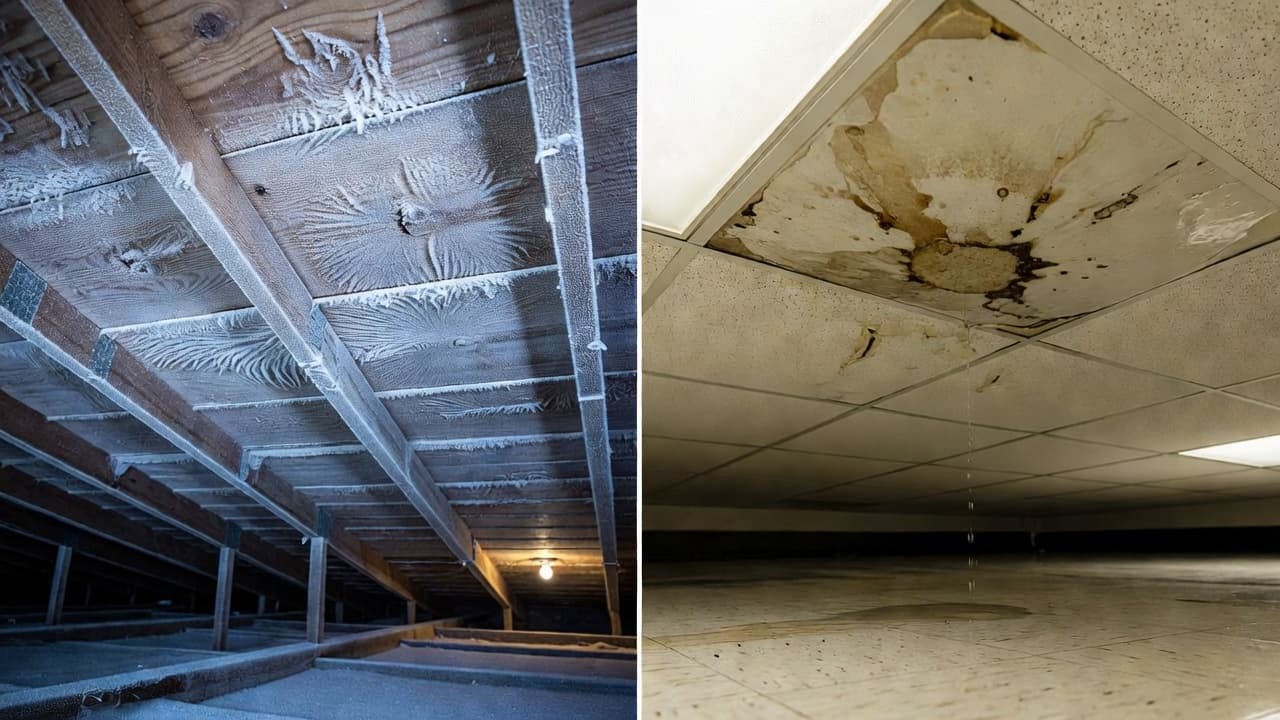
When conditions are safe, inspect the attic or roof cavity. Look for white frost on the underside of the deck, frosted nail tips, damp insulation, moldy sheathing, and dark moisture tracks on wood.
A true leak often creates a more focused path. You may see one wet area below a vent, wall flashing line, valley, curb, or damaged section. Frost problems usually spread across a wider cold zone.
Pay close attention to air leaks
Check bath fan ducts, kitchen exhausts, makeup air units, recessed lights, access hatches, and open chases. A disconnected duct can dump warm humid air straight into the attic all winter.
4. Look at the exterior roof only when it is dry and safe
Do not send staff onto an icy roof, a slick membrane, or a storm-damaged surface. One bad fall costs more than a delayed inspection.
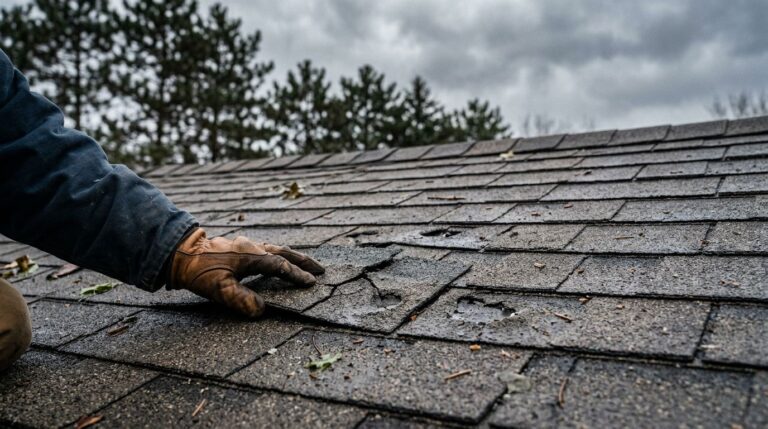
When access is safe, check the areas that fail first: ridges, eaves, valleys, roof edges, flashings, penetrations, and transitions between roof types. Fresh damage such as lifted shingles, bent flashing, punctures, or open seams points to a real leak. If the roof looks intact but the attic is frosted, the moisture likely started indoors.
5. Stop added damage, but keep the evidence
If water is reaching the interior, protect the space right away. Move stock, cover equipment, set containment, and remove soaked ceiling tiles if needed. Save photos, notes, and receipts before repairs hide the cause.
Reasonable temporary work
Temporary dry-in work is fine when water is entering. That can include a tarp, a small patch, drain clearing, or interior water cleanup. Full tear-off or large permanent repairs should wait until the cause is documented.
6. Match the fix to the cause
If attic frost caused the drip, the repair usually involves air sealing, reconnecting exhaust ducts, reducing indoor humidity, improving insulation, and correcting ventilation details. A roof patch alone will not solve that.
If exterior damage is present, the commercial roof needs repair before the next storm or thaw. When the source is unclear, commercial roof leak detection St. Paul can trace hidden moisture with more than a visual walk-through. That matters because water on commercial roofs often travels before it shows inside.
Local damage may call for a targeted repair. Broad wet insulation, repeated leaks, or failure across connected roof areas can push the discussion toward commercial roof replacement.
Why the wrong call gets expensive
Moisture damage rarely stays put
A thaw-driven drip can soak insulation, stain ceilings, rust fasteners, and feed mold before anyone realizes the roof itself is not the first problem. Meanwhile, a real leak can spread sideways through the roof assembly and show up far from the opening.
Because of that, guessing wastes money. Owners often pay for patches, then still face indoor moisture because the attic air leak never got fixed.
The repair path changes with the diagnosis
Frost problems usually need building-envelope corrections. Roof leaks need roof repairs, and sometimes much more. If crews find saturated insulation, recurring entry points, or system-wide failure, patching may only delay a larger project.
A trusted commercial roofing contractor in St. Paul can inspect both the roof system and the moisture path before work begins. That helps you avoid paying for the wrong fix twice.
Conclusion
Yes, attic frost can look almost exactly like a roof leak in Minnesota, especially after a hard freeze followed by a thaw. The best clue is when the water shows up and whether the attic has widespread frost or the roof has a clear exterior failure.
For commercial owners, the smart move is careful diagnosis first. Once you know whether the moisture began inside the building or through the roof, the repair plan gets much simpler.
FAQ
Can attic frost drip even when the shingles or membrane are in good shape?
Yes. Frost forms inside the attic when warm indoor air escapes into a cold roof cavity. When temperatures rise, that frost melts and drips. The roof covering can be intact while the building still takes on water.
Why does the stain get worse on sunny days?
Sun can warm the roof deck enough to melt frost even when outdoor air still feels cold. That is why some stains grow after a bright winter afternoon, not during rain. The moisture may be thaw-driven, not weather-driven.
Can maintenance staff check the attic right away?
They can check interior spaces first, but attic access still needs care. Wet insulation, poor lighting, exposed wiring, and slick surfaces create risk. Roof access is even riskier after storms or during freeze-thaw weather.
What if the building has both frost and storm damage?
That happens more than owners expect. A storm may open flashing or lift roofing, while indoor humidity builds frost in the same period. In that case, document both patterns separately so repairs address each source.
Will insurance pay for damage caused by attic frost?
Usually, coverage depends on the cause. Storm-created roof openings are often treated differently from moisture tied to indoor humidity, ventilation problems, or long-term building conditions. If a covered event caused the damage, keep photos, dates, and contractor findings before permanent repairs begin.
Need a roof inspection in Saint Paul or the Twin Cities? Call Sellers Roofing Company at +1-651-703-2336 or schedule a free estimate. We are a black-owned, NMSDC-certified MBE roofing contractor with 9+ years experience.