Last updated: 2026-05-26 by Ted Sellers, Owner
Short answer: Look for fresh granule loss, sharp chips, and small cracks right at the shingle’s outer edges and corners. Hail hits often leave random, uneven marks, not a uniform “worn” look. Check for bruising (a soft spot) under the granules, and compare several areas on different slopes. If multiple corners show fractures, the roof may need a professional roof inspection.
Hail doesn’t always announce itself with a big leak. On many roofs with asphalt shingles, the first real clues show up where shingles are most fragile: edges and corners. Those spots take direct impact and can break before the rest of the field shingles look damaged.
For commercial business owners, that matters because small failures at the perimeter can lead to water movement, water stains, and tenant complaints later. Catching hail damage shingles early is often the difference between a targeted repair and a bigger project.
When This Applies
When edge and corner checks are most useful
Edge and corner inspection helps when your building has asphalt shingles on any steep-slope area, for example, offices, retail storefronts with pitched sections, mansards, entry canopies, or residential-style roofing over a commercial space.
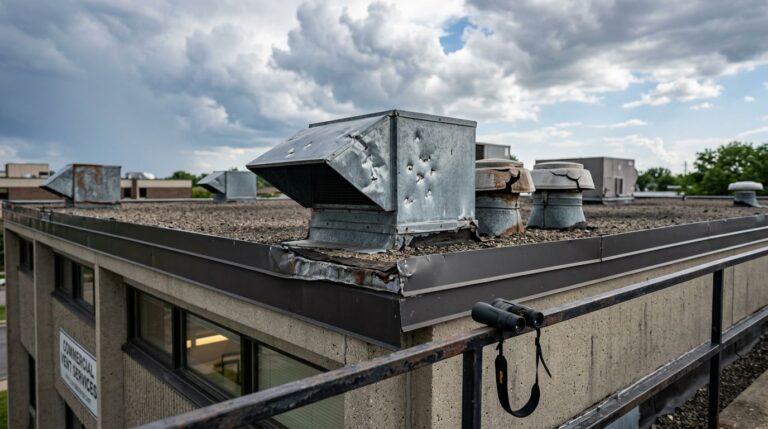
This approach also applies when you see “soft metal” damage around the property, like dented gutters and downspouts, metal vents, or metal caps, as well as spatter marks on vinyl siding. These forms of collateral damage don’t prove shingle damage, but they tell you hail likely had enough energy to affect the roof surface too. For an insurance-friendly overview of what to look for, see Travelers’ guidance on identifying roof hail damage.
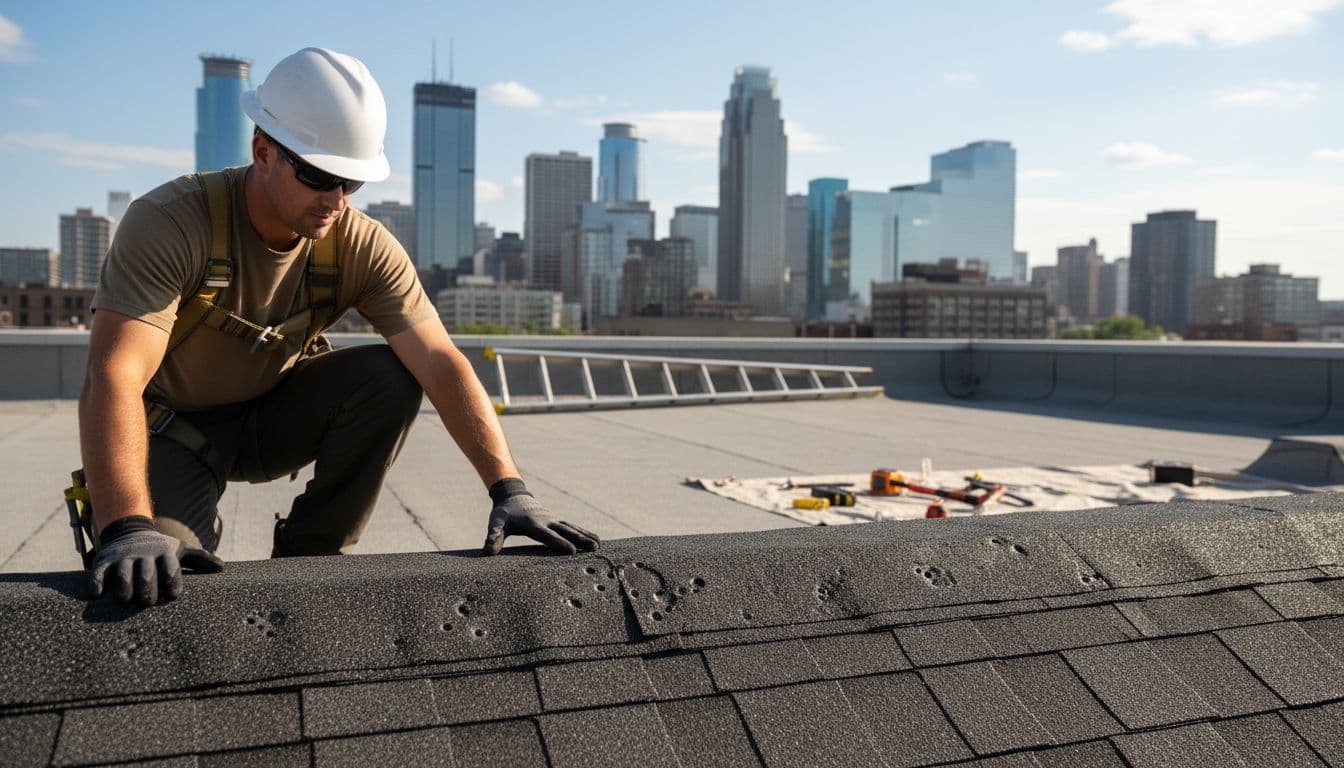
When it’s probably not hail (and key exceptions)
Not every nick on a corner is hail. Edges also fail from age, heat, wind, foot traffic, or poor fastening. If the roof shows a uniform “sandpaper” look along every edge, that often points to long-term wear, not a single storm.
Use this quick comparison to avoid false alarms:
| What you see on edges/corners | More like storm damage | More like wear and tear or other damage |
|---|---|---|
| Pattern across roof | Random, scattered hits | Even, consistent thinning |
| Granule loss | Fresh, dark asphalt exposed | Dull, gradual loss with dirt/algae |
| Corner shape | Sharp chips, broken tabs | Rounded edges from aging |
| Nearby clues | Dented soft metals nearby | No collateral damage visible |
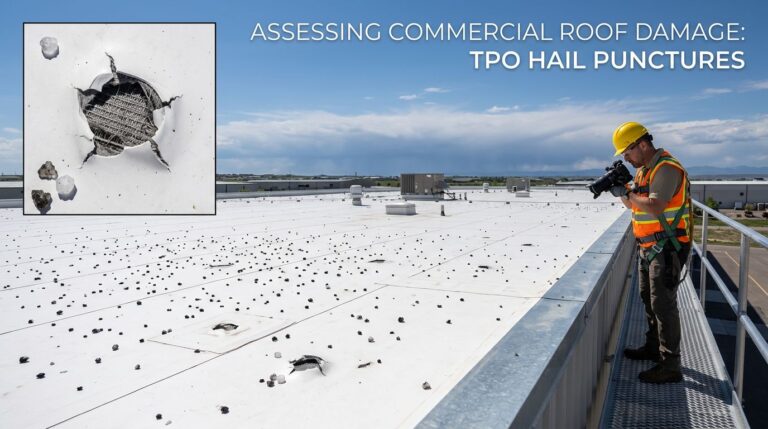
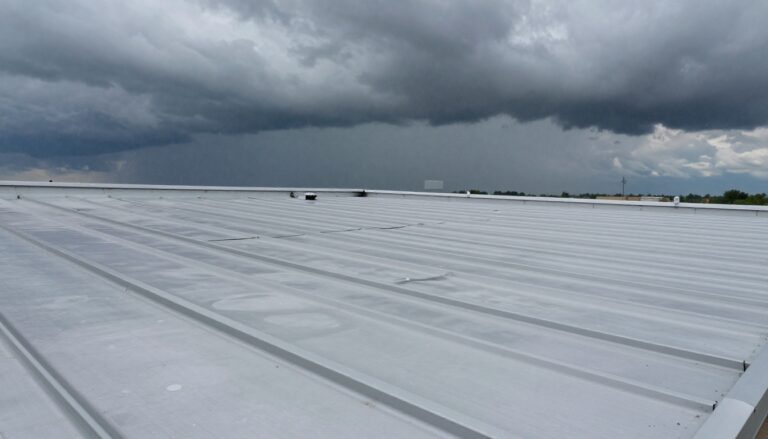
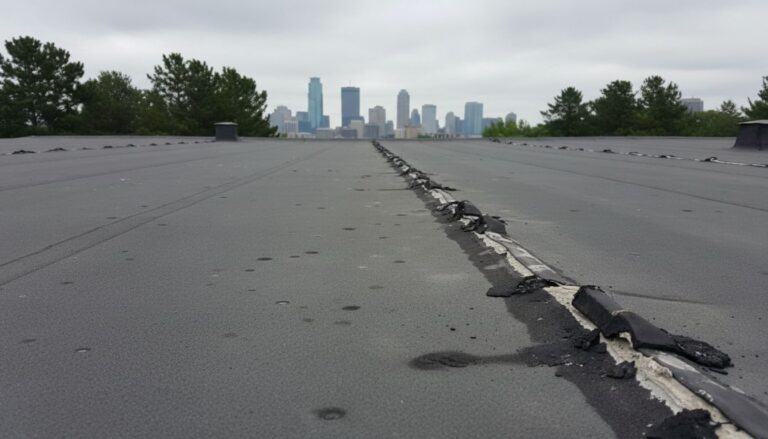
Also, if your property is mostly membrane roofing, this shingle-focused method won’t cover the whole risk. A hail event can still trigger commercial flat roof repair needs, especially at perimeter metal, flashing, and rooftop equipment, even when shingles are only on a small architectural section.
A good rule: hail damage looks random. Age-related wear looks organized.
Step-by-Step
1) Confirm conditions and start from the ground
- Document the storm window. Note the date, time range, and any alerts you received. That helps later if you need a claim timeline.
- Walk the site perimeter first. Look for downspout dents, bent gutter screens, scuffed metal caps, and impact marks. These are fast “yes or no” clues to storm damage.
- Check for shingle debris. Corners that snap off often end up near downspouts, splash blocks, and high-traffic sidewalks.
- Scan the roofline with binoculars. Focus on rakes, eaves, hips, and ridge caps. Hail damage shingles at edges sometimes shows as jagged outlines or missing corner points.
If you want a second reference for common symptoms beyond edges, this hail damage inspection guide lays out several recognizable signs.
2) Inspect shingle edges and corners up close (safely)
- Choose the right access. If the roof is steep, wet, or high, stay off it. A fall costs more than any repair.
- Look at corners first. Hail can “bite” the shingle’s corner, leaving a sharp chip with fresh granule loss. You’ll often see darker asphalt where granules are gone.
- Check edges for hairline fractures. At the outer edge, hail may create a short crack that runs inward a half inch or so, sometimes with a small crescent-shaped bruise.
- Use low-angle light. A flashlight held sideways highlights raised edges, creases, and surface breaks you won’t see straight on.
- Feel for a bruise. With a gentle press (not a hard poke), bruised shingles can feel softer than surrounding areas because the shingle mat beneath was impacted, creating soft spots.
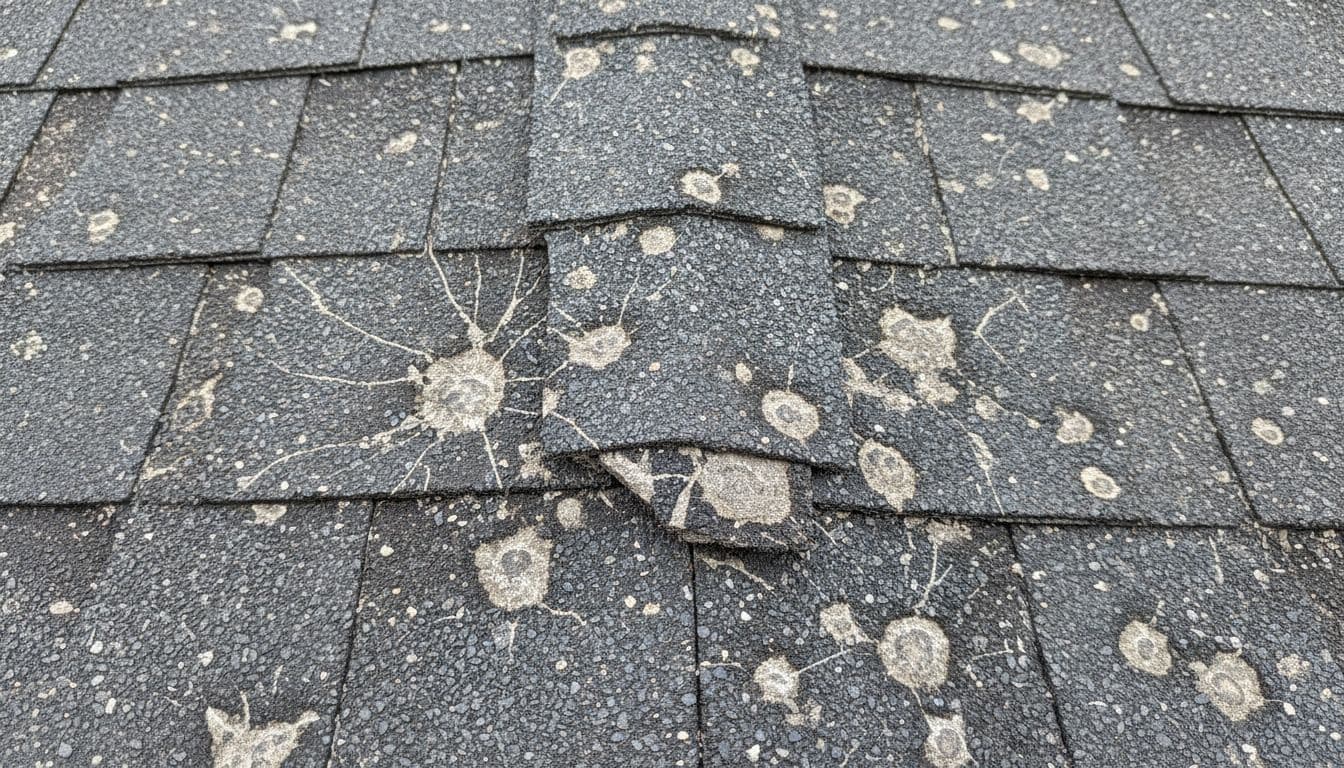
Edge case: brittle shingles can “shatter” instead of bruise
Older shingles, including wood shingles, may crack cleanly with less visible bruising. In that case, prioritize broken corners, chipped edges, and exposed mat as your main indicators.
3) Decide whether you’re looking at spot repair or a bigger problem
- Compare multiple slopes. Hail often hits one side harder (wind-driven storms), especially with larger hailstone size. If only one elevation shows damage, note that.
- Count damaged corners in a small area. If you find several fractured corners within a 10 foot by 10 foot zone, damage is likely functional damage beyond cosmetic.
- Check the perimeter details. On commercial sites, leaks often start where systems meet, such as edge metal, transitions, and penetrations. If water intrusion is already present, your commercial roof needs repair now, not after the next storm.
- Set the project expectation. Widespread edge fractures across many slopes may push the decision toward commercial roof replacement, especially if roofing materials are near end of life. Consult a professional roofing contractor for evaluation.
For additional “what to do next” context, this overview of signs your roof has hail damage is a helpful cross-check before you call in a contractor.
FAQ
Can hail damage show up only on shingle corners?
Yes. Corners and edges of asphalt shingles are thin and exposed, so they can crack first, leading to cracked shingles. This is common on older shingles made from various roofing materials or on roofs with strong wind during the storm. Still, confirm by checking several areas and looking for matching collateral damage on soft metals.
What’s the difference between hail hits and wind damage on corners?
Wind damage at high wind speed often shows lifted, creased tabs with a clear “hinge” line near the seal strip. Hail damage is more like a bruise, chip, or fractured corner point. Wind patterns can look directional and repeated, while hail marks usually look random.
If you see missing corners but no dents anywhere else
Treat it cautiously. Foot traffic, tree debris, and brittle age can break corners without hail. Impact-resistant shingles might show different signs with less fracturing. Look for fresh granules in gutters and inspect other slopes before calling it hail damage.
If I find lots of granules in gutters, is that proof of hail damage?
Not by itself. Granules shed over time, especially after freeze-thaw cycles or due to poor attic ventilation. Hail-related granule loss is usually paired with sharp impact marks, exposed asphalt, or bruising. Compare the gutter granules with what you see at damaged corners.
Should I tarp a shingle roof after a hailstorm?
Only if you have active roof leaks or visible holes, and only if it’s safe. A tarp won’t fix bruised edges, and poor placement can cause more damage. If water is entering, focus on stopping intrusion quickly, then schedule a full assessment.
How soon should I document and report suspected hail damage?
Start photos the same week if you can. Take wide shots of each slope and close-ups of damaged corners, plus any dented metal items. Keep notes on locations. Early documentation helps support an insurance claim for storm damage if conditions worsen, or if you later need to explain when the damage occurred.
Conclusion
Hail damage shingles often hide in plain sight, and edges and corners are where it shows up first. Focus on random chips, fresh granule loss, and small fractures, then compare across slopes. If damage repeats across large areas, plan for a professional inspection and next steps. Your roof protects revenue, tenants, and operations, so treat hail damage shingles as an early warning for the integrity of your roofing materials, not background noise.
Need a roof inspection in Saint Paul or the Twin Cities? Call Sellers Roofing Company at +1-651-703-2336 or schedule a free estimate. We are a black-owned, NMSDC-certified MBE roofing contractor with 9+ years experience.