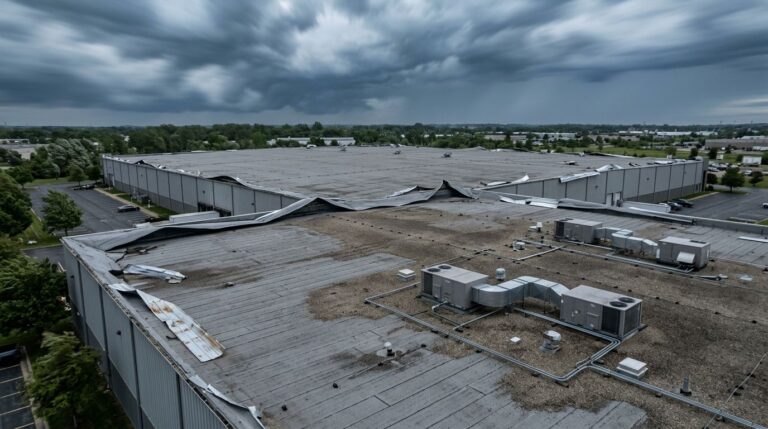
Last updated: 2026-08-01 by Ted Sellers, Owner
Yes. Flat roof foot traffic can crush insulation, scuff membranes, loosen seams, and create small punctures that stay dry for a while. The roof may look fine after the walk, then fail later when the same area gets more stress or the next storm pushes water through a weak spot.
When This Applies
Regular roof access is the main risk. That includes HVAC techs, cleaners, solar crews, electricians, and facility staff who cross the roof often. It also includes anyone who drags hoses, tools, or equipment across single-ply membranes.
A dry ceiling does not mean the roof is unharmed.
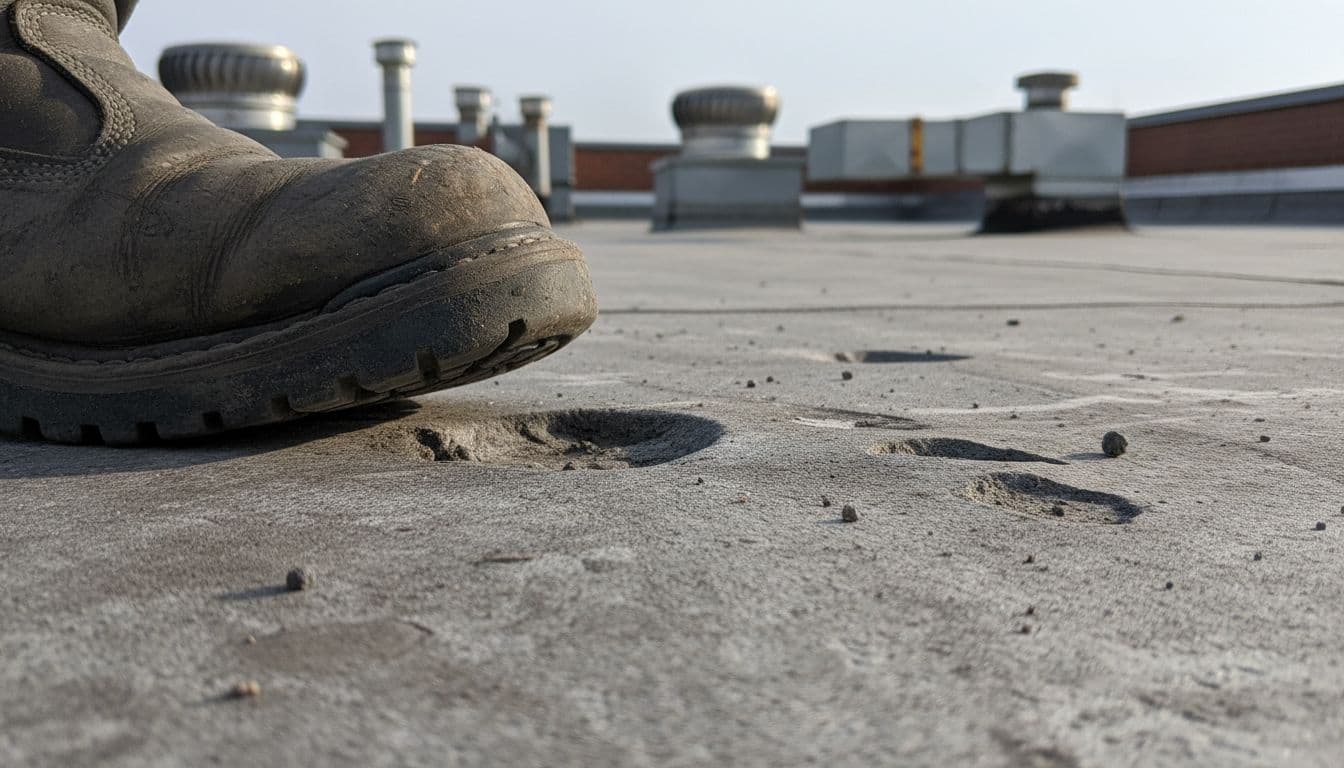
That slow wear pattern is described in how foot traffic is silently killing roofs, and it shows up on more roofs than owners expect. One person walking a route once is usually not the problem. Repeated traffic over seams, drains, corners, and hatches is where the damage builds.
This matters most on EPDM, TPO, PVC, modified bitumen, and older coated systems. It matters less on roofs with strong walk pads and controlled access. Even then, a bad step near flashing or a seam can start a hidden failure.
If the roof feels soft underfoot, your commercial roof needs repair even if no leak has started. When the condition is unclear, a commercial roofing in Saint Paul inspection can show whether the membrane, insulation, or deck took the hit first.
Step-by-Step
1. Map the traffic path before you chase the stain
Start with the route, not the leak. Find every place people cross the roof, then note where they stop, turn, or set things down. The danger zones are usually around hatches, condensers, drains, skylights, and service corridors.
Look for repeated stress points. A single boot print is one thing. A monthly path across the same seam is another. Over time, that path can wear through the top layer and leave the roof open to the next rain.
Also check whether crews use the same entry point every time. If they do, that area often needs extra protection first. Good notes now save time later if the roof starts leaking or a claim gets filed.
2. Look for hidden damage, not just water
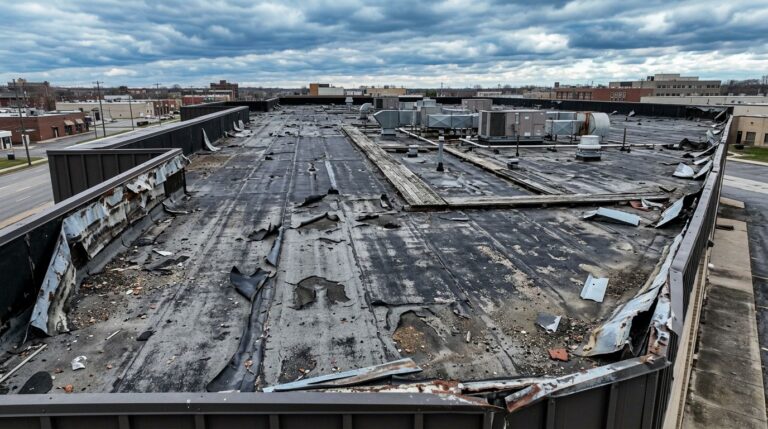
Foot traffic often damages a roof before it leaks. It can bruise insulation, crack laps, loosen flashing, and weaken the membrane without creating an obvious hole. That is why a roof can look dry and still be in trouble.
A flat roof integrity under traffic review makes the same point, punctures are only part of the problem. Small abrasions can become open failures after heat, ponding, or another round of foot traffic.
Check for soft spots, wrinkles, lifted seams, and new ponding. If the surface flexes more than the rest of the roof, take that seriously. Moisture scans and core cuts help when the damage is hidden below the membrane.
If the roof shows these signs, your commercial roofing in Saint Paul team can confirm whether the problem is surface wear or something deeper. That distinction matters, because a small commercial flat roof repair is enough in some cases, but not in all.
3. Protect the roof while you still have options
Once you spot wear, limit more traffic. Put down walk pads, mark safe lanes, and keep tools off weak sections. Ask every contractor to lift materials instead of dragging them.
If water is already entering, commercial roof leak detection services can trace the source before a patch hides the evidence. That step matters because the wet spot inside is often far from the actual opening above.
Temporary stabilization is fine. Permanent work before inspection is not. A quick patch, a temporary seal, or a dry-in measure can buy time. It should not replace a full look at the roof condition.
This is also the point where many owners move too fast. A patch that stops the drip may still leave crushed insulation or a damaged seam behind it. That hidden damage can keep spreading.
4. Match the fix to the size of the problem
Small scuffs and one puncture often need patching, seam work, or added protection at the access point. Spread-out wear, wet insulation, or repeated damage across the same lanes points to a larger scope.
When repair is enough
Repair works when the membrane is sound around the damaged spot and the insulation stayed dry. In that case, the roof just needs the weak area closed and the traffic path controlled.
When replacement is smarter
If the same routes keep failing, or the roof has already been patched several times, commercial roof replacement may be the cleaner answer. A roof that keeps losing the same fight is telling you its margin is gone.
The goal is simple. Stop paying for the same failure twice.
FAQ
Can one person walking on a flat roof cause damage?
Yes, if that person steps on a weak seam, a soft spot, or a roof that already has wear in the travel path. One walk usually does not ruin a healthy roof. It can, however, start a small failure that shows up later.
Which flat roofs are most sensitive to foot traffic?
Single-ply roofs often show damage first, especially older EPDM and weathered TPO. Their surfaces can scuff, stretch, or puncture more easily than tougher assemblies with protected walk paths. Gravel roofs and protected systems can handle more traffic, but they still need care.
How do I know the damage is hidden under the membrane?
Look for soft spots, lifted laps, loose flashing, or a new wrinkle pattern. Moisture readings help when the surface looks normal. If the roof feels spongy or holds water in a new area, the damage has moved past the cosmetic stage.
Should I stop roof access after one incident?
Yes, until someone checks the area. Keep people off the weak path, save photos, and note who was on the roof. A short access pause is cheaper than another pass over the same damaged section.
Can foot traffic damage affect an insurance claim?
Often, yes. Carriers may ask whether the problem came from routine use, poor access control, or a covered event. Clear photos, dates, and inspection notes help separate old wear from new damage. Good records matter even more when the claim involves water entry.
Conclusion
The practical rule
A flat roof can be damaged long before it leaks. That is why scuffs, seam stress, and soft spots matter, even when the ceiling stays dry.
Treat repeated traffic as a roof issue, not a housekeeping issue. If the damage is local, a commercial flat roof repair may be enough. If the same paths keep failing, a commercial roof replacement is the stronger fix.
Need a roof inspection in Saint Paul or the Twin Cities? Call Sellers Roofing Company at +1-651-703-2336 or schedule a free estimate. We are a black-owned, NMSDC-certified MBE roofing contractor with 9+ years experience.