Last updated: 2026-08-14 by Ted Sellers, Owner
Short answer: A roof that leaks during snow melt but stays dry in rain usually has a cold-weather drainage problem, not only a simple hole. Melting snow moves slowly, backs up behind ice or frozen drains, and can slip under seams, flashing, or roof edges. On commercial roofs, thaw cycles also expose hidden moisture paths inside insulation and along the deck.
That pattern says a lot about how water is moving across your building in winter. Once you find where thaw water stalls, you can stop repeat leaks before they turn into a larger repair.
When This Applies
This usually points to a winter drainage problem
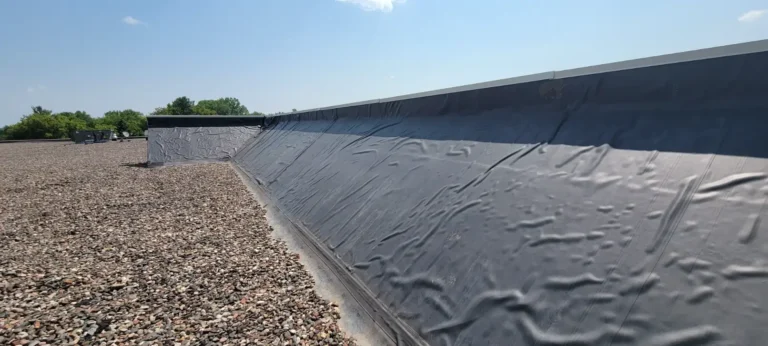
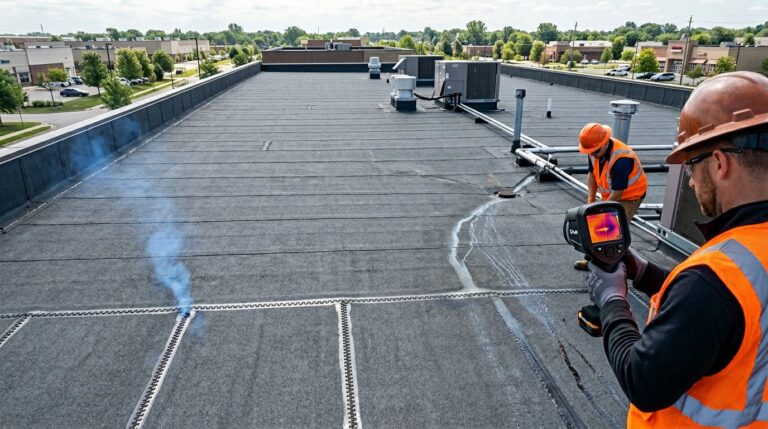
This fits commercial buildings with flat or low-slope roofs, parapet walls, roof drains, scuppers, and a lot of rooftop equipment. Offices, retail centers, warehouses, churches, and condo buildings often see it during late-winter thaws. Water moves slowly under snow, then backs up where ice, slush, or clogged drainage blocks the exit.
If your building has both membrane roofs and steep-slope accents, the problem may still start on the flat section. Meltwater from upper roofs can dump onto lower roofs, overload drains, and find weak flashing around curbs and walls. The same thing can happen when wind-driven snow gets into upper roof details, then melts later.
When it may be a different issue
This pattern does not fully fit a roof that leaks in every rain. In that case, the roof likely has an open seam, puncture, failed flashing detail, or another long-standing defect. It also may not fit moisture that shows up during cold weather with no thaw at all.
Mixed signals that can confuse the diagnosis
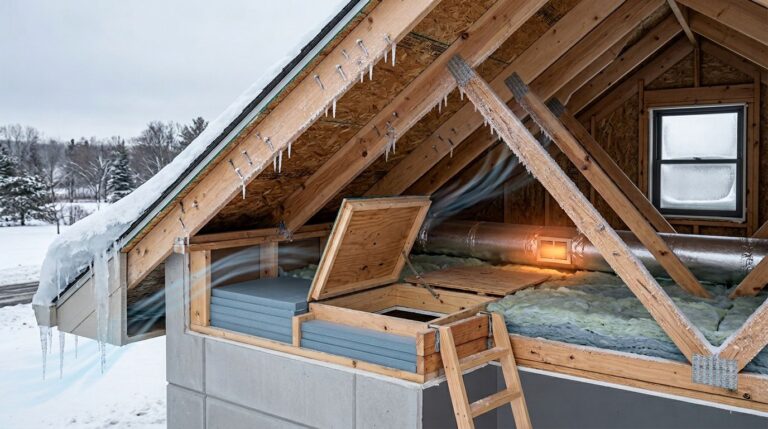
Indoor humidity can create frost in attics, deck cavities, or cold roof edges. Later, that frost melts and looks like a roof leak. Wind-driven snow can also enter small gaps that ordinary rain never reaches. Because of that, the weather, timing, and leak location matter as much as the ceiling stain.
Why snow melt leaks show up when rain doesn’t
Meltwater behaves differently from rainfall
Rain is usually a short, direct event. Snow is stored water. Once sun or interior heat starts a thaw, water can feed the same area for hours, sometimes days. That slow flow has more time to creep under raised laps, loose flashing, or small fastener openings.
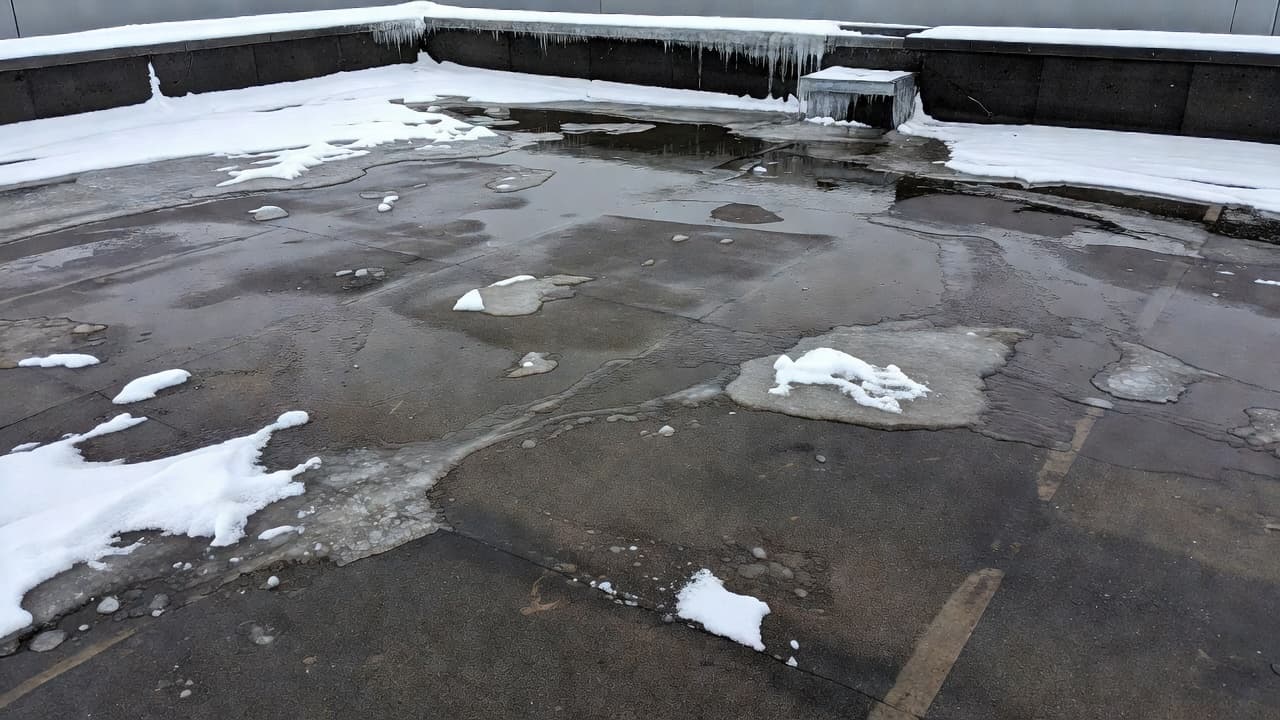
On commercial roofs, cold edges make the problem worse. Drains, scuppers, gutters, and perimeter metal can stay frozen while the upper roof starts melting. Water then backs up behind ice and moves sideways until it finds a weak point.
A quick comparison makes the pattern easier to spot.
| Condition | Rain | Snow melt |
|---|---|---|
| Drainage path | Usually open | Often slowed by ice or slush |
| Water flow | Short burst | Slow feed over hours |
| Leak route | More direct | Can back up under roofing details |
| Common timing | During storm | During daytime thaw or after refreeze |
The timing matters. If the drip starts on warm afternoons after snow, thaw backup is a strong suspect.
Freeze-thaw cycles open hidden paths
Cold weather also stresses roof details. Sealants harden, metal moves, and old repairs can pull apart. A small gap may stay quiet in a warm rain, yet meltwater can find it once ice blocks drainage and pushes water into places it should never reach.
Wind-driven snow adds another twist. It can pack into wall flashings, vent details, and roof transitions, then melt later when the surface looks dry from the ground.
A thaw leak often means slow-moving water is backing up, not that the ceiling stain sits below the source.
That is why ceiling spots can fool you. Water on low-slope systems can travel along membrane laps, cover board, deck ribs, or insulation before it drops indoors.
Snow rarely melts at the same rate
Heat loss, dark rooftop equipment, drifting, and sun exposure create warm and cold pockets across the same roof. One area may start draining while the next stays frozen. As a result, water collects near curbs, walls, and low spots.
Older roofs often have previous patches in those same areas. During a thaw, hidden moisture below the surface can soften the system and make a small defect leak sooner than you would expect.
Step-by-Step
What to do before the next thaw
- Protect people, inventory, and ceilings first. Move stock, put containers under active drips, and keep water away from electrical gear. Then take dated photos of the stain, the drip point, and any exterior snow buildup you can see safely.
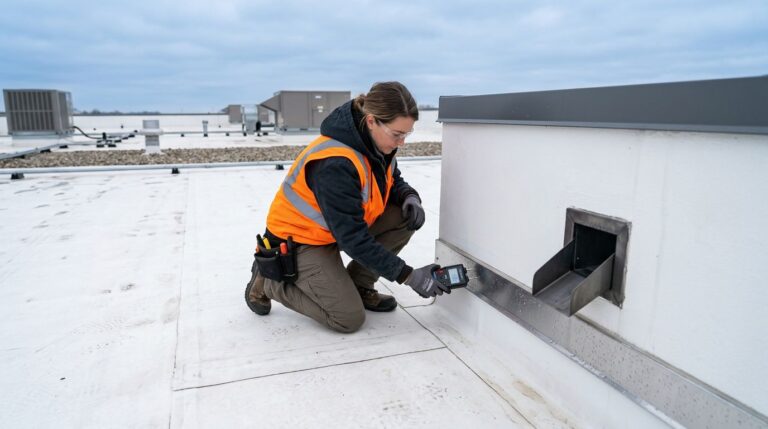
- Check likely trouble spots without climbing onto an unsafe roof. Look at drains, scuppers, roof edges, parapet walls, skylights, rooftop units, and places where upper roofs dump onto lower ones. If snow sits in one area while the rest has melted, that spot may be trapping water.
- Trace the source before authorizing permanent work. Because water can travel far on commercial roofs, the wet ceiling tile rarely marks the entry point. When the leak path is unclear, professional commercial roof inspection and leak troubleshooting can map trapped moisture and find hidden openings before the next thaw.
- Decide whether the scope is local or widespread. If the defect is limited and the surrounding insulation is dry, a targeted commercial flat roof repair may solve the problem. If crews find wet insulation across connected areas, repeated seam failure, membrane shrinkage, or damaged deck sections, commercial roof replacement may be the better financial call. Those signs mean the commercial roof needs repair now, not after another freeze-thaw cycle.
- Separate roof leaks from interior moisture problems. If the building shows condensation on steel, damp attic areas, or frost in roof cavities, check humidity and ventilation too. A thaw can expose both issues at once, and mixing them together leads to the wrong repair.
- Keep the roof draining, but avoid rough winter fixes. Clear interior drain lines if they are blocked, and remove obvious debris when it is safe. Do not hack at ice with metal tools or let untrained staff peel back frozen materials. Temporary dry-in work is reasonable when water is entering, but a rushed permanent fix can hide the real cause.
- Bring in the right scope before spring storms arrive. A professional commercial roofing contractor in Saint Paul can separate a one-area defect from a roof-wide failure, document moisture spread, and tell you whether repair, section replacement, or a larger roof project makes sense.
- Re-check the area after the next thaw or rain. A good repair should stop the leak. If water returns, the first opening was only part of the problem, and the roof may have more than one weak point.
Conclusion
A roof that leaks during thaw but not rain is usually telling you that winter drainage is failing somewhere. Ice, slow meltwater, blocked drains, and small weak points combine to push water under details that handle ordinary rain well enough.
The sooner you trace that path, the smaller the repair usually stays. Ignore a repeat snow-melt leak, and one wet ceiling tile can turn into saturated insulation, damaged decking, and a much larger bill.
FAQ
Why does the leak show up in the afternoon, then stop at night?
Daytime sun or building heat starts the melt. Then water moves until it hits a blocked drain, icy edge, or weak flashing detail. At night, temperatures drop, flow slows, and the drip may stop even though the roof problem remains.
Can one blocked drain cause a leak far from the drain?
Yes. On low-slope roofs, water can travel along seams, insulation, or deck ribs before it appears indoors. Because of that, the stain may show near a wall or tenant space that sits several feet from the entry point.
If the stain is near a parapet wall
Check wall flashings, counterflashings, and scuppers too. Those spots often redirect backed-up water sideways.
Should my maintenance team shovel snow or chip ice off the roof?
Only if the roof is safe to access and the team knows the roof system. Aggressive snow removal can tear membranes, loosen flashing, and make leaks worse. Soft methods and temporary protection are safer than chipping at frozen roofing.
Could this be condensation instead of a roof leak?
Sometimes. If moisture appears during cold periods with no rain and no thaw, indoor humidity or attic frost may be the cause. Track the weather, indoor conditions, and the exact timing of each drip so the repair crew can separate condensation from outside water entry.
When does a thaw leak point to commercial roof replacement?
One trouble spot does not always mean a full reroof. However, repeated winter leaks, wet insulation across wide sections, failing seams in connected areas, or deck damage found after tear-off often mean patching is no longer the low-cost option.
Need a roof inspection in Saint Paul or the Twin Cities? Call Sellers Roofing Company at +1-651-703-2336 or schedule a free estimate. We are a black-owned, NMSDC-certified MBE roofing contractor with 9+ years experience.