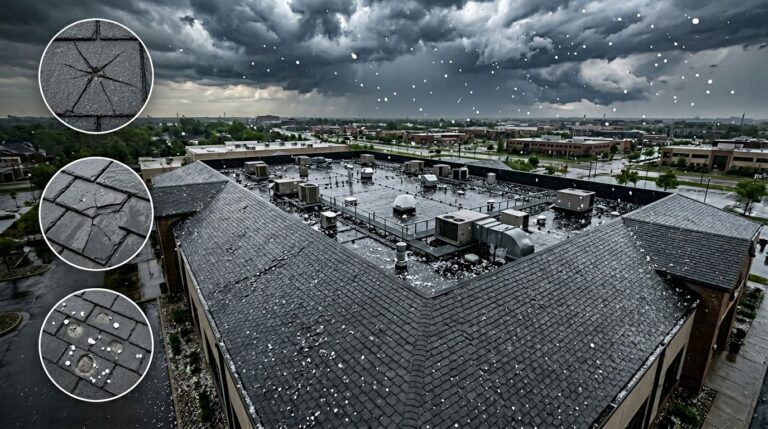
Last updated: 2026-08-01 by Ted Sellers, Owner
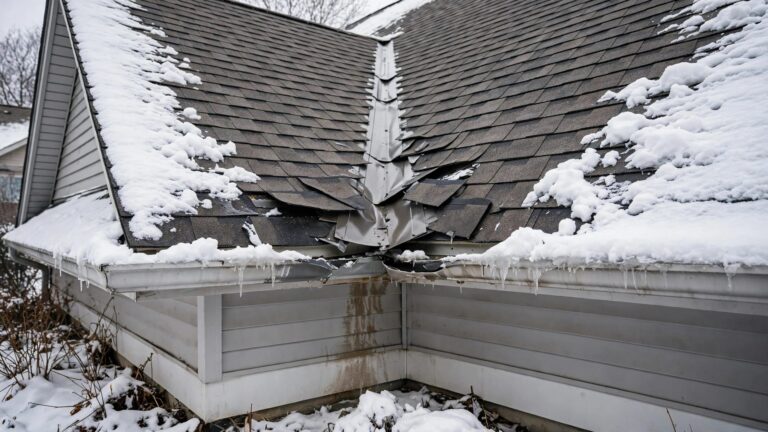
Yes. Roof snow removal can tear shingles or flashing when crews scrape too hard, use the wrong tool, or work on cold, brittle material. The risk is highest at edges, seams, vents, and old repairs. Careful, layered removal lowers the chance of roof snow removal damage on commercial buildings and mixed roof systems.
Snow puts weight on the roof, but the cleanup can cause the real problem. A roof may survive the storm and still fail during removal. One bad pass can crack shingles, bend flashing, or pull sealant loose.
For business owners, the goal is simple. Clear the load without creating new leaks or a larger claim. That means knowing where the roof is fragile, how the job should be done, and what to document if something changes.
When This Applies
Commercial roofs and mixed roof areas
This issue matters most on roofs with older details, mixed materials, or tight transitions around walls and penetrations. A pitched entry canopy, a service building with shingles, or a roof with metal edge trim can lose tabs or flashing during cleanup. On low-slope systems, the bigger risk is often seam, edge metal, and flashing damage rather than torn shingles in the field.
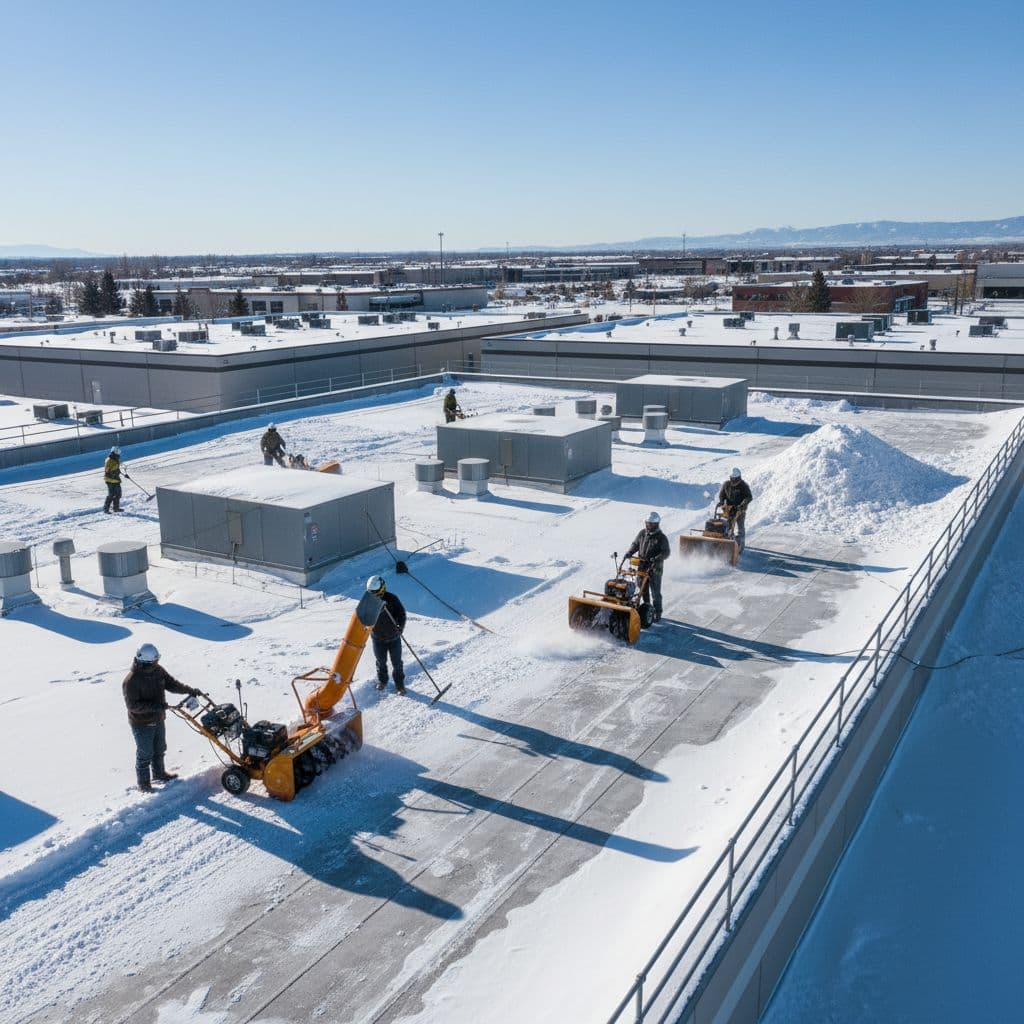
Wet, heavy snow is harder to move than dry powder. Once it freezes, it can bond to the surface and make people pry instead of lift. That is when roof snow removal damage usually starts.
When the risk is highest
The risk climbs after a thaw and refreeze cycle. Snow turns to ice, then grips shingles, flashing, and sealant like glue. Older roofs are even more vulnerable because the materials are already stiff and tired.
The worst damage often starts where the roof already had a weak spot.
If a roof already has lifted edges, cracked tabs, loose fasteners, or old patches, snow removal can finish the job. The same goes for flashing that has been bent before. A small amount of force can turn a minor defect into an active leak.
When the risk is lower
The risk drops when the roof is newer, the snow is light, and the removal method stays gentle. Powdery snow on a clean surface is easier to clear than a packed crust. A trained crew can also work around vulnerable details instead of driving through them.
Large sites and complicated access are better handled by professional commercial roofing services in Saint Paul. That matters when the roof has multiple elevations, rooftop equipment, or a history of leaks.
Step-by-Step
1. Check the roof type and the weak spots
Start with the roof system, not the shovel. Look for shingles, flashing, edge metal, drains, skylights, pipe boots, and any place where one material meets another. Those transitions fail first because they move differently in cold weather.
If the building has a steep service roof or a hard-to-reach section, bring in a trained crew before anyone starts scraping. A steep roof and a frozen surface are a bad mix, especially when the work is near parapets or electrical gear.
Look at edges first
Edges, corners, and penetrations matter more than the open field. The snow may look harmless from the ground, but the danger usually sits at the perimeter. On commercial roofs, that is where flashing and metal trim take the most abuse.
2. Remove snow in thin layers, not deep cuts
A snow rake with a plastic edge is gentler than a metal shovel. So is a pass that removes the top layer first instead of trying to strip the roof clean in one move. When someone digs into the surface, shingles can tear and flashing can bend.
Do not chop at ice to free it fast. That is how tabs split, sealant breaks, and metal edges curl. If the snow is bonded to the roof, the method should change, not the force.
Why force hurts
Roofing materials are less flexible in cold weather. Shingles crack more easily, and flashing can deform before anyone sees it. A worker who pushes harder to save time often creates a leak that costs more than the snow removal.
3. Protect flashing, seams, and drains as you work
Keep tools away from the spots that fail first. That includes wall flashing, pipe boots, skylight curbs, terminations, and roof edges. On low-slope roofs, seams and edge metal need the same care.
If water shows up after cleanup, identifying roof leaks in Saint Paul can help trace the entry point before a patch hides it. Leak tracing matters because water often travels away from the opening.
Stop when the roof starts to change
If flashing lifts, a shingle tears, or sealant peels away, stop the work in that area. The goal is to remove snow, not to pry at the roof until something gives. A small damaged spot is easier to fix than a torn section around it.
4. Document anything new before you repair it
Take photos before and after the work. Capture the weather, the date, the roof area, and the damaged detail. If it is safe, keep a sample of a torn shingle or bent flashing.
That record helps separate old wear from fresh damage. It also keeps the file clean if an insurer gets involved. Temporary dry-in work, interior protection, and leak tracing do not weaken a claim. They show you acted fast to limit more loss.
Keep the claim clean
Save receipts, labor notes, and any emergency materials used to stop water. If the building stays open, note what areas were protected and when. Good records matter more than polished language later.
5. Decide whether repair or replacement fits the loss
A small tear or loose piece of flashing may only need commercial flat roof repair or a localized shingle repair. Wider problems are different. Wet insulation, repeated leaks, or failed seams across several areas can point to commercial roof replacement instead.
If the commercial roof needs repair after snow removal, the next step is a clear inspection, not a guess. Compare the damaged areas with the roof’s age, the leak history, and the amount of material affected. Then review deciding between roof repair and replacement before you sign a final scope.
FAQ
Can snow removal tear asphalt shingles?
Yes. Cold shingles crack more easily, especially when they are old or already worn. A hard scrape can lift tabs, strip granules, or split the shingle mat. The risk is higher near the eaves and any place where ice has bonded to the surface.
Can snow removal damage flashing on a commercial roof?
Yes. Flashing bends more easily than the main roof surface. Step flashing, counterflashing, pipe boots, skylight flashing, and edge metal can all pull loose if someone pries at ice or works too close with a shovel.
What should I do if I see torn shingles or bent flashing after clearing snow?
Stop work in that area and document the damage right away. Take photos from a few angles, then protect the opening with temporary dry-in material if water can enter. After that, call a roofer before the next thaw makes the leak worse.
Does temporary mitigation hurt an insurance claim?
No. Reasonable mitigation usually helps because it limits more damage. Keep the tarp invoice, photos, and notes from the visit. Those records show the insurer what happened before any permanent repair starts.
When should I call a roofer instead of using in-house staff?
Call a roofer when the roof is steep, icy, bonded with frozen snow, or already leaking. The same is true if the roof has repeated trouble spots or if the job is large enough to move from a small fix to a broader commercial flat roof repair. In-house staff should not learn roof work on an icy building.
Conclusion
What matters most
Snow removal can protect a roof, but only if the method matches the roof condition. The real danger sits at the edges, the seams, and the flashing details, where cold materials break easier.
If you spot a tear or a bent metal detail, document it first, then choose the fix based on scope. Sometimes that means a small repair. Other times, the damage is broad enough for commercial roof replacement.
The safest winter roof is the one cleared without giving the storm a second chance.
Need a roof inspection in Saint Paul or the Twin Cities? Call Sellers Roofing Company at +1-651-703-2336 or schedule a free estimate. We are a black-owned, NMSDC-certified MBE roofing contractor with 9+ years experience.