Last updated: 2026-05-26 by Ted Sellers, Owner
Roof shingles are the overlapping outer roof covering on sloped surfaces. Their job is simple but critical: they shed water, protect the roof deck underneath, and take the hit from sun, wind, and impacts like hail.
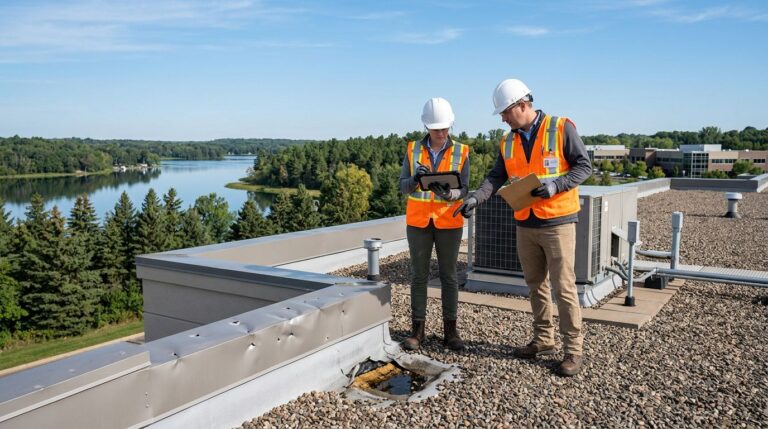
For commercial business owners, shingles often show up on office entries, retail storefront canopies, and older properties, even if the main roof is a flat system. Because Minnesota weather swings hard, small issues like lifted edges, worn granules, or failed seals can turn into leaks fast, especially after a storm (see signs of hail-damaged shingles).
This guide answers, What Are Roof Shingles? by breaking down what shingles are made of, how they work as a system with underlayment and flashing, and the most common types you’ll see on light-commercial roofs. It also covers what really affects lifespan, what to watch for during inspections, and how to choose shingles that make sense for Minnesota wind, freeze-thaw cycles, and hail risk.
What roof shingles are, and how they keep water out
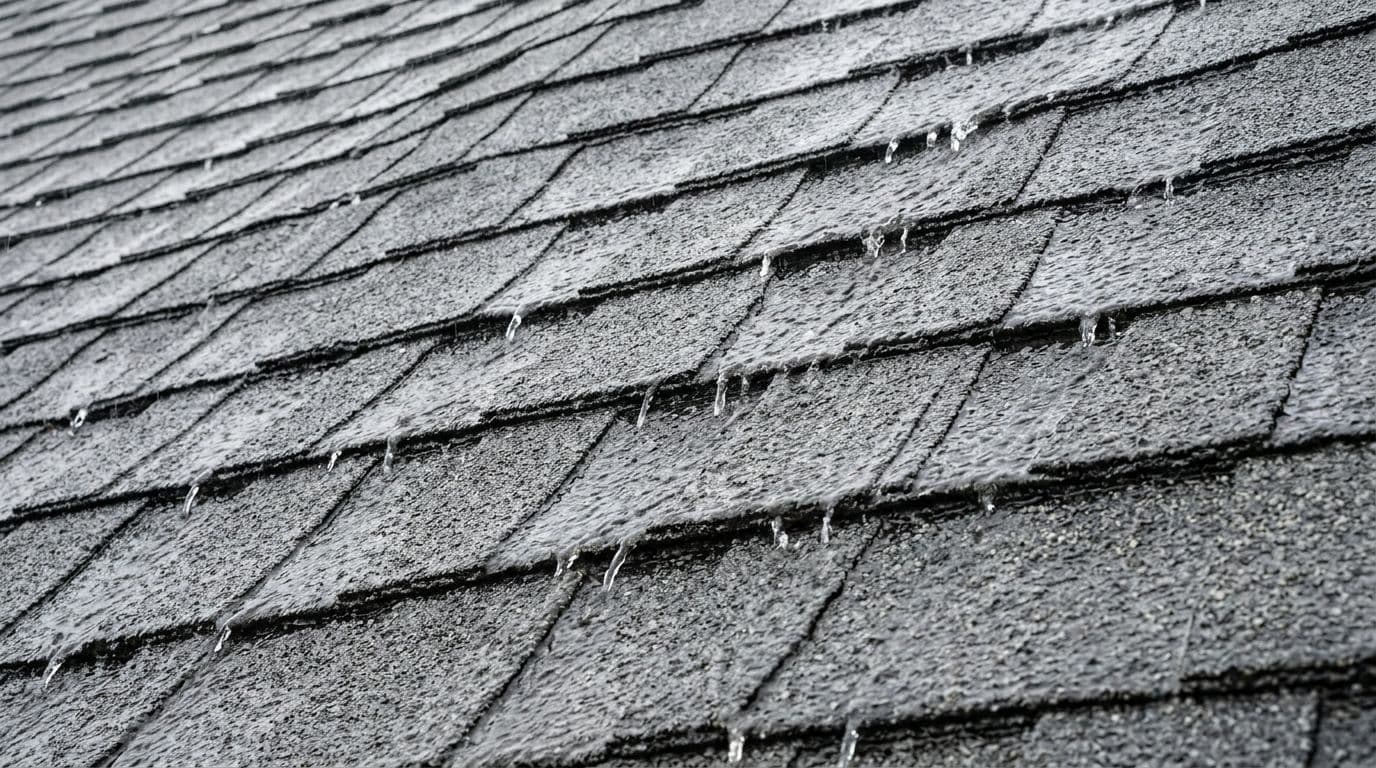
When people ask, What Are Roof Shingles?, they usually want the practical answer: what they do on day one, and what fails when leaks show up. Shingles keep water out by forcing it to run downhill, layer by layer, while the parts underneath handle the “what if” moments, like wind-driven rain, ice, and backed-up water.
For commercial building owners, this matters because shingle sections are often the “small roof” that causes a “big headache”, especially at entries, dormers, and steep accents that tie into flat roofing.
The basic definition: small overlapping pieces that shed rain and snow
Roof shingles are small, flat roofing pieces installed in rows on a sloped roof. Each row overlaps the row below to shed rain and snow away from the building.
Picture a deck of cards laid on a table with each card covering the top edge of the next card. Water hits the surface, then travels down and across overlaps until it exits at the eaves. That overlap is the whole idea; it creates a repeating path that keeps water moving outward instead of letting it reach the wood underneath.
Shingles do more than handle rain. They also:
- Block UV that breaks down roofing materials over time.
- Take minor impacts from things like small hail, wind-tossed debris, and foot traffic from maintenance.
Still, shingles are not a “waterproof lid.” They’re a water-shedding surface that depends on gravity. That’s why roof pitch matters. If the slope is too low, water moves slowly, lingers longer, and can work its way sideways under laps during wind, ice, or pooling. In other words, shingles need enough pitch to do their job reliably.
If water can sit on the surface for long periods, the roof is asking the shingle system to do work it wasn’t designed to do.
How a shingle roof works as a system, not a single product
A shingle roof performs like a chain. One weak detail can become the leak path, even if the shingles look fine from the parking lot. Here’s how the key parts work together.
Roof decking (the base). This is the structural layer, usually wood panels, that everything fastens to. Decking needs to be solid, dry, and properly attached. Soft decking can’t hold nails well, and that can lead to lifted shingles and gaps.
Underlayment (the backup). Underlayment sits between shingles and decking. Think of it as the second line of defense. It helps manage water that gets past shingles during wind-driven rain, ice dam conditions, or temporary blow-offs.
Starter strip (the edge seal). The starter strip runs along eaves and often rakes. It helps seal the first course and sets up proper water flow into the gutter line. Without a good starter, you can get edge lift and early wind issues, which can invite water at the roof’s most exposed perimeter.
Field shingles (the main water-shedding layer). These are the visible shingles across the open roof area. When installed correctly, field shingles usually are not where leaks start. They are designed to drain quickly, and they have repeated overlaps that tolerate normal rain very well.
Flashing (the leak preventer at details). Flashing is what keeps water out where the roof surface gets interrupted, such as:
- Wall transitions (step flashing, counterflashing)
- Roof penetrations (pipes, vents, skylights)
- Chimneys and parapet intersections
- Valleys, where two slopes meet and concentrate runoff
Because these spots interrupt the smooth “downhill path,” they’re where mistakes or aging show up first. In practice, most roof leaks trace back to flashings, valleys, or penetrations, not the center of the shingle field.
Ridge and hip caps (the peak protection). At ridges and hips, the roof changes direction and catches wind. Cap shingles cover the seams at these peaks, protecting the top edges of the field shingles while allowing the roof to “finish” in a watertight way.
Ventilation (heat and moisture control). Ventilation is easy to overlook because it doesn’t “stop water” directly. Still, it reduces heat and moisture buildup that can shorten shingle life and encourage condensation issues in the roof assembly. Balanced intake and exhaust help the roof dry out, which matters after snow cover, freeze-thaw cycles, and humid seasons.
On a commercial property, this systems view also helps you troubleshoot faster. If you see staining on a ceiling, the leak source might be uphill, or it might be at a flashing that sits several feet away from the wet spot.
What shingles are made of (fiberglass mat, asphalt, mineral granules, sealant strips)
Most shingle roofs you see today use modern asphalt shingles, sometimes called composition shingles. They’re simple in concept, but each layer has a specific job.
Fiberglass mat (the backbone). At the center of the shingle is a fiberglass mat. This gives the shingle its shape and strength, and it helps resist tearing.
Asphalt coating (the water resistance). Asphalt is applied to the mat to help keep water out and to hold the shingle together. It also adds flexibility so the shingle can handle normal movement from temperature swings.
Mineral granules (UV protection and color). The top surface is covered with mineral granules, essentially crushed stone coated for durability and color. Granules protect the asphalt from sunlight, add fire resistance, and help the roof handle weathering. When you see heavy granule loss in gutters or at downspouts, you’re often seeing the roof’s “sunscreen” washing away.
Sealant strips (wind resistance). Most shingles include heat-activated sealant strips. After installation and enough warm sun, these strips bond shingles together to resist wind lift. If shingles never seal (because of cold installs, dust, or aging), edges can flutter, tabs can lift, and water can get pushed under the laps during storms.
Back-coating and parting agents (bundle handling). Shingles also have a back surface treatment that keeps them from sticking together in the bundle. It’s not a performance feature you think about day to day, but it helps installers handle and place shingles without damaging them.
For a manufacturer-style breakdown of common asphalt shingle types and construction, see asphalt shingle types and components.
A quick note on older products: organic-mat shingles (made with a paper-based mat) exist, but they’re much less common today. You’ll mainly run into them on older buildings or older additions, and they tend to be heavier and more prone to moisture-related aging.
Where shingles make sense on commercial buildings, and where they don’t
If you own or manage a commercial building, shingles can be a smart choice in the right places. They also can be the wrong system if the roof shape fights against gravity drainage.
Shingles are commonly used on:
- Steep-slope roof sections that shed water quickly
- Mansards (the sloped faces around some retail and office buildings)
- Entry features like porte-cochères, canopies, and decorative gables
- Small office buildings or mixed-use properties with traditional rooflines
So why don’t you see shingles on most large commercial roofs? Because most big commercial roofs are low-slope. Low-slope areas often need membranes (like TPO, EPDM, or modified bitumen) that handle slow drainage and occasional ponding better than shingles can.
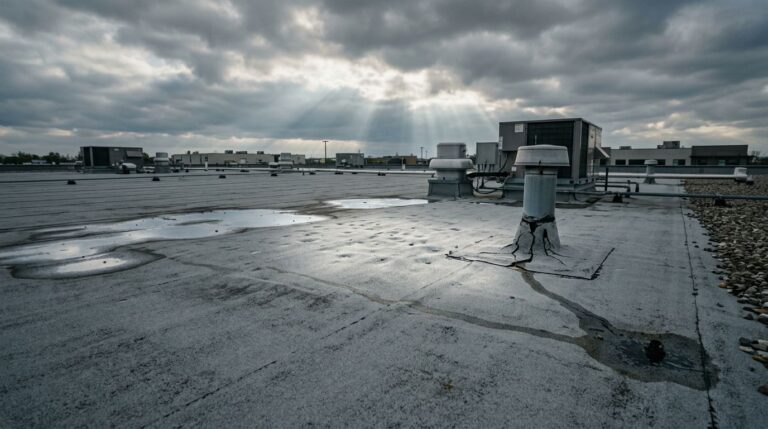
Here’s the practical test that saves money: if water can sit on the roof after a rain, shingles are the wrong material for that area. Even “minor” ponding can push water into places shingles were never meant to seal, especially around nails, joints, and transitions.
Mixing systems is also very common. A property might have a flat membrane roof with a shingle mansard or a shingle entry section. That setup can work well, but the transition is unforgiving. The connection between a flat roof and a shingle slope needs excellent flashing and termination details, because that’s where water can back up or get driven uphill by wind.
If you’re budgeting for repairs, treat shingle sections like high-visibility, high-detail zones. They’re smaller than the main roof, yet they often have more edges, more joints, and more leak opportunities per square foot.
The main types of roof shingles and what each one is best at
When you ask, What Are Roof Shingles?, you are usually trying to figure out which kind makes sense for your building, budget, and weather risk. The “best” shingle is the one that fits your roof’s slope and details, handles your local wind and hail, and won’t turn into a maintenance project.
On light-commercial roofs (entry canopies, mansards, steep accents), the choice often comes down to four families: asphalt, wood, synthetic/composite, and metal or tile-style systems. Each has a different balance of cost, looks, upkeep, and storm performance.
Asphalt shingles: the most common choice because they balance cost and performance
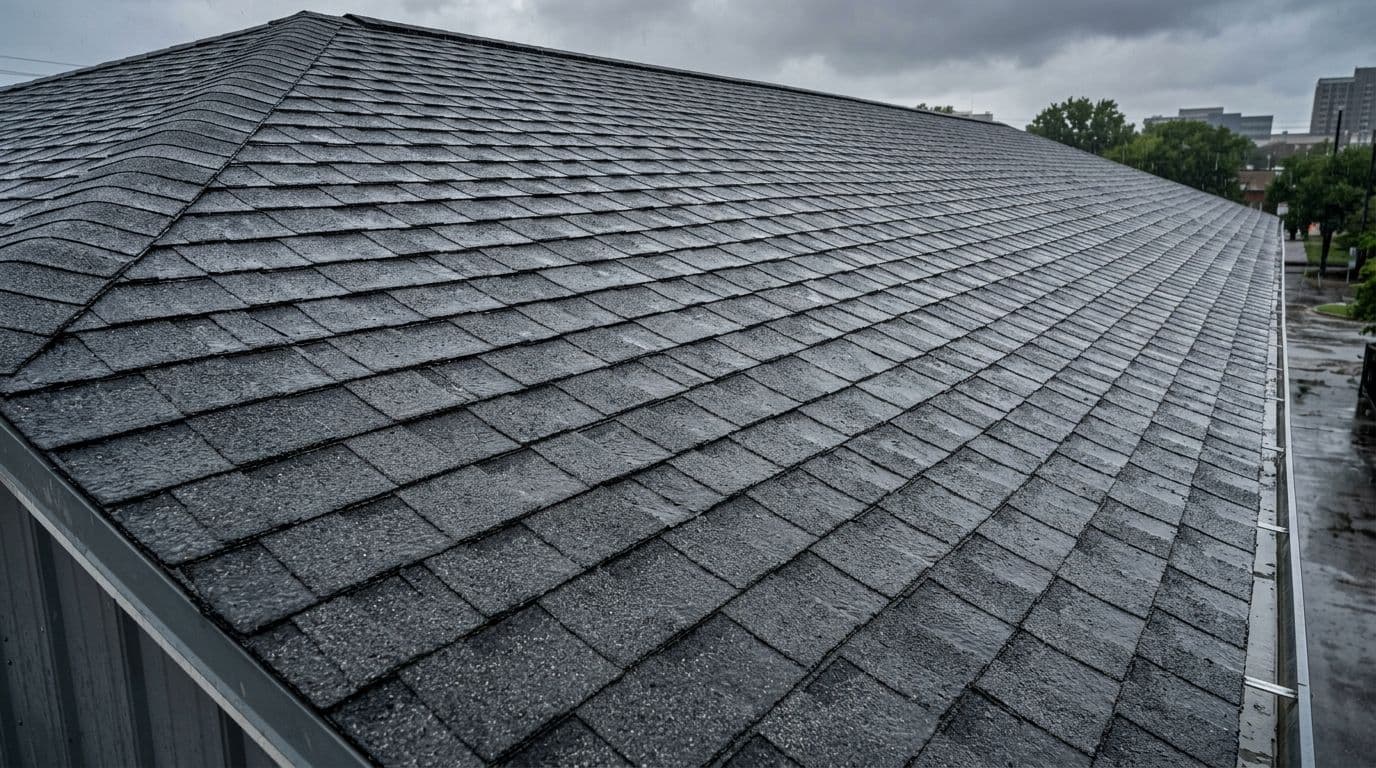
Most asphalt shingles today are fiberglass-based composition shingles. Think of them like a reinforced waterproof layer with a protective “skin” on top:
- The fiberglass mat is the backbone that gives the shingle strength and tear resistance.
- The asphalt coating adds water resistance and flexibility through temperature swings.
- The mineral granules act like sunscreen and armor, they block UV, add color, and take abrasion.
- The sealant strip is the wind helper, it bonds shingles together once warmed by sun, which reduces edge lift and tab flutter.
That sealant bond matters on commercial entries and mansards because wind hits those edges hard. Meanwhile, granules matter because once they thin out, the asphalt ages faster and the shingle becomes more brittle.
3-tab vs architectural (laminated) shingles in plain terms
- 3-tab shingles: Thinner, flatter look, and a repeating pattern. They typically trend toward shorter real-world durability and lower wind resistance than laminated options, especially as they age.
- Architectural shingles: Thicker, layered, and more dimensional, like stacked cards. They commonly trend stronger in wind and wear because the build is heavier and the adhesive areas are often more robust.
Practical pros and cons for business owners Asphalt wins on simplicity and price. It is also easy to source fast after a storm, which helps when you need repairs without weeks of lead time.
Still, asphalt has predictable weak spots:
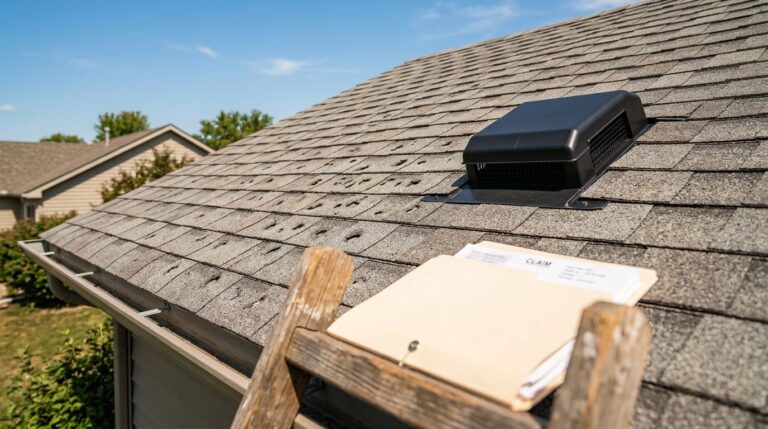
- Hail can bruise or knock granules loose, which speeds aging.
- Heat can soften asphalt, especially on darker roofs or poorly ventilated assemblies.
- Poor ventilation can cook shingles from below, raising the risk of early cracking and curled edges.
If two roofs use the same shingles, the one with better ventilation and flashing details usually lasts longer.
For a neutral overview of common shingle categories, see a breakdown of roof shingle types.
Wood shingles: classic look, higher upkeep, and stricter fire concerns
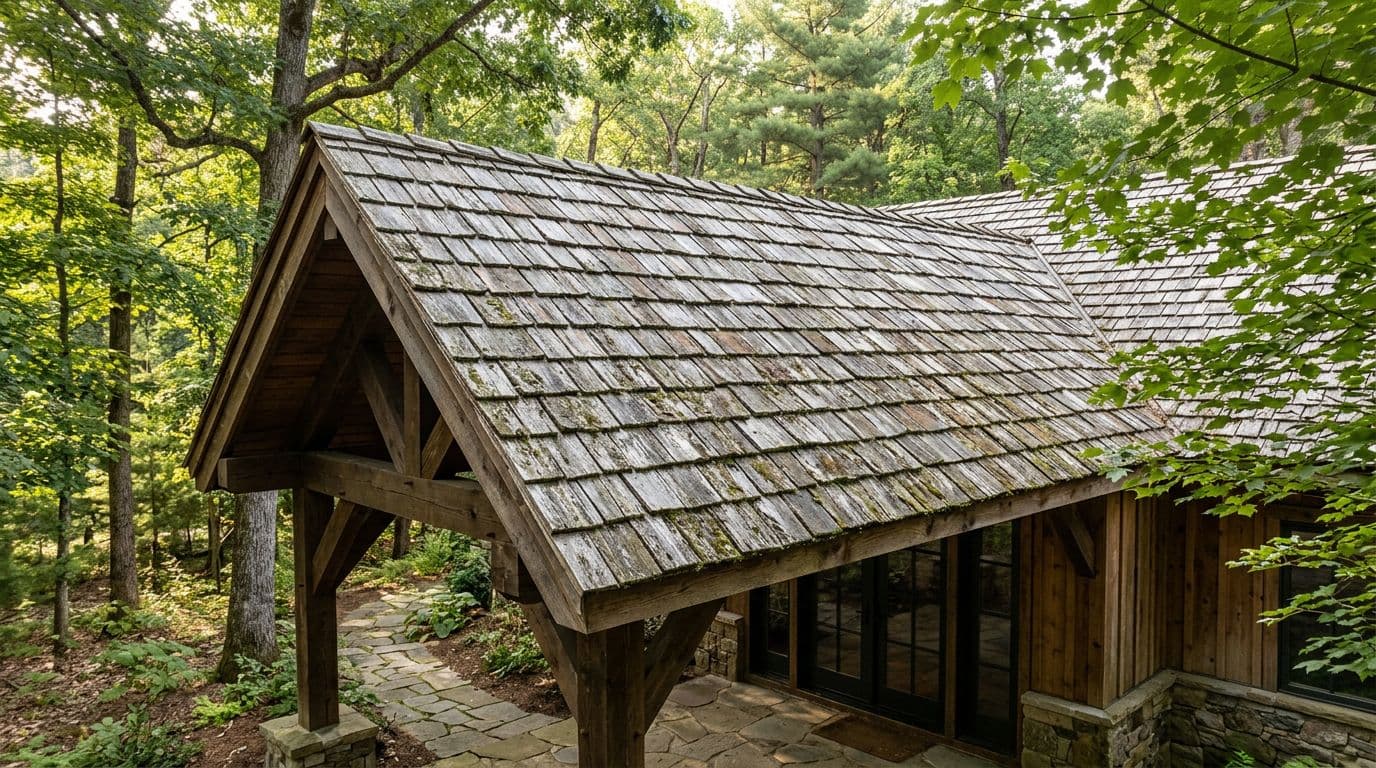
Wood shingles, most often cedar, get picked for one big reason: they look real because they are real. On a storefront canopy or a steep entry feature, wood can deliver a warm, high-end appearance that asphalt struggles to match.
However, wood asks more from the owner. You are managing a natural product that reacts to moisture, shade, and debris. On commercial properties, that can be a tough fit if your maintenance plan is already stretched.
Here are the practical drawbacks to weigh:
- More routine upkeep: Leaves, branches, and roof-edge debris hold moisture against wood.
- Moss and algae risk: Shaded roof faces can green up faster, especially near trees and north slopes.
- Fire requirements and local rules: Many areas require specific fire ratings or have restrictions, and those rules can change by jurisdiction and building type.
- Insurance concerns: Some carriers price wood differently, or ask more questions about fire ratings and mitigation.
Wood can still be a solid choice when appearance matters and you can commit to regular inspections and cleaning. The key is treating it like exterior wood siding, not like a “set it and forget it” roof.
Composite, synthetic, and “luxury” shingles: when you want the look without some of the drawbacks
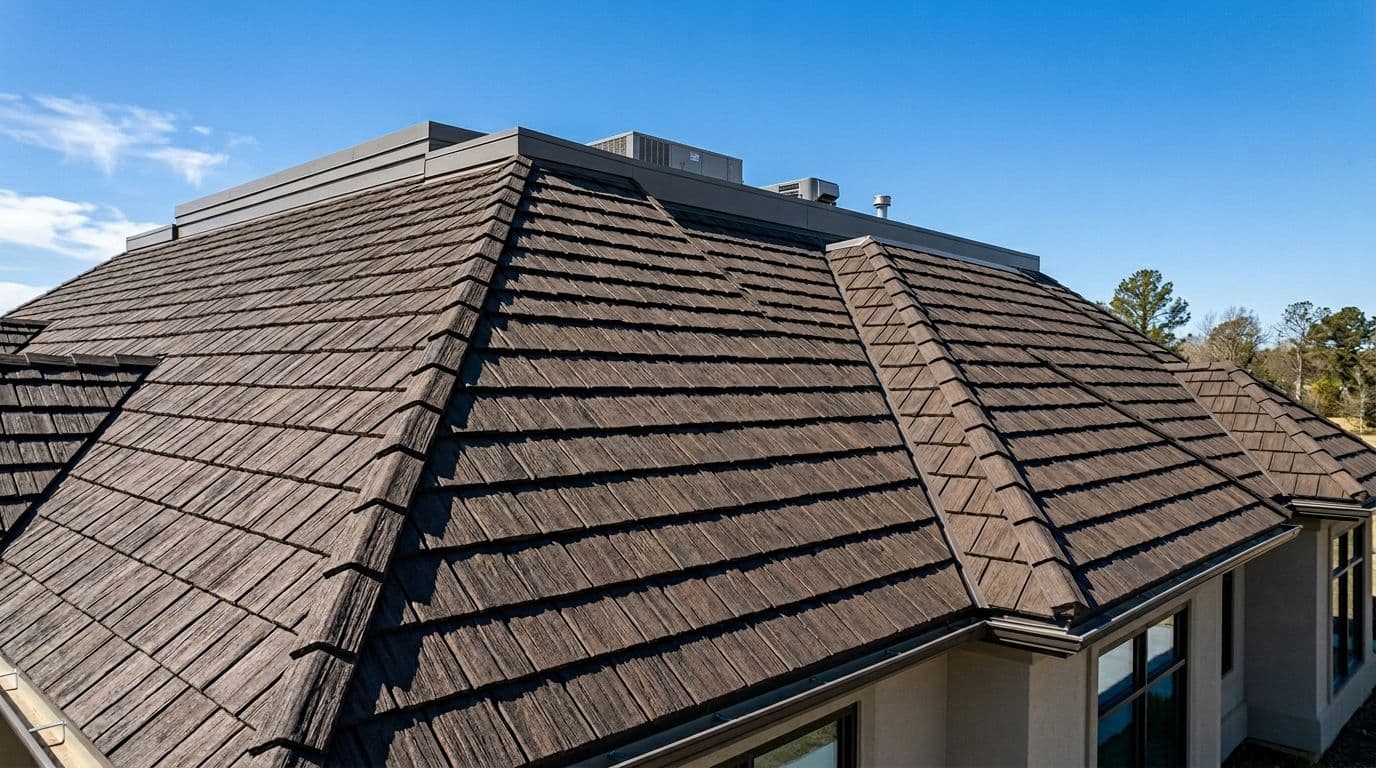
Composite and synthetic shingles are engineered products made to mimic the look of wood shake or slate, with more consistent sizing and color. Many are designed with storm concerns in mind, so you will often see them marketed around impact resistance and more predictable performance from piece to piece.
For commercial owners, these are usually a “pay more now, worry less later” option, but only if you choose wisely. Before you sign off, focus on decision points that affect real-world ownership:
- Cost premium: Materials and labor can run higher than basic asphalt.
- Warranty differences: Not all warranties cover the same things, and some have strict install requirements.
- Installer skill: These systems can be less forgiving, and the details matter at hips, ridges, and transitions.
- Future repair matching: If one area gets damaged, can you match the product later?
Ask your contractor for the actual test ratings, not just marketing claims. In particular, request wind ratings and impact ratings so you can compare apples to apples. Also confirm the manufacturer’s track record for keeping the same colors available, because mismatched patches stand out on visible mansards.
Metal shingles and tile-style options: long-life materials with different install details
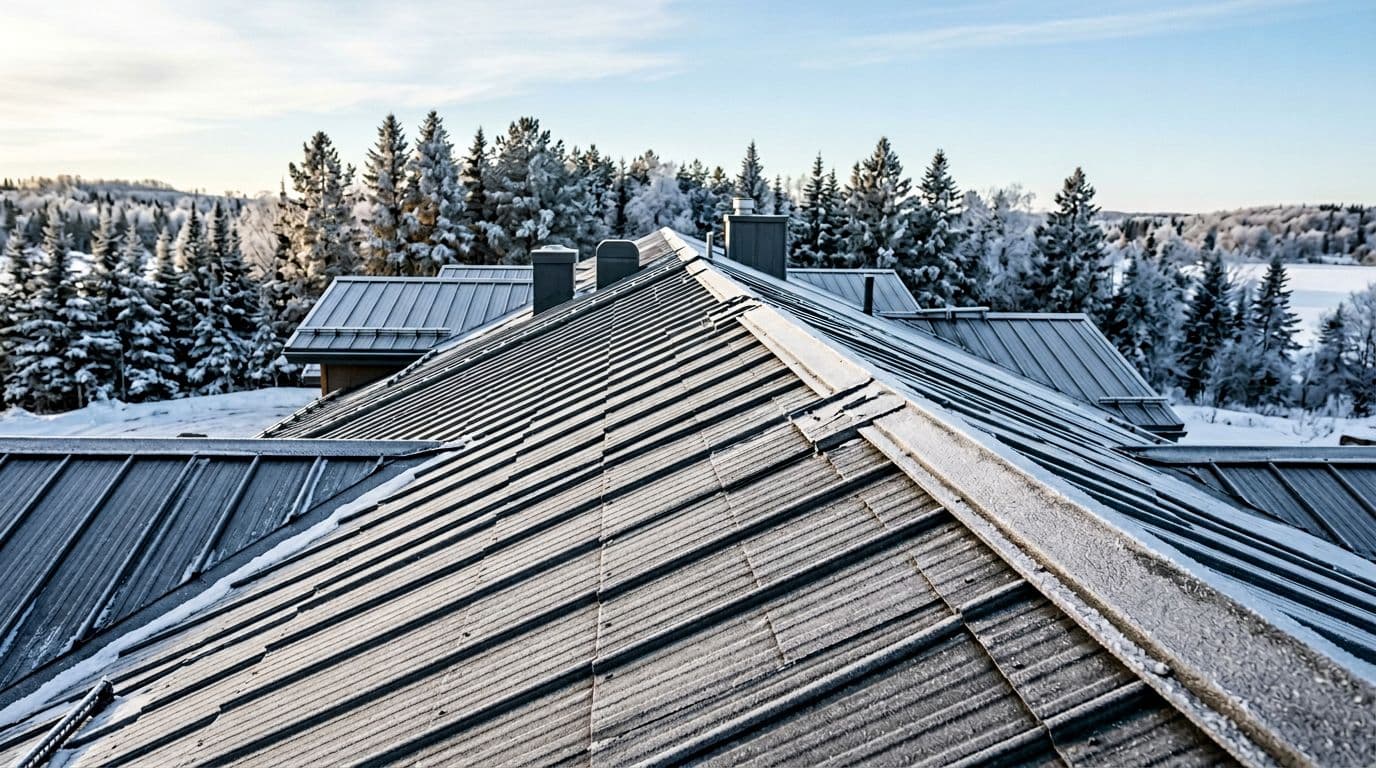
Metal shingles are not the same thing as standing seam panels. Instead of long vertical panels, metal shingles come as individual pieces that interlock or fasten in patterns. That format can work well on steep accents because it handles complex shapes while still delivering metal’s durability.
Tile-style options are a different animal. Slate and clay tiles can last a long time, but they are heavier and more brittle. That often means the building needs stronger framing, careful handling during installs, and a plan for breakage during future rooftop work.
From a commercial ownership standpoint, focus on the realities that show up after installation:
- Weight limits: Tile and slate can push structural loads, especially on older buildings.
- Noise perception: Rain noise is often more about the deck and underlayment than the metal itself, but it’s worth discussing if the roof is over occupied space.
- Snow-shedding behavior: Metal tends to shed snow more readily, which can be helpful, but it can also dump snow suddenly near entrances unless snow retention is designed in.
- Underlayment and flashing: Long-life coverings still fail at the weak points, so valleys, walls, and penetrations need first-rate details.
 Photo by Skylar Kang
A tile or slate look can be impressive on highly visible roof sections, but the system under it matters just as much. If the underlayment, flashings, and attachment plan are wrong, even premium materials can leak.
What affects shingle lifespan, leaks, and repair costs in Minnesota weather
If you manage a commercial property in Minnesota, shingles age faster than you expect, and leaks rarely wait for a “convenient” time. Temperature swings, wind, hail, and ice work like repeated stress tests on the same seams and edges. That is why “What Are Roof Shingles?” is not just a materials question, it is a performance question, especially on entry canopies, mansards, and steep accents that take the worst of the weather.
The good news is that most costly surprises leave clues first. When you know what failure looks like, you can repair early, prevent interior damage, and keep roof spending predictable.
How shingles usually fail: granule loss, cracks, lifted edges, and damaged flashing
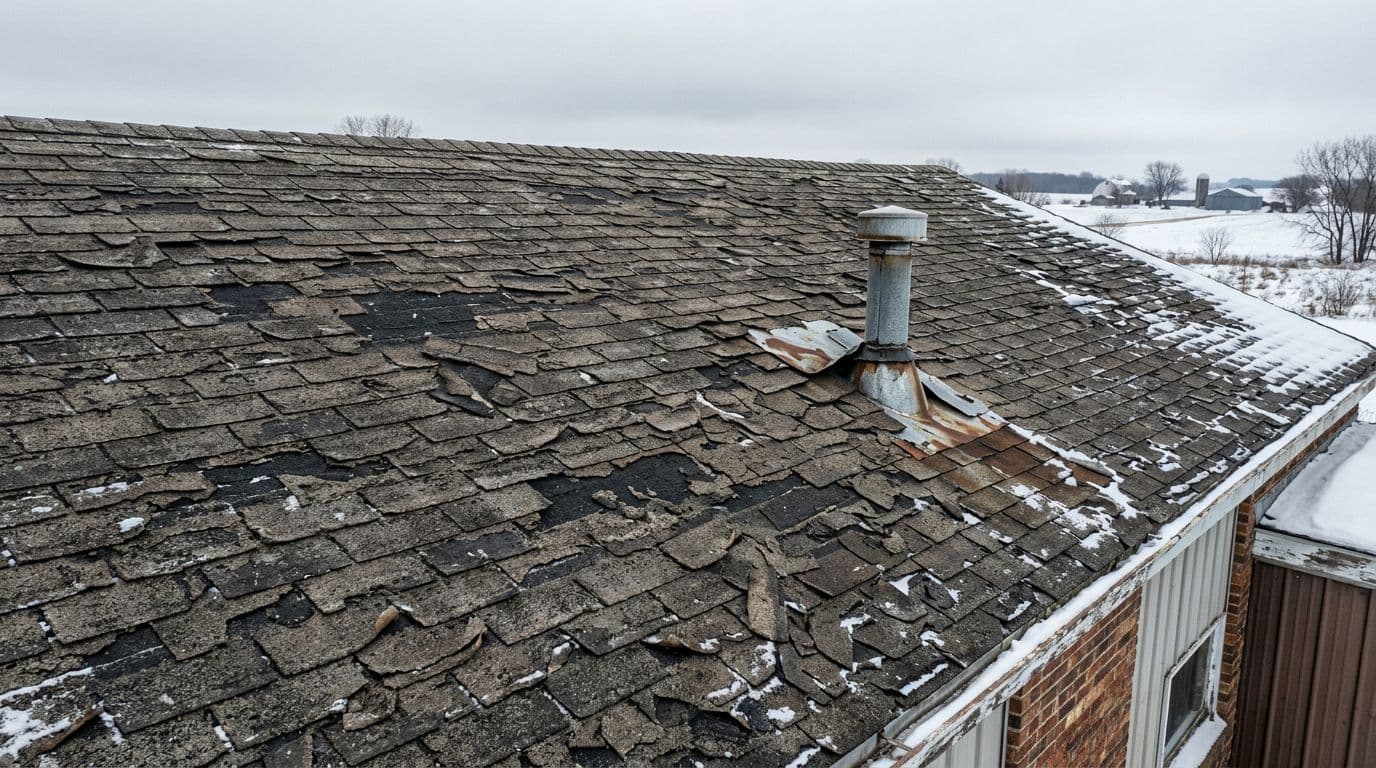
Most shingle problems start small, then spread. Think of shingles like a layered rain jacket. Once the outer “skin” wears thin or the seams open up, water finds the weak spot and keeps working it wider.
Here are the most common failure modes and what they can lead to:
- Granule loss: Granules are the shingle’s UV shield. When they wash off, the asphalt dries out and gets brittle. You might notice sand-like piles at downspouts, bald patches, or darker spots that look “polished.” Over time, that can lead to cracking, faster aging, and leaks that soak insulation and stain ceilings.
- Cracks and splits: Cold, sun, and repeated freeze-thaw cycles can turn shingles brittle. Cracks let water reach underlayment and decking, which can trigger wood rot and hidden mold. Inside, you may see brown rings on ceiling tiles or wet insulation that never fully dries.
- Lifted edges and unsealed tabs: Wind gets under loose edges and “flutters” the shingle. That movement breaks sealant bonds and opens a path for wind-driven rain. From the ground, look for shadows under tabs, uneven lines along rakes, or corners that curl.
- Flashing damage or separation: Flashing is the metal (or membrane) detail around penetrations, walls, and transitions. It fails from corrosion, loose fasteners, bad sealant, or movement. This is a big one because flashing can leak even when shingles look fine.
Actionable clues a building owner often notices first:
- Water stains on ceilings or walls, especially near exterior walls or around mechanical rooms
- Drips that show up only during wind-driven rain or during thaw cycles
- Missing shingles, shingle “corners” on the ground, or debris after wind
- Granules collecting in gutters and at downspout outlets
If the leak appears far from the roof edge, suspect flashing at walls, vents, skylights, and transitions first, not the middle of the shingle field.
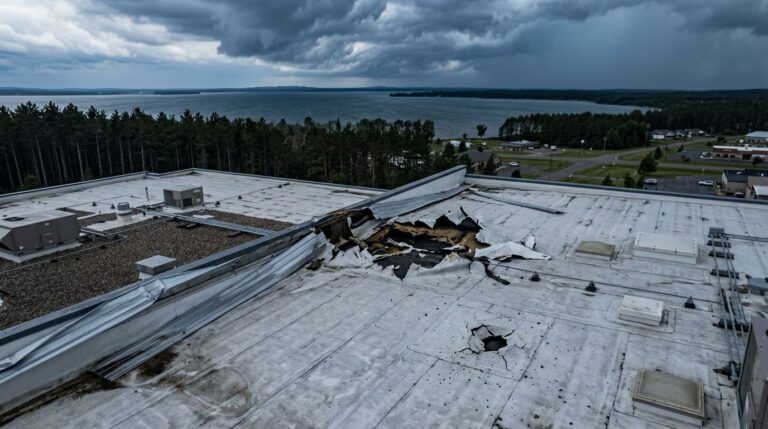
Hail, wind, snow, and ice: what to watch for after a storm
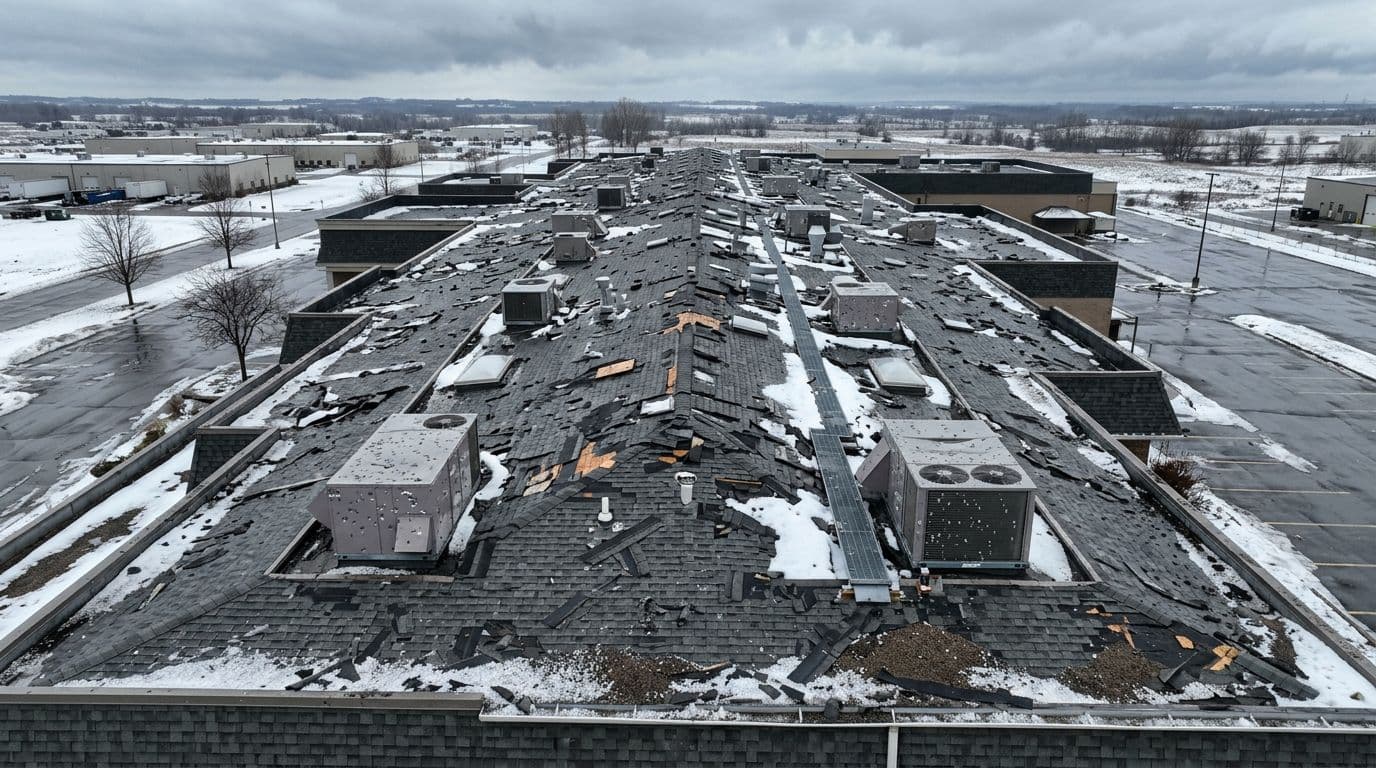
After a storm, you can do a useful first pass from the ground. You are not trying to “prove” damage, you are trying to spot red flags that justify a professional inspection.
Start with a safe, ground-level check:
- Walk the perimeter and look for shingles on the ground or fresh debris near downspouts.
- Scan rooflines for missing tabs, lifted corners, or uneven edges along ridges and rakes.
- Check metal items you can see (gutters, downspouts, vents) for dents and dings.
- Look at downspout discharge for granule piles (it can look like coarse black sand).
Then match the signs to the weather event:
- Hail impact clues: Hail damage often shows up as random, scattered hits, not tidy lines. From the ground, dents on soft metals (vents, gutter faces, AC covers) are strong hints. If gutters suddenly flush out dark granules, that also points to hail scouring the shingle surface. For general context on how environment and maintenance change roof lifespan, see roof lifespan factors explained.
- Wind damage clues: Wind tends to cause creased shingles (a visible bend line), lifted edges, or shingles that blow off clean. If you see a consistent pattern on one side of the building, wind likely hit that exposure hardest.
- Snow load and ice basics: Snow itself is not always the problem. Trouble starts when roof heat melts snow, water runs down, and eaves freeze. That creates an ice dam, basically a frozen curb at the edge. Water backs up behind it and can sneak under shingles and nails, soaking decking and insulation before you see a drip.
Call a pro sooner (not later) if any of these happen:
- Active leaks, ceiling tile sagging, or wet insulation smells
- Missing shingles, exposed underlayment, or visible flashing gaps
- Hail dents on vents plus granules washing out of gutters
- Ice buildup at eaves with interior staining during thaws
Ventilation and attic moisture: the hidden factor that can shorten shingle life
Storms get the attention, but heat and moisture can do steady damage every week. Poor ventilation lets hot, damp air collect under the roof deck. That “cooks” shingles from below and can make them age like they are a few seasons older than they are.
Moisture is the other half of the problem. Warm indoor air can leak into attic spaces, then condense on cold surfaces in winter. Once the deck stays damp, you risk mold, rot, and insulation that stops insulating.
Symptoms owners often notice (even without going into the attic):
- Higher HVAC bills, especially in summer, because heat builds under the roof
- A musty smell near top floors or stairwells
- Winter signs like frost on nails or damp spots that appear during cold snaps
- Shingles that look prematurely aged for their install date (brittle, curled edges, fast granule loss)
During any roof inspection, ask for a basic ventilation and insulation check. For commercial buildings with mixed roof types, also confirm that mechanical work did not block intake or exhaust paths. A small venting mistake can shorten the life of a very expensive roof area. A recent Minnesota-focused summary also points to ventilation as a major driver of premature aging, along with temperature swings and winter stress (see Minnesota winter roof impacts).
Maintenance and inspection habits that protect your roof budget
Shingle repairs get expensive when you pay for interior damage too. The simplest budget protection is a repeatable routine, the same way you would treat HVAC filters or fire systems.
A practical schedule that most owners can keep:
- Seasonal visual checks (spring and fall): Walk the perimeter, look for lifted edges, sagging gutters, and debris buildup in valleys.
- After major storms: Do a ground-level scan for missing shingles, dented vents, and fresh granules at downspouts.
- Keep drainage clear: Clean gutters, scuppers, and downspout screens so water does not back up under edges.
- Trim overhanging branches: Branches scrape granules, drop debris, and can punch shingles during wind.
- Watch penetrations: HVAC curbs, vents, and pipe boots are common leak zones. If sealant looks cracked or missing, it is time for a closer look.
- Document changes: Take date-stamped photos after storms and during seasonal checks. This helps with repair planning and insurance conversations.
What not to do:
- Don’t pressure wash shingles. It strips granules and shortens life fast.
- Don’t walk steep roofs without training and proper fall protection. Foot traffic can crack brittle shingles and damage flashing.
Early repairs usually cost less because you are fixing a small opening, not replacing soaked insulation, stained ceilings, or rotted decking. The roof will always lose a fight with water, so the goal is to spot the first crack in the armor and patch it before the next storm finishes the job.
How to choose the right shingles for your building, your budget, and your risk
Choosing shingles for a commercial property is less about the “best” brand and more about the right fit for your roof shape, local hazards, and how your building actually operates. When owners ask, What Are Roof Shingles?, the most useful answer is practical: they are a water-shedding system that only performs as well as the slope, details, and install rules allow.
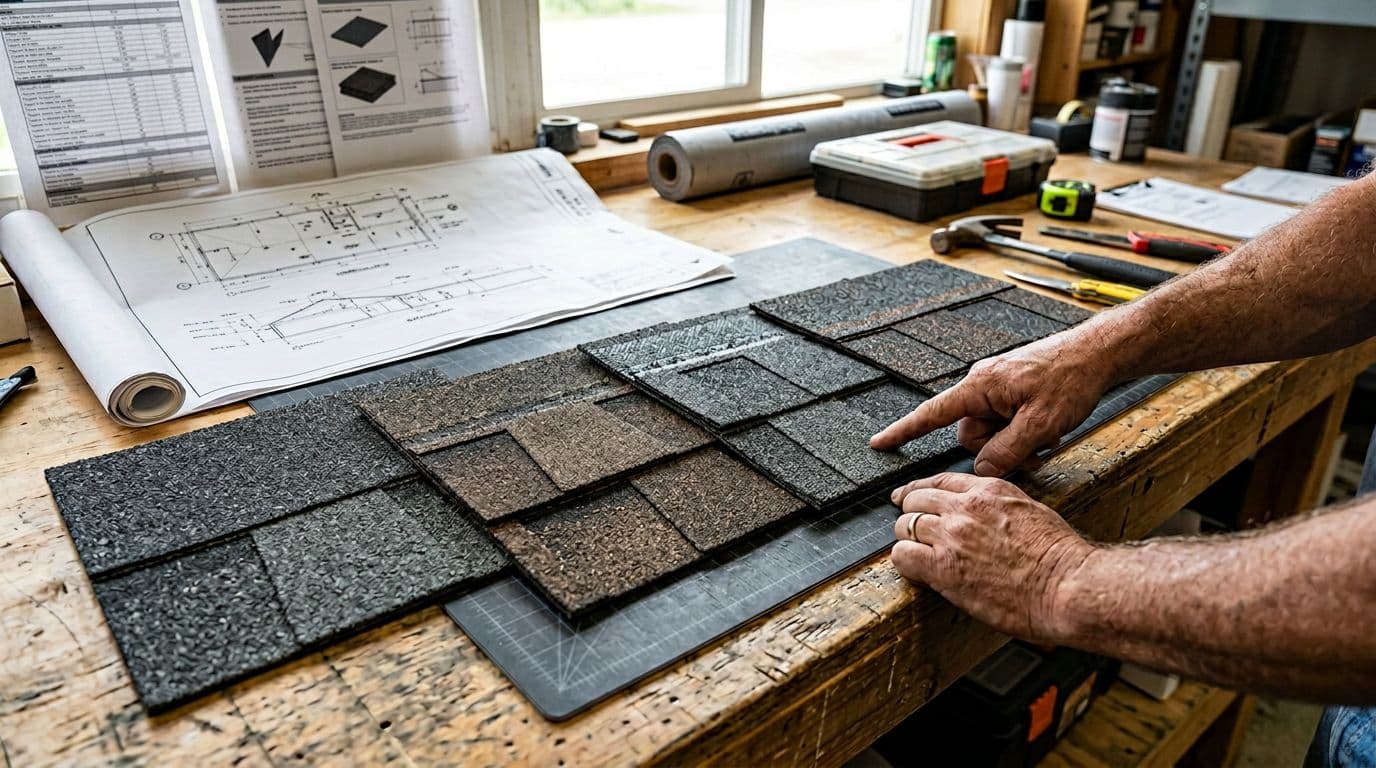
Start with roof design and code: slope, fire rating, and edge details
First, make sure shingles even belong on that roof area. Slope is the gatekeeper. If the surface is too low-slope, water drains slowly and wind-driven rain can work under laps. In those areas, a membrane system often makes more sense than any shingle upgrade.
Next, treat code and fire rating as non-negotiable, especially on commercial sites. If your building sits close to neighboring structures, has rooftop equipment, or includes tenant buildouts with higher fire loads, the roof covering needs the right fire classification for the occupancy and layout. Don’t rely on “standard shingles are fine.” Ask your contractor what rating they’re proposing and why it meets your local requirements.
 Photo by morgan
Finally, pay extra attention to the perimeter and edges. Minnesota wind events don’t “test” the middle first, they attack corners, rakes, eaves, and transitions. A premium shingle can still fail early if the starter course, drip edge, underlayment laps, or fastening pattern is sloppy.
A shingle roof is like a winter coat. The fabric matters, but the cuffs and zipper decide whether cold air gets in.
Pick performance targets: wind resistance, impact resistance, and algae protection
Once slope and code check out, set clear performance goals. The easiest way to compare products is by using recognized test standards and ratings. You don’t need to memorize technical details, but you do want bids that state what the shingle is designed to handle in three real-world categories:
- Wind resistance: This comes from the shingle design, the sealant strip, and correct nailing. Wind failures usually start as lifted corners, then creases, then blow-offs.
- Impact resistance (hail): Hail can bruise shingles, crack mat layers, and knock off granules. If your property has a history of hail claims, impact-rated options can reduce damage severity.
- Algae protection: On shaded slopes, near trees, or on north-facing sections, dark streaking can show up and stick around. Algae-resistant granules can help roofs look cleaner longer, which matters on visible entries and mansards.
Minnesota reality check: you’re not choosing one risk. You’re balancing straight-line winds, hail bursts, and long damp seasons where shaded roof sections stay wet. That mix is why vague proposals are dangerous.
When you request bids, push for this level of clarity:
- The exact manufacturer and product line (not just “architectural shingles”).
- The target ratings for wind and impact the bid intends to meet.
- The installation details that make those ratings possible (starter at rakes, proper ridge cap, required accessories).
If you want a quick snapshot of what manufacturers are emphasizing this year, see the trade overview in Roofing Contractor’s product focus. The takeaway is simple: performance is a system, not a single line item.
Think long-term: repairability, matching, warranties, and business disruption
A smart shingle choice should make future repairs easier, not harder. Some products are more forgiving when you need to replace a handful of shingles after a wind event. Others look great, but turn into a bigger headache when a small repair won’t blend.
Repairability and matching matter more than most owners expect. Even if a shingle color is still “available,” dye lots and weathering can make a patched area stand out years later. That’s a big deal on customer-facing rooflines. If appearances matter, ask about realistic matching expectations and whether keeping extra bundles on-site makes sense.
Warranties deserve a cautious read. Many shingle warranties assume:
- Proper ventilation (heat and moisture can void coverage or shorten life)
- Approved accessories (underlayment, starter, ridge vent, caps)
- Correct install (fastening pattern, flashing rules, and details)
In other words, the warranty is only as strong as the documentation and the install quality. Don’t accept “lifetime” language without asking what conditions can reduce coverage.
Also plan the work like a business project, not just a roof project. Shingle replacement can affect operations through noise, access limits, and safety zones. Before the first bundle shows up, align on:
- Work hours that respect tenants, deliveries, or customer peak times
- Access routes for crews (especially around loading docks and main entries)
- Dumpster placement that won’t block parking, ADA paths, or fire lanes
- Protection for signage, landscaping, and outdoor seating
A well-chosen shingle helps, but a well-planned install protects your revenue and your relationships with tenants.
Conclusion
Roof shingles are overlapping roof pieces built to shed water fast, row by row, as gravity pulls runoff to the eaves. That simple overlap only works when the whole system is right, underlayment, starter strips, flashing, ventilation, and proper fastening all matter as much as the shingle you can see.
For commercial business owners, the best answer to “What Are Roof Shingles?” is practical: pick the type that fits your slope and your risk.
Steeper accents and mansards can do well with quality architectural shingles or impact-rated options, while low-slope areas usually need membranes. In Minnesota, weather stress makes installation quality and routine inspections the difference between a small repair and a disruptive leak.
Next, document what you have (photos, product name, install date, past repairs), then schedule a professional inspection after major storms. When you compare bids, look for system details, flashing approach, edge protection, ventilation plan, and manufacturer-required accessories, not just the price.
Need a roof inspection in Saint Paul or the Twin Cities? Call Sellers Roofing Company at +1-651-703-2336 or schedule a free estimate. We are a black-owned, NMSDC-certified MBE roofing contractor with 9+ years experience.