Last updated: 2026-08-01 by Ted Sellers, Owner
Start with safety, then check the roof in layers. Look from the ground first, photograph dents, splits, and missing granules, and only climb if the surface is stable. On a detached garage, garage roof hail damage often shows up on edges, flashings, and metal trim before it shows through the ceiling. If you find leaks, sagging, or soft decking, stop and call a roofer.
When This Applies
Who should use this inspection process
This process fits detached garages, storage sheds, service buildings, and small accessory roofs after a hailstorm. It also fits commercial properties with detached garages, condo outbuildings, rental storage spaces, and maintenance bays. The roof can be shingle, metal, or low-slope. The method stays the same, but the damage signs change by material.
For business owners, this matters because a small outbuilding can still protect tools, inventory, or vehicles. A hit that looks minor from the driveway can still open seams, crack sealant, or loosen edge metal. That is where a wider claim starts to form.
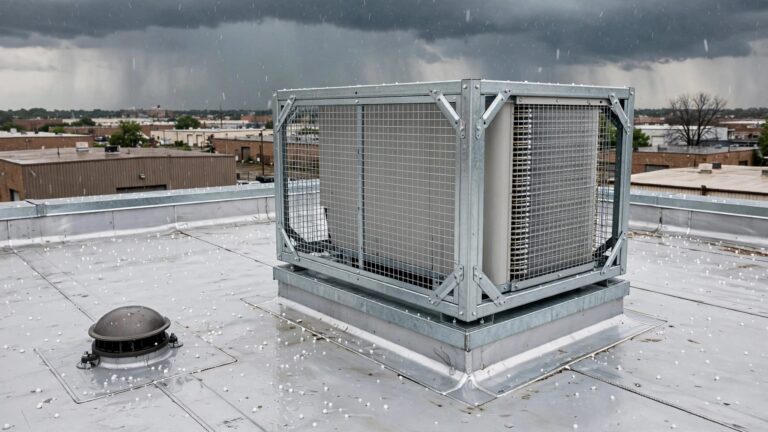
If the detached garage is part of a larger property claim, a commercial roof inspection helps separate hail damage from old wear, ponding, or prior patch work.
When to stop and get help
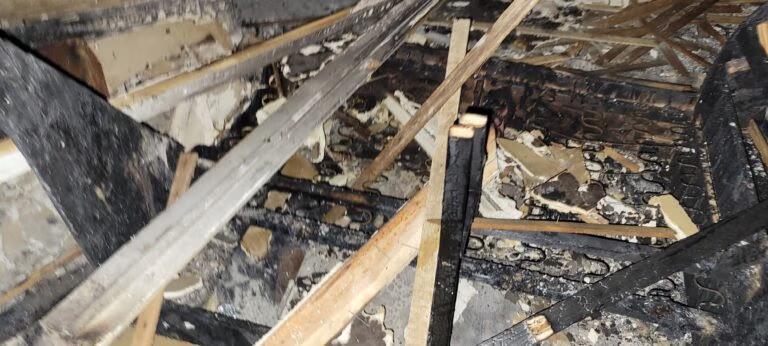
Do not climb if the roof is steep, slick, wet, or covered with loose debris. Skip the inspection if you see sagging framing, exposed wiring, or ceiling collapse inside the garage. Those are not do-it-yourself conditions.
The same caution applies if the roof already had active leaks before the hail. In that case, the hail may have made a weak roof worse, but it may not be the only cause. If water is still entering, a leak-focused inspection is the faster path. On roofs with hidden moisture, commercial roof leak detection services can find damage that a simple walk-through misses.
If the roof is unsafe or the damage seems broad, the goal is proof first and repairs second.
Step-by-Step
Start with safety and a clean record
- Write down the storm date, the time you noticed the damage, and any leaks you saw afterward. That timeline matters later, especially if you need to show the hail event came before the repair.
- Walk the perimeter before you go up. Look at the roof plane, gutters, downspouts, fascia, vents, and metal trim. Hail often leaves dents on the parts people notice last.
- Take wide photos first, then close-ups. Capture each side of the garage, every roof edge, and any visible punctures or missing material. If you have a phone with zoom, use it before you climb.
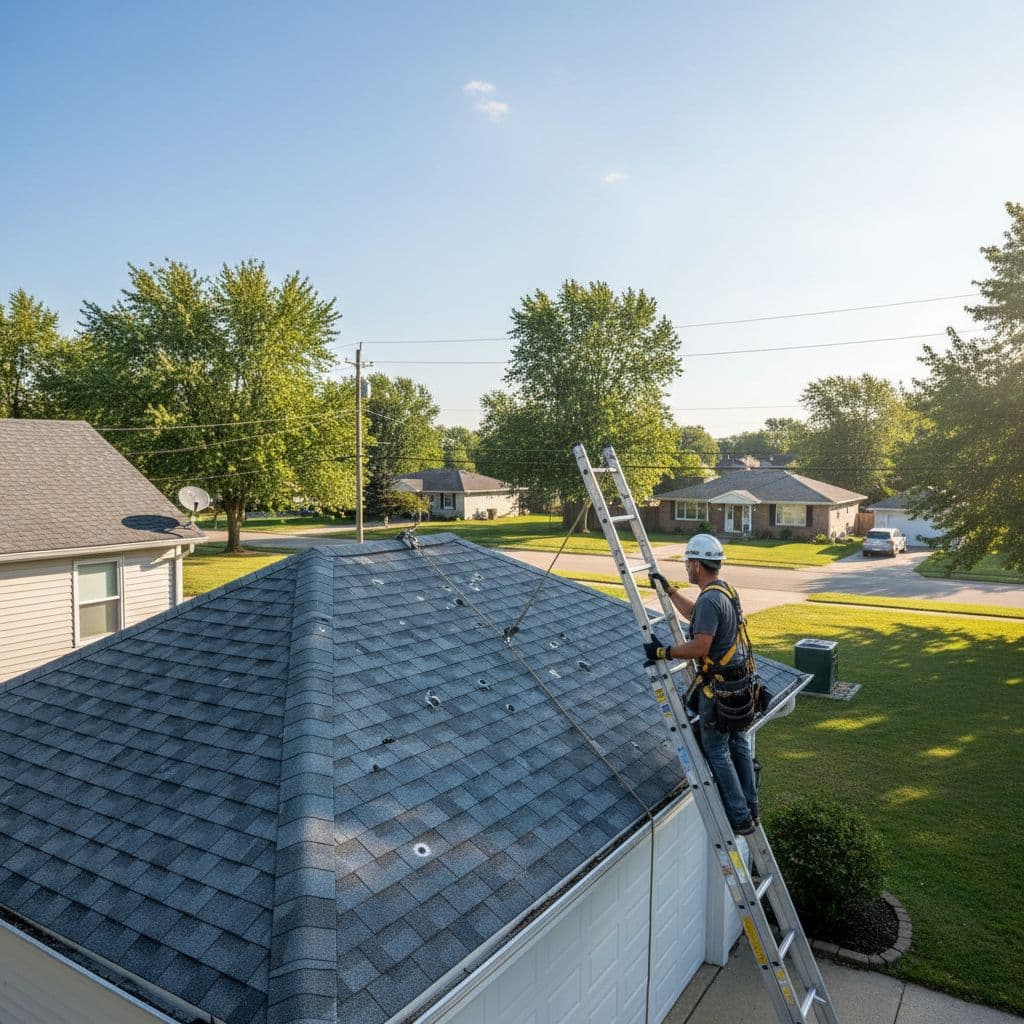
4. Move onto the roof only if the surface is stable. On shingles, look for bruised spots, cracked tabs, granule loss, and lifted flashing. On metal, check for dents that crease seams or loosen fasteners. On low-slope roofs, look for punctures, seam splits, and scuffed coating. 5. Check the inside of the garage next. Stains, wet insulation, drips, and a musty smell tell you the roof may be leaking even if the outside damage looks small. If you find moisture inside, the roof needs a closer look before cleanup hides the evidence. 6. Save every note, photo, and estimate in one folder. If you later need a contractor or insurer to review the loss, a clean record is much easier to use than a pile of scattered images.
Pay attention to the parts hail hits first
Edge metal, vents, pipe boots, and gutter lines usually show damage sooner than the field of the roof. That is because hail strikes exposed trim at an angle and often cracks the weak points first.
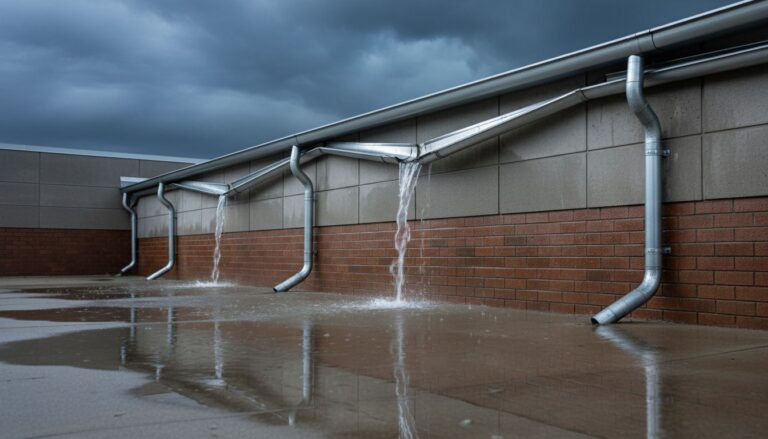
If the roof has a flat section, spend extra time on drains and seams. Standing water can make hail damage harder to spot and easier to worsen after the storm passes.
What Damage Matters Most on a Detached Garage Roof
Focus on function, not surface marks
Not every dent means the roof failed. Some marks are cosmetic, especially on older metal panels or trim. The real question is whether the roof still sheds water as designed.
On shingle roofs, look for bruised granules, torn tabs, and cracked corners. A shingle can still look intact from the ground and fail once wind or rain lifts it.
On metal roofs, a dent matters more when it bends a seam, breaks a coating, or opens a fastener hole. Smooth dents are less serious than damage that changes the panel shape.
On low-slope roofs, a hail hit can puncture the membrane or split a seam. That kind of damage often creates a slow leak, which is why interior staining and wet insulation matter so much.
The biggest red flags are soft decking, repeated leaks, and water inside the building. Those signs move the job from inspection to repair planning.
Common signs worth documenting
- Bruised or missing granules on shingles
- Cracked sealant around vents, boots, and edges
- Dented gutters, downspouts, or rake metal
- Split seams or punctures on flat roofing
- Interior stains or damp insulation
If you can photograph those items with the date attached, you have a much stronger record of what changed after the storm.
When the Roof Needs More Than a Patch
When a targeted repair is enough
A small repair makes sense when the hail hit one section, one flashing detail, or a few isolated shingles. The roof should still be dry inside, and the decking should feel solid. In that case, a focused fix is often enough to stop the leak and protect the structure.
This is where commercial flat roof repair can be the right answer for a detached garage on a business site. If the damage is limited, the roof does not need a full rebuild just because it has hail marks.
When the scope is wider
If you find widespread seam failure, wet insulation, or repeated leaks, the roof may need more than repair. That is also true when the damage keeps spreading after temporary patch work. At that point, the garage roof is no longer a simple service call. It is a scope decision.
If the detached garage is part of a larger asset, a broader review may show that commercial roof needs repair is the wrong phrase and commercial roof replacement is the better call. That shift usually happens when the roof has too many weak spots to trust a patch.
The question is not how bad the roof looks from the driveway. The question is whether the roof still protects what sits under it.
FAQ
Can I inspect a detached garage roof from the ground?
Yes, and you should start there. Ground-level photos catch dents, missing shingles, bent metal, and gutter damage without adding risk. They will not show soft decking or hidden seam splits, so treat the ground check as the first step, not the last one.
What does hail damage look like on a metal garage roof?
It often shows up as dents in panels, ridges, ridge caps, vents, and gutters. The damage matters most when a dent creases a panel, breaks a coating, or loosens a seam. Smooth dents alone are less urgent than damage that changes the roof’s ability to shed water.
Do dented gutters mean the roof is damaged too?
Not always, but they are a warning sign. Hail often hits the roof edge, flashing, and penetrations at the same time it dents the gutters. If the gutters are damaged, inspect the roof more closely before you assume the problem is only cosmetic.
How do I know if the garage needs repair or replacement?
Repair is more likely when the damage is local and the roof still feels solid. Replacement is more likely when you find saturated insulation, widespread leaks, or repeated failures across several areas. If the roof is part of a business property, the cost difference can be large, so the inspection has to be precise.
What should I save for insurance or contractor review?
Keep storm dates, photos, leak notes, contractor findings, and repair invoices. Do not throw away damaged materials before you photograph them. Once the evidence is gone, it becomes harder to show what hail changed and when it changed.
Conclusion
Keep the inspection simple, safe, and documented
A detached garage roof can hide more than it shows. Dented metal, bruised shingles, and cracked sealant are easy to miss until water gets inside. The best inspection starts on the ground, moves to clear photos, and ends with a decision based on function, not guesswork.
If you document the damage early, you can choose the right fix with less delay. That is the difference between a quick repair and a bigger claim later.
Need a roof inspection in Saint Paul or the Twin Cities? Call Sellers Roofing Company at +1-651-703-2336 or schedule a free estimate. We are a black-owned, NMSDC-certified MBE roofing contractor with 9+ years experience.