Last updated: 2026-08-01 by Ted Sellers, Owner
Look for pattern and texture. A roof with hail damage usually shows random, impact-style marks plus dents on soft metals (vents, caps, gutters). Shingle blistering, on the other hand, looks like raised bubbles that formed from within the roof system, often in more uniform “fields.” Identifying these across various roofing materials is crucial. When in doubt, document the area and get an inspection, because the fix and insurance outcome can differ.
When This Applies
If you own or manage a commercial building
This question fits commercial business owners who need to decide whether a roof issue is hail damage from a storm or a roof-system problem. It’s common after a hail event when tenants report leaks, ceiling stains, or musty odors, but the roof surface looks “mostly fine” from the ground, though granule loss or impact marks may appear on closer inspection.
It also applies if you have a low-slope system (TPO, EPDM, asphalt bitumen, BUR) where damage can be subtle. Water can travel before it shows inside, so the first visible interior sign may be far from the source.
While these guidelines focus on flat or low-slope commercial roofs, the same bruising versus blistering logic applies to sloped sections with roof shingles.
On the other hand, it may not apply if the roof surface is clearly cut, punctured by tools, or damaged by foot traffic. Those leave sharper, directional marks. Also, if your roof is very new and you’re seeing widespread “bubbling” right away, you may be dealing with an installation or material issue, not hail damage.
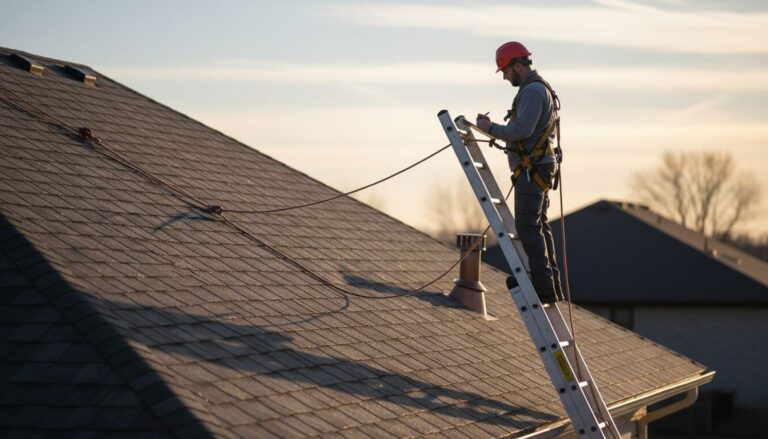
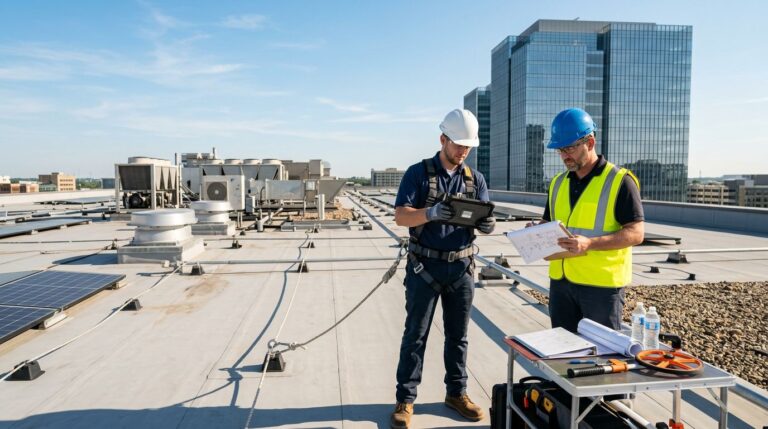
If your team isn’t trained for rooftop work, don’t “just take a quick walk.” A rushed look can miss damage and create a safety incident.
What hail hits look like vs what blisters look like
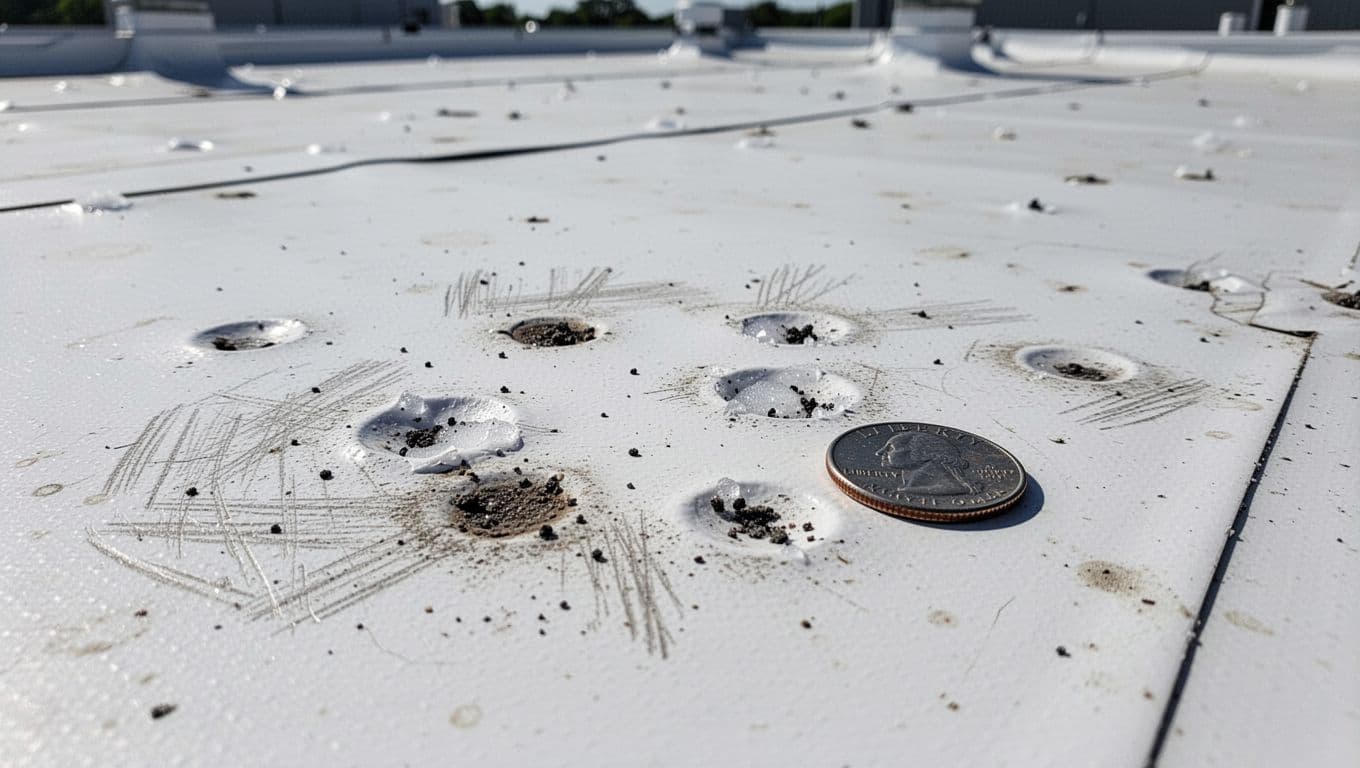
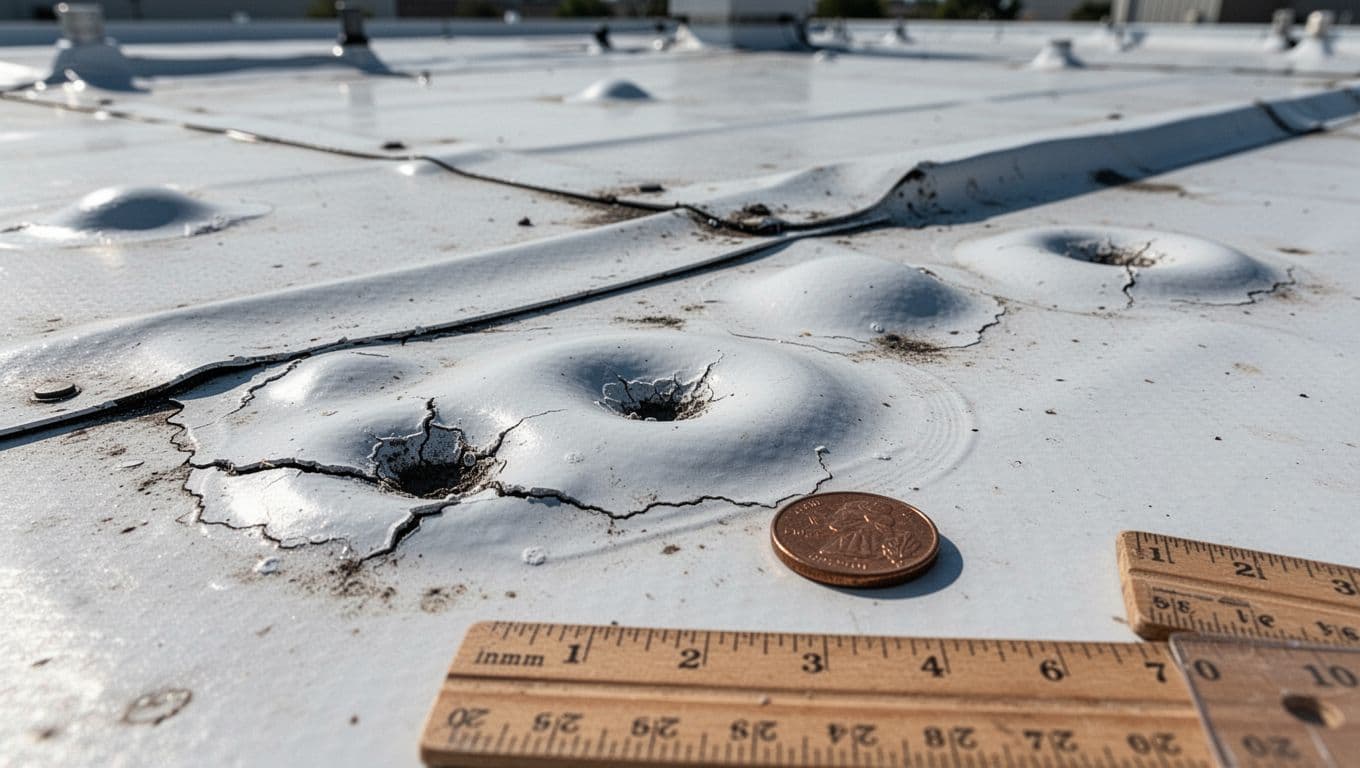
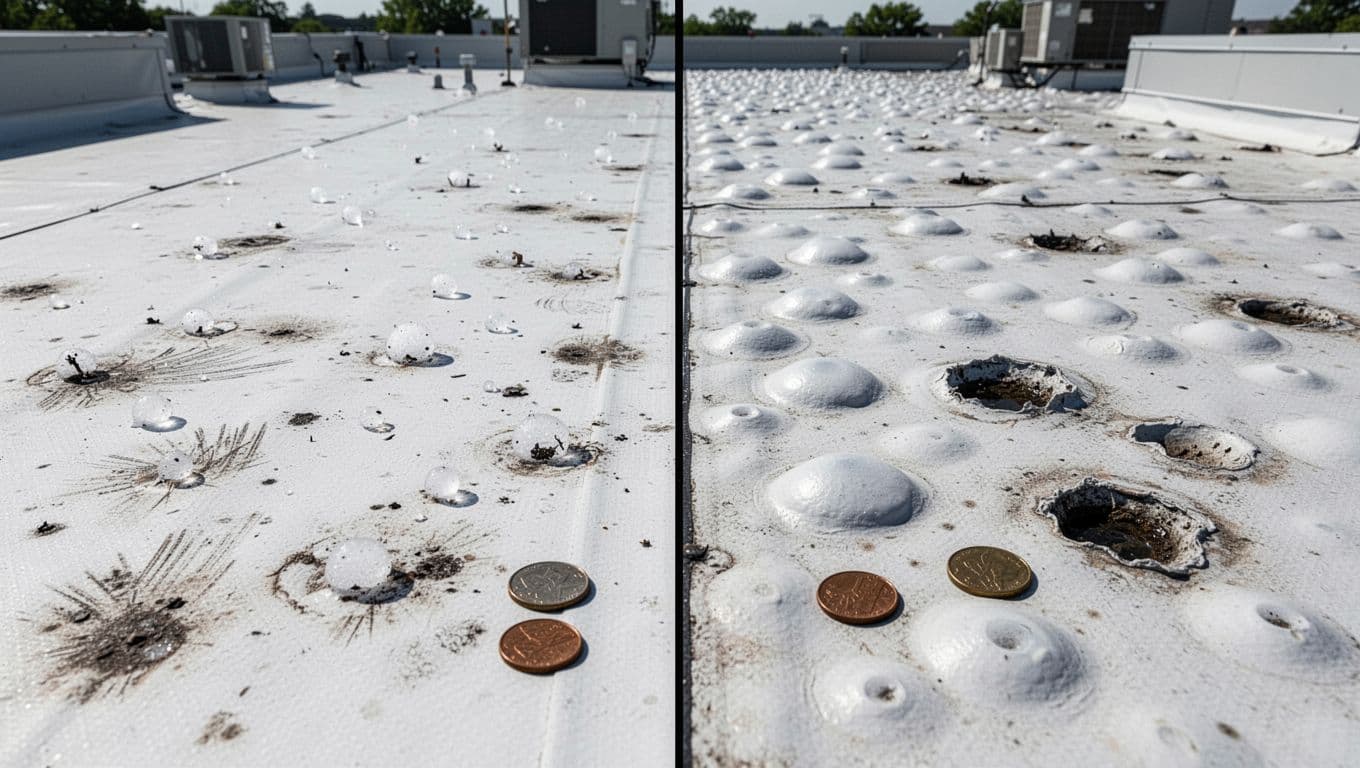
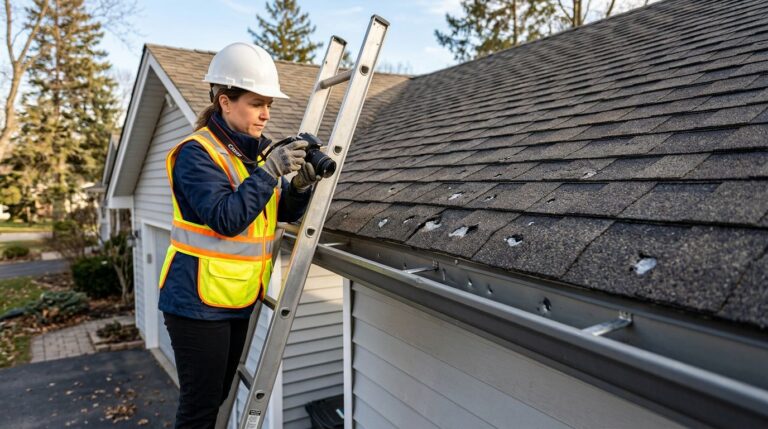
Hail hits tend to look like random bruises, scuffs, fractures, punctures, granule loss, or impact marks. Think “scatter pattern.” If the storm was intense, hailstones may also leave visible dents on metal coping, vent caps, rooftop unit panels, or gutter edges. Blisters tend to look like rounded bubbles that can be firm or soft. Some pop and leave a crater that people mistake for impact.
This quick table helps you sort the two:
| What you notice | More like hail hits | More like blisters |
|---|---|---|
| Pattern on the roof | Random “peppered” marks | More uniform clusters |
| Surface shape | Dents, scuffs, fractures | Raised bubbles (sometimes popped) |
| Collateral damage nearby | Often present on soft metals | Usually not present |
| How it starts | Sudden event (likely insurance claim) | Develops over time |
For a deeper explanation of why blisters form in low-slope systems, see this overview of flat roof blistering causes and treatment. If you need a contractor’s eye on storm-versus-aging clues, a clear walkthrough is also in how to tell hail damage from blistering.
If your building is in the Twin Cities area, it also helps to have a commercial team that does both diagnosis and repairs, like commercial roofing support in Saint Paul.
Step-by-Step
Start with a professional roof inspection
- Confirm the storm window (date and time range), then note when leaks or stains first appeared.
- Set safety rules before anyone goes up, including access control and roof-edge precautions.
- Begin from the ground with binoculars, looking for obvious membrane tears, displaced edge metal, and clogged drains.
Check surfaces for collateral damage from hail dents first
- Inspect soft metals at eye level, such as downspouts, gutters, termination bars, and metal caps. Collateral damage there makes hail more likely on the roof field.
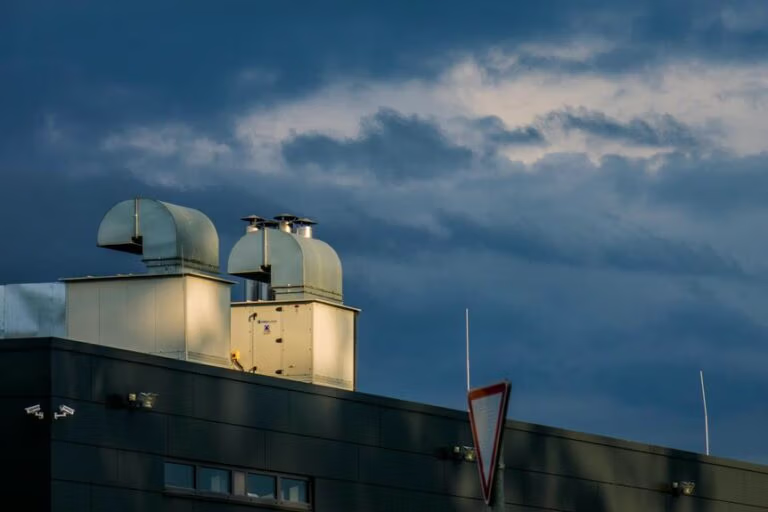
- Look at rooftop units, vent hoods, and skylight frames. Hail often leaves small, scattered dings on exposed metal surfaces.
- If you see zero collateral damage anywhere, don’t assume “no hail,” but treat the roof marks more cautiously.
Separate hail hits from blisters on the roof surface
- Scan for a random scatter of marks. Hail damage often varies in size and spacing across a slope or section.
- Check the mark profile. Hail hits tend to leave circular dents or concave impressions, while blisters caused by trapped moisture are raised until they rupture.
- Press gently (only if safe and permitted). Popped blisters may reveal missing granules and feel like a deflated bubble; impacts usually don’t.
- Inspect seams, flashings, and penetrations. Even small hail can contribute to seam stress, splits, or punctures that trigger leaks.
- If water has shown inside, schedule targeted testing, because the leak source may be far from the stain. For pinpointing active pathways, use commercial roof leak detection in Saint Paul.
Decide whether your commercial roof needs repair or replacement
- Choose commercial flat roof repair when damage is isolated, seams can be re-welded, or punctures can be properly patched with compatible materials.
- Consider restoration or larger section replacement if blistering is widespread and popping, since open blisters can turn into leaks and wet insulation.
- Move toward roof replacement when impacts damage the fiberglass reinforcement mat in asphalt shingles or the asphalt bitumen layers in flat roofs, or when wet insulation and repeated leaks show the system is failing as a whole. These steps apply to all roof types.
- Document everything with location notes and close photos (include a coin or ruler), then keep records together for maintenance planning and any insurance review.
FAQ for Commercial Roof Owners
Can hail create blisters on a commercial roof?
Hailstones usually cause impact damage, not true blisters. However, hailstones can weaken a surface so existing blisters from poor attic ventilation or shingle manufacturing defects pop sooner. After a storm, you may notice popped blisters you never saw before because the roof is now dirty, wet, or scuffed.
What if my roof is blistered but it isn’t leaking?
Some blisters from manufacturing defects stay “cosmetic” for a while, yet popped blisters can open a path for water. Treat it like a small boil on skin; it might be fine until it breaks. Curling shingles signal aging much like these blisters, unlike hail damage or storm damage. If blisters are growing or splitting, your commercial roof needs repair planning, not a wait-and-see approach.
Will insurance cover hail hits but deny blisters?
Often, yes. An insurance company covers hail as a covered event on many policies for an insurance claim, while blistering can be seen as wear, heat, poor attic ventilation, or manufacturing defects. That’s why documentation matters. If you can show collateral dents and a storm timeline, the hail case is clearer.
What paperwork helps most?
Photos with scale, roof plan locations, interior leak notes, granule loss evidence, and dates tied to the storm.
How soon should I inspect after a hailstorm?
Inspect as soon as it’s safe, ideally within days, because temporary repairs and water intrusion move fast. Even if you can’t access the roof, start documentation immediately and note interior conditions. Fast action can prevent insulation saturation and higher repair scopes.
Can my maintenance staff patch suspected hail hits?
Simple sealant smears often fail on membranes and can void warranties, leading to higher repair costs. A proper repair uses compatible materials, correct prep, and the right heat or adhesive method for the system. Use maintenance staff for documentation and safe observation, then bring in a commercial roofer for the repair scope.
Bottom line for business owners
Hail hits act like dents from above, while shingle blistering acts like bubbles forming from below. If you spot random impacts plus metal dings, treat it as a hail damage roof until proven otherwise. If you see raised bubbles in clusters, plan for diagnosis and repairs before they open. Regardless of whether it is a residential roof with roof shingles or a commercial flat system, early detection helps manage repair costs and prevents being denied by an insurance company. Either way, fast documentation of visible dents immediately after a storm helps you control cost, downtime, and risk.
Need a roof inspection in Saint Paul or the Twin Cities? Call Sellers Roofing Company at +1-651-703-2336 or schedule a free estimate. We are a black-owned, NMSDC-certified MBE roofing contractor with 9+ years experience.