Last updated: 2026-08-01 by Ted Sellers, Owner
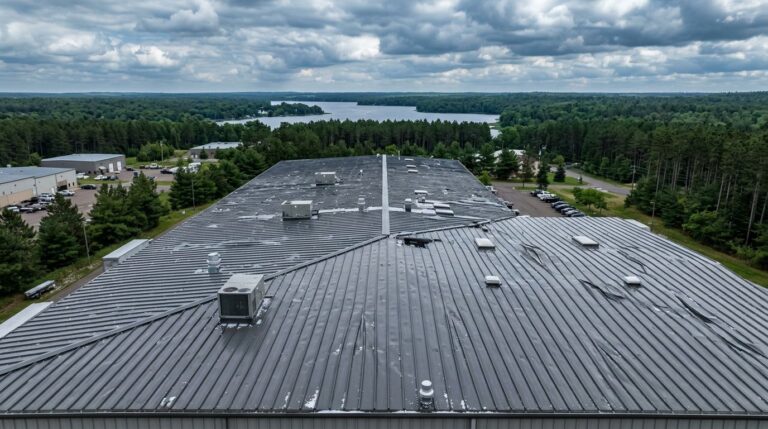
A hail damage roof inspection for a commercial building usually takes 1 to 3 hours. Small, open roofs may take less time. Large roofs, multiple levels, wet insulation, rooftop equipment, or insurance-grade documentation can stretch the visit to half a day, especially when the inspector also checks interior leak paths.
When This Applies
This timing fits most commercial roofs
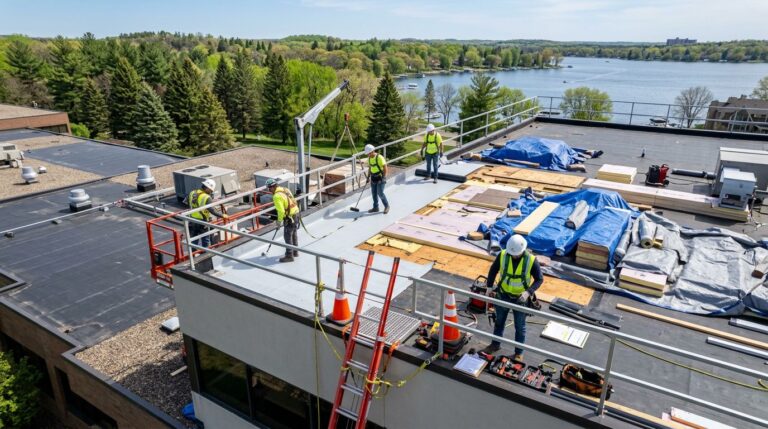
This timeline works for office buildings, retail centers, warehouses, schools, and other properties with low-slope or metal roofing. It also fits common systems like TPO, EPDM, modified bitumen, and coated roofs.
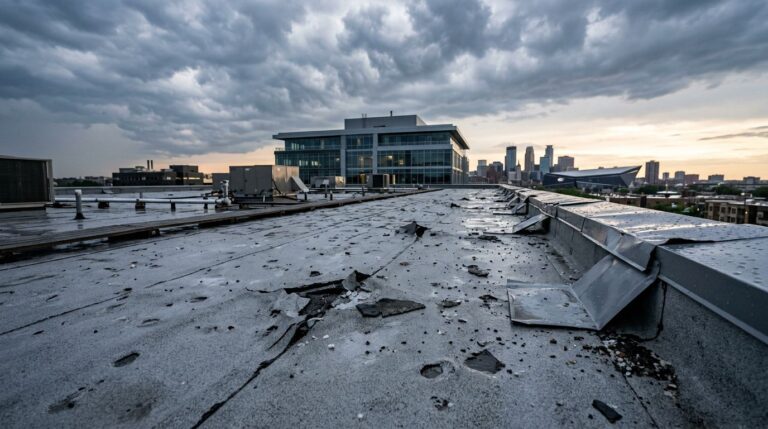
After a hailstorm, an inspector usually checks the full roof surface, drains, seams, flashings, penetrations, and impact marks on metal. If access is good and the roof is dry, the work moves fast. In many cases, the inspection itself is quicker than the photo report that follows.
When this estimate does not fit
This guide does not fit every property. A 5,000-square-foot roof is not the same as a multi-building site with different elevations, restricted access, and dozens of rooftop units.
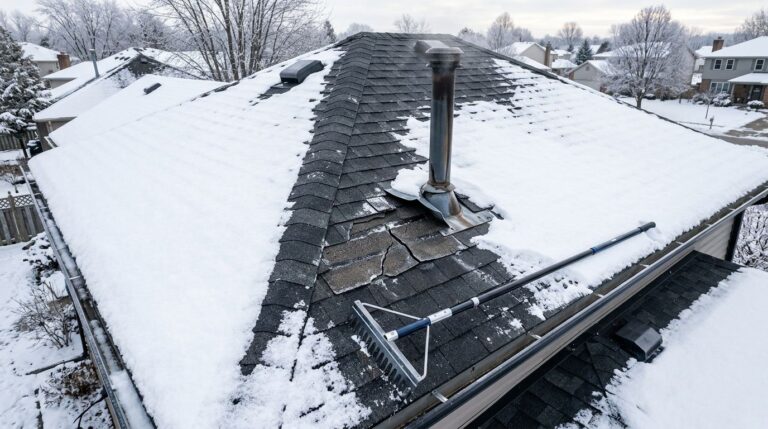
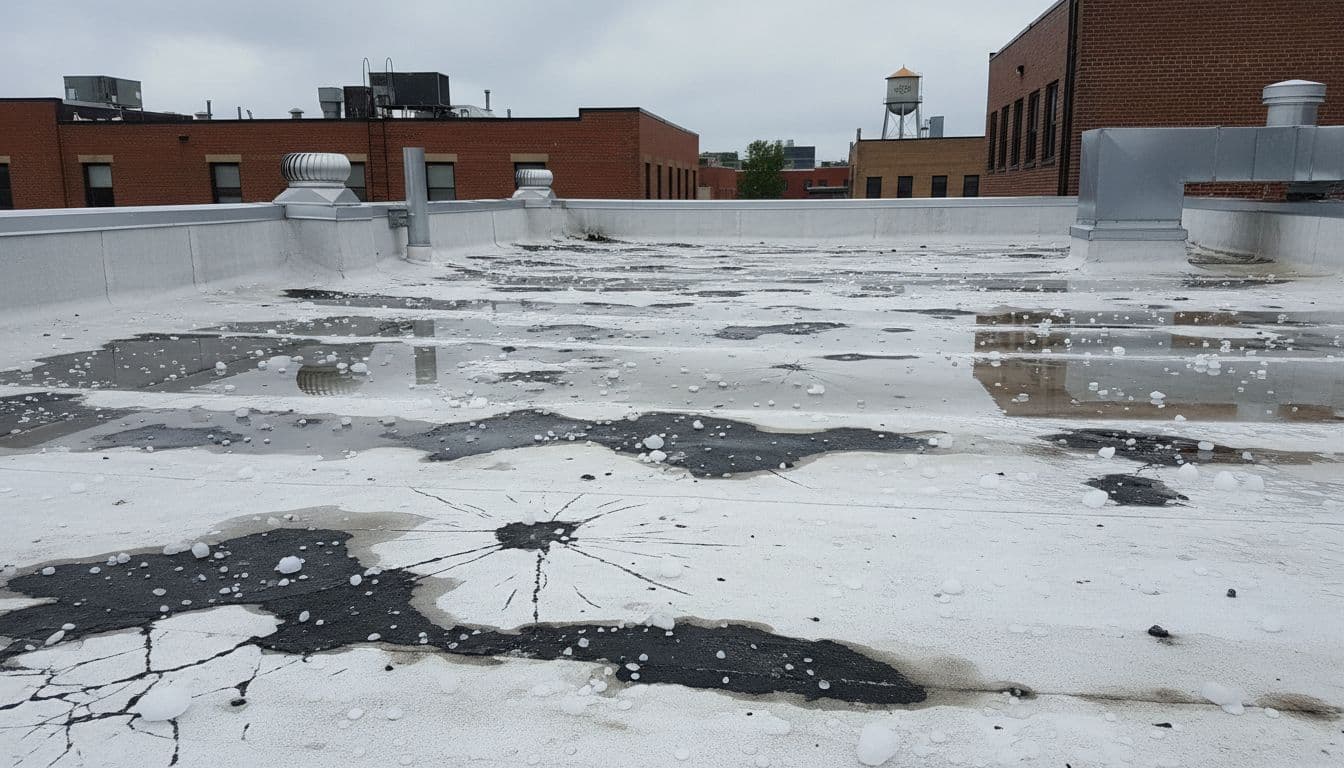
If the surface is still slick, snow-covered, or blocked by debris, the inspection may pause or split into two visits. The same goes for roofs with active leaks inside the building, because tracing water paths takes extra time.
If the storm caused interior water entry, expect the visit to last longer than a simple exterior check.
Cases that add time
Some conditions slow things down right away. Wet insulation may call for moisture scanning. Hidden punctures may call for advanced testing. Extensive damage may require enough documentation to compare commercial flat roof repair against a larger corrective scope.
And if your insurer asks for marked photos, roof maps, and damage counts by section, the site visit often grows beyond a quick walk-through.
Step-by-Step
1. Call for the inspection as soon as the storm passes safely
Time matters because hail marks fade, foot traffic changes the surface, and small openings can turn into leaks after the next rain. For a commercial owner, the goal is not speed for its own sake. The goal is clean documentation before conditions change.
If your building is in the Twin Cities, a team that handles professional roofing for Saint Paul businesses can inspect the roof, note storm-related damage, and flag urgent risks early.
If there is an active leak
Ask for both exterior and interior review. A stain on a ceiling tile may not sit below the actual entry point, so the inspector may need time to trace the path.
2. Expect a quick roof-wide survey first
The first pass is broad. The inspector checks access points, edges, flashings, drains, curbs, skylights, and rooftop equipment. On metal roofs, dents often show up first on softer components like caps and flashing. On single-ply systems, the search focuses on splits, bruises, punctures, and disturbed seams.
That roof-wide survey often takes 15 to 40 minutes on a small to mid-size building. It gives the inspector a map of where to spend more time next.
3. The detailed inspection is where most of the time goes
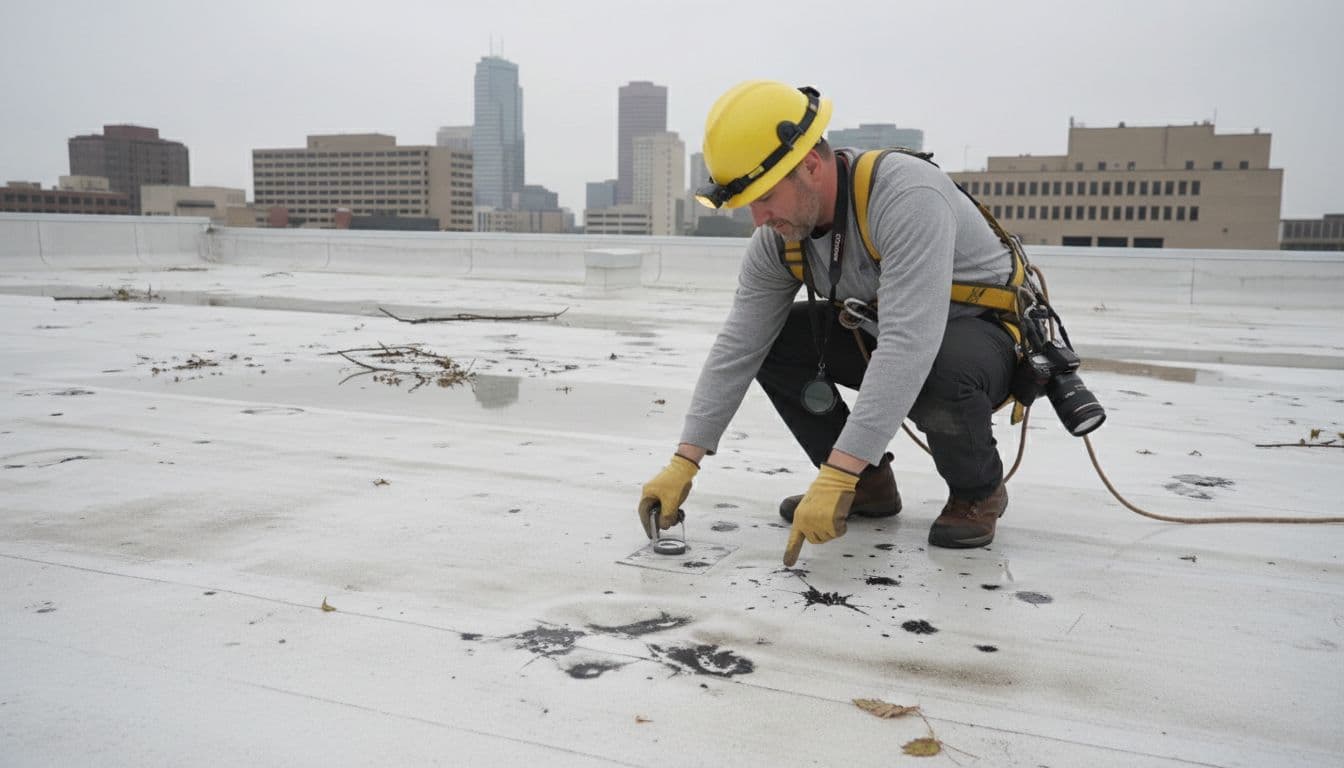
This is the part owners often underestimate. The inspector takes close photos, measures affected areas, checks seams by hand, inspects soft spots, and compares hail strikes across different roof zones. If interior damage exists, they may also review ceilings, wall lines, and insulation clues.
When signs are subtle, the next step may be commercial roof leak detection in Saint Paul. That extra layer helps when punctures are hard to spot or when water moves under the membrane before it shows inside.
If the insurer wants stronger proof
Expect more time on-site. The roofer may mark test areas, document impact density, and separate old wear from storm-created damage. That matters because age alone does not prove loss, and hail alone does not always mean replacement.
4. Get a repair-or-replace recommendation before the crew leaves
A good inspection should end with a clear next step. If damage is isolated, the right answer may be commercial flat roof repair. If seams have failed across large sections, flashing is distorted, or insulation is wet in many areas, commercial roof replacement may be the safer call.
This is also where you learn whether your commercial roof needs repair now or only monitoring. Not every dent matters. However, membrane splits, punctures, displaced flashings, and trapped moisture should not wait.
What a useful report looks like
It should tie findings to roof areas, not vague opinions. You want photos, locations, likely causes, and a practical scope. Many owners receive that report the same day or within one business day.
Final takeaway
For most commercial buildings, a hail inspection takes 1 to 3 hours. The clock runs longer when the roof is large, the damage is subtle, or leak tracing and insurer documentation are part of the job.
The main point is simple. Fast, careful documentation protects your building and helps you choose the right fix before a minor hit turns into a costly claim.
FAQ
Can my business stay open during the inspection?
Usually, yes. Most of the work happens on the roof and around access points. If the inspector needs to trace a leak indoors, they may need brief access to selected rooms.
When operations may pause
A short pause may help if the team must enter a restricted area, move ceiling tiles, or work near sensitive equipment.
Should I wait for a leak before booking an inspection?
No. Hail damage often starts as bruising, punctures, or seam stress. Water may not show up until the next heavy rain or thaw cycle.
What if the roof looks fine from the ground?
Ground views miss most commercial roof damage. Hail can dent metal and weaken membrane areas that are impossible to judge from a parking lot.
Can an inspection tell old damage from new storm damage?
Often, yes. A trained inspector looks at impact patterns, oxidation, weathering, seam condition, and whether the marks line up with the recent storm path.
When the answer is less clear
If the roof already had wear, the report may separate likely storm damage from pre-existing issues instead of forcing a simple yes-or-no answer.
What happens if the roof cannot be walked safely?
The inspection may start with perimeter review, interior leak tracing, or drone photos. Then the roofer returns for a full hands-on check when conditions are safe.
Need a roof inspection in Saint Paul or the Twin Cities? Call Sellers Roofing Company at +1-651-703-2336 or schedule a free estimate. We are a black-owned, NMSDC-certified MBE roofing contractor with 9+ years experience.