Last updated: 2026-05-26 by Ted Sellers, Owner
Spotting issues on asphalt shingles from a distance involves looking for granule loss and random bruising. Hail damage architectural shingles can often be spotted from the ground by using binoculars or a phone zoom and looking for random dark “bruise” spots, scuffed areas, and patches where granules look thin or washed out. Also check nearby metal and soft items (gutters and downspouts, vent caps, window screens) for small dents. Document what you see, then schedule a professional roof inspection to verify your ground-level findings.
When This Applies
When a ground check is a good fit (and when it isn’t)
Ground-level spotting works best for business owners who manage properties with steep-slope dimensional shingle sections, like office entries, pitched additions, mansard-style facades, or mixed-use buildings. It’s also useful right after a storm, when you need quick triage before calling vendors or starting a claim.
On the other hand, a ground check doesn’t “prove” hail damage. Storm damage on composition shingles can be particularly difficult to see due to their layered construction. In addition, steep angles, shade, and dark shingle colors can mask bruising. If your roof is high, complex, or partly blocked by parapets and signage, you may only see collateral indicators.
Ground spotting is a screening tool. Property managers should use it to decide whether to consult a roofing contractor to determine if a full insurance claim is necessary or if a simple roof repair will suffice, not to make a final call.
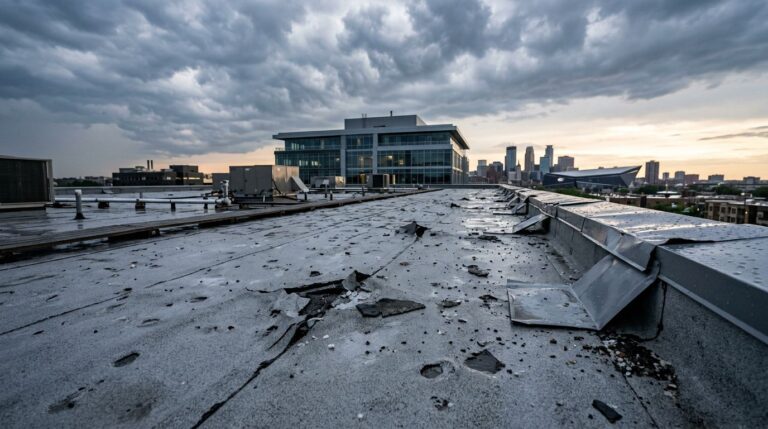
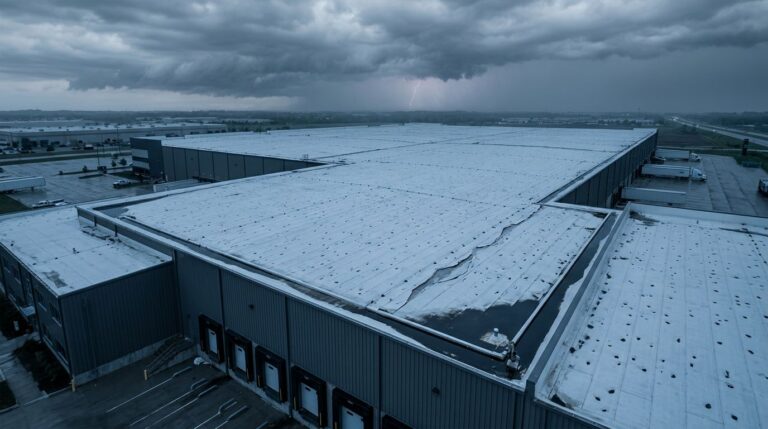
If your site is mostly a low-slope system, remember that this article won’t cover membrane punctures or seam damage. That’s a different skill set, more like commercial flat roof repair than shingle evaluation. Still, the collateral indicators (dented metal, granules in downspouts) can help you decide whether commercial roof needs repair in any form.
Hail damage vs look-alikes you can mistake from below
From the ground, several issues can mimic hail. Use this quick comparison to avoid chasing the wrong problem.
| What you see from the ground | Often hail-related | Common look-alike | Quick way to tell |
|---|---|---|---|
| Random dark spots scattered | Yes | Algae staining | Algae looks more like wide streaks, not “coin-size” marks |
| Shiny patches or thin color | Yes | Age-related granule loss | Hail loss is more spotty and sudden, not evenly faded |
| Scuffed ridge caps or edges | Yes | Foot traffic | Traffic scuffs often follow a straight path near access points |
| Dented gutters, downspouts | Yes | Ladder dents | Ladder dents cluster at one corner, hail dents spread broadly |
| Granules collecting in elbows | Sometimes | Normal wear | A sudden increase after a storm is more suspicious |
For an insurance-focused explanation of what adjusters often look for, review Travelers’ guidance on identifying roof hail damage.
Step-by-Step
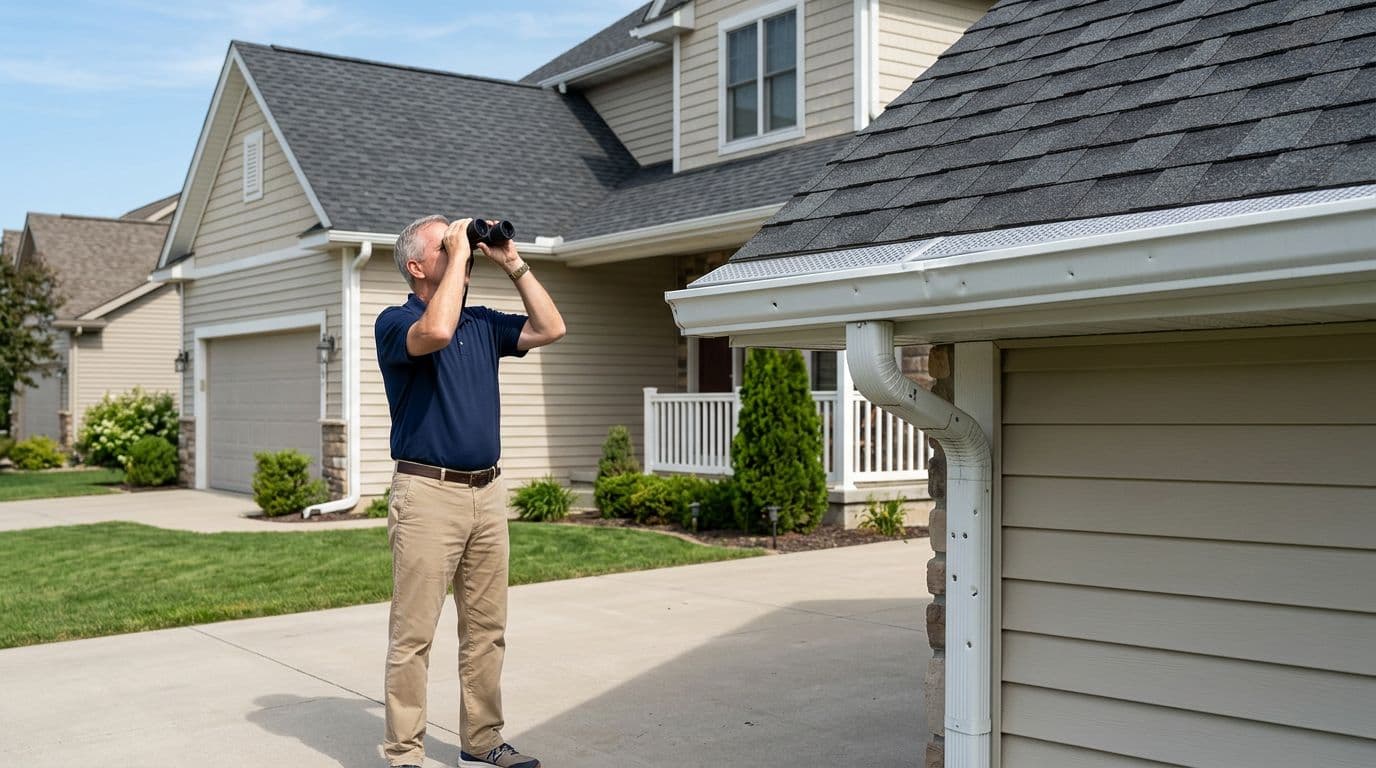
Using binoculars from the ground helps you spot roof and gutter clues safely (created with AI).
Set up your view so small damage is easier to see
- Stand where you can see each slope clearly, then move in 10 to 20-foot increments as needed.
- Use binoculars or a phone camera zoom, and keep the lens steady against a vehicle or fence post.
- Inspect when the sun is low (morning or late afternoon) because shallow light shows dents and scuffs.
- Check local weather data for the specific hailstone size and wind speed recorded during the event, then compare matching roof faces (front-left vs front-right) because hail usually hits one side harder.
Scan architectural shingles for “bruise” patterns and granule change
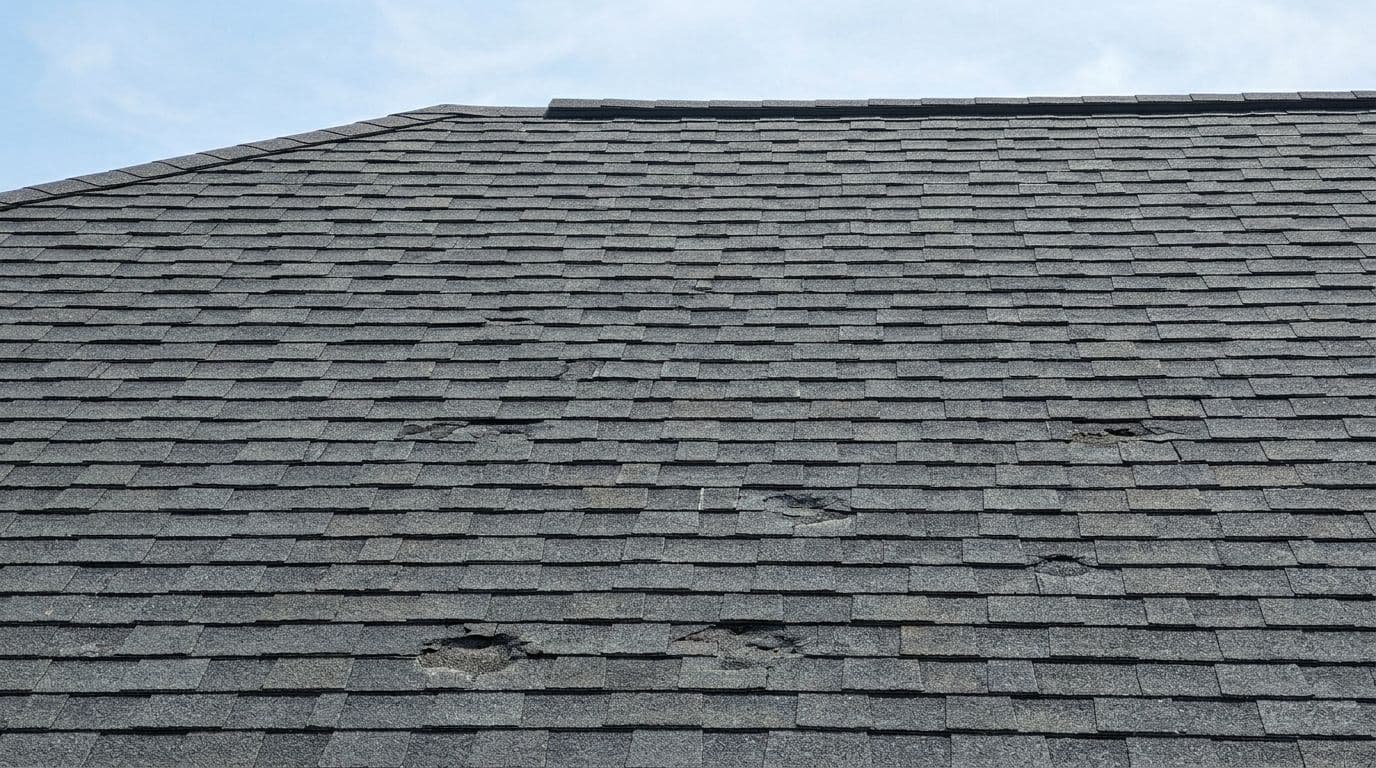
From below, hail clues often show up as uneven shading and small granule-thin patches (created with AI).
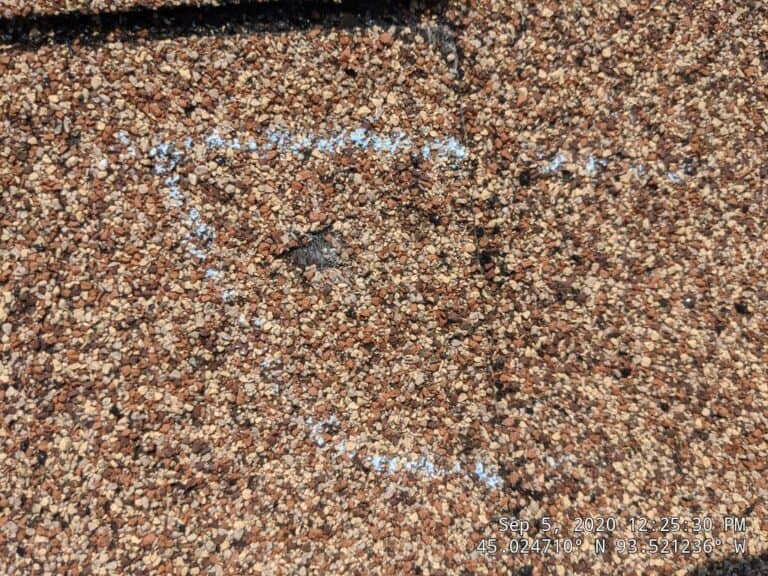
5. Look for light-colored spatter marks and dark shingle bruising that appear as random, round-ish dark spots not following a line or a clean pattern.
6. Watch for patches that look “washed out” or slightly different in color, which can suggest granules got knocked loose; heavy granule loss can expose the underlying fiberglass mat.
7. Check ridge caps and hip lines first, because hail and wind often hit those edges harder.
8. Note any cracked corners or lifted laminate tabs, especially near the eaves and rakes where wind stress stacks up.
Confirm with collateral damage on metal and rooftop accessories
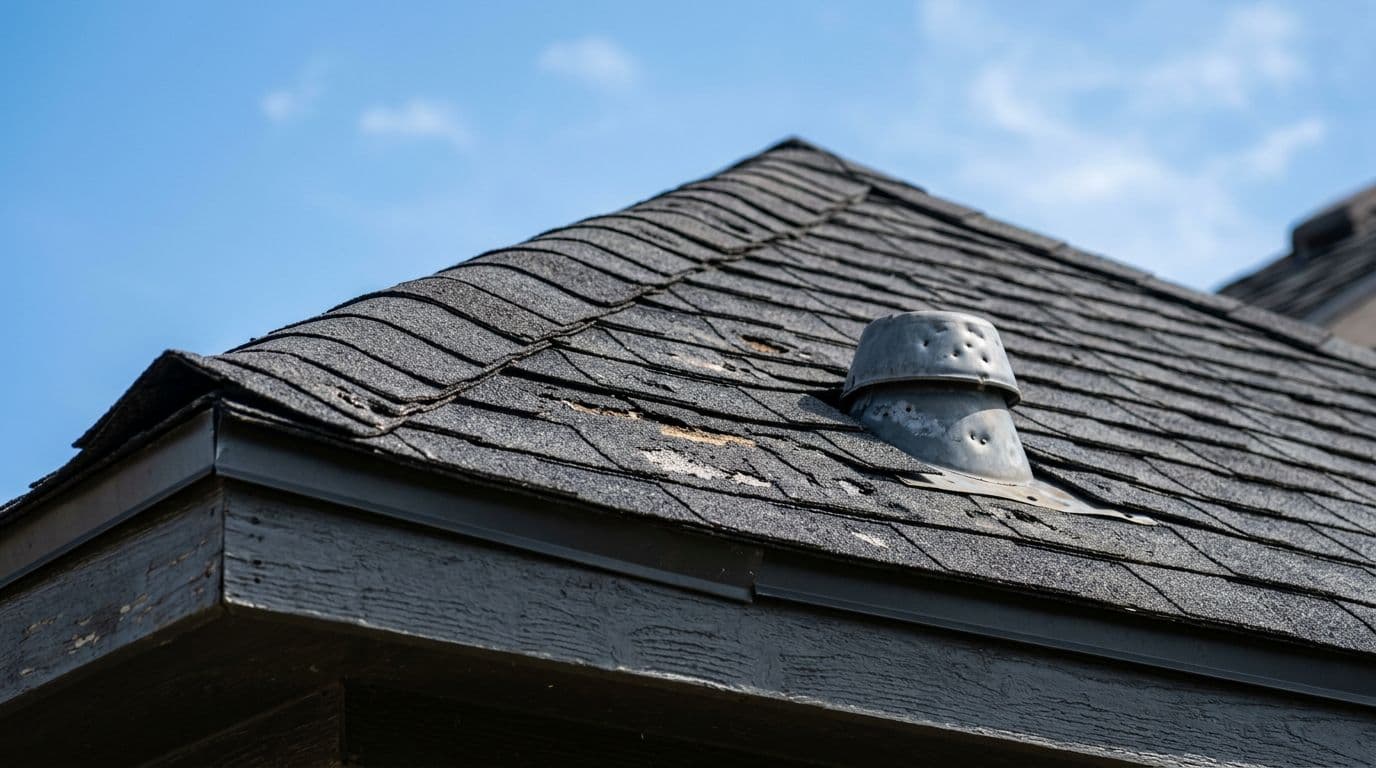
Roof edges and vent caps can show dents and scuffing that support a hail damage call (created with AI).
9. Inspect gutters, downspouts, and metal fascia for small dimples spread across long runs, not just one corner.
10. Check roof vents, including vent caps, pipe jacks, and other soft metal components you can see from below for fresh denting or chipped coatings.
11. Look at window screens, soft metal wraps, and rooftop units in view; hail often leaves matching evidence there.
12. After the next rain, check downspout outlets for extra granules; a sudden surge supports recent impact.
Document what you found and decide the next action
- Take zoom photos from two angles per slope, and include a wide shot to prove location.
- Write down storm date, reported hailstone size, and which roof faces show the strongest clues.
- If you manage multiple buildings, map the “hit” side across the site to spot a consistent direction.
- Schedule a professional inspection if you see bruising plus collateral dents, because those pairs often indicate functional damage and justify repair planning; if functional damage is confirmed, consider upgrading to impact-resistant shingles with a UL 2218 classification, such as Class 4 shingles, to improve future impact resistance.
For additional examples of shingle-level signs, see RoofMaxx’s overview of identifying hail damage. If you need photo comparisons to train your eye, a helpful reference is Exterior Alliance’s hail damage photo guide.
FAQs
Can hail damage on architectural shingles be “invisible” from the ground?
Yes. Laminated shingles can bruise without obvious missing pieces. A mat fracture is a type of invisible damage that compromises the shingle’s integrity. From below, you may only see subtle color changes. If you also find dented gutters or vent caps, assume the roof may be affected even if shingle marks look faint. A close-up inspection often finds what a driveway check can’t.
What if only one roof slope shows signs?
That’s common. Wind drives hail, so one face gets hit harder. In that case, document both sides anyway. Insurers and inspectors often compare “test squares” across slopes. Also, plan for uneven aging after repairs because a replaced slope can look newer than untouched areas.
Do granules in gutters always mean hail damage?
No. All asphalt shingles shed some granules, especially after installation and during hot summers. The red flag is timing and volume. If you notice an unusual pile right after a hail event, it supports impact. If the build-up looks slow and consistent, it may be normal wear.
If I suspect hail, does that mean I need commercial roof replacement right away?
Not always. Some damage is cosmetic, while other impacts shorten shingle life fast. Properties located in Hail Alley often benefit from the increased impact resistance of polymer-modified shingles, which may also qualify the owner for an insurance discount. The deciding factor is whether the mat is exposed, cracks formed, or sealing strips got disturbed. If water entry risk rises (leading to water damage) or large areas are affected, commercial roof replacement may be the smarter financial move than patching.
What if the building also has a flat roof?
Treat them separately. A flat section might need commercial flat roof repair even when the shingle section only shows light bruising. Ask your inspector to evaluate both systems, because hail can bruise membranes, damage seams, or dent coping caps.
What should I do if I can’t safely see the roofline at all?
Skip the guesswork. Focus on ground evidence you can see (dented downspouts, damaged screens, chipped fascia paint) and pull any available security camera footage that shows hail intensity. Then schedule an inspection. If interior staining appears, treat it as urgent because it can signal your commercial roof needs repair now, not later.
Bottom line: You can spot likely hail damage on asphalt shingles from the ground by looking for random bruising, granule-thin patches, and matching dents on nearby metal. Still, the ground view is only a first filter, merely a precursor to a professional roof inspection. When the clues stack up, document them and get a professional inspection so small storm damage doesn’t turn into a leak months later.
Need a roof inspection in Saint Paul or the Twin Cities? Call Sellers Roofing Company at +1-651-703-2336 or schedule a free estimate. We are a black-owned, NMSDC-certified MBE roofing contractor with 9+ years experience.