Last updated: 2026-05-26 by Ted Sellers, Owner
After a severe storm, many homeowners wonder how to tell if hail damaged shingles. While some hail marks are cosmetic, true shingle damage can shorten your roof’s lifespan and lead to leaks if ignored.
After a severe storm, many homeowners wonder how to tell if hail damaged shingles. While some hail marks are cosmetic, true shingle damage can shorten your roof’s lifespan and lead to leaks if ignored.
Understanding the key signs of hail damage helps you take action quickly and decide whether a professional roof inspection is necessary.
Minnesota storms don’t hold back. One evening of golf ball-sized hail can leave your roof looking fine from the ground while hiding thousands of dollars in damage up above. Learning how to tell if hail damaged shingles are compromising your roof’s integrity is the first step toward protecting your home, and your wallet.
The tricky part? Hail damage isn’t always obvious. Unlike a missing shingle or a visible leak, hail impacts often create subtle bruising and granule loss that goes unnoticed for months. By the time water starts seeping into your attic, the damage has already spread far beyond what a simple repair can fix. That’s why knowing what to look for matters so much, especially when insurance claim deadlines are ticking.
At Sellers Roofing Company, we’ve spent over 18 years helping Twin Cities homeowners identify storm damage and navigate the claim process, including cases where initial insurance denials were overturned after a proper inspection. We’ve seen firsthand how early detection makes the difference between a straightforward shingle replacement and a costly structural repair.
This guide breaks down the visual signs of hail damage, explains how to distinguish real damage from normal wear, and walks you through what to do once you’ve spotted a problem. Whether you’re inspecting your own roof or preparing for a professional assessment, you’ll have the knowledge you need to make informed decisions and protect your home.
What hail damage looks like on shingles
Hail creates specific patterns on asphalt shingles that differ dramatically from wind damage, aging, or manufacturing defects. Understanding how to tell if hail damaged shingles are present on your roof starts with recognizing these distinct visual markers. The impacts leave behind telltale signs that reveal themselves through changes in texture, color, and structural integrity across the shingle surface.
Surface bruising and dents
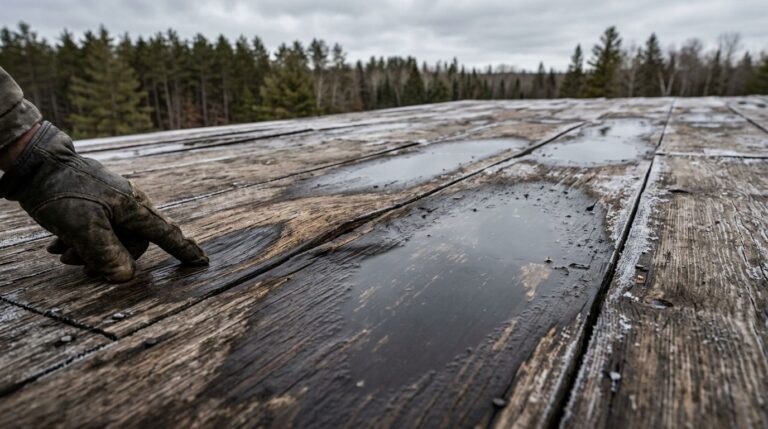
The most common indicator of hail impact is a dark, rounded bruise where the hailstone compressed the shingle’s protective granules into the asphalt mat below.
You’ll spot these impact marks as circular depressions roughly the size of the hailstone itself, ranging from dime-sized to golf ball-sized depending on the storm. The bruised area appears darker because the compressed granules no longer reflect light evenly, creating a noticeable contrast against undamaged sections.
Fresh hail damage feels different when you run your hand across it. The bruised spots have a soft, spongy texture similar to pressing on a ripe piece of fruit.
This happens because the impact fractures the fiberglass mat underneath without breaking through the surface layer. Over time, these soft spots harden and can lead to water infiltration as the weakened asphalt loses its waterproofing capability.
Granule displacement patterns
Hailstones don’t just bruise shingles; they blast away the protective granule coating that shields the asphalt from UV rays and weather. You’ll notice random, scattered spots across the roof where the black asphalt base shows through, creating a speckled appearance. Unlike normal granule loss that occurs evenly along the entire shingle or at the edges, hail damage creates irregular circular patches where the granules have been knocked loose by direct impacts.
The distribution pattern tells the story. Look for these specific characteristics:
- Concentrated impact zones on the slope facing the storm’s direction
- Random circular spots rather than linear streaks or uniform patterns
- Exposed asphalt that appears shiny or slightly raised at impact sites
- Granules accumulating in gutters and downspouts after the storm
- Matching damage patterns on roof penetrations, vents, and flashing
Granule loss from hail creates circular patterns with sharp edges, while normal aging produces gradual, even wear across the entire shingle surface.
Cracking and punctures
Severe hail produces visible cracks or complete punctures in the shingle material. These fractures typically radiate outward from the impact point, creating a spider web pattern in the asphalt. You might find shingles with crescent-shaped tears where the hailstone hit at an angle, or small holes where particularly sharp ice chunks penetrated completely through.
Cracking becomes more pronounced on older or already weathered shingles because the asphalt has lost flexibility over time. A roof that might have survived a hailstorm ten years ago could suffer extensive cracking from the same storm today.
The cracks may not leak immediately, but they create entry points for moisture that accelerate deterioration and eventually compromise your roof’s waterproofing barrier. Test shingles around visible cracks by gently pressing them; damaged areas will flex abnormally or reveal additional hidden fractures.
Step 1. Confirm the storm and check safe areas
Before you climb any ladders or call a roofer, you need to confirm that hail actually hit your property and establish a baseline for what damage might exist. Many homeowners skip this verification step and waste time inspecting roofs after storms that dropped rain but no hail, or hail that fell several miles away. Starting with weather confirmation and ground-level checks saves you effort and helps you document the storm date for insurance purposes.
Verify hail occurred in your area
Your first task is confirming that hail of a damaging size fell on your specific location. Check local weather reports from the National Weather Service for your zip code, not just general forecasts for your city. Hailstorms create narrow damage paths, sometimes hitting one neighborhood while leaving the next block untouched.
Look for these confirmation sources:
- National Weather Service storm reports showing hail size and exact time
- Local news coverage with viewer-submitted photos or videos
- Neighborhood social media posts documenting hail on the ground
- Your own outdoor items like patio furniture, air conditioning units, or vehicle hoods showing fresh dents
- Neighbors’ experiences if they collected hailstones or noticed impacts
Document the storm date immediately. Your insurance claim timeline starts from the date of loss, and most policies require notification within a specific window. Take photos of any hailstones you find on the ground next to a reference object like a ruler or coin to establish size.
Conduct a ground-level inspection first
Walk your property’s perimeter and examine everything visible from the ground before attempting roof access. You’re looking for collateral damage that confirms hail struck with enough force to affect your shingles. This ground-level survey keeps you safe while gathering evidence about the storm’s intensity.
Check these accessible areas for damage patterns:
- Gutters and downspouts for fresh dents on metal surfaces
- Window screens showing punctures or torn mesh
- Siding and trim with new dings or cracked paint
- Deck railings and posts displaying impact marks
- Mailboxes and light fixtures with visible dents
- Garage doors showing dimpled patterns across metal panels
If you find consistent denting on soft metals like aluminum gutters, your shingles likely sustained damage since roofing materials absorb impacts differently than rigid surfaces.
Any visible ground-level damage strongly suggests your roof took hits too. Understanding how to tell if hail damaged shingles starts with this confirmation process because it establishes whether a professional roof inspection makes sense for your situation.
Step 2. Spot shingle bruises, cracks, and granule loss
Once you’ve confirmed hail hit your area and checked accessible surfaces, you need to examine the shingles themselves for impact evidence. This step requires careful observation because hail damage often appears subtle from a distance but reveals itself clearly under close inspection. You’ll examine three primary damage types: bruising that weakens the shingle structure, granule loss that exposes the asphalt base, and cracks that create immediate leak risks.
Test for soft spots and bruising
Press gently on suspected impact sites with your thumb or a gloved hand to feel for the spongy texture that indicates compressed fiberglass matting. Damaged areas give slightly under pressure, similar to pushing on a bruised apple, while undamaged sections remain firm. Walk across accessible roof sections and note any areas that feel softer than surrounding shingles when you step on them.
Look at shingles from a low angle where sunlight hits the roof surface. This angle reveals subtle depressions and color variations that disappear when viewed straight-on. Focus your inspection on:
- High points on the roof like ridges and peaks where hail hits with maximum force
- South and west-facing slopes that took the brunt of the storm’s direction
- Random circular marks about one to two inches in diameter
- Darker spots where compressed granules create shadows in the depressions
Viewing shingles at a low angle in direct sunlight makes bruising patterns visible that you’d miss from ground level or on overcast days.
Identify granule loss patterns
Examine your gutters and downspouts for excessive granule accumulation following the storm. Fresh granule loss appears as loose, sand-like material collecting at downspout outlets or sitting on top of debris guards. Run your hand across suspected damage areas; if granules come off easily or you feel exposed asphalt underneath, hail likely displaced the protective coating.
Understanding how to tell if hail damaged shingles includes recognizing that granule loss creates distinct circular patterns rather than the uniform wear you see with aging. Compare damaged areas to undamaged sections on the same roof to establish a baseline for normal granule coverage.
Look for cracks and splits
Search for visible breaks in the shingle surface, particularly crescent-shaped tears that indicate glancing blows or star-pattern cracks radiating from direct hits. Cracks often appear at the edges of impact bruises where the asphalt stretched beyond its flexibility limit. Gently lift shingle edges to check for hidden fractures that aren’t visible from above but compromise the shingle’s integrity underneath.
Photograph every instance of cracking you find with a reference object like a coin placed next to the damage. These images document the extent and pattern of deterioration for your insurance claim and help contractors assess whether repair or full replacement makes sense.
Step 3. Check gutters, vents, flashing, and soft metals
Shingles aren’t the only roof components that reveal hail damage. Metal elements and protrusions across your roof system show impact evidence more clearly than asphalt shingles because metal dents rather than bruises. These areas serve as diagnostic indicators that confirm both the storm’s intensity and the likelihood of shingle damage. By examining gutters, vents, flashing, and other metal components, you gather concrete proof that hail struck with enough force to compromise your entire roof system.
Inspect gutters and downspouts
Your gutters collect direct hits from falling hail without any protective covering, making them prime locations for visible damage. Walk the perimeter of your home and look along the top edge and face of gutter sections for fresh dents, dings, or dimples that weren’t there before the storm. Pay special attention to gutters on south and west exposures where storm patterns typically hit hardest.
Check these specific gutter features:
- Top gutter edges showing fresh dents along the lip
- Downspout seams with new creases or separation
- Gutter brackets and hangers displaying bent metal or loosened connections
- End caps and corners where thin metal shows impact marks most clearly
- Granule accumulation inside gutters indicating shingle damage above
Consistent denting across gutters proves hail fell with sufficient force to damage shingles, even when roof damage isn’t immediately visible from ground level.
Examine roof vents and penetrations
Roof vents, turbines, and pipe boots take direct hail impacts that create obvious visual evidence of storm damage. Climb safely to roof level or use binoculars to inspect metal vent caps for dents, particularly on the top surfaces and sides facing the storm direction. Plastic vents may show cracks or punctures where large hailstones struck, while metal turbine vents display multiple impact marks across their curved surfaces.
Document every damaged penetration you find because these components often require individual replacement even when surrounding shingles appear intact. Learning how to tell if hail damaged shingles includes recognizing that vent damage confirms sufficient impact force to compromise the entire roof system.
Assess flashing and soft metal components
Flashing around chimneys, skylights, and valley intersections reveals hail damage through distinctive denting patterns that match impact sizes from the storm. Aluminum and copper flashing show damage more readily than galvanized steel, so prioritize inspecting these softer metals first. Look for fresh dings on chimney cricket flashing and along valley metal where hail accumulates before sliding off the roof.
Metal drip edges along roof perimeters and step flashing against walls provide additional confirmation of storm intensity. Fresh dents on these components, combined with shingle damage patterns, build a comprehensive damage picture that supports insurance claims and replacement decisions.
Step 4. Separate hail damage from normal wear and tear
Not every roof imperfection stems from hailstorms. Distinguishing between storm impacts and age-related decline determines whether you have a legitimate insurance claim or simply an aging roof that needs routine maintenance. Understanding how to tell if hail damaged shingles requires recognizing the specific patterns that separate violent weather events from gradual deterioration, manufacturing defects, or poor installation practices.
Age-related deterioration vs. impact damage
Aging shingles lose granules gradually and evenly across their entire surface, creating a uniform fading pattern that progresses from the roof’s most sun-exposed areas. You’ll notice this wear along ridge caps and south-facing slopes first, with the black asphalt base showing through consistently rather than in random circular spots. The granule loss appears smooth and widespread instead of concentrated in coin-sized impact zones.
Hail damage creates the opposite pattern. Impact sites appear as distinct circular marks scattered randomly across all roof sections, including shaded areas that would normally retain granules longer. The edges of hail damage show sharp definition where granules were blasted away suddenly, while aging produces soft, gradual transitions between covered and exposed areas.
Compare these characteristics between wear types:
| Aging/Wear | Hail Damage |
|---|---|
| Even granule loss across shingles | Random circular spots |
| Starts on sun-exposed slopes | Affects all exposures equally |
| Gradual color fading | Sharp-edged dark bruises |
| Firm, consistent texture | Soft, spongy impact points |
| Progressive over years | Appears suddenly after storm |
Hail creates random circular damage patterns that appear overnight, while normal aging produces gradual, uniform deterioration that develops over multiple seasons.
Manufacturing defects and installation issues
Factory defects typically affect entire batches of shingles with identical problems appearing in regular patterns. You might find blistering that creates uniform raised bubbles across multiple shingles, or delamination where the top layer separates from the base material in consistent horizontal lines. These defects follow predictable patterns based on how shingles were manufactured or stored before installation.
Poor installation creates its own signature problems. Shingles nailed too high allow wind to lift edges, creating mechanical damage along nail lines rather than random bruising. Improper overlap spacing lets water infiltrate between courses, causing deterioration that follows the roof’s horizontal pattern. Installation damage shows logical, repeating patterns that match construction techniques rather than the chaotic scatter of hailstorm impacts.
Compare damage across different roof sections
Walk multiple roof areas to establish damage consistency. Hail affects exposed surfaces uniformly based on the storm’s direction, creating matching damage on gutters, vents, and shingles within the same impact zone. If you find shingle damage on the south slope but no corresponding marks on metal components in that same area, you’re likely seeing age or installation problems rather than storm impacts.
Step 5. Document damage for an insurance conversation
Your insurance adjuster won’t climb your roof twice if you miss documenting critical damage the first time. Building a comprehensive damage record before filing your claim ensures you capture every impact, establish the storm’s timing, and provide evidence that withstands scrutiny during the claims process. The documentation you create now directly influences whether your claim gets approved, denied, or requires additional inspections that delay your repairs.
Take comprehensive photographs
Start by photographing every damaged area from multiple angles, using a reference object like a coin or ruler placed next to each impact site. Your phone camera works fine, but ensure photos are clear, well-lit, and shot in landscape orientation for better detail. Capture wide shots showing the entire roof section, then move closer for detailed close-ups of individual bruises, cracks, and granule loss patterns.
Include these specific photographic elements:
- Shingle damage: Close-ups of bruises, cracks, and exposed asphalt
- Reference measurements: Coins or rulers next to impacts showing size
- Metal components: Dented gutters, vents, flashing with visible marks
- Multiple angles: Same damage from different perspectives
- Contextual shots: Where damage sits on the overall roof structure
- Ground evidence: Hailstones if available, damaged lawn items, dented vehicles
Clear photographs showing damage next to reference objects provide concrete evidence that insurance adjusters can verify without requiring immediate site visits.
Create a written damage inventory
Write down exactly what you found during your inspection, including locations, quantities, and severity for each damaged component. Note which roof slopes show the heaviest impact concentration and whether damage appears on all exposures or primarily on south and west faces. Record the approximate number of damaged shingles per section, though you don’t need an exact count at this stage.
Your inventory should capture these details:
- Date and time you conducted the inspection
- Weather conditions during your assessment
- Specific roof sections showing damage (north slope, chimney area, etc.)
- Types of damage observed (bruising, cracking, granule loss)
- Condition of gutters, vents, flashing, and other metal components
- Any interior signs like water stains or attic moisture
Gather storm verification records
Collect official weather documentation proving hail struck your property on a specific date. Download National Weather Service storm reports showing hail size and time, save local news coverage mentioning your area, and screenshot neighborhood social media posts where residents shared hailstone photos. Print or save digital copies of everything because understanding how to tell if hail damaged shingles matters less if you can’t prove when the damage occurred.
Contact your insurance company within the policy’s notification window, typically 30 to 60 days from the storm date. Provide your complete documentation package and request a professional roof inspection to assess the full extent of damage before discussing repair or replacement options.
Step 6. Decide on repair, replacement, or monitoring
After documenting your damage, you face a critical decision that affects both your immediate repair costs and your roof’s long-term performance. The choice between patching damaged shingles, replacing the entire roof system, or monitoring the situation depends on damage severity, your roof’s age, and whether insurance will cover the work.
Making the wrong call now means either overpaying for unnecessary replacement or underestimating damage that worsens rapidly during the next storm season.
When to repair individual shingles
Spot repairs make sense when you find isolated damage affecting fewer than 15 to 20 shingles across your entire roof system. This limited impact typically occurs during minor hailstorms where only marble-sized stones fell, or when mature trees blocked most of the incoming hail. You might choose this route when damage appears on a single roof section rather than spread across multiple slopes.
Repairs work best under these specific conditions:
- Shingles show minor bruising without cracks or punctures
- Your roof is less than eight years old with plenty of service life remaining
- Damage affects less than 10 percent of the total roof area
- You can match existing shingle colors and styles with current inventory
- No insurance claim is involved or your deductible exceeds repair costs
Individual shingle replacement typically costs between $150 and $400 depending on roof accessibility and the number of shingles replaced. Remember that repaired sections may weather differently than surrounding originals, creating visible color variations over time.
When full replacement makes sense
Full roof replacement becomes necessary when damage affects more than 30 percent of your shingles or when your roof has already exceeded its expected lifespan. Insurance companies often deny partial repair claims on older roofs because patching storm damage doesn’t address underlying deterioration. A complete replacement also resets your warranty coverage and provides peace of mind that all components meet current building codes.
Replace your entire roof when these factors align:
- Widespread damage across multiple roof sections
- Your current roof exceeds 15 years old (for asphalt shingles)
- Insurance approves a full replacement claim
- Visible cracking or punctures create immediate leak risks
- Matching shingles are unavailable due to discontinued product lines
Insurance companies typically approve full replacement when damage affects more than 30 percent of any roof section, making documentation of widespread impacts critical for claim success.
The monitoring approach for borderline cases
Some damage situations require watchful waiting rather than immediate action. When understanding how to tell if hail damaged shingles reveals minor bruising without cracks, and your roof otherwise performs well, monitoring makes financial sense. Schedule professional inspections every six months to track whether the damage progresses or remains stable.
Monitor rather than repair when your assessment shows limited granule loss, no active leaks, and damage concentrated on slopes that rarely see water pooling. Document conditions with dated photographs every few months to establish whether deterioration accelerates or holds steady.
Wrap up and next steps
You now understand how to tell if hail damaged shingles by recognizing bruising patterns, granule loss, cracks, and matching damage on metal components. These visual indicators separate storm impacts from normal aging and give you the evidence needed to make informed repair decisions. The process starts with confirming the storm occurred, moves through careful inspection of shingles and soft metals, and ends with documentation that supports your insurance claim.
Your next action depends on what you found during inspection. If you spotted suspicious damage patterns, schedule a professional assessment within your insurance policy’s notification window. Professional roofers bring calibrated tools, trained eyes, and documentation expertise that strengthens your claim position.
Sellers Roofing Company provides comprehensive hail damage inspections throughout the Twin Cities, including detailed reports that help navigate insurance conversations. We’ve helped hundreds of Minnesota homeowners identify storm damage that adjusters initially missed, securing approvals for necessary replacements that protect homes long-term.
Need a roof inspection in Saint Paul or the Twin Cities? Call Sellers Roofing Company at +1-651-703-2336 or schedule a free estimate. We are a black-owned, NMSDC-certified MBE roofing contractor with 9+ years experience.